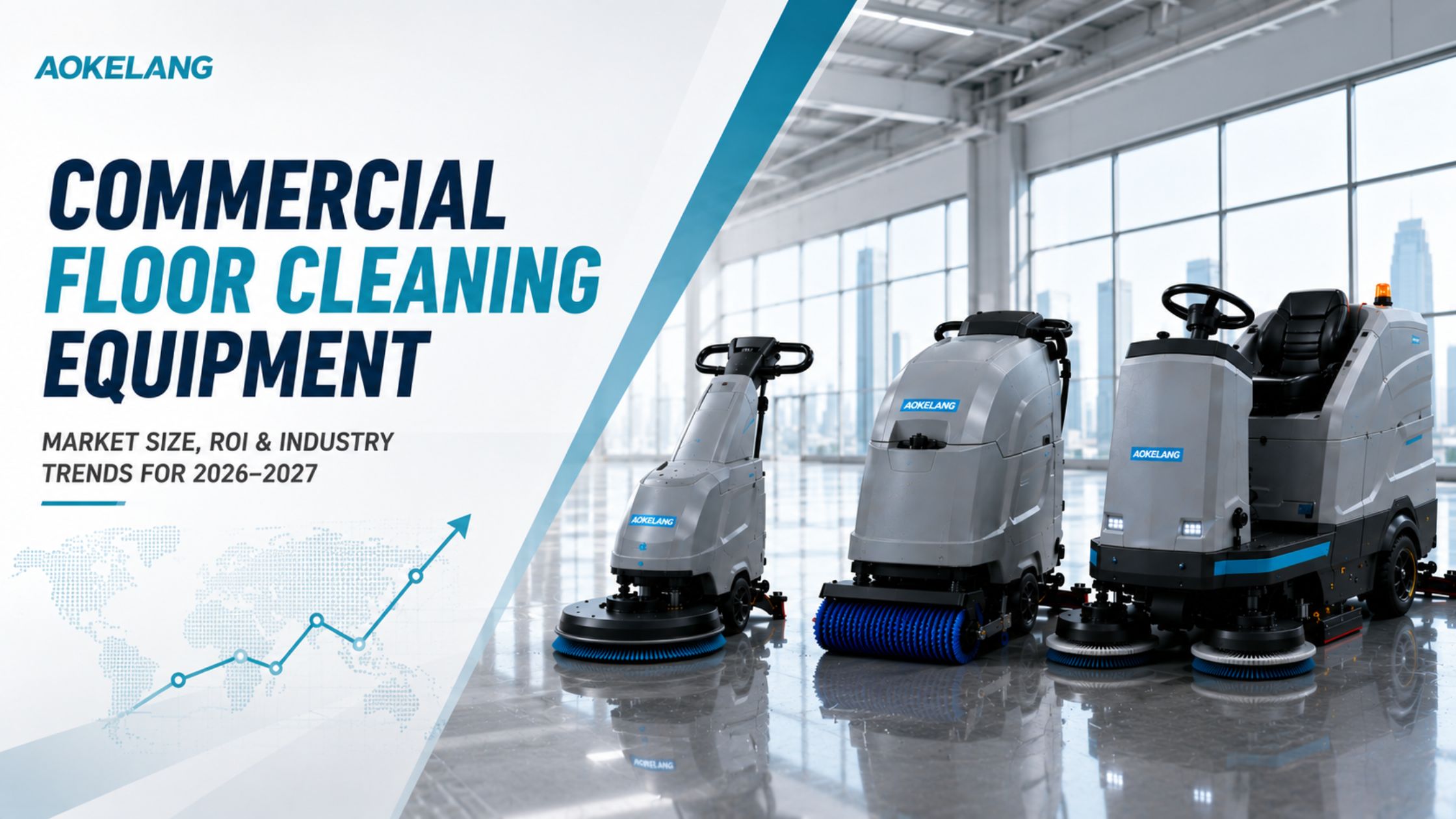
The commercial floor cleaning equipment market is growing faster than most facility managers realise and the technology inside these machines is changing faster still. This guide covers the numbers behind the market, the ROI case for switching from manual mopping, how autonomous machines compare to traditional scrubbers, and what the next two years look like for buyers and distributors sourcing from manufacturers like Aokelang.
Table of Contents
How Big Is the Global Floor Cleaning Equipment Market?
The global floor cleaning equipment market was valued at USD 13.67 billion in 2024 and is projected to reach USD 27.56 billion by 2033, growing at a CAGR of 8.1% during the forecast period. Straits Research
North America dominates the market with a 44% share, driven by increased commercial infrastructure and rising hygiene standards. However, the fastest growth is happening elsewhere. The Asia-Pacific region is recognised as the fastest-growing market — driven by rapid industrialisation, expanding warehouse and logistics networks, and rising labour costs that are pushing facility operators toward mechanised cleaning solutions. For a manufacturer like Aokelang, operating out of Hefei, China, this regional dynamic is both a domestic market opportunity and a significant export tailwind. Grand View ResearchMarket Research Future
The commercial and industrial floor scrubber and sweeper segment sits within this broader market. The global floor cleaning machine market specifically is estimated at USD 4.5 billion in 2024 and is forecast to reach USD 7.5 billion by 2033, growing at a CAGR of 7.3% between 2026 and 2033. The growth is being driven by three structural forces: increasing warehouse automation, post-pandemic hygiene standard elevation, and labour cost pressures that make manual cleaning economically unsustainable at scale. Market Research Intellect
What ROI Can a Facility Expect by Switching From Manual Mopping to a Commercial Floor Scrubber?
The productivity gap between manual cleaning and machine cleaning is one of the most consistently documented figures in the industry.
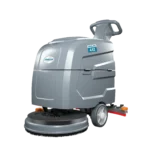
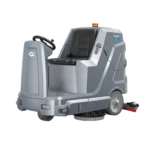
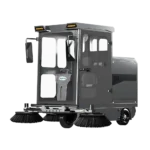
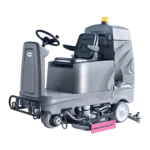
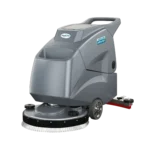
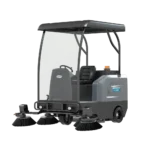
A manual worker with a mop or broom covers approximately 300–500 m² per hour. A walk-behind scrubber covers 2,000–4,000 m² per hour. A ride-on scrubber like the Aokelang D7 or D8 can cover 8,000–15,000+ m² per hour representing a productivity improvement of 20–30x over manual methods across large floor areas.
The financial case follows directly from that productivity gap. The true loaded labour cost of a single full-time cleaning employee in commercial facilities is typically $40,000–$55,000 annually when you factor in wages, employer taxes, insurance, and shift premiums. A commercial floor scrubber’s total annual operating cost including brushes, squeegee replacements, battery maintenance, and preventive servicing typically runs $4,000–$7,000 per year. Sproutmation
For a large facility running 3–5 manual cleaners on floor work, the payback period on a well-specified scrubber is typically 12–24 months. Additional savings compound from reduced water consumption, lower chemical use, and a reduction in slip-and-fall incidents — which carry workers’ compensation and liability costs that rarely feature in simple ROI calculations but are real. Aokelang’s post on how floor cleaning machines save your business money runs through this calculation in practical terms for different facility sizes. Also read – aokelang floor cleaning equipment manufacturer
What Are the Biggest Trends in Commercial Floor Cleaning Equipment for 2026–2027?
1. Lithium-Ion Battery Adoption Is Accelerating
Lithium-ion battery penetration has reached 58% of new commercial floor scrubbers globally, driven by faster charging and longer runtime advantages over traditional lead-acid systems. Over 64% of commercial buildings upgraded their cleaning fleets to battery-powered machines in 2025 to cut cord hazards and energy usage. Global Growth Insights
Lead-acid is not disappearing overnight, but it is clearly in decline as the default power source for new machines. For buyers evaluating new equipment now, lithium-ion is the forward-looking choice for any facility running machines daily. The benefits of a floor scrubber machine guide covers the full operational advantage in detail.
2. Autonomous and Semi-Autonomous Scrubbers Are Moving from Niche to Mainstream
The global autonomous robotic floor scrubber market was valued at USD 894.6 million in 2025 and is projected to reach USD 2.19 billion by 2034 — growing at a CAGR of 10.5%. Intelmarketresearch
Over 1.2 million autonomous scrubbers were deployed globally across industrial and commercial facilities in 2024, a 34% increase from 2020. Approximately 63% of large enterprises have adopted robotic floor scrubbers to optimise cleaning productivity and reduce manual labour costs. Industryresearch
Autonomous models are better suited to predictable, open layouts where route programming is straightforward — large warehouse floors, airport concourses, and shopping mall atria. They utilise LiDAR, 3D depth cameras, and SLAM mapping to navigate dynamically, distinguishing between static shelving and moving machinery like forklifts. Traditional operated scrubbers remain dominant in complex layouts, smaller spaces, and environments where cleaning staff perform other duties alongside machine operation. Ednex Automation
Aokelang’s X5 Automatic Ride-On Floor Scrubber reflects this direction within the range — an intelligent machine for large facilities moving toward automation. The D6, D7, and D8 remain the right choice for the large majority of facilities where a human operator is the practical and preferred configuration.
3. IoT Fleet Monitoring Is Becoming Standard
Approximately 53% of new machines now include digital telemetry features that track usage, battery health, and cleaning efficiency. IoT-enabled scrubbers have risen in adoption by 33% as facility managers seek remote fleet management capabilities. Global Growth Insights
For large facilities running multiple machines across shifts, IoT monitoring changes the maintenance model from reactive to predictive — catching battery degradation, squeegee wear, and brush pressure issues before they become operational problems. Aokelang’s resources on regular performance checks and identifying common issues in cleaning machines cover the baseline maintenance framework that IoT systems are progressively automating.
Also read – are floor scrubbers eco friendly
4. Eco-Efficiency and Low-Water Machines Are Gaining Priority
Eco-friendly innovations are transforming the floor cleaning equipment market, with sustainability-focused designs increasingly influencing procurement decisions across commercial, industrial, and institutional sectors. Global Market Insights
Reduced water consumption and lower chemical use are both operational cost benefits and sustainability credentials — relevant for facilities operating under LEED or similar green building frameworks. Aokelang positions the range on energy efficiency and reduced resource consumption. Using a certified commercial scrubber that measurably reduces water and chemical use can contribute to a facility’s LEED operations and maintenance credits. Buyers pursuing green building credentials should request specific energy consumption and water usage figures from Aokelang’s sales team to support documentation requirements.
5. E-Commerce Warehouse Expansion Is Driving Sustained Demand
The floor scrubber and sweeper segment is experiencing significant growth driven by expanding commercial and industrial applications, with warehouse and logistics facilities representing one of the highest-growth end markets. The Insight Partners
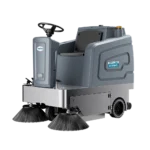
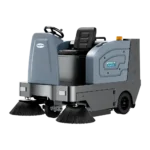
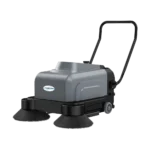
Global e-commerce growth means more distribution centre floorspace being built and commissioned every year — each requiring cleaning equipment from day one. This structural demand driver is independent of economic cycles and represents sustained procurement activity for both walk-behind and ride-on scrubbers and sweepers across the Aokelang range. The Aokelang D2000 Factory Floor Sweeper and D2300 Heavy-Duty Industrial Sweeper are directly positioned for this warehouse expansion demand.
Is Buying Direct From a Manufacturer Like Aokelang Cheaper Than Through a Distributor?
Yes — in terms of unit price. Buying directly from the manufacturer eliminates distributor markups, which typically range from 20–50% on commercial cleaning equipment. For a container order of multiple machines, that saving is substantial in absolute terms.
The total cost analysis when buying from a manufacturer should factor in shipping, import duties, and potential costs for spare parts over 3–5 years — these are real costs that a local distributor typically absorbs or manages on the buyer’s behalf. The trade-off is clear: direct buying saves on unit price but transfers logistics management, import compliance, and after-sales coordination to the buyer. Accio
Aokelang mitigates part of this gap by offering direct global technical support and parts supply to international buyers — making the direct model more accessible to buyers without established import experience. For distributors building a floor cleaning equipment line, the combination of competitive direct pricing, OEM private label capability, and Aokelang’s full commercial floor cleaning machine range makes the direct manufacturer relationship the natural starting point.
Autonomous vs Traditional Scrubbers: Which Should You Choose?
Both will coexist for the foreseeable future. The decision comes down to facility type, layout complexity, and whether the labour cost saving justifies the autonomous machine premium.
Autonomous scrubbers cost on average 2.8 times more than conventional cleaning equipment. Additionally, 49% of small businesses cite capital affordability as the biggest adoption barrier. Industryresearch
The ROI case for autonomous is strongest in large, predictable, open layouts where the machine can run consistent routes without frequent human intervention — hypermarket floors, airport terminals, large university buildings, and logistics warehouses. The ROI case weakens in complex environments with many obstacles, frequent layout changes, or smaller floor areas where a walk-behind operator machine is already highly efficient.
For most facilities today, the right answer is a traditional operator machine from a reliable manufacturer — with autonomous as a future consideration as the technology matures and the price premium narrows. Aokelang’s guide on features to look for in a professional floor cleaning machine is the right starting point for buyers building their specification before committing to a machine type.
Also read – floor scrubber technical specifications
External references: Grand View Research — Global Floor Cleaning Equipment Market Report | ISSA — Industry Trends and Cleaning Business Intelligence
FAQ – Commercial Floor Cleaning Equipment
How big is the global floor cleaning equipment market in 2026?
The global floor cleaning equipment market was valued at USD 13.67 billion in 2024 and is projected to reach USD 27.56 billion by 2033, growing at a CAGR of 8.1%. The commercial floor cleaning machine segment specifically — covering scrubbers and sweepers — sits within this at around USD 4.5–5 billion, growing at roughly 7–8% annually driven by warehouse expansion, rising hygiene standards, and labour cost pressure. Straits Research
What is the ROI of switching from manual mopping to a floor scrubber?
The productivity difference is 20–30x for large floor areas. The total operating cost of a commercial scrubber typically runs $4,000–$7,000 per year versus a loaded labour cost of $40,000–$55,000 for a single full-time cleaning employee. For facilities replacing multiple manual cleaners, payback periods of 12–24 months are common, with compounding savings from reduced water, chemical, and injury costs thereafter. Sproutmation
What is the difference between an autonomous and a traditional floor scrubber?
An autonomous scrubber uses LiDAR, 3D cameras, and AI mapping to navigate and clean independently. A traditional scrubber requires a human operator. Approximately 63% of large enterprises have adopted robotic floor scrubbers to optimise productivity — but autonomous models cost 2.8x more than conventional equipment and are best suited to open, predictable layouts. Traditional models remain dominant in complex or smaller environments. Industryresearch
What are the biggest floor scrubber industry trends for 2026–2027?
The headline trends are: 58% lithium-ion battery integration across new machines, a 36% boost in robotic scrubber sales, 33% rise in IoT-based maintenance usage, and a 47% preference for compact walk-behind models. Eco-efficiency and low-water consumption are also increasingly shaping procurement criteria alongside the operational performance specifications. Global Growth Insights
Is it better to buy floor cleaning equipment directly from a Chinese manufacturer or through a local distributor?
Buying direct eliminates 20–50% distributor markups on unit price, which is significant at container volumes. The trade-off is managing shipping, import duties, and after-sales support independently. For distributors and large facility operators with import experience, buying direct from a manufacturer like Aokelang is the more cost-effective model. For single-machine buyers without logistics infrastructure, a local distributor absorbs that complexity in exchange for the markup.