Key takeaways
- Poor water pickup is almost always a suction problem. Air is getting in, something is blocking the airflow, or the vacuum motor isn’t running at full power.
- Three quick tests narrow down the cause before you take anything apart: listen to the motor, try to lift the recovery tank lid, and feel the suction at the hose end.
- The most common fixes cost nothing. Lower the squeegee, empty the tank, close the drain hose cap and clear the hose.
- Foam is a hidden cause. Too much detergent fills the recovery tank with foam, which can trip the float valve and cut suction long before the tank is full of water.
- If the motor is silent or weak after all eight steps, the problem is electrical or mechanical and needs a technician.
Table of Contents
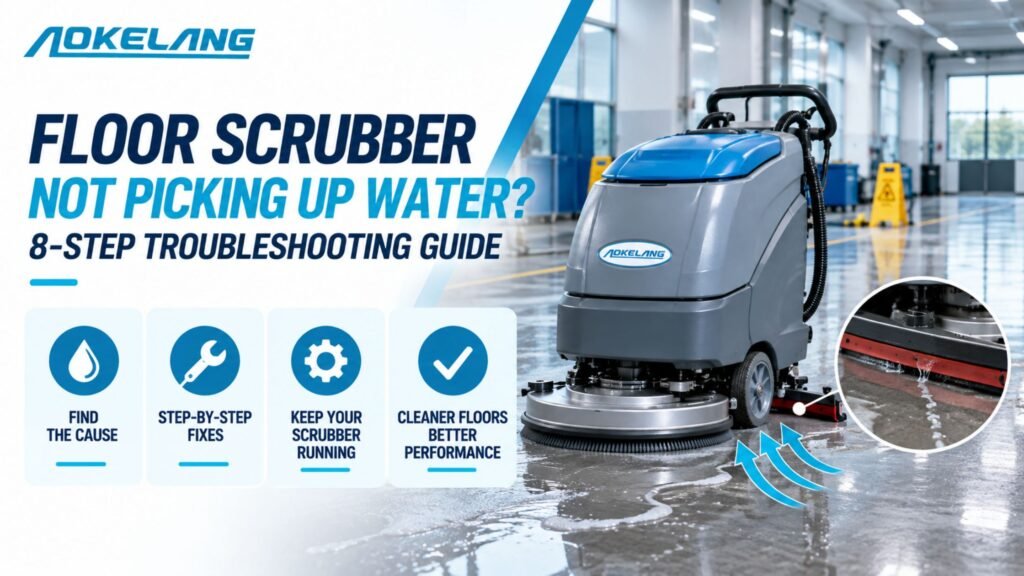
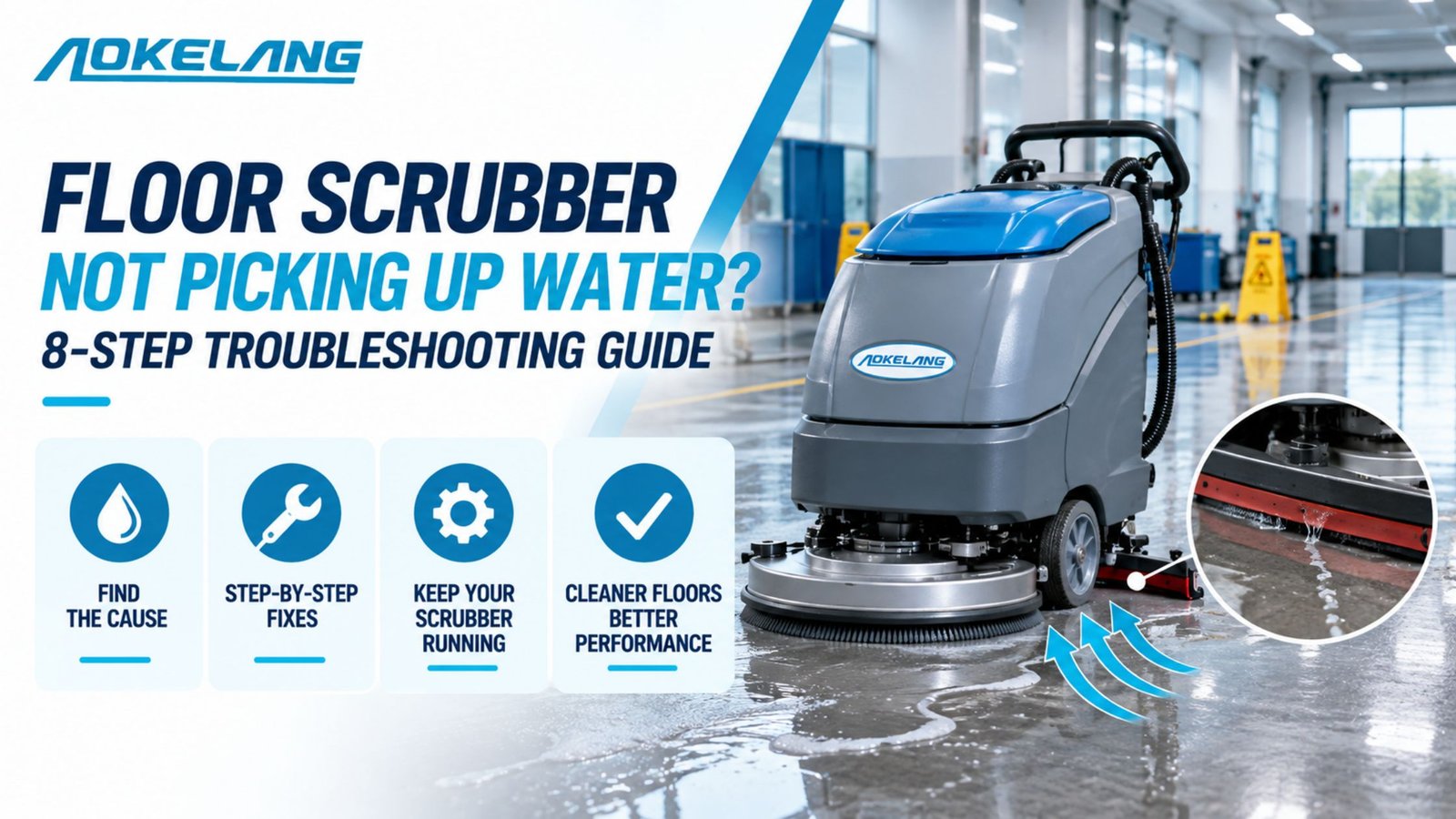
When a floor scrubber stops picking up water or Floor Scrubber Not Picking Up Water, the vacuum system has lost suction. The cause is usually an air leak at the tank, a full or foamy recovery tank, a blocked hose, or a dirty or worn squeegee.
Work through the steps below in order. They run from the quickest checks to the slowest.

Which part of the system is failing? – Floor Scrubber Not Picking Up Water
Three tests, each taking under a minute, tell you where to look.
- Listen to the vacuum motor. Switch on the vacuum. You should hear a steady, high-pitched hum. If it’s silent, the problem is with power or a switch.
- Try to lift the recovery tank lid. With the vacuum running, a sealed tank pulls the lid down tight. If it lifts easily, air is leaking in.
- Feel the suction at the hose. Disconnect the vacuum hose from the squeegee and cover the open end with your palm. You should feel a strong pull.
Match what you find to the table:
| What you notice | Likely cause | Go to |
|---|---|---|
| Vacuum motor is silent | Squeegee raised, low battery, switch or tripped breaker | Step 1 |
| Pickup is fine at the start but fades during the shift | Tank filling, foam, float tripping or battery draining | Steps 1, 2 and 5 |
| Lid lifts easily with the vacuum on | Air leak at the lid seal or drain hose cap | Steps 3 and 4 |
| Weak suction at the hose end | Blockage or leak in the hose or tank | Steps 5 and 6 |
| Strong suction at the hose, but water is still left behind | Blocked or worn squeegee | Step 7 |
| Water left only at high speed or high solution flow | Operating settings | Step 8 |
Step 1: Make sure the vacuum motor is actually running
Start with the simplest causes.
- Is the squeegee lowered? On many scrubbers, the vacuum only runs when the squeegee is down. Lower the brush and squeegee assembly before you start cleaning.
- Is the vacuum switched on? Some machines have a separate vacuum switch or button on the control panel.
- Is the battery charged? A low battery can weaken the vacuum before the machine stops altogether. Charge it fully and test again.
- Has a breaker tripped or a fuse blown? If the motor stays silent, check the circuit breaker or fuse for the vacuum circuit. Your operator manual shows where it is and how to reset it.
If pickup starts strong and fades over the shift, the battery is a likely suspect. The vacuum motor is one of the biggest power draws on the machine. The Aokelang AD4, for example, runs a 500 W vacuum motor. For more on how battery type affects runtime, see our guide to battery powered floor scrubbers.
Step 2: Empty the recovery tank and check for foam
A full recovery tank can’t take any more water. Aokelang scrubbers have a float valve that shuts off the vacuum when the recovery tank is full, which protects the vacuum motor from drawing in water. You’ll hear it happen, because the suction sound stops.
Empty the tank and test again. If pickup returns, the tank was simply full.
If the tank was only half full but full of foam, the detergent is the problem. Foam rises faster than water and can lift the float early. It can also be drawn toward the vacuum motor, where it risks damaging it.
To deal with foam:
- Drain the recovery tank and rinse it.
- Cut the detergent dose. Measure it instead of pouring it straight in.
- Use a low-foam detergent made for floor scrubbers. Household cleaners usually foam too much.
- On greasy floors that foam heavily, add a defoamer to the recovery tank, not the solution tank. Use one approved for floor scrubbers, at the rate on its label.
Step 3: Close the drain hose cap
The recovery tank drain hose is the most overlooked air leak. If its cap is missing, loose or cracked, the tank can’t hold the vacuum it needs to lift water.
Check the cap every time you empty the tank. Screw or push it fully closed, and replace it if the seal inside is torn or missing.
This takes ten seconds. It’s also one of the most common reasons a machine works one day and won’t pick up water the next.
Step 4: Check the recovery tank lid and gasket
Run the lid-lift test from earlier. With the vacuum on, the lid should be hard to lift. If it comes up easily, air is getting in around the edge.
Inspect the rubber gasket around the lid:
- Is it fully seated in its groove?
- Is it cracked, torn, flattened or stretched?
- Is there dried dirt or grit on it that stops it from sealing?
Wipe the gasket and the tank rim clean. If the gasket is damaged, replace it. A temporary fix rarely holds under vacuum.
Step 5: Clean the float, filter and debris basket
Inside the recovery tank, air passes the float valve and a filter before it reaches the vacuum motor. If either is blocked or stuck, suction drops even when the tank is empty.
- Float: Check that it moves freely. Sludge, hair or dried detergent can stick it in the closed position. Rinse it until it moves easily.
- Filter: Take out the recovery tank filter and rinse it under running water until it’s clear.
- Debris basket or tray: Many scrubbers have a basket where the hose enters the tank, to catch grit and hair. If yours has one, empty and rinse it.
Rinse the filter and float at the end of every shift. Dried sludge is much harder to clear than fresh. Our floor scrubber maintenance guide covers the full daily routine.
Step 6: Clear the vacuum hose
If suction at the hose end was weak but the tank seals and float are fine, the hose is the next suspect.
- Disconnect the hose at both ends, at the squeegee and at the recovery tank.
- Look through it toward a light. A blockage shows up as a dark section.
- Push out soft clogs with a blunt tool, such as a broom handle. Don’t use anything sharp that could puncture the hose.
- Flush the hose with warm water until it runs clear.
- Bend the hose along its length and check for cracks or pinholes, especially near the cuffs and at bends.
A cracked hose leaks air in the same way a loose lid does. Taping it is a short-term fix only, so replace the hose.
Also check how the hose sits on the machine. A hose that’s kinked, crushed or trapped under a tank cuts airflow even without a blockage.
Step 7: Clean and inspect the squeegee assembly
If suction at the hose is strong but water is still left behind, the problem is at the squeegee.
- Remove the squeegee assembly.
- Clean the suction port where the hose connects. Paper, grit and string often collect there.
- Clear anything packed between the front and rear blades.
- Check the blades for tears, cracks, warping or rounded edges.
- Refit the squeegee and make sure the blades touch the floor evenly along their full width.
Worn blades let water slip underneath. Aokelang squeegee blades have two usable edges. When one edge shows wear, flip the blade to use the other. Replace it once both edges are rounded, nicked or uneven.
If the scrubber picks up most of the water but leaves thin lines or a one-sided trail, see our guide to why a floor scrubber leaves streaks. It covers squeegee angle and level in detail.
Mus read – loor Scrubber Leaving Streaks
Step 8: Slow down and reduce the solution flow
If the machine picks up water well in testing but leaves puddles during work, look at how it’s being run.
- Speed: At high speed, the squeegee skims over water instead of collecting it. Slow down, especially on rough floors and through turns.
- Solution flow: Too much solution puts more water on the floor than the squeegee can lift in one pass. Lower the flow until the floor behind the machine is almost dry.
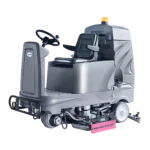
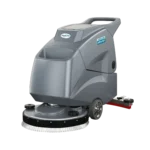
On Aokelang walk-behind scrubbers, set the flow with the solution control dial. On ride-on models like the Aokelang AD6, you can adjust both the brush and water flow settings to suit the floor.
For pacing, overlap and other operating basics, see our guide on how to use a floor scrubber.
What if the vacuum motor is the problem?
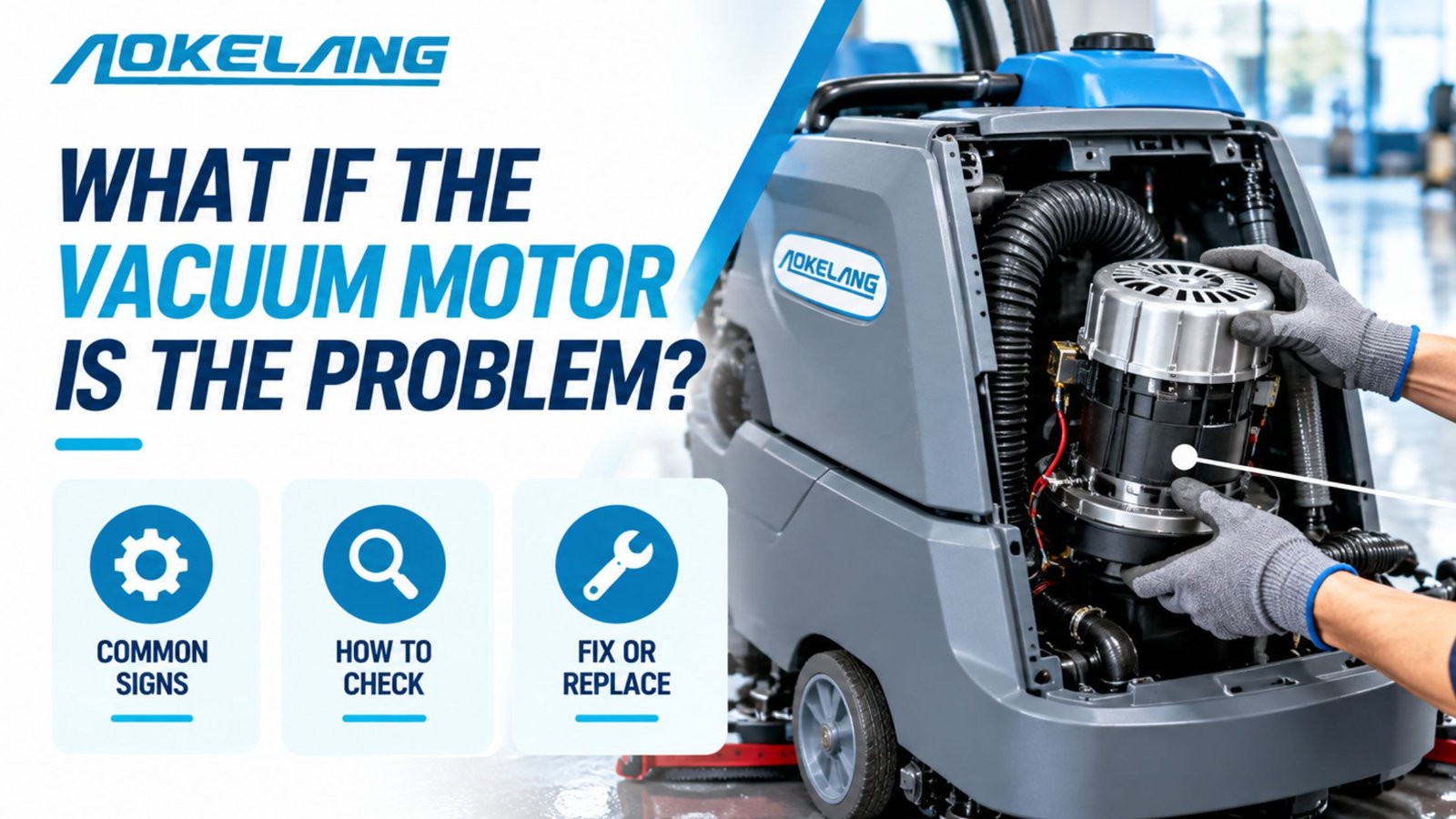
The motor needs attention if either of these is true:
- It’s still silent after you’ve checked the battery, switch, breaker and float.
- It runs, but suction stays weak with everything else sealed and clear.
Signs of a failing vacuum motor include:
- a grinding, rattling or uneven sound
- a burning smell
- a lower pitch than normal, even on a full battery
- water or foam inside the motor housing
Stop using the machine if you see water near the motor. Running it can cause more damage.
Every Aokelang floor scrubber comes with a 1-year warranty and online technical support. Email info@aokelang.com with your model number, the steps you’ve already checked, and a short video of the motor running.
We stock replacement squeegees, brushes, pads, filters and batteries for all our models and ship parts internationally. If you’re replacing the machine, compare vacuum power and tank size across our floor scrubber range.
Frequently asked questions – Floor Scrubber Not Picking Up Water
Why did my floor scrubber suddenly stop picking up water?
A sudden stop usually has a simple cause. Check three things first: a full recovery tank, a drain hose cap left open after emptying, or the squeegee left in the raised position.
Can a low battery cause poor water pickup?
Yes. The vacuum motor needs a steady voltage, and as the battery drains, suction can drop before the machine shuts off. Charge the battery fully and test again.
Why is foam coming out of my scrubber’s vacuum exhaust?
The recovery tank is overfilled with foam, and the foam is being drawn toward the vacuum motor. Stop the machine, drain the tank, and reduce or change the detergent. Foam that reaches the motor can damage it.
How often should I clean the vacuum hose and float?
Rinse the float and filter at the end of every shift. Flush the hose weekly, or whenever suction feels weaker than normal.