Key takeaways
- Most streaks come from the squeegee. Debris on the blade, a nick, a rounded edge or an uneven setting is the cause more often than anything else.
- The shape of the streak tells you where to look. A thin wet line, a one-sided streak, a wide wet band and a dry haze each point to a different cause.
- Wet streaks mean the machine isn’t picking water up. A haze that appears after the floor dries usually means too much detergent or dirty pads.
- Pre-sweeping and wiping the squeegee with a rag fix a large share of streaking in minutes.
- Check the cheap, fast fixes first. Leave hose, seal and motor checks until the squeegee and the chemical are ruled out.
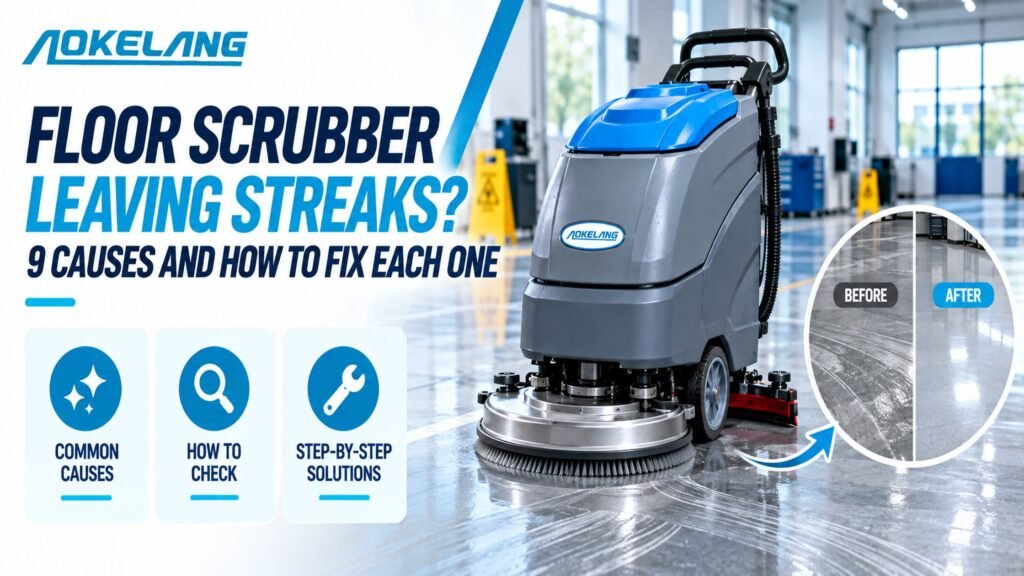
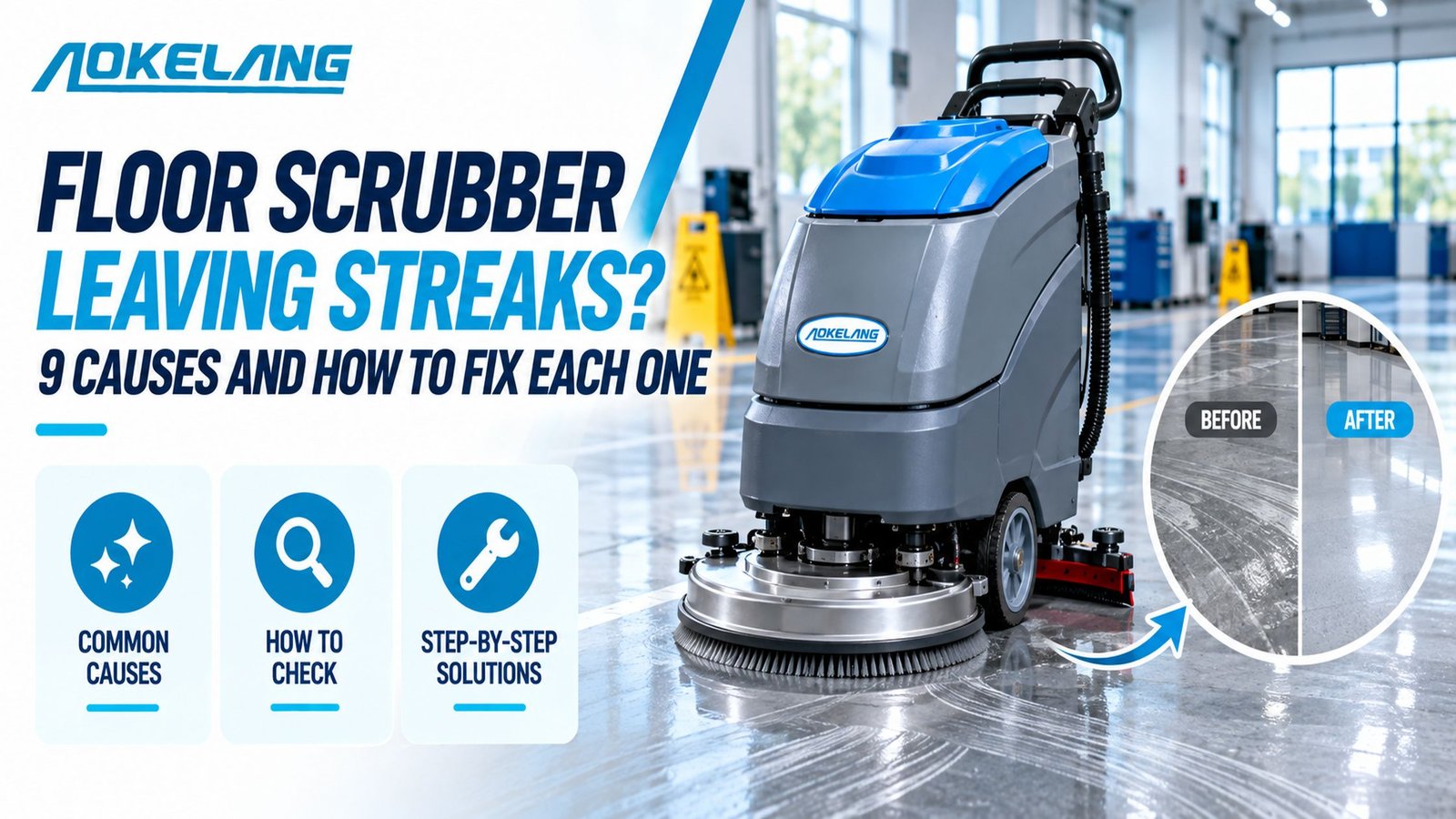
Floor Scrubber Leaving Streaks? when dirty water stays on the floor, or when cleaning residue dries on it. The usual causes are a dirty or worn squeegee blade, lost suction in the vacuum system, too much detergent, or driving too fast.
The quickest way to find your cause is to look closely at the streak itself.
Table of Contents
What does the streak pattern tell you?
Different faults leave different marks. Match what you see to the table, then go straight to that section.
| What you see | Most likely cause | Check |
| One or two thin wet lines in the same spot on every pass | Debris caught on the blade, or a nick in it | Causes 1 and 2 |
| Water left along one side of the path only | Squeegee not level, or a bent frame | Cause 3 |
| A wide wet band across most of the squeegee | Lost suction from a clog, air leak or full tank | Causes 4 and 5 |
| Water left only on turns | Turning too fast, so the squeegee lifts | Cause 9 |
| Floor dries, but looks hazy, dull or feels sticky | Too much chemical, or dirty pads | Causes 6 and 7 |
| Swirl marks or fine scratches | Wrong pad or brush for the floor | Cause 8 |

1. Worn or damaged squeegee blades
The rear squeegee blade needs a sharp, square edge to wipe the floor dry. Once that edge is rounded, cut or hardened, water slips under it and leaves thin trails.
Lay the blade flat and look at the wiping edge under good light. A healthy edge has a crisp corner. A worn edge looks rounded, like a pencil eraser.
Aokelang squeegee blades can be flipped. When one edge shows wear, turn the blade over to use the second edge. Replace the blade once both edges are rounded, nicked or uneven.
How fast blades wear depends on the floor and the hours you run. In daily commercial use, most squeegee sets last around 3 to 6 months. Rough, unsealed concrete wears them faster than sealed epoxy, so check the edges weekly.
Also check that the front and rear blades are in the right positions. The front blade usually has slots or notches that let water flow into the squeegee. A slotted blade fitted in the rear position leaves a streak at every slot.
2. Debris trapped under or inside the squeegee
A single hair, a pebble or a strip of shrink wrap can lift a section of blade off the floor. You’ll see one clean wet line that follows the machine on every pass.
To fix it:
- Stop the machine and raise the squeegee.
- Wipe both blade edges with a damp rag. Don’t use your bare hand, because the blade can carry broken glass or metal shavings.
- Look between the inner and outer blades. Grit and paper often get packed in there.
- Check inside the squeegee where the vacuum hose connects.
If the problem keeps coming back on the same shift, look at the scrub deck. A front splash skirt caked with dust keeps shedding clumps onto the squeegee long after the floor looks clean. Wipe it down.
The long-term fix is pre-sweeping. In warehouses, the usual culprits are pallet splinters, zip ties and shrink-wrap tails, and a quick sweep or dust mop clears them before the scrubber does.
3. Squeegee not level or at the wrong angle
If water is left on one side of the path only, the squeegee isn’t pressing evenly across its width.
The blade should bend back slightly and evenly along its whole length while you drive forward. If one end stands straight while the other folds over, the assembly is out of level.
Common causes include:
- caster wheels or rollers on the squeegee set at different heights
- a bent squeegee frame after it clipped a racking leg or a doorway
- mounting bolts that have worked loose
To reset the squeegee on an Aokelang scrubber:
- Lower the squeegee onto a flat, level section of floor.
- Loosen the squeegee mounting bolts.
- Press the squeegee flat so both ends touch the floor evenly.
- Retighten the bolts.
- Make a test pass over a small area.
If water is still left behind, the blade needs more contact. If it drags and squeals, it has too much.
4. Clogged vacuum hose or filter
If a wide band of water is left behind and the vacuum motor sounds normal, airflow is probably blocked somewhere between the squeegee and the recovery tank.
A quick suction test:
- Disconnect the vacuum hose from the squeegee.
- Switch on the vacuum.
- Cover the hose end with your palm. You should feel a strong pull.
If suction is strong at the hose, the blockage is in the squeegee body. If it’s weak, check the hose and the filter.
Flush the hose with clean water from the tank end. Then take out the filter inside the recovery tank and rinse it until the water runs clear. Make rinsing the filter part of your end-of-shift routine, because dried sludge is much harder to clear than fresh.
5. Air leaks or a full recovery tank
The vacuum system only works when it’s sealed. A small air gap anywhere drops suction at the squeegee.
Check these points:
- The gasket on the recovery tank lid. It should be clean, seated and free of cracks.
- The drain hose cap. It should be closed tightly.
- The vacuum hose. Look for splits, especially near bends and cuffs.
- The hose connections at the squeegee and at the tank.
A full recovery tank causes the same symptom. Aokelang scrubbers have a float valve that shuts off the vacuum when the recovery tank is full. When it trips, the suction sound stops. Drain and rinse the tank, then carry on.
Heavy foam can trip the float early, before the tank is full of water. If suction drops partway through a shift, empty the tank before you start taking parts off. Then cut the detergent dose and switch to a low-foam scrubber detergent.
6. Too much or too little detergent
If the floor looks streaky only after it dries, the problem is usually the chemical, not the water pickup.
Too much detergent leaves a sticky film that dries as a haze. It also makes foam, which can trip the recovery tank float (see cause 5). Too little detergent leaves soil behind, and that dries as dull patches.
Measure the dose instead of pouring it straight from the container. A marked jug or a dosing pump keeps the dilution consistent from one tank to the next.
For daily cleaning on sealed or finished floors, use a low-foam, pH-neutral cleaner made for automatic scrubbers. Household floor cleaners usually foam too much.
If an old residue film is already on the floor, make one pass with clean water only. It lifts the excess chemical, and you’ll see straight away whether that was the cause.
The solution flow matters too. Too much solution floods the squeegee, and too little leaves dirty slurry on the floor. On Aokelang walk-behind scrubbers, set the flow with the solution control dial before you start. On ride-on models like the Aokelang AD6, you can adjust both the brush and the water flow settings to suit the floor.
7. Dirty or worn brushes and pads
A pad loaded with dirt spreads grime across the floor instead of lifting it. The result is a grey, uneven film once the floor dries.
To fix it:
- Rinse brushes and pads after every use and let them dry.
- On long shifts or dirty floors, swap the pad partway through.
- Pull hair and string out of the brush bristles.
- Replace pads when they’re thin or torn, and replace brushes when the bristles are short or worn unevenly.
8. Wrong pad or brush for the floor
A pad that’s too aggressive can leave swirl marks or scratches on smooth floors. A pad that’s too soft won’t move heavy soil.
Most scrubber pads follow a standard color system, from least to most aggressive:
- White: polishing and very light cleaning on delicate floors
- Red: daily cleaning on finished floors
- Blue: heavier scrubbing
- Green and black: stripping finish, not for daily cleaning
For brushes, soft nylon suits sealed concrete, epoxy, vinyl and tile. Grit brushes are better for rough or textured concrete, where a pad would shred.
Aokelang stocks replacement brushes and pads for all its scrubber models. When you order, tell us your machine model and floor type so we can match the right brush or pad to your floor.
9. Driving too fast or skipping the overlap
Speed is the most common operator cause of streaks. The squeegee needs time to collect water. At high speed it skims over the top, and on rough floors it bounces.
Turns are where it shows most. A sharp, fast turn twists the squeegee and lifts one end off the floor, which leaves a curved wet trail.
To fix it:
- Slow down over dirty areas and on rough floors.
- Overlap each pass by 5 to 8 cm (2 to 3 inches), so the squeegee catches the edge of the last pass.
- Make wide, slow turns.
- Raise the squeegee before reversing. Backing up with the blade down bends it the wrong way and wears it quickly.
Must Read – Floor Scrubber Not Picking Up Water
What end-of-shift routine stops streaks coming back?
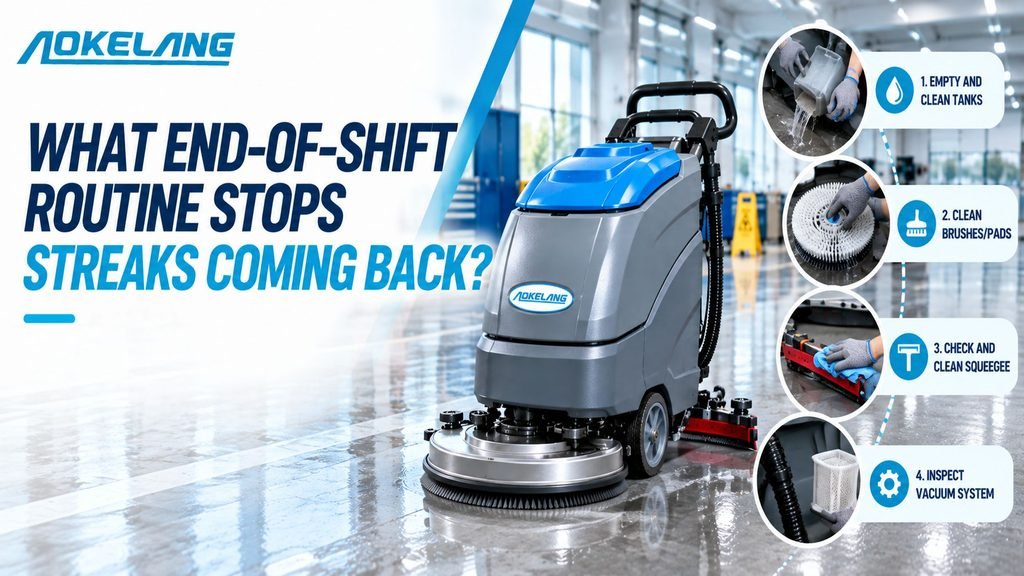
Five minutes of cleaning after each use prevents most of the causes above:
- Empty and rinse the recovery tank, then leave the lid open to dry.
- Drain any leftover solution so chemical doesn’t build up in the lines.
- Remove the squeegee, rinse it and wipe both blades.
- Rinse the recovery tank filter and check that the float moves freely.
- Rinse the pads or brushes and hang them to dry.
- Check the blade edges, and flip or replace a worn blade before the next shift.
- Put the battery on charge. If you’re unsure which charging routine suits your battery type, our guide to battery powered floor scrubbers covers lead-acid and lithium.
For a full daily, weekly and monthly schedule, see our floor scrubber maintenance guide. For day-to-day operation, see how to use a floor scrubber.
When is it the machine, not the setup?
If you’ve worked through all nine checks and water is still left behind, the cause is likely a part. Look out for:
- a vacuum motor that sounds weak, high-pitched or rough
- suction that’s poor even with the hose disconnected and the tank empty
- a squeegee frame that won’t sit level after adjustment
At that point, contact your supplier with the model number and a short video of the streaking. A video shows the pattern far better than a description.
Every Aokelang floor scrubber comes with a 1-year warranty and online technical support. We stock replacement squeegees, brushes, pads, filters and batteries for all our models, and we ship parts internationally. Email info@aokelang.com with your model number and photos or video of the problem.
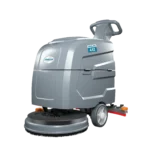
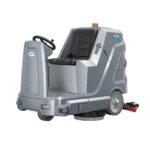
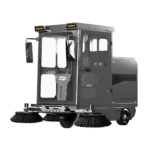
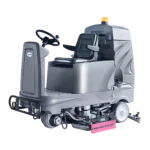
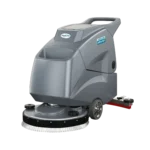
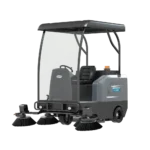
If you’re replacing an older machine, compare cleaning width and tank size across our floor scrubber range. Compact walk-behind models like the Aokelang AX2 and Aokelang AD4 suit smaller areas. Ride-on models like the AD6 are built for large warehouse floors.
Frequently asked questions – Floor Scrubber Leaving Streaks
Why does my floor scrubber only leave water on turns?
Sharp or fast turns twist the squeegee and lift one end off the floor. Take turns wider and slower, and check that the squeegee casters are set at the same height.
How often should squeegee blades be replaced?
Flip the blade when one edge shows wear, and replace it when both edges are worn. In daily commercial use, most sets last around 3 to 6 months, and less on rough concrete.
Can I use regular floor cleaner in a floor scrubber?
It’s best not to. Most household cleaners foam heavily, and the foam can trip the recovery tank float and leave residue. Use a low-foam cleaner made for automatic scrubbers.
Do I need to sweep before using a floor scrubber?
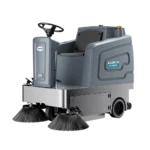
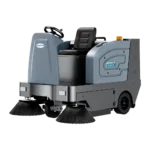
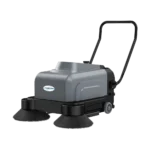
Yes, on any floor with loose debris. Grit and wrap scraps catch under the squeegee and cause streaks. On large sites, an industrial floor sweeper can clear debris before the scrubber runs.