The top features to look for in a professional floor cleaning machine are: sufficient tank capacity for your facility size, the right brush type (disc or cylindrical), reliable battery runtime, adjustable brush pressure, a high-quality squeegee system for water recovery, ease of maintenance, and the correct machine format, walk-behind or ride-on, matched to your floor area. Getting these right separates a machine that transforms your cleaning operations from one that collects dust in a corner.
If you manage a warehouse, factory, shopping mall, hospital, or any large commercial space, you already know that mopping floors at scale is a losing battle. It’s slow, inconsistent, and physically exhausting for your team. A professional floor cleaning machine whether a scrubber, sweeper, or combined unit solves all of that. But not every machine is built for every job.
This guide breaks down exactly what to evaluate before you buy, so you invest in the right equipment the first time.
Table of Contents
1. Machine Type: Scrubber, Sweeper, or Both?
Before features, the most important decision is picking the right category of machine.
- Floor scrubbers use rotating brushes, water, and suction to deep-clean hard floors. They’re ideal for retail stores, hospitals, food processing units, and anywhere hygiene is critical. Browse commercial floor scrubber machines to see the range available.
- Floor sweepers collect dry debris — dust, gravel, packaging waste — using brushes and a hopper. They’re the first step in any cleaning cycle and essential for warehouses, logistics hubs, and outdoor yards. Explore floor sweeper machines based on your environment.
- Sweeper-scrubbers combine both functions in a single pass, ideal for industrial environments where time is the scarcest resource.
Choosing the wrong category — no matter how premium the machine — will always underperform.
2. Walk-Behind vs. Ride-On: Match the Machine to the Space
This is the decision most buyers get wrong. The rule is simple: the larger the floor area, the stronger the case for a ride-on machine.
Walk-Behind Floor Cleaning Machines
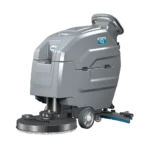
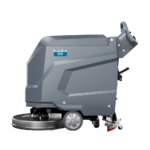
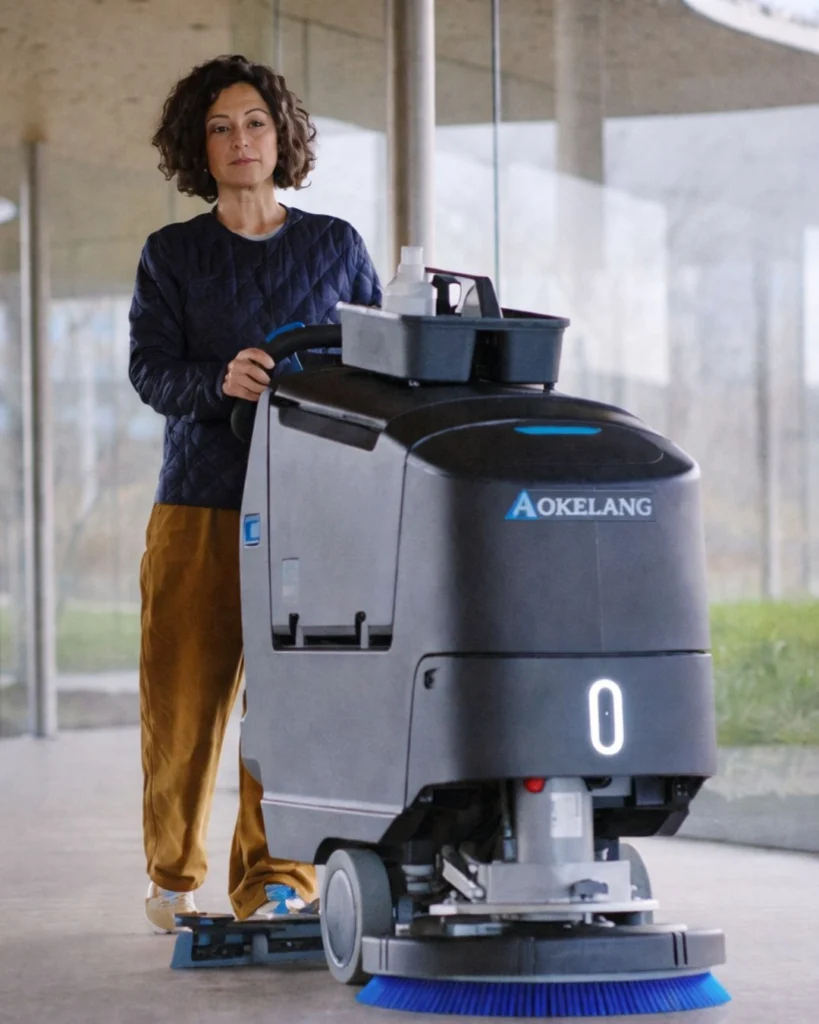
Walk-behind models are compact, highly manoeuvrable, and cost-effective for spaces up to approximately 3,000–5,000 sq. ft. They’re easy to operate, store in tight spaces, and require minimal training. If you’re cleaning retail stores, restaurant kitchens, or small warehouses, a walk-behind floor scrubber or a walk-behind floor sweeper is the right fit.
Ride-On Floor Cleaning Machines
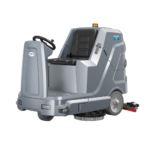
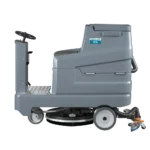
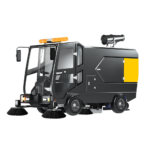
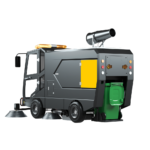
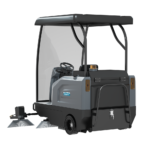
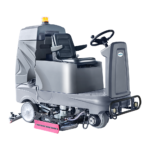
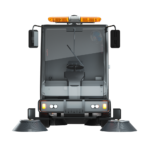
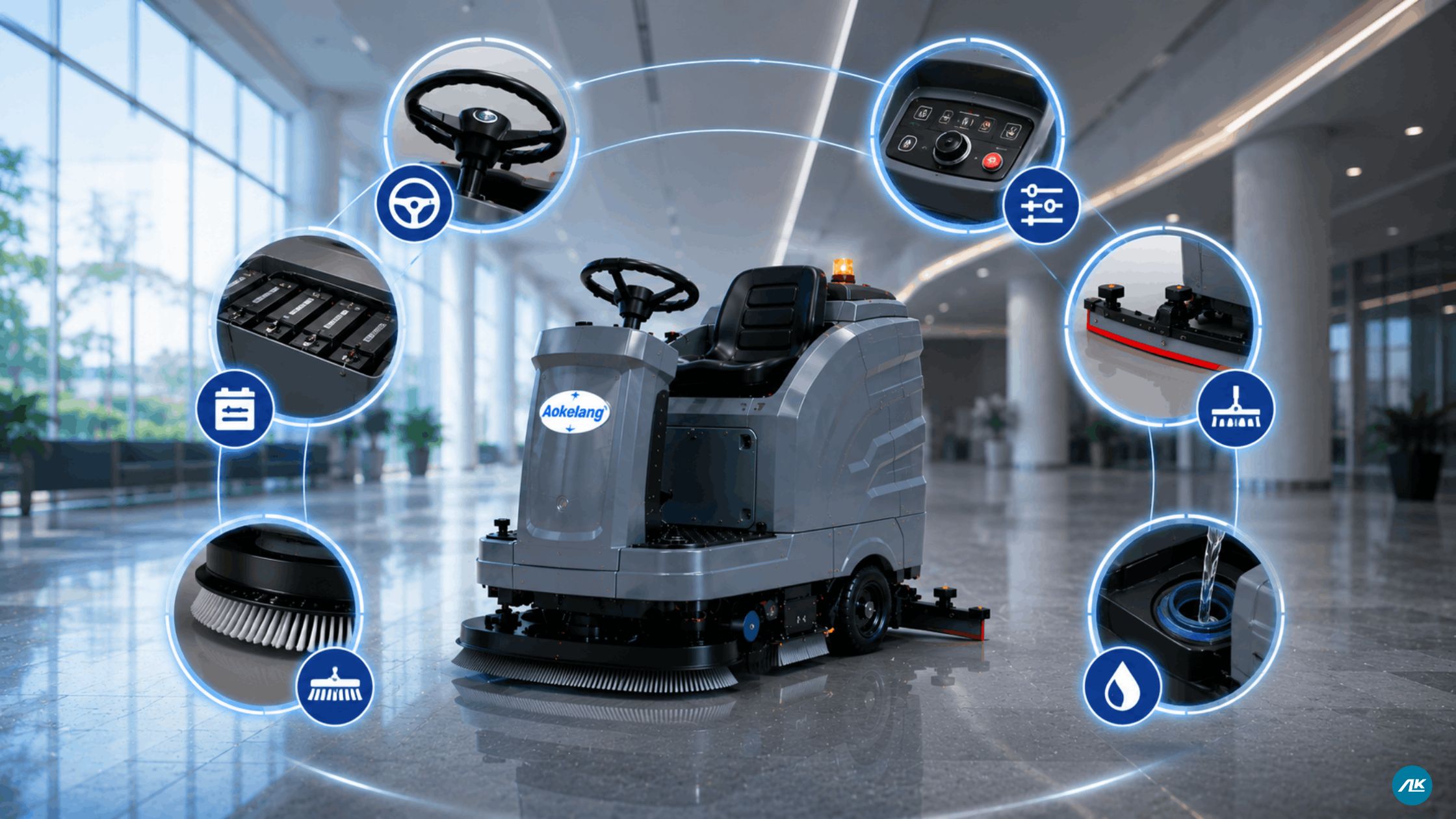
For large facilities — distribution centres, airports, manufacturing plants, shopping malls — the productivity jump from a ride-on machine is dramatic. A ride-on can clean two to four times faster than a walk-behind of similar brush width, simply because the operator isn’t walking. A ride-on floor scrubber covers large open areas without fatiguing the operator, while a ride-on floor sweeper makes fast work of dust, debris, and loose material across massive floor areas.
Quick guide:
| Facility Size | Recommended Type |
| Under 5,000 sq ft | Walk-behind |
| 5,000 – 20,000 sq ft | Mid-size walk-behind or compact ride-on |
| 20,000 sq ft and above | Ride-on |
3. Tank Capacity: Don’t Underestimate This (Top Features to Look For in a Professional Floor Cleaning Machine)
Tank capacity determines how long your machine can run before stopping to refill the clean water tank or empty the dirty water recovery tank. For large facilities, constant interruptions to refill tanks directly eat into productivity.
What to look for:
- Small facilities: 10–30 litre tanks are sufficient
- Medium facilities: 40–70 litre tanks give a comfortable uninterrupted run
- Large facilities: 80–200+ litre tanks are needed to clean meaningfully without stopping
Both the solution tank (clean water + detergent) and the recovery tank (dirty water) matter equally. A machine with a large solution tank but a small recovery tank will still stop you frequently.
Pro tip: some machines use water-saving technology that can extend a tank’s effective coverage by two to three times — worth factoring into the comparison.
4. Brush Type and Down Pressure
The brush is where the actual cleaning happens, so it’s worth understanding the difference between the two main systems.
Disc Brushes
Single or multiple rotating circular brushes. Excellent for general cleaning across smooth hard floors — concrete, tile, epoxy coatings. Disc systems are the most common in commercial settings and tend to be easier to swap out.
Cylindrical Brushes
Counter-rotating cylindrical rollers that sweep debris into the machine while simultaneously scrubbing. Better for uneven floors, textured surfaces, or environments with loose debris (saw dust, dirt tracked in from outside). Many industrial floor scrubber machines use cylindrical brush systems precisely for this reason.
Down pressure is equally important. More pressure means deeper scrubbing for heavy soils and ingrained grime. Look for machines with adjustable down pressure so you can protect delicate floor coatings while still having the power to tackle tough stains when needed.
5. Battery Type and Runtime
For most indoor commercial environments, battery-powered machines are the standard — no trailing cables, no exhaust fumes, and fully quiet operation that won’t disrupt business hours. This one of the main features to look for in a professional floor cleaning machine.
Lead-Acid Batteries
Lower upfront cost, well-understood technology, but heavier and require dedicated charging cycles. Avoid charging them partially — it shortens battery life.
Lithium-Ion Batteries
Lighter, faster to charge, and support opportunity charging — you can plug in for 30 minutes during a lunch break without damaging the battery. Over the machine’s lifetime, the operational flexibility often outweighs the higher purchase cost.
Target runtime: For a full shift of cleaning, you want at least 4–6 hours of battery life. Heavy-duty industrial machines often deliver 6–8 hours on a single charge.
Also read – Why service matters in cleaning equipments
6. Squeegee Quality and Water Recovery
This is a feature that gets far less attention than it deserves. After scrubbing, the squeegee vacuums up the dirty water left on the floor. Poor squeegee design leaves water behind — creating slip hazards, streaky floors, and long drying times that disrupt foot traffic.
What makes a good squeegee:
- Parabolic (curved) design that follows the machine’s turning radius perfectly, recovering water even through corners without leaving trails
- High-quality rubber blades that maintain contact with the floor even on slightly uneven surfaces
- Easy blade replacement — squeegee blades are wear items, and a machine that requires a toolkit to swap them costs you time every week
For environments where floor dryness is a safety or compliance concern — food production, healthcare, logistics — prioritise machines that leave floors virtually dry immediately after the pass.
7. Cleaning Path Width
Cleaning path width is the single biggest driver of how quickly you can clean a given area. A wider path means fewer passes and less total time.
- 400–500 mm (16–20 inches): Compact walk-behinds, tight spaces
- 550–750 mm (22–30 inches): General commercial use
- 800 mm–1,300 mm (32–52 inches): Industrial ride-ons for large open areas
Match the cleaning path to your space realistically. A very wide machine in a space full of racking, pillars, or narrow aisles will actually be slower because of the manoeuvring required.
8. Ease of Maintenance
A machine that’s difficult to maintain is a machine that doesn’t get maintained — and that means shortened lifespan and unexpected downtime.
Look specifically for:
- No-tool brush changes: Brush pads and cylindrical brushes are replaced regularly. Machines that allow click-on, click-off pad/brush changes save real time.
- Easy tank access: Both solution and recovery tanks should be straightforward to empty, rinse, and refill without crouching into awkward positions.
- Clear service indicators: Good machines tell you when filters need cleaning, when squeegee blades need replacing, or when a fault occurs — before it becomes a breakdown.
- Accessible service network: Ensure spare parts and service technicians are available in your region.
Daily maintenance is simple — empty and rinse tanks, clean the squeegee, check pads. Weekly and scheduled maintenance involves checking batteries, filters, and wear parts. Machines that make this easy have dramatically lower lifetime operating costs.
9. Safety Features
In busy commercial and industrial environments, floor cleaning machines operate alongside workers, forklifts, and pedestrian traffic. Safety features aren’t optional extras.
Key safety features to look for:
- Low-noise operation to avoid disturbing workers or customers
- Slip-resistant design — some machines use certified water-management technology specifically to reduce slip-and-fall risk
- Operator presence sensors that stop the machine if the operator steps away
- Bumper guards and corner rollers to protect both the machine and facility infrastructure like racking and walls
- Bright warning lights or indicators for visibility in busy environments
For warehouse sweeper machines operating in busy logistics environments especially, safety design should be a primary consideration alongside performance.
10. Noise Level
This matters more than most buyers think at the point of purchase. A machine cleaning retail space during business hours, a hospital corridor at night, or an office building in the early morning needs to operate quietly.
Battery-powered electric machines are significantly quieter than petrol or LPG equivalents. Among electric machines, look for decibel ratings in the product spec sheet — anything under 65–68 dB is generally considered acceptable for occupied spaces.
11. Automatic vs. Manual Operation
Traditional floor scrubbers are operator-driven — someone walks or rides the machine through the space. Increasingly, automatic floor scrubbers and robotic models are becoming a practical option for large, regularly-shaped floor areas.
Manual/semi-automatic machines offer more flexibility, handle complex layouts better, and are more affordable. They remain the right choice for the vast majority of commercial environments.
Fully automatic (robotic) scrubbers make sense where the floor area is large and consistent, labour costs are high, and cleaning schedules need to happen without dedicated operators. They require a higher initial investment and setup time but can deliver significant operational savings over time.
For most businesses looking at electric floor scrubbers, a semi-automatic machine with intuitive controls strikes the best balance of productivity and affordability.
12. Floor Surface Compatibility
Not all professional floor cleaning machines work on all surfaces. Before purchasing, confirm the machine is suitable for your specific floor type:
- Sealed concrete: Compatible with most scrubbers — use disc or cylindrical brushes depending on soil load
- Epoxy-coated floors: Require appropriate pad softness to avoid scratching the coating
- Tile and grout: Cylindrical brushes or disc brushes with scrubbing pads work well
- Textured or uneven floors: Cylindrical brushes maintain better contact and coverage
- Outdoor hardstanding: Needs a machine rated for outdoor use with appropriate debris capacity
Industrial settings with heavily soiled floors oil, grease, chemical residue benefit from machines with higher brush pressure and the option to use chemical detergents rather than water-only operation.
13. Industrial Environments: Specific Considerations
If you’re buying for a factory, food processing plant, logistics hub, or heavy manufacturing facility, standard commercial machines may not be robust enough. Industrial environments demand:
- Heavy-duty construction — steel frames, reinforced brush housings, industrial-grade components
- Higher debris capacity in sweepers to handle the volume of material generated
- Chemical resistance in tanks and hoses if industrial cleaning agents are used
- IP-rated components in environments with dust or moisture
The industrial ride-on floor sweeper machines category is designed specifically for these environments — built to operate daily in conditions that would rapidly wear out lighter commercial equipment.
Pulling It All Together: A Quick Buying Checklist
Before requesting a quote or demo, work through these questions:
- What is my total floor area? → Determines machine size and tank capacity
- What type of soiling am I dealing with? → Dry debris (sweeper), wet grime (scrubber), or both
- What is my floor surface? → Confirms brush type compatibility
- How many hours per day will the machine operate? → Sets battery runtime requirements
- Do I have tight spaces, aisles, or obstacles? → May favour walk-behind over ride-on
- Is noise a concern? → Prioritise electric, low-dB models
- What is my maintenance capacity? → Simpler machines if limited in-house technical support
- What is my total budget including consumables? → Factor in replacement brushes, pads, squeegee blades
Where to Start
If you’re ready to explore machines matched to your facility, the commercial floor cleaning machines range covers scrubbers, sweepers, and industrial machines across all sizes and configurations. Whether you need a compact walk-behind for a retail space or a heavy-duty industrial ride-on for a distribution warehouse, starting with the right category and then applying the features above will get you to the right machine significantly faster.
A professional floor cleaning machine is not a small purchase — but when you match the right machine to your environment and get the key features right, it pays for itself in labour savings, improved hygiene outcomes, and reduced slip-and-fall liability remarkably quickly.