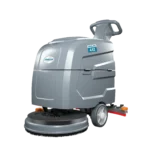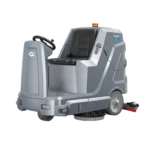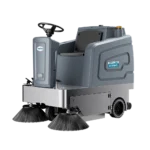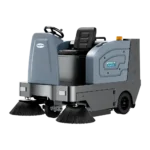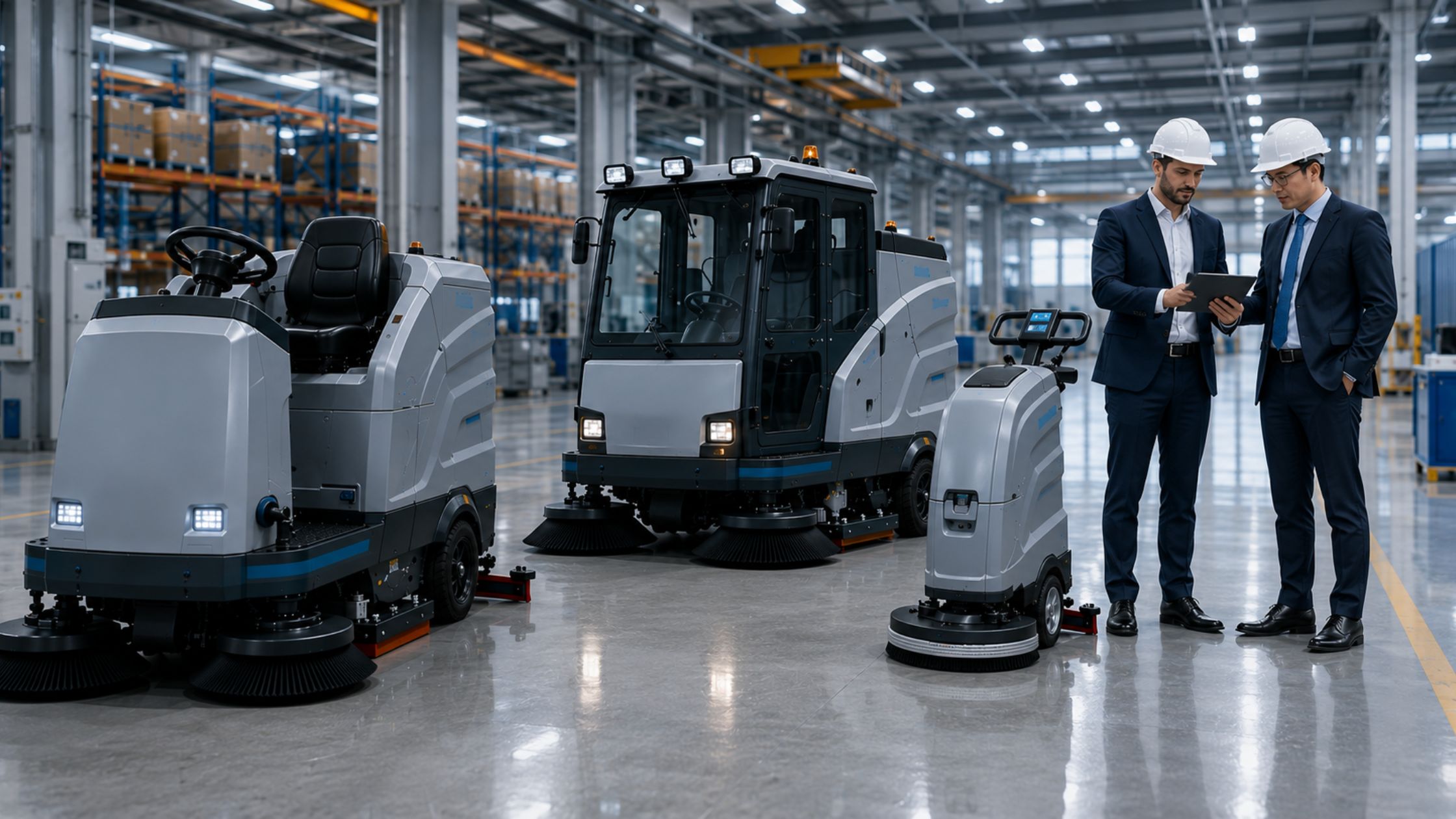
Procurement managers buying industrial floor cleaning equipment should evaluate total cost of ownership rather than purchase price alone, match machine specifications to each facility’s floor area and debris type, confirm parts and service availability before signing a contract, and consider standardizing on fewer models across multiple sites to simplify training and spare-parts inventory.
This guide Industrial Floor Cleaning Equipment covers how to calculate total cost of ownership, which specifications matter most for a procurement decision, and a vendor-evaluation checklist to use before purchasing.
Table of Contents
What Should Procurement Managers Prioritize When Buying Floor Cleaning Equipment?
- Total cost of ownership over sticker price. The cheapest machine on paper isn’t always the cheapest to operate once consumables, battery replacement, and downtime are factored in.
- Specification match to actual facility conditions. A machine sized for a small office won’t hold up to daily use in a 20,000 sq ft warehouse, and an oversized ride-on machine is wasted capital in a facility with narrow aisles.
- Standardization across multiple sites. Buying the same two or three models across a portfolio of facilities reduces the number of consumable part types you need to stock and simplifies operator training when staff move between locations.
- Vendor parts and service availability. A machine that’s cheap to buy but slow to repair costs more in downtime than it saved upfront.
- Warranty terms and what they actually cover. Confirm whether labor, parts, and batteries are covered separately, since battery replacement is often excluded or covered on a shorter timeline than the rest of the machine.
- Operator training and safety documentation. Facilities with high staff turnover benefit from vendors that provide clear operating guides and training support rather than assuming staff will learn by trial and error.
How Do You Calculate Total Cost of Ownership for Floor Cleaning Equipment?
Total cost of ownership (TCO) combines the purchase price with every ongoing cost over the machine’s expected lifespan, typically 7–10 years with proper maintenance.
| Cost Category | What to Include | Why It Matters |
| Purchase price | Base unit cost, plus any financing interest if applicable | The most visible cost, but often only 40–60% of lifetime cost on a heavily used machine |
| Battery costs | Replacement battery cost and expected replacement interval (lead-acid vs. lithium) | Lithium batteries cost more upfront but often last longer and charge faster; see this battery comparison for the cost tradeoff |
| Consumables | Brushes, pads, squeegee blades, filters | These wear out on a predictable schedule and should be budgeted as a recurring line item, not a surprise cost |
| Maintenance and repairs | Scheduled maintenance, plus an estimate for unplanned repairs | See this maintenance guide for what a proper maintenance schedule typically includes |
| Labor cost saved | Estimated labor-hours saved versus manual cleaning, valued at your facility’s labor rate | This is the offsetting benefit that determines payback period; see Manual vs. Mechanized Floor Cleaning for the underlying math |
| Downtime cost | Estimated cost of cleaning delays during repairs, based on parts/service lead time | Often overlooked, but can be significant if your vendor doesn’t have a fast local parts supply chain |
A simple TCO comparison: if Machine A costs $3,000 less upfront but its consumables and battery replacement cost $150 more per year than Machine B over a 7-year lifespan, Machine A is actually more expensive by year 20 of ownership — around $1,050 more, once that annual difference is totaled. Running this math before purchasing, rather than comparing sticker prices alone, is what separates a procurement decision from a quick purchase.
Also read – How to Become a Floor Scrubber Distributor
What Specifications Matter Most for Procurement Decisions?
| Spec | Why It Matters for Procurement | Typical Range |
| Cleaning width | Directly determines coverage rate and labor hours needed per cleaning cycle | 350 mm – 2,000 mm+ |
| Productivity (m²/hour) | Used to calculate how many machines/operator-hours are needed to cover your total floor area within your cleaning window | 1,350 m²/h – 16,000 m²/h |
| Battery type and runtime | Determines whether one charge covers a full shift or requires a mid-shift swap | 3 – 6 hours per charge |
| Tank capacity | Larger tanks reduce refill/dump interruptions during long cleaning runs | 12L – 220L+ |
| Gradeability | Relevant if any facility in your portfolio has ramps or loading dock inclines | 20% – 25% |
| Warranty period | Affects your risk exposure and total cost calculation | Typically 1–2 years standard, longer on request from some manufacturers |
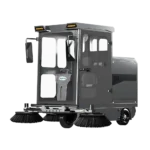
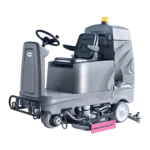
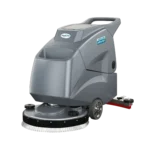
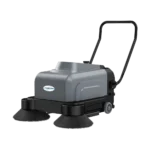
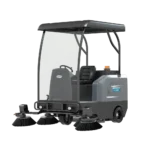
For a full breakdown of how these specs translate to real-world machine models, see the floor sweeper guide and best factory scrubbers guide, which list actual specs across compact, walk-behind, and ride-on machines.
Should You Standardize Equipment Across Multiple Facilities?
For procurement teams managing more than one site, standardizing on a small number of models — rather than letting each facility manager choose independently typically reduces costs in three ways:
- Fewer consumable SKUs to stock. Standardizing on one or two brush/pad types across sites means smaller, simpler spare-parts inventory instead of stocking unique parts for a dozen different machine models.
- Simplified operator training. Staff who transfer between facilities, or new hires trained centrally, only need to learn one or two machine interfaces instead of relearning controls at every site.
- Stronger vendor pricing leverage. Consolidated purchasing volume across multiple sites with a single manufacturer typically earns better bulk pricing than each facility purchasing independently in smaller quantities.
The tradeoff is flexibility a standardized fleet may not always be the ideal size for every individual facility, so it’s worth allowing exceptions for sites with unusually small or unusually large floor areas rather than forcing a single model everywhere.
What Questions Should Procurement Ask Vendors Before Purchasing?
Use this checklist when evaluating equipment vendors or preparing an RFP:
- What does the warranty cover, and for how long? Confirm whether labor, parts, and the battery are covered under the same terms or separately.
- What is the typical lead time for replacement parts? Ask specifically about squeegees, brushes, and batteries, since these wear fastest.
- Do you offer factory-direct pricing, or does pricing include a dealer/distributor markup? This can meaningfully affect your total spend at fleet scale — see this commercial floor scrubber cost guide for how factory-direct and dealer-network pricing typically compare.
- What training or documentation is provided with each machine? Ask for operator guides and maintenance schedules upfront rather than assuming they’ll be provided after purchase.
- What are the payment and financing terms for bulk or multi-site orders? Larger fleet purchases may qualify for staged payments or volume discounts worth negotiating.
- Can you provide references from similar facilities? A vendor with experience in your specific industry — warehousing, manufacturing, healthcare, or similar — is more likely to recommend the right specification the first time.
- What is your typical delivery timeline for standard and custom orders? Especially relevant if you’re rolling equipment out across multiple sites on a schedule.
Buying Checklist for Procurement Managers
- Map total floor area and floor type across all facilities in scope.
- Estimate labor-hours currently spent on manual or existing mechanized cleaning at each site.
- Calculate total cost of ownership for each shortlisted machine, not just purchase price.
- Decide whether standardizing on one or two models across sites makes sense for your portfolio.
- Send the vendor-evaluation questions above to each shortlisted supplier and compare answers side by side.
- Confirm warranty, parts lead time, and local service coverage before finalizing any purchase order.
- Request a live demonstration on your own floor type before committing to a large order.
Next Steps
To build a shortlist for an RFP or multi-site purchase, browse the full floor scrubber range and floor sweeper range for factory-direct specifications and pricing, or request a quote with your facility count, floor area, and floor types for a tailored recommendation. For technical documentation to include in your evaluation, see the resources page, or contact the Aokelang team directly to discuss fleet or multi-site pricing.
Must read – How Much Does a Commercial Floor Scrubber Cost
Procurement FAQs
What’s the biggest mistake procurement teams make when buying floor cleaning equipment?
Comparing purchase price alone without factoring in consumables, battery replacement, and parts lead time. A lower-priced machine with expensive or hard-to-source consumables often costs more over its lifespan than a slightly higher-priced machine with cheaper, readily available parts.
Is it better to buy fewer, larger machines or more, smaller machines for a large facility?
It depends on floor layout. Large open areas are usually more efficiently covered by fewer wide-deck or ride-on machines, while facilities with tight corridors, obstacles, or segmented floor plans often need multiple smaller walk-behind units instead.
How long should a commercial floor scrubber or sweeper last with proper maintenance?
Most well-maintained commercial machines last 7 to 10 years, though this depends heavily on daily usage hours and how consistently scheduled maintenance is followed. See this maintenance guide for the upkeep that affects lifespan most.
Should procurement standardize equipment brands across all facilities?
Standardizing on one or two brands or models generally reduces spare-parts inventory and training costs, but it’s worth allowing exceptions for facilities with unusual floor sizes or specialized debris types that a standard model doesn’t handle well.