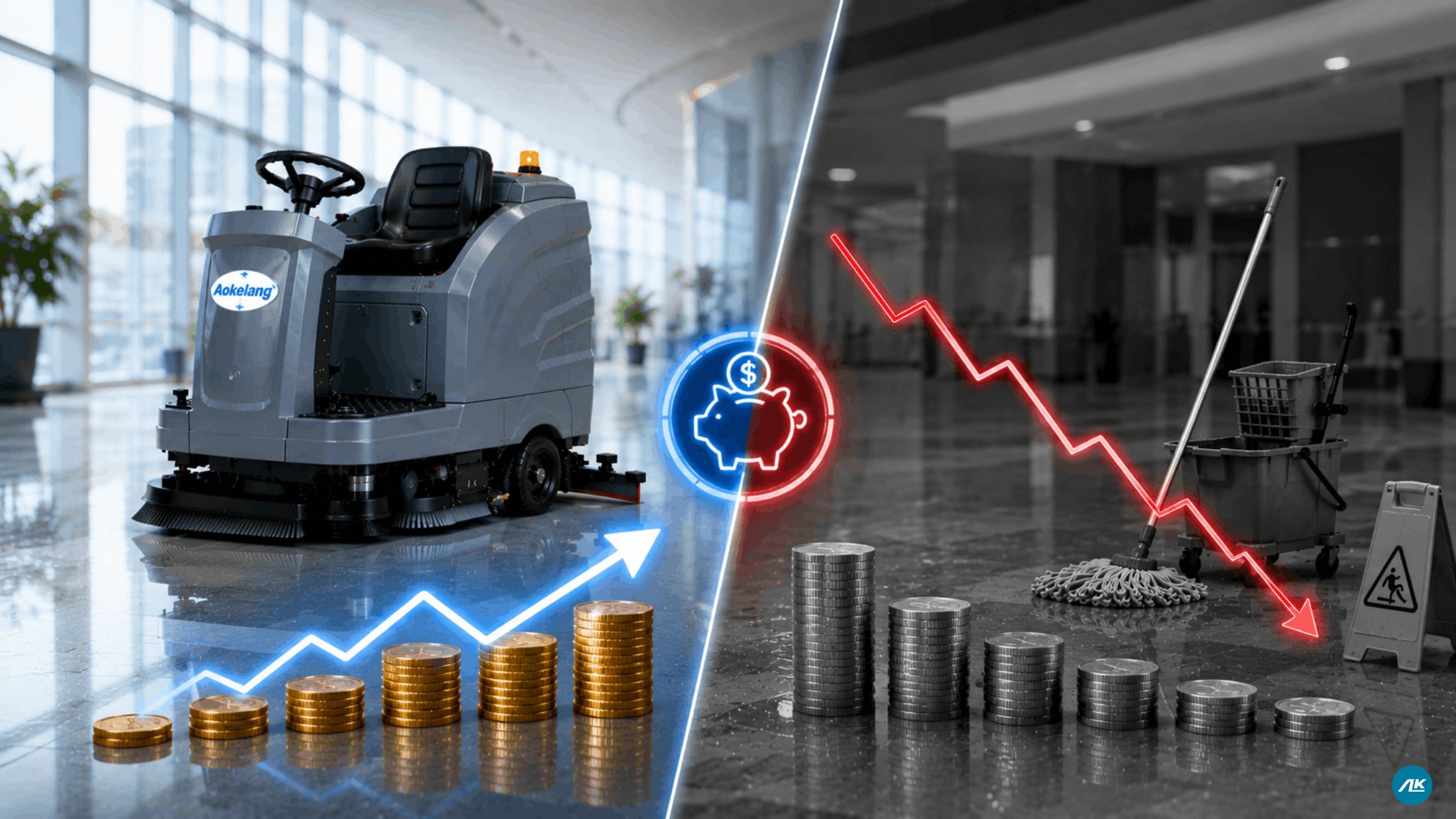
Professional floor cleaning machines save your business’s money by dramatically cutting labor costs, reducing chemical and water consumption, extending floor lifespan, lowering liability exposure, and eliminating expensive outsourced cleaning contracts with most machines delivering a full return on investment within 6 to 18 months.
If you are still relying on mops, brooms, and manual scrubbing to maintain your facility, you are spending far more than you need to. This guide breaks down exactly where the savings happen, what the numbers look like, and how to choose the right machine for your operation.
Table of Contents
The Real Cost of Manual Floor Cleaning (That Nobody Talks About)
Before understanding the savings, it helps to see what manual cleaning actually costs.
Labor accounts for approximately 90% of most facility maintenance budgets. A cleaning crew member working an 8-hour shift covers between 3,000 and 5,000 sq ft with a mop. A professional floor scrubber machine can clean the same area in under 30 minutes. You are not just buying a machine — you are buying back productive time at scale.
Manual cleaning also creates hidden costs:
- Wet floors left damp for 15–20 minutes create slip-and-fall risks and legal liability
- Mops redistribute dirty water rather than removing contaminants, which means floors need to be re-cleaned more often
- Staff fatigue from repetitive scrubbing leads to inconsistent results and higher turnover
- Cleaning chemicals are used inefficiently — workers apply too much or too little, inflating supply costs
Once you add it all up, manual cleaning is rarely the budget-friendly option it appears to be.
6 Ways Floor Cleaning Machines Save Your Business’s Money
1. Labor Cost Reduction The Biggest Saving of All
This is where businesses feel the impact fastest. A single operator using an automatic floor scrubber can clean up to 10 times faster than a person with a mop and bucket. That means you can maintain the same standard of cleanliness with fewer staff hours, or redirect your existing team to higher-value tasks.
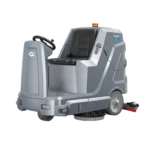
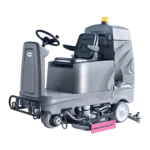
For a warehouse or manufacturing facility cleaning 20,000 sq ft daily, switching from a manual crew to a ride-on floor scrubber can reduce cleaning labor from 4–5 hours to under 45 minutes. At even modest hourly rates, that difference compounds into tens of thousands of rupees saved annually.
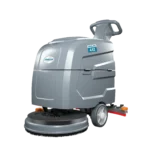
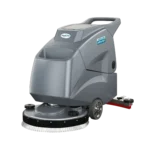
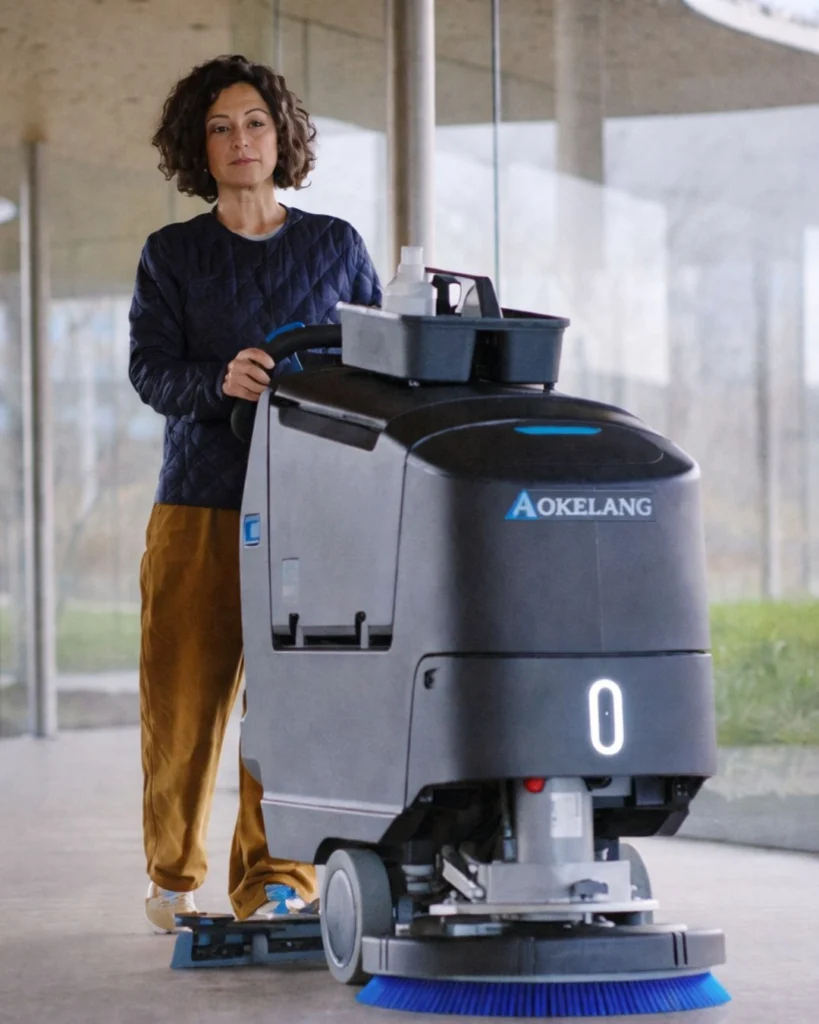
For smaller or more compartmentalised spaces, a walk-behind floor scrubber delivers the same efficiency gains without requiring a large machine footprint.
2. Reduced Chemical and Water Consumption
Professional floor scrubbers are engineered to be precise with resources. Unlike manual mopping where solution is applied freely and inconsistently modern scrubbers use controlled dosing systems that dispense exactly the right amount of cleaning solution per pass.
The result: businesses typically see a 30–50% reduction in cleaning chemical spend after switching to automated equipment. Water consumption is similarly reduced, since scrubbers recover dirty water immediately rather than spreading it across the floor.
Over a 12-month period, this saving alone can offset a significant portion of the machine’s purchase price.
3. Floor Protection That Extends Surface Life by Years
Floors are a major capital asset. Replacing industrial-grade flooring in a warehouse, factory, or commercial space runs into significant money — and it is almost always avoidable with proper maintenance.
Here is the problem with mops: they push grit and debris across the floor rather than lifting it. That fine particulate acts like sandpaper under foot traffic, gradually abrading the surface. Grout lines fill up. Epoxy coatings wear unevenly. Tiles crack at stress points.
A professional industrial floor scrubber machine uses mechanical brush agitation combined with vacuum recovery to actually extract contaminants from the surface. This prevents micro-abrasion, delays the onset of expensive refinishing or recoating, and extends the functional life of your flooring by several years.
Think of it as preventive maintenance for an asset worth far more than the machine itself.
4. Lower Liability and Insurance Costs
Slip-and-fall accidents are one of the most common and costly sources of workplace liability claims. Wet floors are the primary cause, and manual mopping is the primary creator of wet floors.
Professional scrubbers equipped with squeegee recovery systems leave floors bone dry immediately after cleaning. There is no 20-minute drying window. No wet floor signs scattered across a busy aisle. No anxious wait for foot traffic to resume.
Fewer accidents mean fewer compensation claims, lower insurance premiums over time, and protection from legal costs that can dwarf the price of any machine many times over. For operations like food manufacturing, healthcare, or retail where public or employee injury claims are a real risk this benefit alone justifies the investment.
Also read – Is a Ride On Scrubber Worth It
5. Elimination or Reduction of Outsourced Cleaning Contracts
Many businesses outsource deep floor cleaning because their in-house team cannot do it effectively. Industrial degreasing, stripping, and resurfacing are brought in as a regular contracted expense.
When you invest in the right commercial floor cleaning machine, many of these contracted services become unnecessary. A ride-on or walk-behind scrubber with the right pad or brush configuration can handle deep cleaning that previously required external specialists. The cost of a few annual service contracts, cancelled, often covers the machine’s acquisition cost on its own.
If your facility uses a warehouse sweeper machine alongside a scrubber, you further reduce the frequency of contractor visits by maintaining cleaner baseline conditions between deep-clean cycles.
6. Faster Cleaning Means Less Operational Disruption
In high-traffic commercial environments, cleaning time is downtime. Every hour a section of your facility is closed for cleaning is an hour of lost productivity, delayed logistics, or reduced customer throughput.
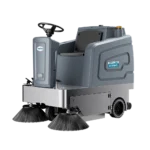
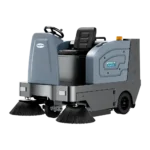
Ride-on floor sweepers and scrubbers cover large areas significantly faster than manual methods, which means cleaning windows are shorter, operations resume sooner, and scheduling flexibility improves. For manufacturing lines, distribution centres, and logistics hubs, this time recovery has direct revenue implications.
Calculating Your ROI: A Practical Framework
The return on investment for a professional floor cleaning machine depends on three variables: your current labor cost, the size of the area being cleaned, and the frequency of cleaning. Here is a simplified model:
| Factor | Manual Cleaning | Machine Cleaning |
| Area covered per hour | ~500 sq ft (mop) | ~4,000–8,000 sq ft |
| Staff required | 2–4 people | 1 operator |
| Chemical use | High / inconsistent | Controlled / reduced |
| Drying time | 15–20 minutes | Immediate |
| Floor damage over 5 years | Significant | Minimal |
For most businesses operating facilities of 5,000 sq ft or more, the payback period on a commercial floor cleaning machine falls between 6 and 18 months. After that point, every cleaning cycle is generating net savings.
Choosing the Right Machine for Your Business
Not every machine suits every facility. The right choice depends on your floor area, surface type, layout, and cleaning frequency.
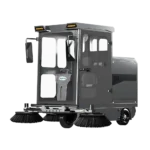
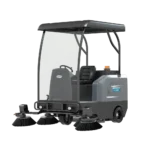
For large open areas such as warehouses, distribution centres, and manufacturing halls, a ride-on scrubber or an industrial ride-on floor sweeper delivers the highest productivity per hour and the fastest ROI.
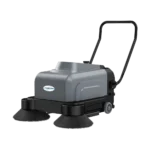
For medium-sized spaces with some obstacles — retail stores, logistics offices, food processing areas a walk-behind scrubber or a walk-behind floor sweeper offers manoeuvrability with strong cleaning performance.
For tight or congested spaces — corridors, toilet blocks, server rooms, kitchen areas a compact electric floor scrubber gives you professional-grade cleaning without requiring a large turning radius.
For mixed use — facilities that need both sweeping and scrubbing across different zones investing in both types of machine, or a combination unit, gives you complete coverage and eliminates the need for manual pre-cleaning before scrubbing.
You can explore Aokelang’s full range of commercial floor cleaning machines to compare models suited to different facility types and cleaning demands.
Final Takeaway
The question is not whether your business can afford a professional floor cleaning machine. The question is how much longer you can afford not to have one.
Labor costs compound. Floor damage compounds. Liability exposure compounds. Every month you rely on manual cleaning methods is a month you are overpaying for a result that is, by most measures, inferior to what a machine delivers.
If you are ready to assess your options, Aokelang’s range of commercial scrubbers and sweepers is designed specifically for the demands of factories, warehouses, retail environments, and public buildings. The machines are built for durability, ease of use, and sustained performance across high-frequency cleaning cycles.
Common Questions About Floor Cleaning Machine ROI
How long before a floor scrubber pays for itself?
For most commercial and industrial facilities, the payback period is 6 to 18 months, with labor savings being the dominant factor. Facilities with higher cleaning frequencies and larger floor areas see faster returns.
Are walk-behind or ride-on machines more cost-effective?
It depends on floor area. Walk-behind models carry a lower upfront cost and are more suited to spaces under 10,000 sq ft. Ride-on models cost more initially but cover ground significantly faster, making them more economical for large facilities over time.
Do these machines require expensive maintenance?
Modern commercial scrubbers and sweepers are built for durability and low maintenance. Routine brush/pad replacement and battery maintenance are the primary recurring costs — both predictable and modest compared to the labor savings delivered.
Can one machine replace an entire cleaning crew?
In many cases, yes — at least for floor maintenance. A single operator on a ride-on scrubber can cover the same ground as a team of 3–4 manual cleaners, often to a higher standard.
What types of floors can these machines clean?
Professional floor scrubbers and sweepers are effective on concrete, epoxy, tile, vinyl, rubber, and most other hard surface flooring common in commercial and industrial environments.