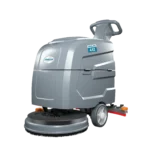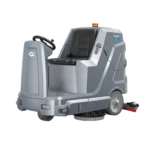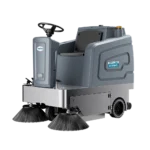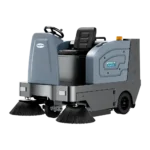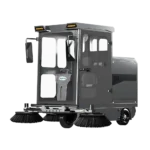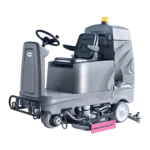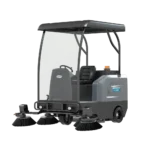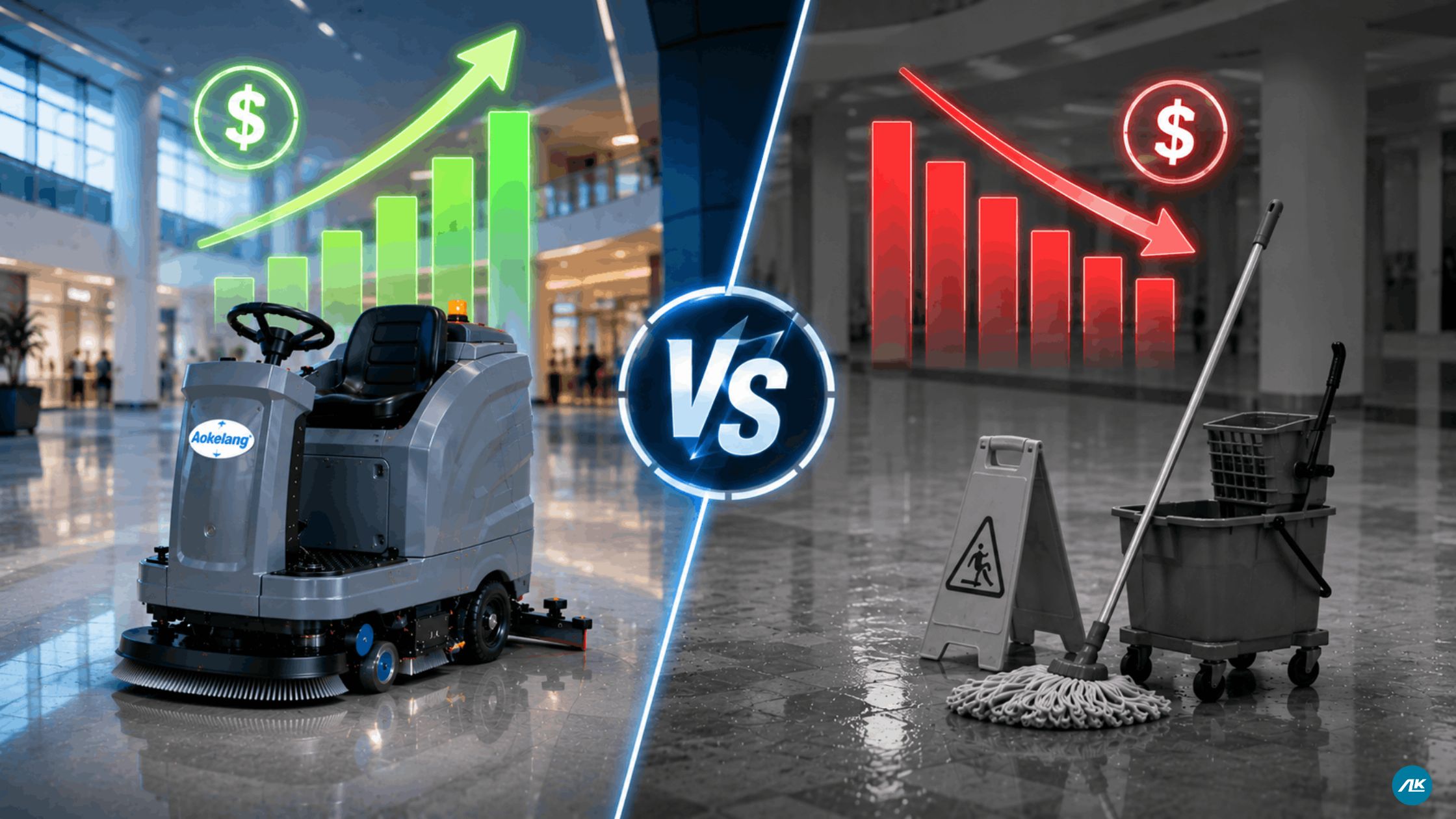
Is a ride-on scrubber worth it? Yes, a ride on a scrubber is absolutely worth it for any facility larger than roughly 2,000 square metres (20,000 sq ft). Ride-on floor scrubbers clean three to six times faster than walk-behind machines, reduce operator fatigue to near zero, cut labour hours significantly, and deliver more consistent results across every shift. For large warehouses, factories, airports, distribution centres, and shopping malls, upgrading to a ride-on scrubber is one of the fastest-payback equipment investments a facility manager can make.
If you’re still relying on mops, or you’re watching your team push a walk-behind scrubber across a 5,000-square-metre warehouse floor every night, this article is for you.
The question isn’t really whether a ride-on scrubber performs better than manual cleaning it does, by a wide margin. The real question most facility managers are asking is: is the investment justified for my operation? The answer depends on your floor area, your current cleaning setup, and how you calculate what your time and labour are actually worth.
Let’s break it down with the seven reasons ride-on scrubbers are reshaping commercial and industrial cleaning.
Table of Contents
Reason 1: The Productivity Gap Is Enormous
This is the number that changes minds instantly.
A standard walk-behind floor scrubber covers roughly 1,500–2,500 m² per hour. A ride-on scrubber operates at speeds of 6–10 km/h and cleans 5,000–10,000 m² per hour. That’s not a marginal improvement — that’s a fundamentally different category of machine.
Industry data puts it plainly: ride-on floor cleaning machines deliver a 64% increase in productivity versus powered walk-behind machines. In large facilities, that gap grows even wider, because the operator isn’t slowing down from physical fatigue.
To put it in real terms: a warehouse with 10,000 m² of floor area that takes 5–6 hours to clean with a walk-behind can be done in under 2 hours with a ride-on. That’s half a shift returned to your operations, every single day.
The Aokelang D6 Ride-On Floor Scrubber covers 5,200 m²/h with a 760mm dual-brush cleaning path — a solid benchmark for commercial ride-on performance that immediately illustrates the productivity difference versus manual or walk-behind alternatives.
Reason 2: Labour Costs Drop Fast
Labour typically accounts for around 90% of total floor maintenance costs. The machine itself — purchase price, consumables, maintenance — represents the remaining 10%. Which means any reduction in labour hours has a disproportionately large impact on your total cleaning cost.
Ride-on scrubbers reduce labour requirements by allowing one operator to cover the same area that would otherwise require multiple people and far more time. Some operations report reducing their cleaning crew from three or four people to a single operator after switching to a ride-on machine.
The cost-per-square-metre calculation shifts dramatically in favour of a ride-on for facilities over 2,000 m². And according to industry benchmarks, the additional cost of a ride-on over a walk-behind model can typically be recouped from labour savings within three to six months.
For businesses running commercial cleaning contracts, this is a margin story. For facility managers running in-house cleaning teams, it’s a headcount and overtime story. Either way, the numbers tend to tell themselves once you run the actual calculation for your site.
Also read – Top Features to Look For in a Professional Floor Cleaning Machine
Reason 3: Operator Fatigue Disappears
Walk-behind scrubbers are physically demanding over long shifts. Operating one for four to six hours means the operator is constantly on their feet, pushing and manoeuvring the machine, often in repetitive patterns across large, open areas. By the end of a shift, fatigue sets in — and fatigued operators cut corners, miss sections, and produce inconsistent results.
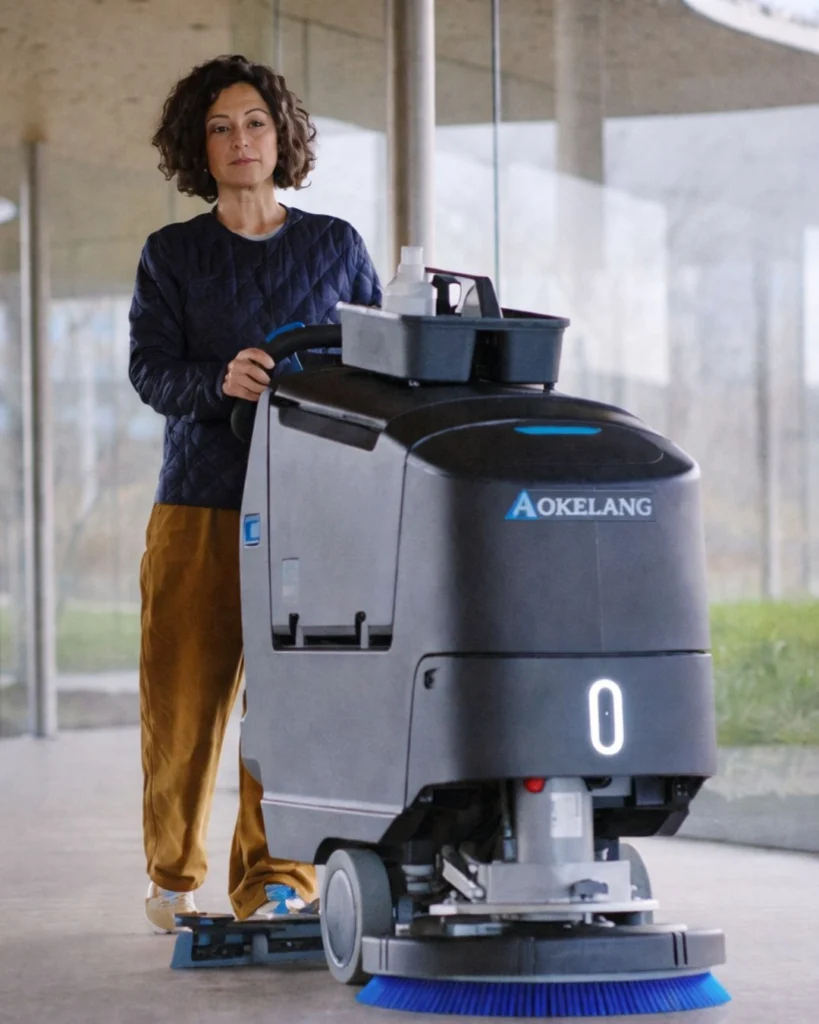
Ride-on scrubbers eliminate this entirely. The operator sits comfortably and drives the machine like a small vehicle. Cleaning speed stays consistent from the first pass to the last pass of a shift, regardless of how many hours in.
This matters in two ways:
- Cleaning quality stays consistent — you’re not getting a thorough clean for the first two hours and a tired shuffle through the last two
- Staff retention improves — physically exhausting cleaning roles have high turnover. Ride-on operators report significantly higher job satisfaction
For facilities running night shifts or back-to-back cleaning windows, this consistency is not a luxury — it’s an operational requirement.
Reason 4: You’re Cleaning at a Different Scale
There’s a practical floor-area threshold where a walk-behind scrubber simply cannot do the job properly, no matter how efficiently it’s operated.
Facilities larger than 50,000 sq ft (approximately 4,600 m²) that rely on walk-behind scrubbers consistently find that cleaning time overruns, sections get skipped under time pressure, or additional cleaning staff are added to compensate — which costs more than buying the right machine in the first place.
The appropriate machine for each scale:
| Floor Area | Recommended Format |
| Under 2,000 m² | Walk-behind scrubber |
| 2,000 – 5,000 m² | Large walk-behind or compact ride-on |
| 5,000 m² and above | Ride-on scrubber |
| 10,000 m²+ (industrial) | Heavy-duty industrial ride-on |
For genuinely large operations — distribution centres, food processing plants, automotive factories, airport terminals — a heavy-duty model like the Aokelang D7 Industrial Ride-On Floor Scrubber is built for exactly this environment: large-scale, demanding, continuous-use cleaning where reliability and throughput are the primary metrics.
Reason 5: Floor Quality and Hygiene Standards Actually Improve
This point often surprises operations teams that have been managing with walk-behind machines or mops: the quality of the clean is better, not just the speed.
Here’s why. A ride-on floor scrubber applies consistent brush pressure, consistent water flow, and consistent suction across every square metre it covers. The operator isn’t varying their push speed based on tiredness, isn’t making irregular overlaps between passes, and isn’t running out of clean water halfway through a section.
Mops, in particular, are a hygiene problem that’s well-documented. They spread dirty water across floors rather than removing it. Floor scrubbers scrub, extract, and recover contaminated water in a single pass — leaving floors genuinely clean rather than redistributing soil.
For environments where hygiene compliance matters — food production, healthcare, pharmaceutical facilities — this isn’t just an operational preference. It’s a regulatory requirement, and the consistent output of a well-matched ride-on scrubber is far easier to document and defend in an audit than manual cleaning records.
The Aokelang D8 Commercial Ride-On Floor Scrubber is designed specifically for commercial environments where both throughput and hygiene consistency are non-negotiable — a combination that manual methods cannot reliably deliver.
Reason 6: Safety Improves on Two Fronts
Ride-on scrubbers improve workplace safety in ways that don’t always make it into the procurement conversation but matter enormously to HSE compliance and liability management.
Slip-and-fall risk reduction: Modern ride-on scrubbers with quality squeegee systems leave floors virtually dry immediately after the cleaning pass. Compared to mopping — which leaves a wet floor for an extended drying period — this dramatically reduces slip-and-fall risk in active environments.
Operator injury reduction: Repetitive strain injuries from pushing walk-behind machines or manually mopping large areas are a real cost. They appear in sick leave, workers’ compensation claims, and staff turnover. Ride-on operation is ergonomically low-stress and sustainable over full shifts without injury risk.
For warehouses and distribution centres running multiple shifts with forklift traffic, pedestrian movement, and high operational tempo, a floor that dries quickly and an operator who isn’t physically strained is meaningful in both human and financial terms.
Reason 7: The ROI Calculation Is Usually Shorter Than Expected
Let’s be direct: ride-on scrubbers cost more upfront than walk-behind models. That’s true. But the total cost of ownership calculation routinely surprises buyers who run the numbers for the first time.
When you factor in:
- Reduced labour hours per week
- Fewer operators required for coverage
- Reduced overtime to complete large cleaning tasks
- Lower injury and sick leave costs
- Extended floor life from more consistent, gentle mechanical cleaning (versus the abrasive inconsistency of mop-based cleaning)
- Reduced chemical usage through better water management
…the payback period on a ride-on scrubber for a facility of 3,000 m² or more typically falls within 6–18 months. Some operations recover the cost within a single quarter when they factor in the full labour picture.
Studies by ISSA (the Worldwide Cleaning Industry Association) have shown companies save around 24% on operating costs within three years of implementing commercial floor scrubbing systems. The ride-on format accelerates this return by increasing the area covered per labour hour.
The Aokelang Ride-On Range: Built for Every Scale
Choosing the right ride-on scrubber or sweeper comes down to matching the machine to your specific floor area, cleaning frequency, and environment type. Here’s an overview of the Aokelang ride-on lineup and where each model fits:
Ride-On Floor Scrubbers
Aokelang D6 — A heavy-duty Aokelang D6 ride-on scrubber with a 760mm cleaning width and 5,200 m²/h coverage, featuring dual brush motors for reliable commercial floor cleaning. A strong all-round choice for shopping centres, logistics hubs, and large commercial facilities.
Aokelang D7 — Aokelang D7 Built for the industrial end of the spectrum. The D7 is designed for demanding environments — factories, food processing plants, heavy manufacturing — where the machine needs to handle tough soiling day in, day out.
Aokelang D8 — A commercial-grade Aokelang D8 ride-on scrubber optimised for environments where cleaning quality and presentation matter alongside throughput: retail malls, hospitals, airports, and high-footfall commercial spaces.
Aokelang DX6 — A versatile Aokelang DX6 ride-on floor cleaning machine designed to handle varied commercial environments with an operator-friendly layout and efficient water management.
Aokelang X5 — An Aokelang X5 automatic ride-on floor scrubber for operations where reduced operator dependency is a priority. Ideal for large, regularly shaped floor areas where autonomous or semi-autonomous cleaning delivers consistent results without continuous operator input. Explore the full automatic floor scrubber range for this category.
Ride-On Floor Sweepers
For environments where dry debris dust, packaging waste, loose aggregate, sand — is the primary challenge before wet scrubbing begins, a dedicated ride-on sweeper handles it faster and more completely than any walk-behind alternative.
Aokelang D1450 Ride-On Floor Sweeper — A capable ride-on sweeper for commercial and light industrial settings. Efficient hopper capacity and strong brush performance make it an excellent first-pass machine in facilities with moderate debris generation.
Aokelang D2400 Ride-On Industrial Sweeper — Built for industrial-scale sweeping. The D2400 handles the volume of debris generated in manufacturing, automotive, and heavy logistics environments, covering large areas quickly with the durability to run in demanding conditions shift after shift. See the full ride-on floor sweeper category for a complete comparison.
So Is a Ride-On Scrubber Worth It?
For facilities under 1,500–2,000 m², probably not yet. A quality walk-behind floor scrubber handles the job efficiently and the investment in a ride-on isn’t yet justified.
But for anything above that threshold and especially for warehouses, distribution centres, factories, airports, malls, and large commercial venues the evidence is consistent: a ride-on scrubber pays for itself, improves cleaning quality, reduces strain on your team, and cuts total cleaning time in ways that compound over every single shift.
The real question isn’t whether a ride-on scrubber is worth it. It’s how much the delay in making the switch is costing you in labour hours, inconsistent cleaning results, and an operation that’s working harder than it needs to.
Browse the full range of ride-on floor scrubbers and commercial floor cleaning machines to find the model matched to your facility’s size and cleaning demands.
Frequently Asked Questions
Is a ride-on scrubber really worth the investment for commercial cleaning?
Yes, a ride-on scrubber can be worth the investment for businesses with large floor areas. It reduces cleaning time, lowers labor costs, improves cleaning consistency, and helps maintain cleaner environments with less manual effort.
What types of facilities benefit most from ride-on scrubber machines?
Ride-on scrubbers are commonly used in warehouses, shopping malls, factories, airports, hospitals, schools, parking garages, and large retail stores—any facility with extensive floor space requiring frequent cleaning.
How much faster is a ride-on scrubber compared to manual floor cleaning?
A ride-on scrubber can clean several times faster than traditional mopping or walk-behind machines, covering thousands of square meters per hour depending on the model and floor conditions.
Can ride-on floor scrubbers help reduce long-term cleaning costs?
Yes. Although the initial purchase cost is higher, businesses often save money over time through reduced labor expenses, lower water and detergent usage, and improved cleaning efficiency.
What features should I look for when choosing a ride-on scrubber?
Key factors include battery life, cleaning width, water tank capacity, maneuverability, runtime, brush pressure, ease of maintenance, and suitability for specific floor types or facility sizes.