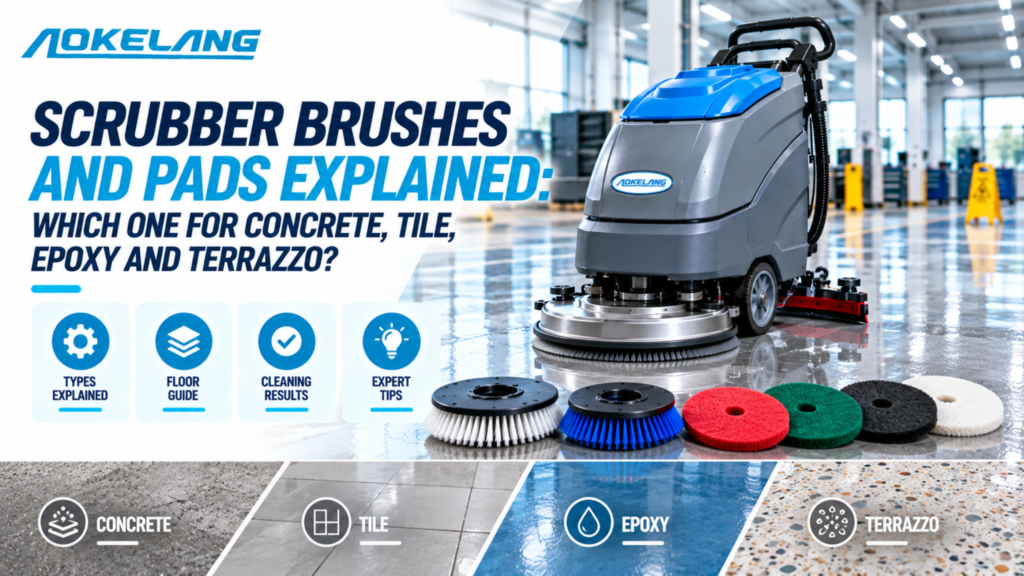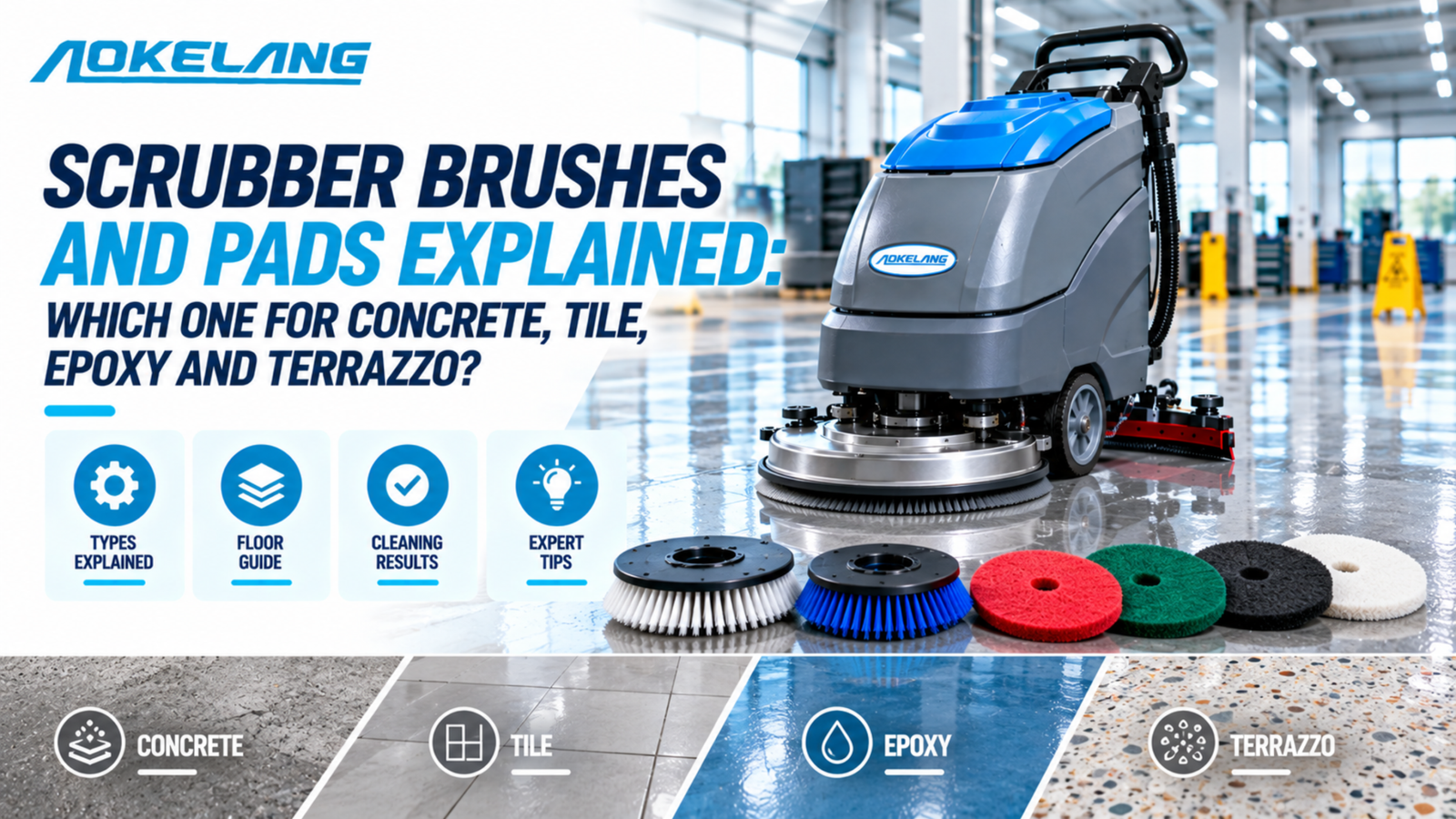
Scrubber Brushes and Pads Explained – Scrubber brushes and pads are the primary working attachments for cleaning machines and manual power tools. Choosing between them depends on your floor texture, soil level, and whether you need routine maintenance or deep scrubbing.
Key takeaways
- Use a brush on textured or uneven floors and a pad on smooth, flat floors. Bristles reach into low spots and grout lines, while pads give full, even contact on flat surfaces.
- Rough concrete and grouted tile need brushes. Pads shred on rough concrete and ride over grout lines without cleaning them.
- Smooth epoxy, polished concrete and terrazzo are best cleaned with pads. A red pad covers daily cleaning, and a white pad is for light polishing.
- Always start with the least aggressive attachment that gets the floor clean. You can step up later, but you can’t undo scratches.
- Test any new brush or pad on a small strip first, and check it under a flashlight held low to the floor.
Choose a brush for textured or uneven floors, such as rough concrete, grouted tile and anti-slip epoxy. Choose a pad for smooth, flat floors, such as polished concrete, smooth epoxy and terrazzo.
After that, pick the aggressiveness. Grit level matters for brushes and color matters for pads. Lets explore Scrubber Brushes and Pads Explained.
Table of Contents
Which brush or pad should you use on each floor?
| Floor | Brush or pad | Good starting choice | Avoid |
| Rough or broom-finished concrete | Brush | Polypropylene brush. Use a grit brush for grease and tire marks. | Pads, which shred quickly |
| Sealed concrete | Either | Polypropylene brush, or a red or blue pad | Coarse grit brushes that cut through the sealer |
| Polished concrete | Pad | Diamond-impregnated maintenance pad, or a red pad | Grit brushes, and brown or black pads |
| Tile with grout lines | Brush | Polypropylene or nylon brush | Pads, which skip the grout |
| Large-format porcelain or LVT with thin joints | Pad | Red or blue pad | Green, brown or black pads on LVT |
| Textured anti-slip epoxy | Brush | Soft nylon or polypropylene brush | Coarse grit brushes |
| Smooth epoxy | Pad | Red pad, and white for polishing | Green, brown and black pads |
| Terrazzo | Pad | Red pad daily, white for polishing | Grit brushes and acidic cleaners |

What is the difference between a brush and a pad?
A brush cleans with bristles. The bristles flex, so they follow dips, joints and texture in the floor. That makes brushes the right choice wherever the surface isn’t flat.
A pad cleans with a flat disc of non-woven fibers held against the floor by a pad driver. It touches the whole flat surface evenly, so it cleans and lightly polishes smooth floors efficiently. On an uneven floor, though, the pad bridges over the low points and only cleans the high spots.
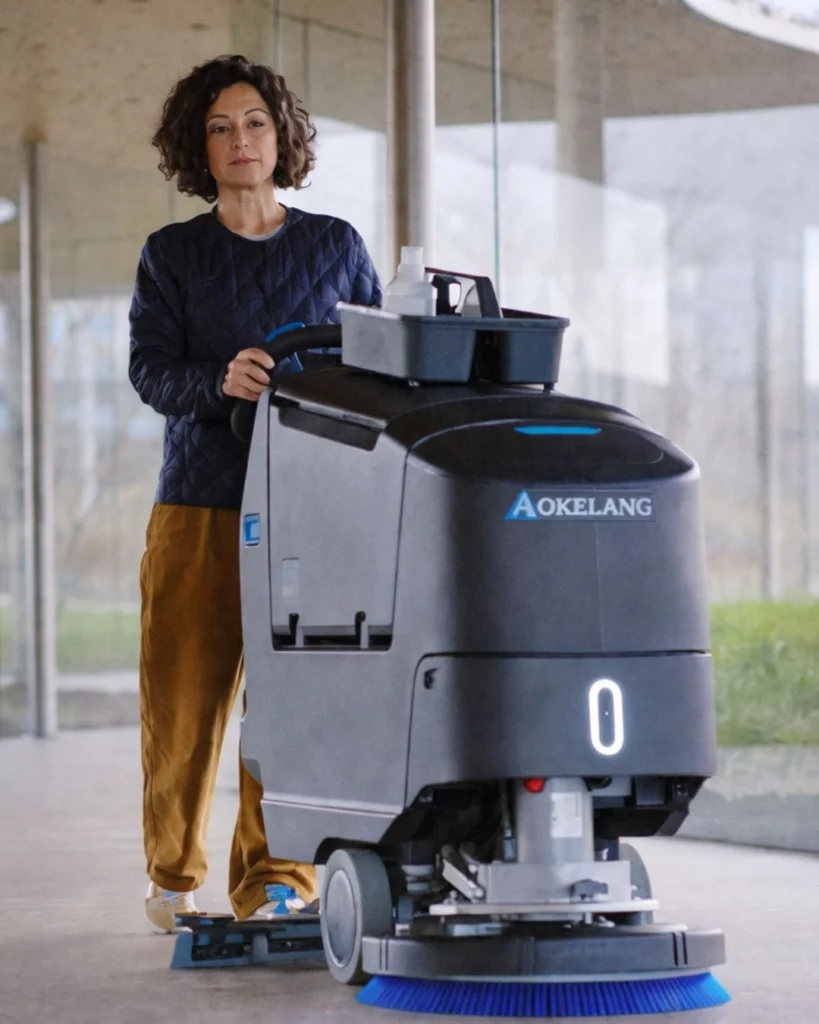
Machine type matters too. Disk scrubbers can usually run either a brush or a pad, with the pad mounted on a separate pad driver. Cylindrical scrubbers use cylindrical brushes. Check which your scrubber takes, and in what diameter, before you order attachments.
What types of scrubber brushes are there?
Brushes are graded by bristle material. From gentlest to most aggressive:
- Nylon: soft and flexible. Suits sealed or coated floors such as epoxy and vinyl, and tile where you want gentle agitation.
- Polypropylene: the general-purpose choice. It’s stiffer than nylon and handles daily cleaning on concrete, tile and most industrial floors.
- Grit brush: nylon or polypropylene bristles with abrasive particles, usually silicon carbide, built into the bristles. It works like flexible sandpaper on heavy soil, grease and tire marks.
- Wire: steel bristles for scale and heavy buildup on rough industrial concrete. Most facilities never need one. Carbon-steel bristles can shed and leave rust marks, and wire will scratch any coating.
Grit brushes are graded by grit number, and a lower number means more aggressive. Very coarse grits, around 46 to 80, are for heavy grease on rough concrete. Medium grits, around 120 to 180, suit regular deep cleaning. Fine grits of 320 and above give a lighter scrub. Exact grit options vary by brand.
What do the scrubber pad colors mean?
Most floor pads follow a similar color system, darker colors being more aggressive. From least to most aggressive:
- White: polishing and very light cleaning. It’s safe on delicate finishes.
- Red: daily cleaning and light scrubbing. This is the everyday pad for most smooth floors.
- Blue: heavier cleaning and scrubbing on dirtier floors.
- Green: aggressive scrubbing and light stripping. This one removes some floor finish.
- Brown and black: stripping old finish and wax. These are not for routine cleaning.
The colors are an industry convention, not a strict standard, so one brand’s blue can be more aggressive than another’s. Check the maker’s chart when you change pad brands.
Two other pad types are worth knowing about. Diamond-impregnated pads are used to maintain the shine on polished concrete and stone. High-speed burnishing pads are made for burnishers running at much higher speeds and are not intended for scrubbers.
Concrete: which brush or pad works best?
Concrete covers several different floors, and the right attachment depends on the finish.
Rough or broom-finished concrete needs a brush. The texture tears synthetic pads apart, often within one shift. Use a polypropylene brush for daily cleaning. Switch to a grit brush in loading bays, workshops and forklift lanes where grease and tire marks build up.
Sealed concrete has a coating that coarse grit can cut through. A polypropylene brush or a red or blue pad cleans it without wearing the sealer away.
Polished concrete is about keeping the shine. Use a diamond-impregnated maintenance pad or a red pad. Keep grit brushes and stripping pads off it, because they dull the polished surface.
Tile and grout: why do brushes work better?
On grouted tile, a pad sits on the flat face of each tile and bridges straight over the joints. The tiles look clean and the grout stays dirty. That is why grout lines darken over time even when the floor is scrubbed daily.
A polypropylene or nylon brush pushes its bristles down into the joints and sweeps the dirt out. For heavily soiled grout, a fine-grit brush adds extra cutting power. Test it first on glazed tile, where aggressive grit can dull the glaze.
The exception is large-format porcelain or luxury vinyl tile (LVT) with very thin joints. There a red or blue pad works well. Keep green and darker pads off LVT, as they can strip the factory wear coating.
Epoxy floors: soft brush or light pad?
Epoxy coatings are tough, but they scratch. Every scratch dulls the gloss and makes the floor harder to clean next time.
- Textured or anti-slip epoxy: use a soft nylon or polypropylene brush. Quartz or sand in anti-slip coatings will shred a pad, and bristles reach between the grains.
- Smooth, glossy epoxy: use a red pad for daily cleaning, and a white pad if you want to bring up the shine.
Avoid green, brown and black pads, and coarse grit brushes, on any epoxy. They wear through the resin surface.
Also read –
Floor Scrubber Leaving Streaks
Commercial Floor Scrubber Won’t Start
Terrazzo: which pad keeps the shine?
Terrazzo is made of marble or stone chips set in cement or epoxy, then ground and polished. Marble is soft compared with most floor surfaces, so aggressive brushes leave permanent scratches.
Use pads on terrazzo. A red pad handles daily scrubbing, and a white pad maintains the polish.
The cleaning chemical matters as much as the pad. Acidic cleaners etch marble, so use a pH-neutral cleaner made for stone floors.
How do you test a new brush or pad safely?
Before switching a whole floor to a new attachment, run a short trial:
- Pick a low-visibility strip about one meter long, such as near a wall or behind racking.
- Scrub it once with your normal chemical and speed.
- Let it dry completely.
- Hold a flashlight close to the floor, shining across the surface at a low angle.
- Look for fine scratches, swirl marks or dull patches compared with the floor next to it.
If you see damage, step down to a less aggressive brush or pad. If the strip is still dirty, step up one level and test again.
When should you replace brushes and pads?
Brushes: replace them when the bristles are noticeably shorter, splayed or worn unevenly. Worn bristles lose contact with the floor and can leave dirty streaks. Pull out hair and string after each use.
Pads: most pads are double-sided, so flip them when one side is loaded with dirt. Rinse pads after every shift and hang them to dry. Replace them when they’re thin, torn or glazed hard. A worn pad spreads dirt instead of lifting it, which is one of the causes covered in our guide to why a floor scrubber leaves streaks.
Down pressure matters too. More pressure isn’t always better. On soft or coated floors, heavy pressure with an aggressive attachment causes scratches faster.
Which Aokelang scrubbers suit these floors?
Aokelang scrubbers are rated for tile, epoxy, terrazzo, marble, PVC and concrete floors.
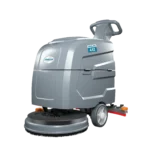
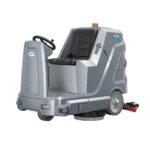
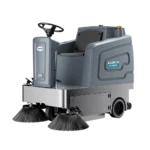
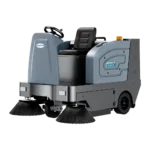
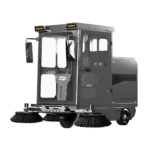
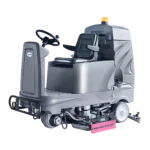
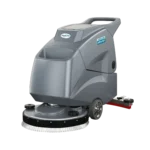
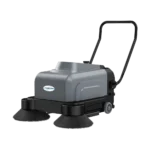
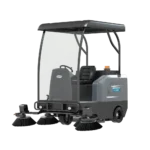
For smaller areas and tighter spaces, walk-behind models like the Aokelang X2, Aokelang T3 and Aokelang D4 cover a 500 to 510 mm cleaning width. For large warehouse floors, the Aokelang D6 ride-on uses dual brush motors across a 760 mm path.
When you request a quote, tell us your floor type and soil level, so we can recommend the right brush or pad setup for your machine.
For setting up and running the machine day to day, see our guide on how to use a floor scrubber.
Frequently asked questions
Can I use the same brush or pad on every floor in my building?
Only if the floors are similar. A facility with rough warehouse concrete and polished office terrazzo needs at least two setups. A brush aggressive enough for the warehouse will scratch the terrazzo.
Is a red pad or a blue pad better for daily cleaning?
Start with red on smooth or coated floors. Move to blue only if red isn’t removing the soil. Blue cuts faster but is more likely to dull a glossy finish.
Why is my pad wearing out in a single shift?
The floor is probably too rough for a pad, as with broom-finished concrete or anti-slip epoxy. Switch to a brush.
Do I need a different machine to use pads instead of brushes?
On most disk scrubbers, no. You swap the brush for a pad driver that holds the pad. Cylindrical scrubbers use brushes only. Check your model’s specifications for the right sizes.