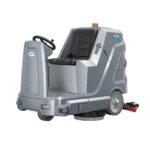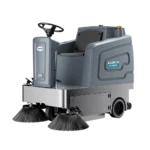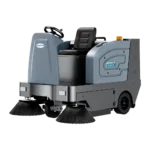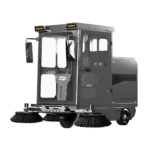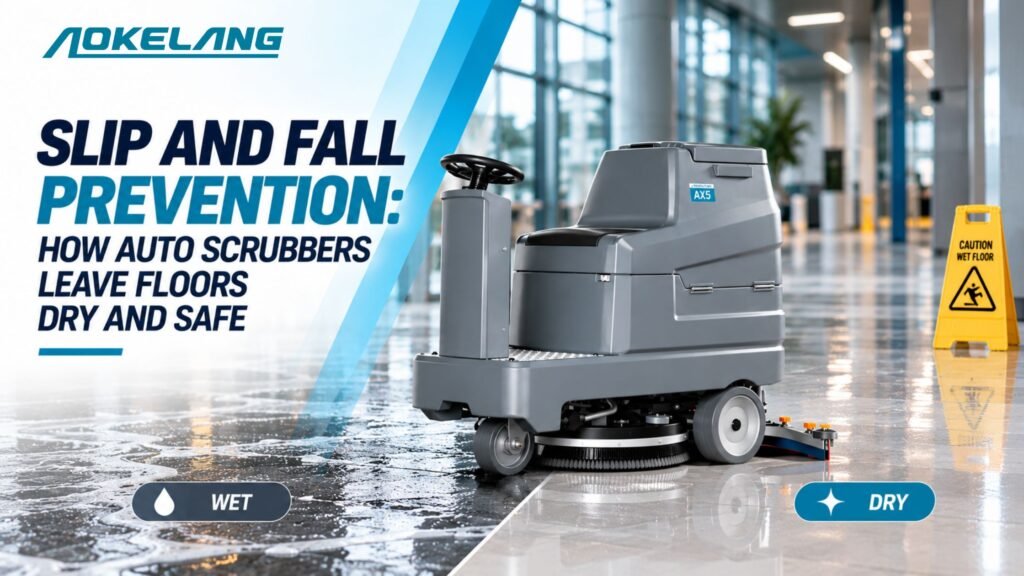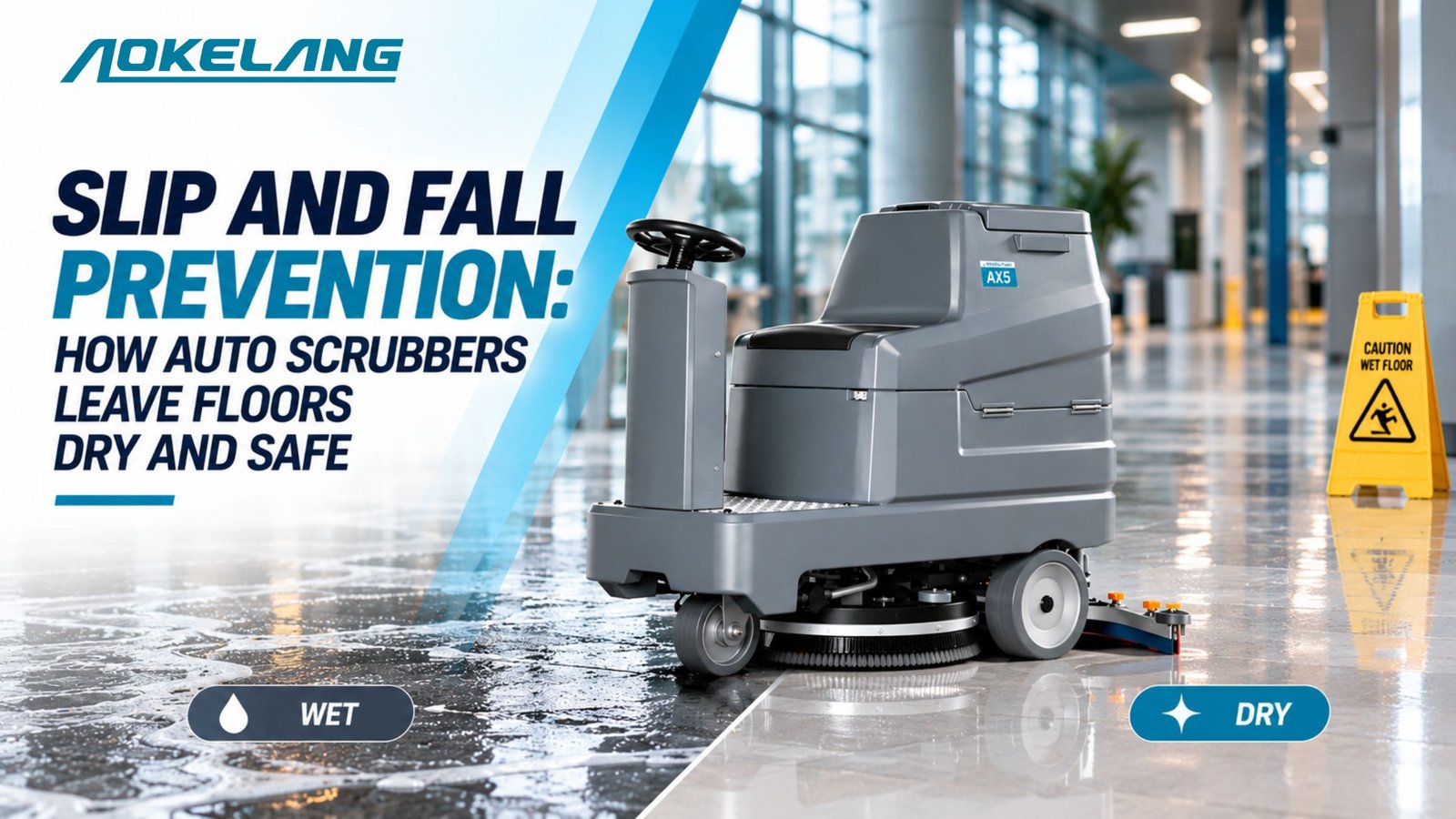
Slip and fall prevention during cleaning depends on how much water and residue stay on the floor afterwards. An auto scrubber cleans and vacuums up the water in one pass, so the floor is almost dry within moments. A mop leaves a wet film that stays slippery until it dries.
Key takeaways
- Wet floors and cleaning residue are two of the most common causes of slips during and after cleaning. Both can be controlled.
- An auto scrubber puts down solution, scrubs, and vacuums the dirty water back up in one pass, so the floor is almost dry straight away.
- A mop leaves a film of water that stays slippery until it evaporates, and it can leave detergent residue behind.
- A scrubber only stays safe if it’s maintained. Worn squeegee blades, weak suction and too much solution all leave water behind.
- Good slip and fall prevention combines the right machine with the right routine: correct dilution, regular squeegee checks, signage, and extra attention to high-risk zones.
Table of Contents
Why does floor cleaning matter for slip and fall prevention?
Slips, trips and falls are one of the most common causes of workplace injury. Safety regulators such as the UK’s Health and Safety Executive list them among the top causes of major injuries at work.
Cleaning can either reduce that risk or add to it. A floor is most slippery when:
- it’s still wet after cleaning
- detergent residue has dried into a slick film
- oil or grease has been spread around instead of removed
- it has been only partly cleaned, so some areas are wet and others dry
Each of these is a cleaning problem with a cleaning solution.

How does an auto scrubber leave the floor dry?
An auto scrubber works in four steps, all in a single pass:
- Solution goes down in a measured amount from the clean water tank.
- The brush or pad scrubs the floor, loosening dirt, grease and film.
- The squeegee gathers the dirty water behind the brush into a line.
- The vacuum lifts the water into the recovery tank.
The water is on the floor for only a moment before it’s picked up. The floor behind the machine is almost dry, so people can usually walk on it immediately.
Two design details help:
- A squeegee wider than the brush path catches water thrown out to the sides by the brush. On the Aokelang AD4, for example, the squeegee is 830 mm wide against a 510 mm cleaning path. On the Aokelang AD6, it’s 1,000 mm against 760 mm.
- A strong vacuum motor keeps suction steady across the full squeegee. The AD4 uses a 500 W vacuum motor and the AD6 a 550 W motor.
Why does mopping increase slip risk?
Mopping can clean a floor, but it creates two problems for safety.
It leaves a wet film. A mop spreads water across the floor, and that water stays there until it evaporates. How long that takes depends on temperature, humidity and airflow, and it can be a while on cool or humid days. During that time, the floor is slippery.
It can leave residue. The mop puts back some of the dirty water it picked up, along with detergent. As it dries, that mixture can leave a thin, slick film.
Mopping still has its place for small spills, corners and tight spaces. For open floors in busy areas, an auto scrubber removes the water instead of leaving it to dry. Our guide to floor scrubber vs mopping compares the two on labour, water use and cost.
What makes a floor slippery after cleaning?
| Cause | Why it’s slippery | Fix |
| Water left on the floor | A water film lowers grip | Use an auto scrubber, and keep the squeegee and vacuum in good condition |
| Too much detergent | Dried residue forms a slick film | Measure dilution accurately and use low-foam cleaners |
| Wrong chemical for the floor | Some cleaners leave a coating, or damage slip-resistant finishes | Use cleaners suited to the floor type |
| Oil and grease spread around | Mops and dirty water spread oil instead of removing it | Absorb spills first, then scrub with a degreaser |
| Worn squeegee blades | Leave wet lines and patches | Rotate or replace blades |
| Weak suction | Leaves a wide wet band | Check the hose, filter, float and seals |
| Driving too fast | The squeegee skims over water instead of collecting it | Slow down, especially on turns |
| Edges and corners missed | Water and soil build up where the machine can’t reach | Detail edges with a mop, then dry them |
What can make an auto scrubber leave water behind?
An auto scrubber is only as safe as its condition. The most common causes of water left behind are:
- Worn, nicked or dirty squeegee blades. These leave thin wet lines.
- A squeegee that isn’t level. This leaves water on one side.
- A clogged vacuum hose or filter, or an air leak. These leave a wide wet band.
- A full or foamy recovery tank. This trips the float and cuts suction.
- Too much solution flow. The squeegee can’t keep up with the water.
- Turning too fast. The squeegee lifts at one end.
If your scrubber is leaving water, our guides to why a floor scrubber leaves streaks and what to do when a floor scrubber isn’t picking up water walk through every check.
Which areas need the most attention?
Some areas carry a higher slip risk than others. Clean them more often and check them more carefully.
| High-risk zone | Why it’s risky | What to do |
| Entrances | Rain, snow and grit tracked in | Use entrance matting; scrub and dry several times a day in wet weather |
| Food courts and canteens | Spilled drinks, food and grease | Spot-clean spills immediately; scrub with a degreasing cleaner |
| Commercial kitchens | Grease and water | Clean daily with a degreaser; use oil-resistant squeegee blades |
| Restroom entrances | Water tracked out | Check and dry frequently |
| Loading docks | Rain, oil drips, grit | Sweep, then scrub oily spots |
| Ramps and slopes | Less grip, more force in a fall | Keep dry and clear; clean at quiet times |
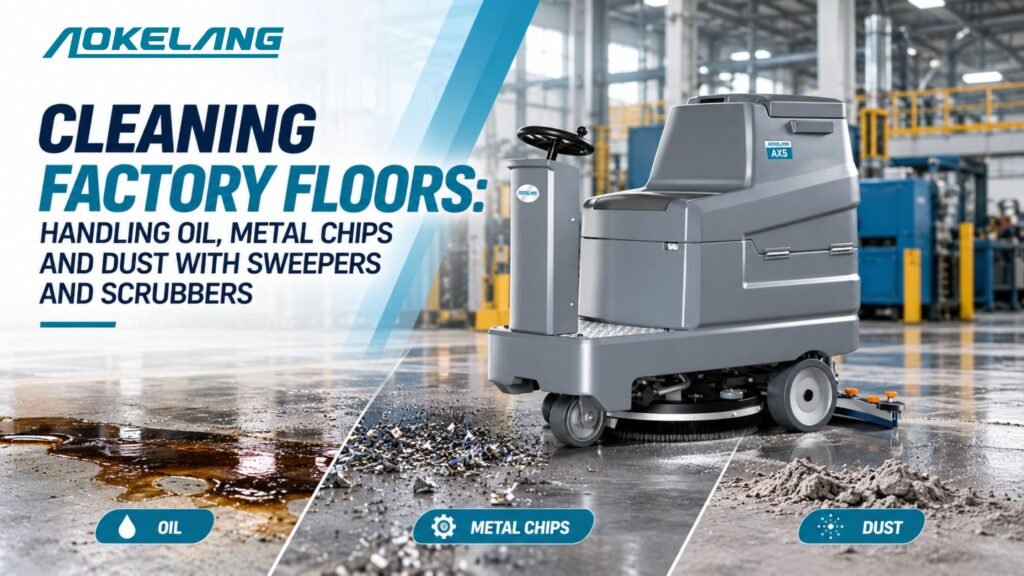
| Machining and workshop areas | Oil, coolant, chips | Remove chips, then scrub with a degreaser daily |
What routine keeps floors safe during cleaning?
Before cleaning
- Choose a quiet time for large areas, such as early morning, overnight or between shifts.
- Set out wet floor signs at the edges of the area you’re cleaning.
- Sweep or dust mop to remove grit and debris.
- Absorb any spills, especially oil, before scrubbing.
- Check the squeegee blades and make sure the recovery tank is empty.
- Mix the cleaning solution at the dilution on the label.
During cleaning
- Run the solution flow at the lowest setting that cleans the floor.
- Drive at a steady, moderate speed, and slow down on turns.
- Overlap each pass slightly, so no wet strips are left between passes.
- Watch the floor behind the machine. If water appears, stop and check the squeegee and recovery tank.
- Keep people away from the area the machine is working in.
After cleaning
- Check edges and corners, and dry any wet spots with a mop or squeegee.
- Walk the area to check that it’s dry before removing the signs.
- Empty and rinse the recovery tank.
- Wipe the squeegee blades and check them for wear…
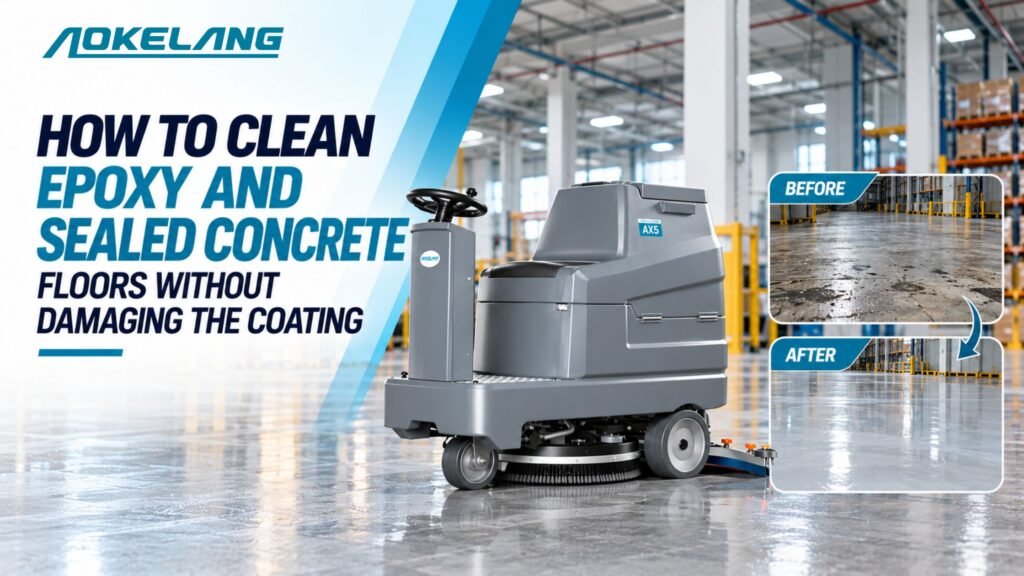
Also read – Clean Epoxy Floors Without Damaging the Coating
Do you still need wet floor signs with an auto scrubber?
Yes. An auto scrubber leaves the floor almost dry, but signs are still good practice:
- Edges and corners may be damp until they’re detailed.
- A machine fault, such as a worn blade or a full tank, can leave water without the operator noticing straight away.
- Signs warn people to keep clear of the moving machine.
- Many workplace safety policies require them.
Take the signs down once you’ve checked that the area is dry.
How do you know your floor has enough grip?
Slip resistance can be measured. Common methods include the pendulum test, used widely in the UK, and dynamic coefficient of friction (DCOF) testing, used in the US under ANSI A326.3. A specialist can test your floors and tell you whether they stay safe when clean and dry, and when wet.
Testing is worth doing if:
- you’ve had slip incidents
- you’ve changed your cleaning chemical or floor finish
- the floor looks polished or worn in high-traffic lanes
Cleaning residue can lower slip resistance noticeably. If a floor tests poorly, try a clean-water scrub to remove residue before assuming the floor surface itself is the problem.
How does chemical choice affect slip risk?
The cleaning chemical matters as much as the machine.
- Use the right dilution. Too much detergent leaves a slippery film, and too little leaves grease and soil behind.
- Choose low-foam products for auto scrubbers, so the recovery tank doesn’t foam up and cut suction.
- Use a degreaser where grease is the problem, such as in kitchens, food courts and workshops.
- Check that the chemical suits your floor. Some products leave a coating on floors that should stay matte and grippy.
- Do an occasional clean-water scrub to remove any residue that builds up over time.
On coated floors, see our guide on how to clean epoxy floors for safe chemicals and pads.
Which auto scrubber helps most with slip and fall prevention?
Look for features that leave the floor as dry as possible:
- A squeegee wider than the brush path, to catch overspray at the sides
- Strong, steady vacuum suction
- Adjustable solution flow, so you don’t put down more water than the squeegee can pick up
- A squeegee that’s easy to adjust and replace
- A size that suits the area, small enough for tight spaces and large enough to finish busy areas in a short window
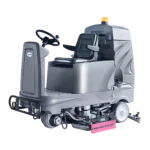
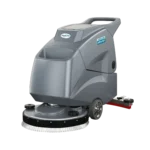
For tight areas such as corridors and restrooms, a compact walk-behind works around people. For large open floors, a ride-on finishes quickly during quiet hours. Aokelang stocks replacement squeegee blades, brushes, pads and filters, so the machine can be kept in the condition that keeps floors dry.
Frequently asked questions
How do auto scrubbers help with slip and fall prevention?
They put down solution, scrub, and vacuum the dirty water back up in a single pass. The floor is almost dry straight away, so there’s no long wet period as there is after mopping.
Is a floor scrubber safer than a mop?
For open floors, generally yes. A mop leaves a wet film that takes time to dry and can leave residue. An auto scrubber removes the water as it cleans. Mops are still useful for small spills and tight spaces.
Why is my floor slippery after scrubbing?
The usual causes are water left behind by worn squeegee blades or weak suction, or a film from too much detergent. Check the squeegee and recovery tank, and measure the cleaner dilution. A clean-water scrub removes built-up residue.
When should I clean high-traffic areas?
Clean large areas during quiet periods, such as early morning, overnight or between shifts. Use a compact scrubber for spot cleaning during busy hours, and set out signs wherever the floor may be damp.