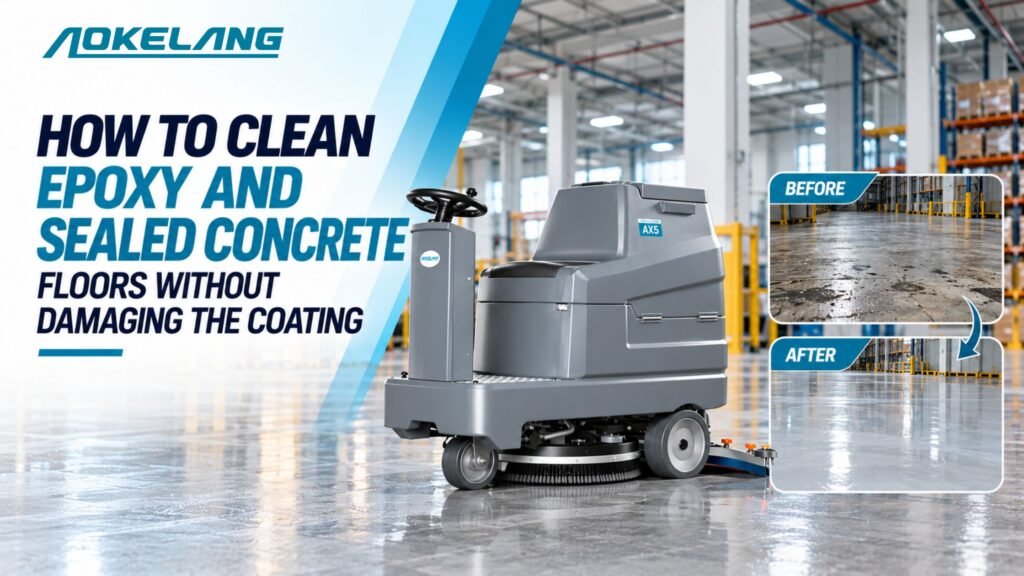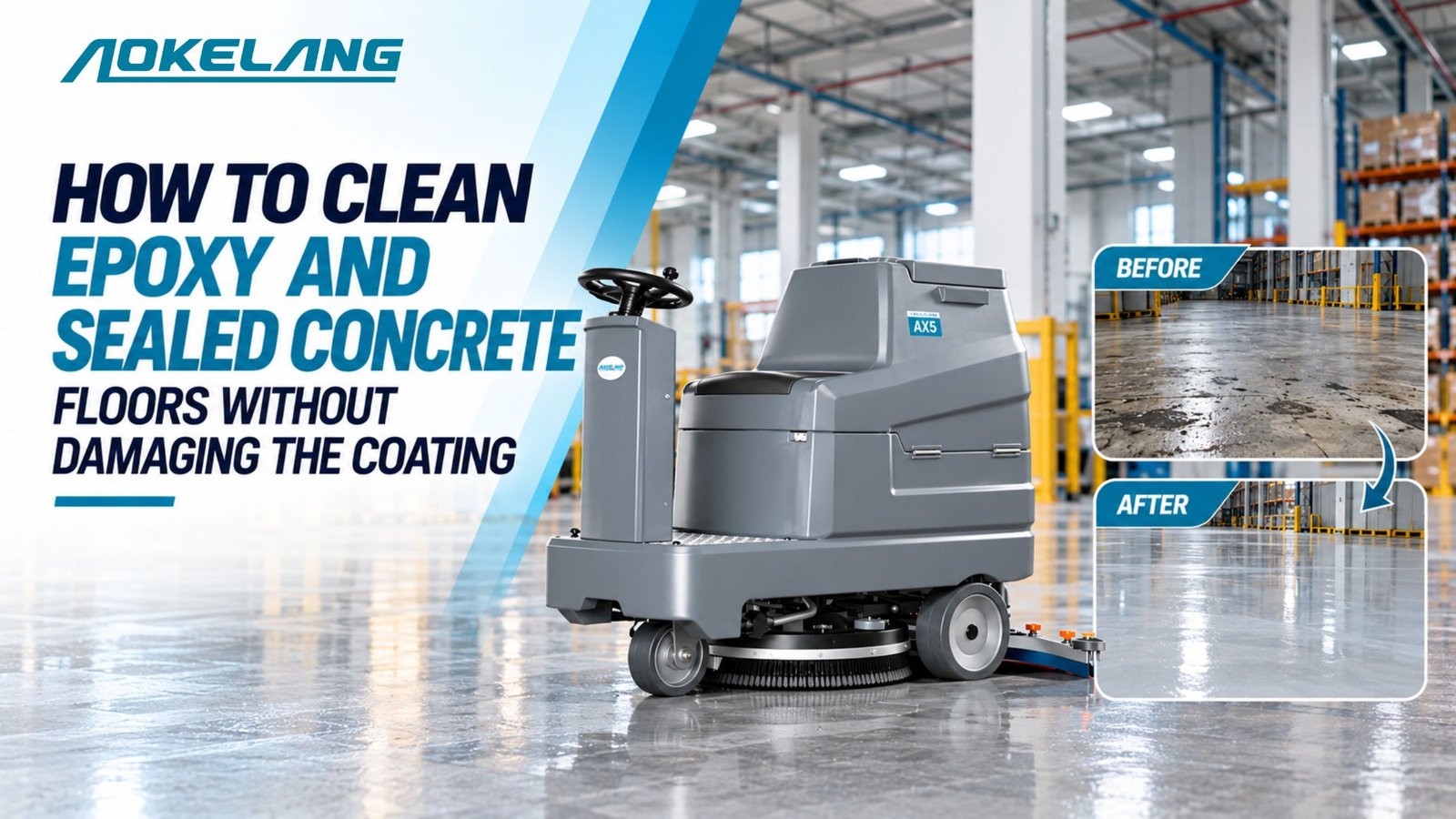
To Clean Epoxy Floors Without Damaging the Coating, remove loose grit first. Then scrub with a pH-neutral cleaner, using a red pad on smooth epoxy or a soft nylon brush on textured epoxy, and pick up the water immediately. Sealed concrete follows the same method, with even gentler pads, because many sealers are thinner than epoxy.
Key takeaways
- Sweep or dust mop first. Grit dragged under a scrubber is the most common cause of scratches on epoxy.
- Use a pH-neutral, low-foam cleaner for daily cleaning. Acids, harsh solvents and soap-based cleaners can dull or haze the coating.
- Use a red pad on smooth epoxy and a soft nylon brush on textured anti-slip epoxy. Avoid green, brown and black pads, and coarse grit brushes.
- Pick up the water straight away. A scrubber that leaves the floor dry keeps residue from setting into a haze.
- Treat sealed concrete more gently than epoxy. Many acrylic sealers are softer and wear through faster.
Table of Contents
How do you clean epoxy floors safely? Clean Epoxy Floors Without Damaging the Coating
Here’s the daily method for commercial and industrial epoxy floors:
- Remove loose debris. Use a dust mop, a sweeper with soft brushes, or a pre-sweep to clear grit, sand and chips.
- Mix a pH-neutral cleaner at the dilution on the label. More concentrate doesn’t clean better. It leaves residue.
- Fit the right pad or brush: a red pad for smooth epoxy, or a soft nylon brush for textured epoxy.
- Scrub at a steady, moderate pace, overlapping each pass slightly.
- Pick up all the water with the squeegee as you go, so nothing dries on the surface.
- Spot-treat stains with the specific method for each one (see the stain table below).
- Clean the machine afterward: rinse the pad, empty the recovery tank and wipe the squeegee blades.
On large floors, an automatic scrubber does steps 4 and 5 in a single pass. Aokelang scrubbers are rated for epoxy and concrete floors, among others.

What damages epoxy and sealed concrete?
Epoxy is tough, but it isn’t scratch-proof or chemical-proof. These are the most common causes of damage:
| Cause | What it does | How to avoid it |
| Grit under pads, brushes or wheels | Fine scratches that dull the gloss | Sweep or dust mop before scrubbing |
| Aggressive pads (green, brown, black) | Wears through the top layer | Use red or white pads on smooth epoxy |
| Coarse grit or wire brushes | Scratches and gouges | Use soft nylon or polypropylene brushes |
| Acidic cleaners (vinegar, citrus, descalers) | Can dull or etch the surface over time | Use pH-neutral cleaners unless the coating maker approves otherwise |
| Strong solvents | Can soften or stain some coatings | Use solvents only if the coating maker approves them |
| Soap-based or high-foam cleaners | Leave a slippery, hazy film | Use low-foam cleaners made for scrubbers |
| Too much cleaner | Leaves sticky residue that attracts dirt | Measure the dilution accurately |
| Standing water | Leaves water marks, and can lift weak sealers | Pick up water immediately |
| Hot tyres on sealed concrete | Can lift or mark some sealers | Check the sealer type, and use protective mats where vehicles park |
Which pad or brush should you use on epoxy?
The right choice depends on the surface texture.
Smooth, glossy epoxy
- Red pad: daily cleaning
- White pad: light polishing, to bring up the shine
- Avoid: green, brown and black pads, which are made for scrubbing hard or stripping finish
Textured or anti-slip epoxy
Anti-slip epoxy has sand or quartz in the surface, and that grit tears pads apart quickly.
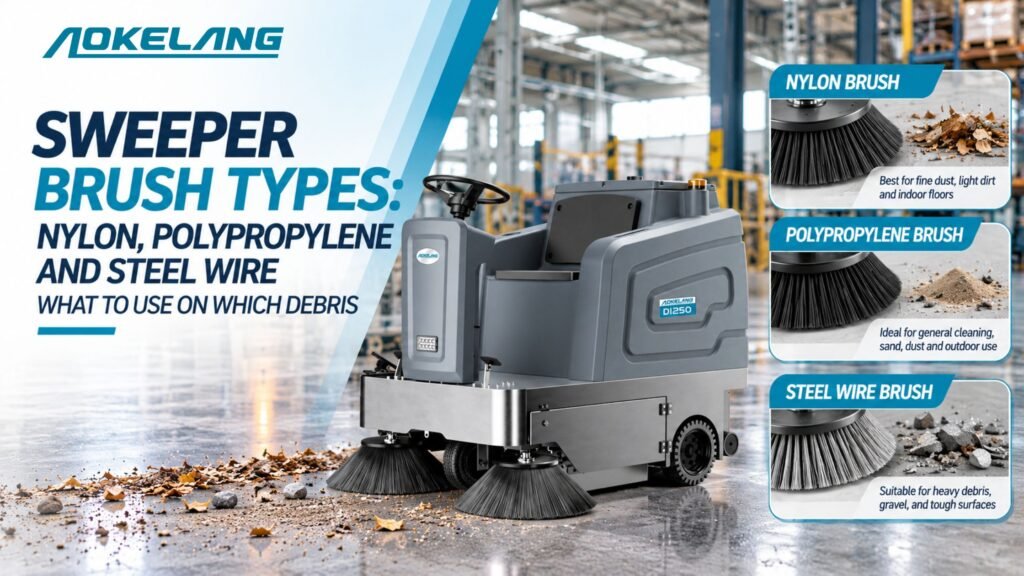
- Soft nylon or polypropylene brush: the bristles reach between the grains without scratching
- Avoid: pads, which shred, and coarse grit brushes
For a full guide to pad colours and brush types, see our post on choosing scrubber brushes and pads.
On textured epoxy, a cylindrical scrub deck can clean between the grains more effectively than a flat disc. Our guide to disc vs cylindrical scrub heads explains the difference.
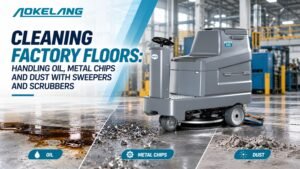
Also read – Cleaning Factory Floors
What is the best cleaner for epoxy floors?
For daily cleaning, choose a cleaner that is:
- pH-neutral or close to it, roughly pH 7 to 9
- low-foam, if you use an automatic scrubber
- free-rinsing, so it leaves no film behind
Follow the dilution on the label. Too much cleaner is a common cause of a sticky, hazy epoxy floor.
For heavier soil, such as oil, grease and tyre marks, use a degreaser that the coating maker approves. Test it on a small area first, and rinse the floor afterward so no degreaser residue stays on the surface.
Avoid these unless the coating maker specifically allows them:
- vinegar, citrus cleaners and other acids
- bleach in strong concentrations
- solvent cleaners
- household soaps and dish detergents
How do you remove stains from epoxy floors?
| Stain | Method |
| Tyre marks | Scrub with a neutral cleaner and a red pad. For stubborn marks, spot-clean with an approved degreaser, then rinse. |
| Oil and grease | Soak up any pooled oil first. Scrub with an approved degreaser at the label dilution, then rinse with clean water. |
| Dried spills (drinks, food) | Pre-wet with neutral cleaner, let it sit for a few minutes, then scrub with a red pad. |
| Rust marks | Test a mild rust remover approved for your coating. Avoid strong acids. |
| Hard water marks | Clean with a neutral cleaner. If the marks remain, use only a product the coating maker approves. |
| Paint drips | Ask the coating maker before using any solvent. Some will soften the epoxy. |
| White haze or film | This is usually cleaner residue. Scrub with clean water only, or with a much weaker cleaner dilution, and pick up all the water. |
Always test a new chemical on a small, hidden area before using it across the floor.
How do you clean sealed concrete floors?
Sealed concrete isn’t the same as epoxy. The sealer can be one of several types, and some are much softer:
- Acrylic sealers form a thin film. They wear more quickly and scratch more easily.
- Polyurethane and epoxy sealers form a tougher film and handle cleaning more like an epoxy coating.
- Penetrating sealers (silanes and siloxanes) soak into the concrete and don’t form a surface film. They’re less affected by pads, but harsh chemicals can still weaken them.
If you’re not sure which sealer you have, treat it as the softest type:
- Use a white or red pad, or a soft nylon brush.
- Use a pH-neutral, low-foam cleaner.
- Don’t leave water standing on the surface.
- Watch for worn patches in high-traffic lanes. These show it’s time to reseal.
How do you test a new pad, brush or cleaner safely?
Before switching the whole floor to a new pad, brush or chemical:
- Pick a small, low-visibility strip, about one metre long.
- Clean it once with the new setup.
- Let it dry completely.
- Shine a flashlight low across the surface.
- Look for scratches, swirl marks, dull patches or haze compared with the floor next to it.
If you see any damage, go back to a gentler pad or a milder cleaner.
How often should epoxy floors be cleaned?
| Traffic level | Example areas | Sweep or dust mop | Scrub |
| Light | Showrooms, labs, offices | Daily | Weekly |
| Moderate | Warehouses, assembly areas | Daily | Two to three times a week |
| Heavy | Main aisles, loading areas, food production | Daily or every shift | Daily |
| Very heavy or oily | Machining areas, workshops | Every shift | Daily, with degreaser on oily spots |
Adjust these to how quickly your floor gets dirty. A floor that looks dull between cleans needs more frequent sweeping, not a more aggressive scrub.
How do you avoid streaks and haze on epoxy?
Glossy epoxy shows every streak. To avoid them:
- Use the right dilution. Too much cleaner is the most common cause of haze.
- Keep the squeegee in good condition. Worn or nicked blades leave wet lines that dry as streaks. On oily floors, use oil-resistant polyurethane blades. Our guide to floor scrubber squeegee blades covers blade types and adjustment.
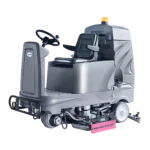
- Lower the solution flow until the floor behind the machine is almost dry. On ride-on models like the Aokelang AD6, you can adjust both brush and water flow to suit the floor.
- Change dirty pads. A loaded pad smears dirt instead of lifting it.
If streaks keep appearing, see why a floor scrubber leaves streaks for a full diagnosis.
When should an epoxy floor be recoated?
Cleaning can’t fix a coating that has worn through. Signs that an epoxy floor or sealer needs attention:
- bare concrete showing in traffic lanes
- peeling, flaking or lifting at edges and joints
- deep scratches that hold dirt
- a permanently dull or chalky surface that doesn’t respond to cleaning
- soft or sticky patches
Talk to a coating specialist about recoating or resealing. Regular gentle cleaning helps a coating last much longer before that’s needed.
Which machine suits epoxy floors?
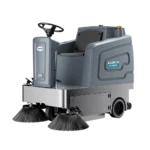
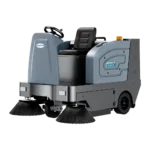
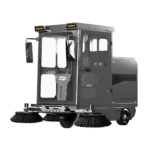
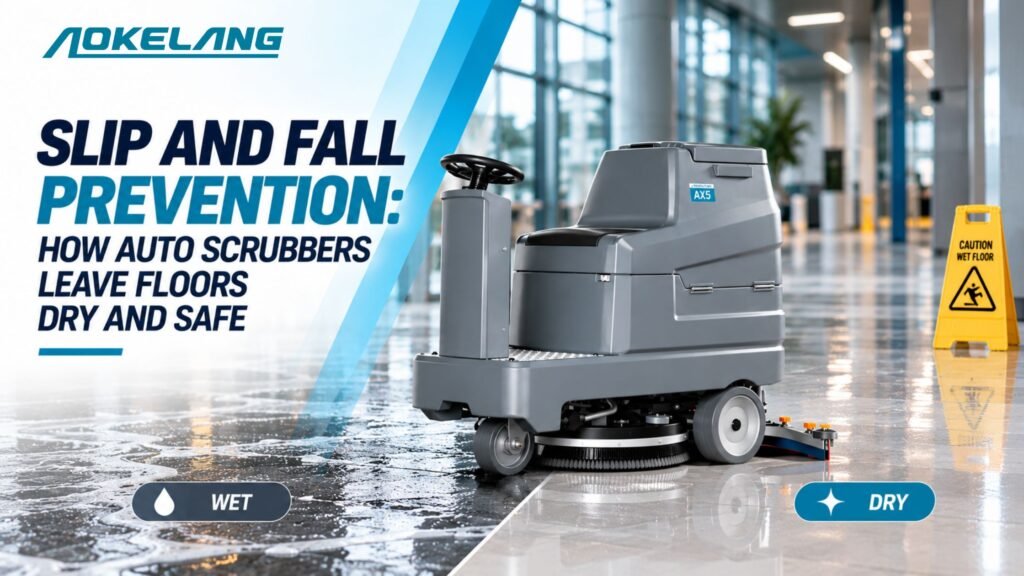
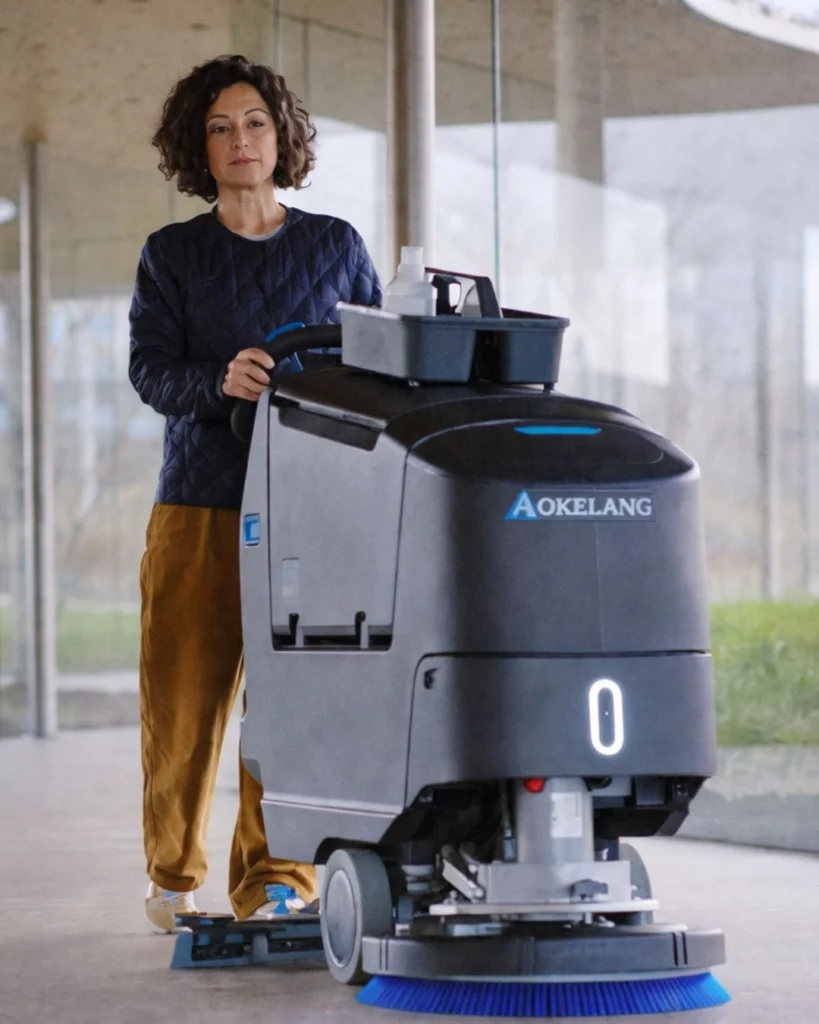
For small areas, a dust mop and a mop with neutral cleaner can be enough. For warehouses, factories and showrooms, an automatic scrubber cleans faster and leaves the floor dry, which protects the gloss.
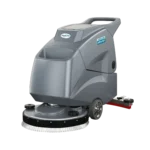
A walk-behind like the Aokelang AD4 suits medium areas with its 510 mm path. For large epoxy floors, a ride-on like the AD6 covers a 760 mm path. Aokelang stocks replacement pads and brushes, so you can keep the right setup for your floor.
Frequently asked questions – Clean Epoxy Floors Without Damaging the Coating
How do you clean epoxy floors without leaving streaks?
Use a pH-neutral, low-foam cleaner at the correct dilution, scrub with a clean red pad, and pick up all the water with a squeegee in good condition. Most streaks come from too much cleaner, worn squeegee blades or dirty pads.
Can I use vinegar to clean epoxy floors?
It’s best not to. Vinegar is acidic and can dull the coating over time. Use a pH-neutral cleaner for routine cleaning.
Can you use a floor scrubber on epoxy?
Yes. An automatic scrubber is one of the best ways to clean large epoxy floors. Use a red or white pad on smooth epoxy, or a soft nylon brush on textured epoxy, with a pH-neutral cleaner.
How do you clean textured anti-slip epoxy?
Use a soft nylon or polypropylene brush rather than a pad, because the grit in the surface tears pads apart. A neutral cleaner and a slow pace let the bristles reach between the grains.