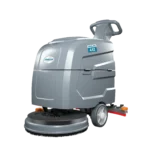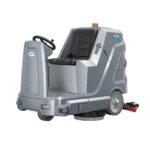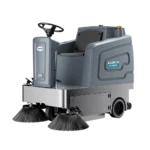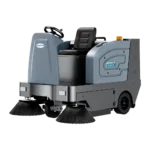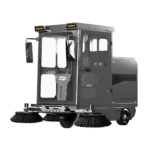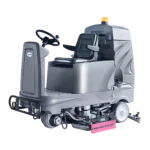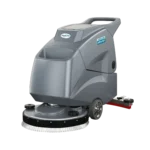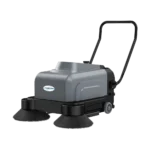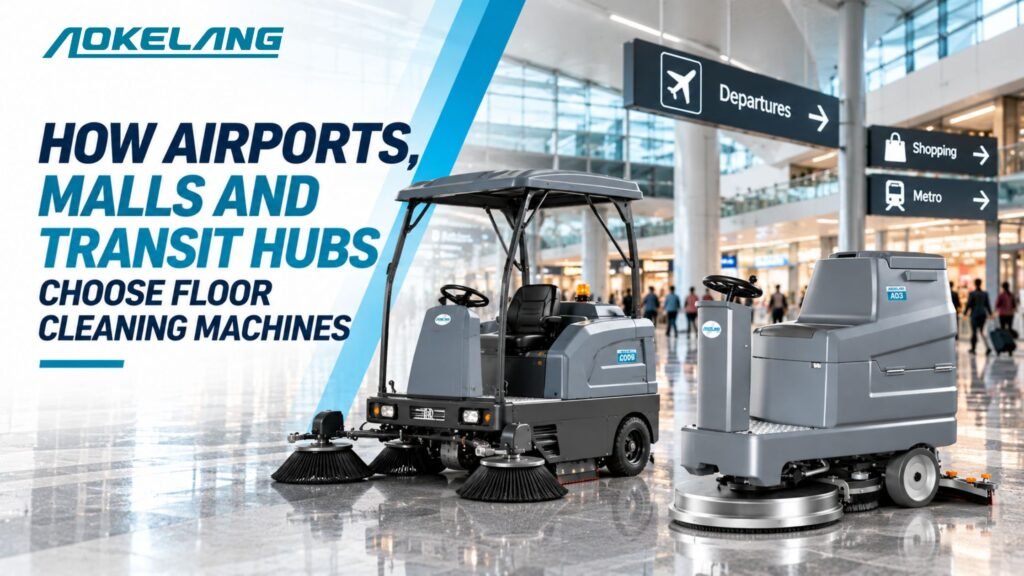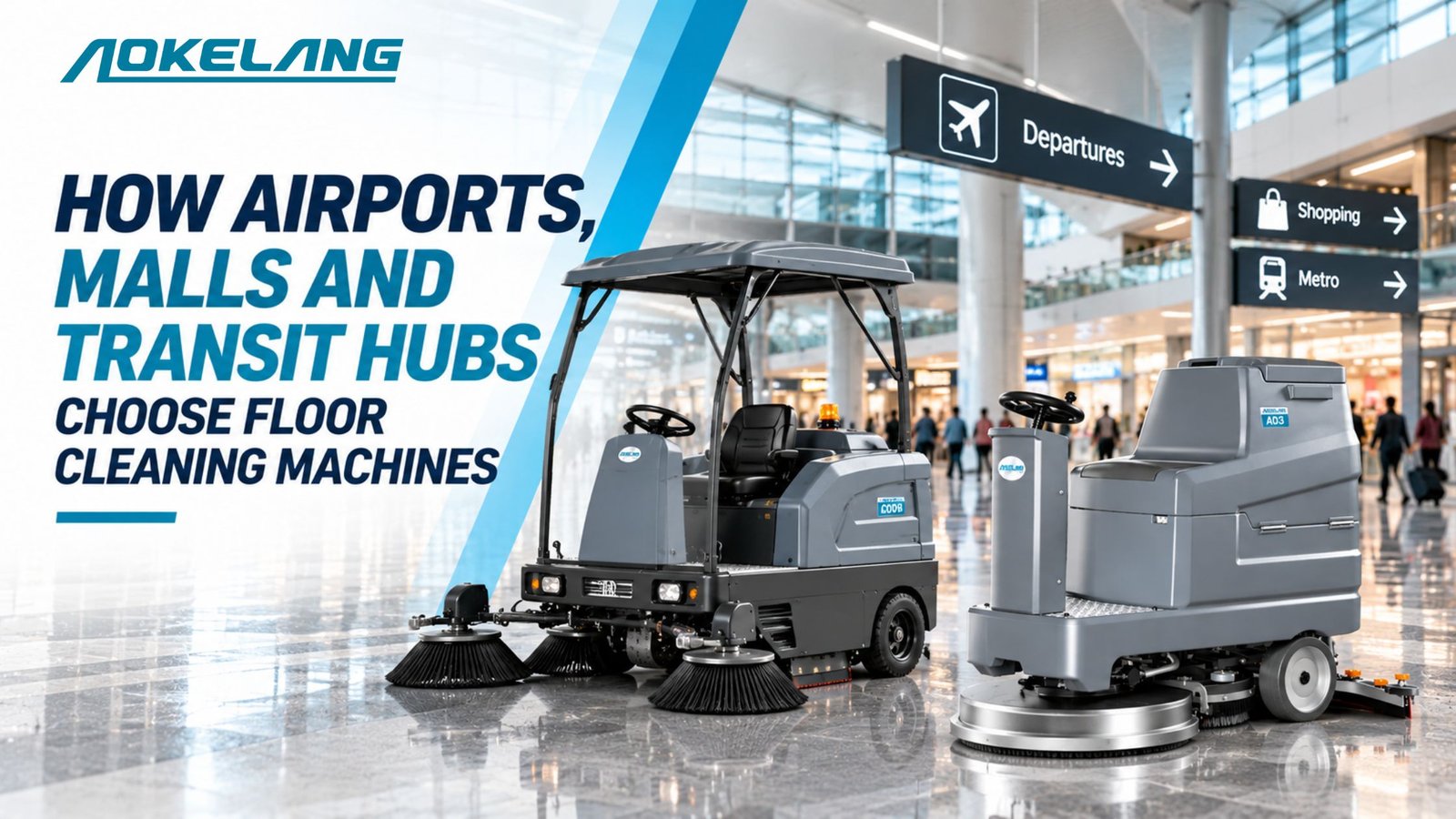
Airports, malls and transit hubs choose commercial floor cleaning machines that are safe around crowds, quiet, quick to dry the floor, and right for their floor types. Most use several machine types together: ride-on scrubbers for big open areas at night, compact walk-behinds for daytime spot cleaning, and sweepers for car parks and outdoor approaches.
Key takeaways
- High-traffic public spaces choose commercial floor cleaning machines for safety, low noise and quick drying first, and raw speed second. The floor is rarely empty.
- Most venues need a mix of machines: a ride-on scrubber for long concourses, a compact walk-behind for food courts and tight spaces, and a sweeper for car parks and forecourts.
- Plan cleaning in two shifts. Do deep cleaning at night, when floors are quieter, and spot cleaning during the day around passengers and shoppers.
- Battery power is the default indoors: no exhaust, lower noise, and simple charging between shifts.
- Choose machines with a scoring checklist, not just by price. Downtime in a busy terminal or mall costs more than the machine.
Table of Contents
Why are airports, malls and transit hubs different?
These buildings share problems that factories and warehouses rarely face:
- People everywhere, often around the clock. Airports and major stations may never close, and malls have long opening hours.
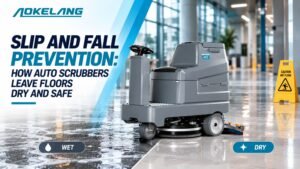
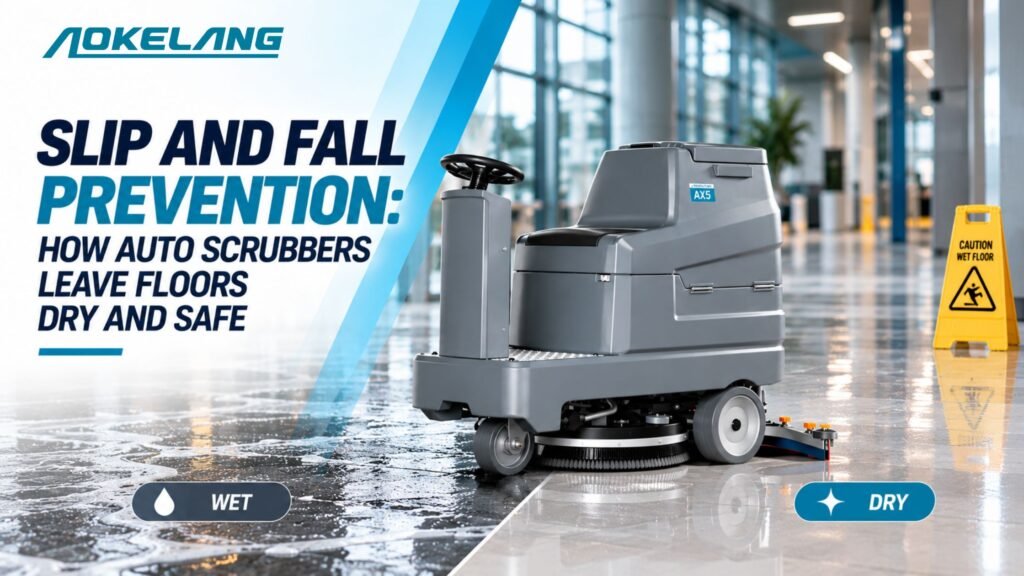
- Wet floors are a liability. A slip in a crowded concourse is a safety and legal risk.
- Noise matters. Loud machines disturb passengers, shoppers and announcements.
- Floors are expensive. Polished terrazzo, granite, marble and decorative vinyl need careful cleaning.
- Soil changes through the day. Food court spills at lunchtime, rain and grit at the entrances, coffee at the gates.
- Layouts are mixed. Long open concourses sit next to tight seating areas, lifts, escalators and retail units.
The right machines handle all of this without getting in the way.
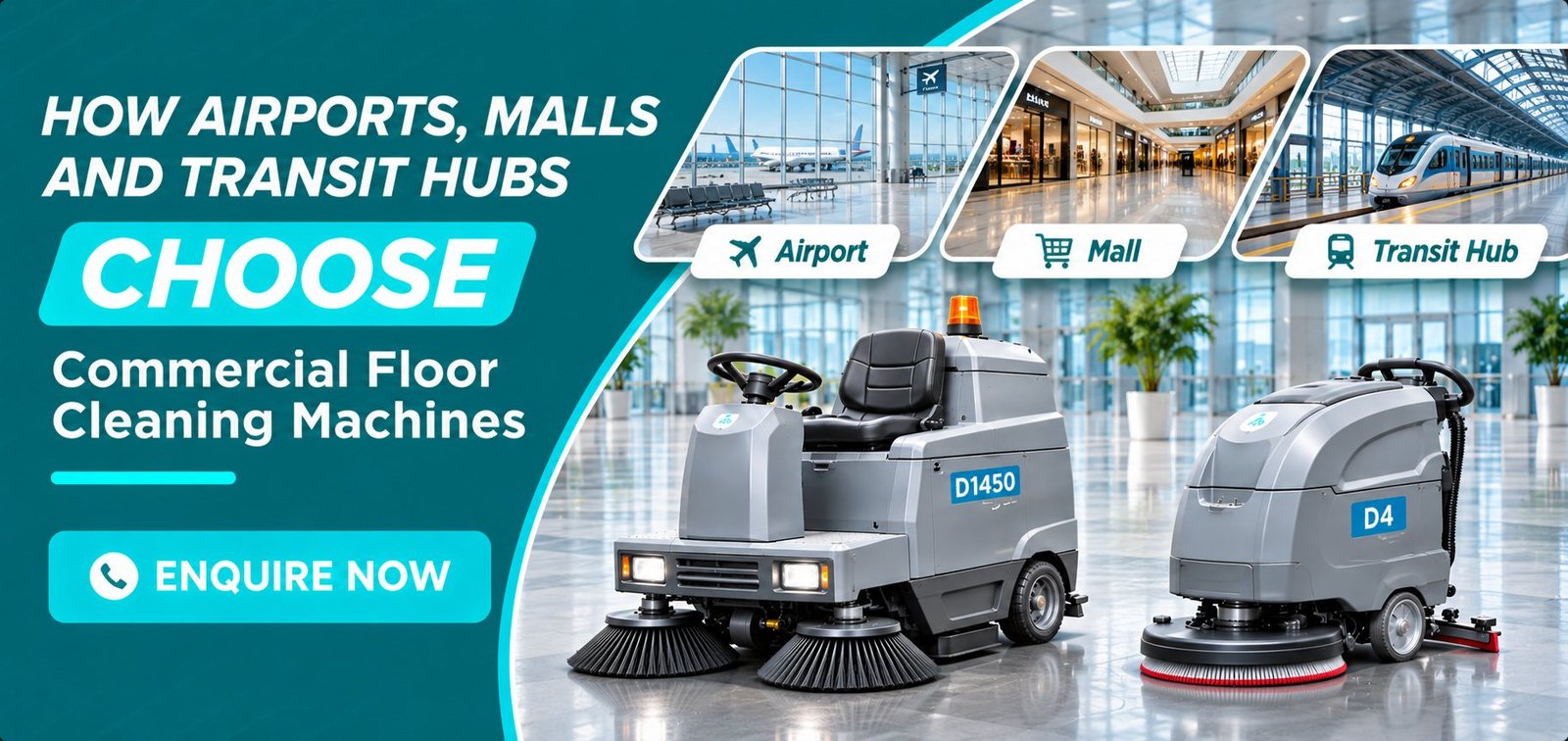
What do commercial floor cleaning machines need in busy public spaces?
Before comparing models, these buildings typically look for six things.
1. Low noise
Machines often run near seating, gates, platforms and shops. Lower noise allows daytime cleaning without complaints. Ask for the noise level in decibels, and compare models under similar conditions.
2. Dry floors straight away
A scrubber that leaves the floor almost dry means the area can reopen immediately. Look for:
- a good squeegee system
- strong vacuum pickup
- adjustable solution flow, so you put down only as much water as you need
3. Safety around people
- Rounded bodywork and bumpers that won’t damage walls, furniture or people’s ankles
- Good visibility from the operator’s position
- Lights or beacons, where your venue’s rules require them
- Easy speed control for crowded areas
4. The right size for each area
Wide ride-ons clean concourses quickly, but they can’t fit into food court seating or narrow corridors. Compact machines reach the tight spots. Most venues need both.
5. Battery power
Indoor public spaces need machines with no exhaust fumes. Battery machines are quieter, and they charge between shifts. If you need to top up during the day, ask about lithium batteries, which handle short charges well.
Aokelang scrubbers ship with a battery and charger included, in lead-acid or lithium versions. Our guide to battery powered floor scrubbers compares the two.
6. Compatibility with the floor
Use the right brushes, pads and chemicals for each surface:
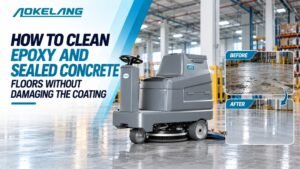
- polished terrazzo and stone need gentle pads and pH-neutral cleaners
- rubber flooring and vinyl need non-aggressive brushes
- entrance matting needs separate treatment
Aokelang scrubbers are rated for tile, epoxy, terrazzo, marble, PVC and concrete floors.
How do airports choose floor cleaning machines?
Airports combine huge floor areas with round-the-clock use, high safety standards and strict security.
| Area | Main soil | Best machine | When |
| Main concourses and corridors | Tracked dirt, scuffs, spills | Ride-on scrubber | Night, low-traffic hours |
| Gate and seating areas | Spills, food, crumbs | Compact walk-behind scrubber | Daytime, between flights |
| Baggage claim | Grit, tyre marks from trolleys | Walk-behind or ride-on scrubber | Between arrivals |
| Security and check-in | Grit, tracked dirt | Walk-behind scrubber | Off-peak |
| Food courts | Grease, drinks, food | Compact walk-behind scrubber | Throughout the day |
| Car parks and forecourts | Dust, litter, leaves, oil drips | Ride-on sweeper | Early morning or overnight |
What matters most:
- Runtime: long concourses need a battery that lasts the whole night shift.
- Operator access: operators and machines may need security clearance to enter airside areas, so plan storage and charging inside the zone each machine works in.
- Lift access: compact machines that fit service lifts can move between levels.
How do shopping malls choose floor cleaning machines?
Malls usually have a clear daily cycle: quiet before opening, busy all day, quiet again after closing.
| Area | Main soil | Best machine | When |
| Main walkways and atriums | Tracked dirt, scuffs | Ride-on scrubber | Before opening or after closing |
| Food courts | Grease, drinks, spilled food | Compact walk-behind scrubber | Throughout the day |
| Entrances | Grit, rainwater | Walk-behind scrubber, plus entrance matting | Several times a day |
| Corridors and back-of-house | Dust, delivery debris | Compact walk-behind scrubber | Off-peak |
| Car parks | Dust, oil, litter | Ride-on sweeper, plus scrubbing for oil | Overnight |
What matters most:
- The finish of polished floors. Many malls use high-gloss stone or terrazzo, so gentle pads and the right chemical protect the shine.
- Quick spot response. Spills in food courts need cleaning within minutes, so keep a compact scrubber close by.
- Appearance. A machine working during opening hours is visible to shoppers. A tidy, quiet machine fits the setting.
The Aokelang AD6 ride-on scrubber is built for large commercial spaces such as shopping malls. It cleans a 760 mm path, with a 90 L clean water tank and a 100 L recovery tank, so it can cover long walkways between refills.
How do transit hubs choose floor cleaning machines?
Train stations, metro stations and bus terminals often combine indoor concourses with semi-outdoor platforms. They face heavy foot traffic, weather and tight schedules.
| Area | Main soil | Best machine | When |
| Ticket halls and concourses | Tracked dirt, rainwater, spills | Ride-on or walk-behind scrubber | Night, or between peaks |
| Platforms | Dust, litter, leaves, rain | Sweeper, then scrubber where needed | During service gaps |
| Underpasses and tunnels | Dust, grime | Walk-behind scrubber | Off-peak |
| Bus bays and forecourts | Oil, dust, litter | Ride-on sweeper | Overnight |
| Stairs and escalators | Dirt, gum | Manual cleaning or specialist equipment | Off-peak |
What matters most:
- Short cleaning windows. Platforms may only be free for minutes between services, so machines need to be quick to start and easy to move.
- Wet weather. Entrances and platforms bring in rain and grit. Scrubbers need good water pickup, and sweepers need to cope with damp debris.
- Tactile paving. Raised safety tiles at platform edges need careful brush selection. Aggressive brushes wear them, and soft pads can’t clean between the bumps.
How should cleaning be split between day and night?
Most high-traffic venues use two kinds of cleaning.
Night or off-peak deep cleaning
- Ride-on scrubbers clean the large open areas.
- Ride-on sweepers clean car parks, forecourts and outdoor approaches.
- Floor care is done in this window: polishing, deep scrubbing and stain removal.
Daytime spot and maintenance cleaning
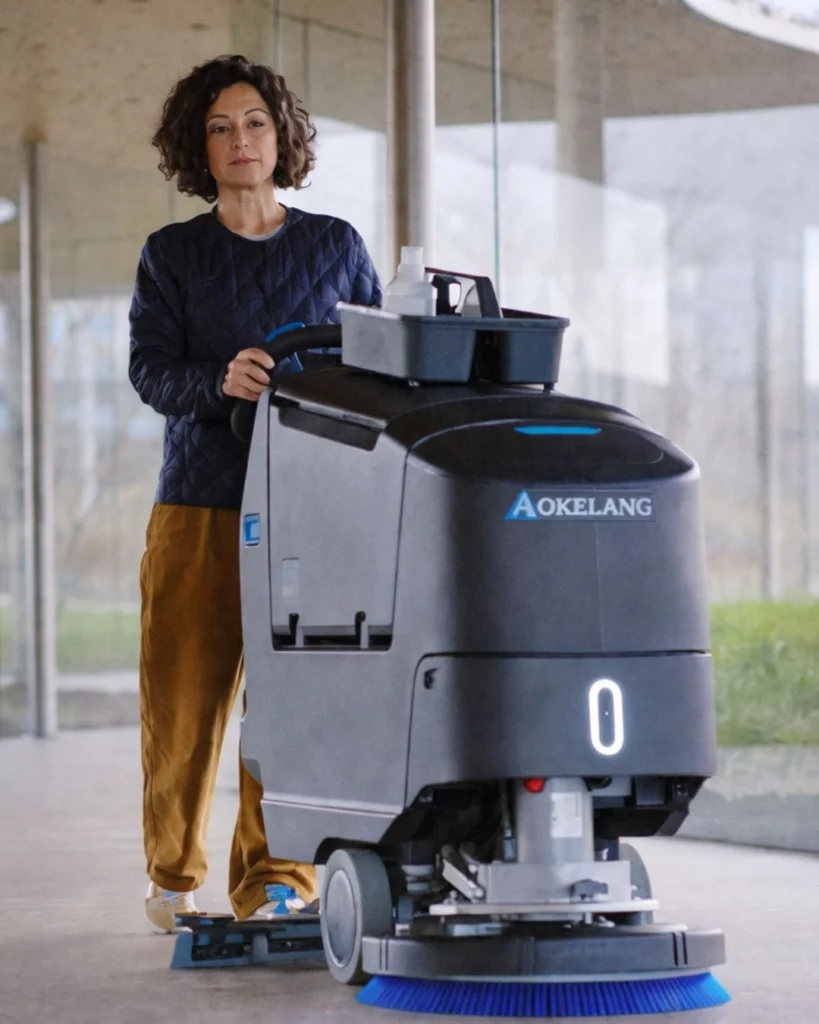
- Compact walk-behind scrubbers handle spills, food courts, entrances and seating areas.
- Operators work around people at walking pace.
- The focus is on visible problems and slip risks.
This split means you don’t need a fleet of large machines running all day. A few compact machines cover daytime needs, and the large machines work when the floor is clear.
The compact Aokelang AD2 has a 350 mm cleaning width and weighs 65 kg with its battery. It suits daytime work in corridors, retail areas and other tight spaces. For larger daytime areas, the Aokelang AD4 walk-behind covers a 510 mm path, with 3 to 4 hours of runtime.
How many machines does a venue need?
Work it out zone by zone, not for the whole building at once.
- List each zone: concourse, food court, entrances, car park and so on.
- Measure the area of each zone.
- Note the cleaning window for each zone, night or day, and how long it lasts.
- Work out the time needed: area ÷ the machine’s real productivity.
- Group zones that one machine can cover in the same window.
Our guide on what size floor scrubber you need walks through the productivity, tank and battery maths step by step.
As a general pattern, many venues end up with:
- one or more ride-on scrubbers for night cleaning of the main concourses
- one compact walk-behind for each busy daytime zone, such as each food court
- a ride-on sweeper for car parks and outdoor areas
How do you compare machines fairly?
Use a scoring checklist so every machine is judged on the same criteria. Weight each criterion by how much it matters to your venue, then score each machine from 1 to 5.
| Criterion | Example weight | What to check |
| Safety around people | 20% | Visibility, bumpers, speed control |
| Noise level | 15% | Decibel rating, sound in real use |
| Floor dryness after a pass | 15% | Squeegee and vacuum performance |
| Fit for the zone | 15% | Width, turning space, lift access |
| Runtime | 10% | Battery hours against the cleaning window |
| Floor compatibility | 10% | Brushes, pads and chemicals for your surfaces |
| Ease of use | 5% | Controls, training time |
| Parts and support | 10% | Spare parts stock, technical support, delivery times |
Adjust the weights to your venue. An airport may weight safety and runtime higher, while a mall may weight appearance and noise higher.
Ask for a demonstration on your own floor whenever you can. A short trial in a real concourse or food court shows more than any brochure.
What about outdoor areas?
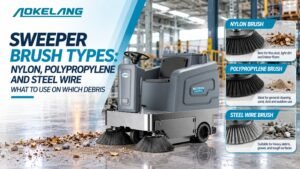
Car parks, forecourts, drop-off zones and bus bays need a sweeper, not a scrubber, for daily cleaning. Leaves, litter, sand and dust are dry-debris problems. Oil stains in car parks can be scrubbed occasionally.
Our guide to choosing an outdoor ride-on sweeper covers gradeability for car park ramps, dust control, tyres and hopper size.
Frequently asked questions
What commercial floor cleaning machines do airports use?
Most airports use ride-on scrubbers for concourses at night, compact walk-behind scrubbers for gates, food courts and spot cleaning during the day, and ride-on sweepers for car parks and forecourts. Battery power is the norm indoors.
Can floor scrubbers be used while shoppers or passengers are present?
Yes, with the right machine and procedures. Use compact, quiet walk-behinds that leave the floor almost dry, keep the speed low, and use signs where the floor is damp. Keep large ride-ons for quieter hours.
What is the best floor scrubber for a shopping mall?
Most malls need two types: a ride-on scrubber for main walkways and atriums before opening or after closing, and a compact walk-behind for food courts and spills during the day. Match the brushes or pads to the floor finish, especially on polished stone and terrazzo.