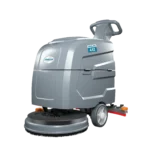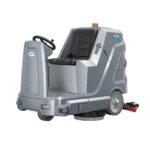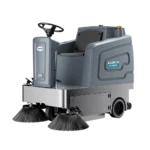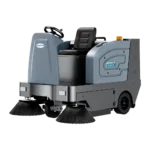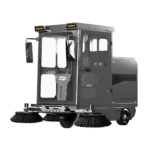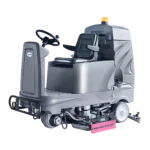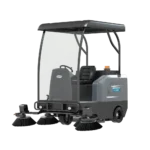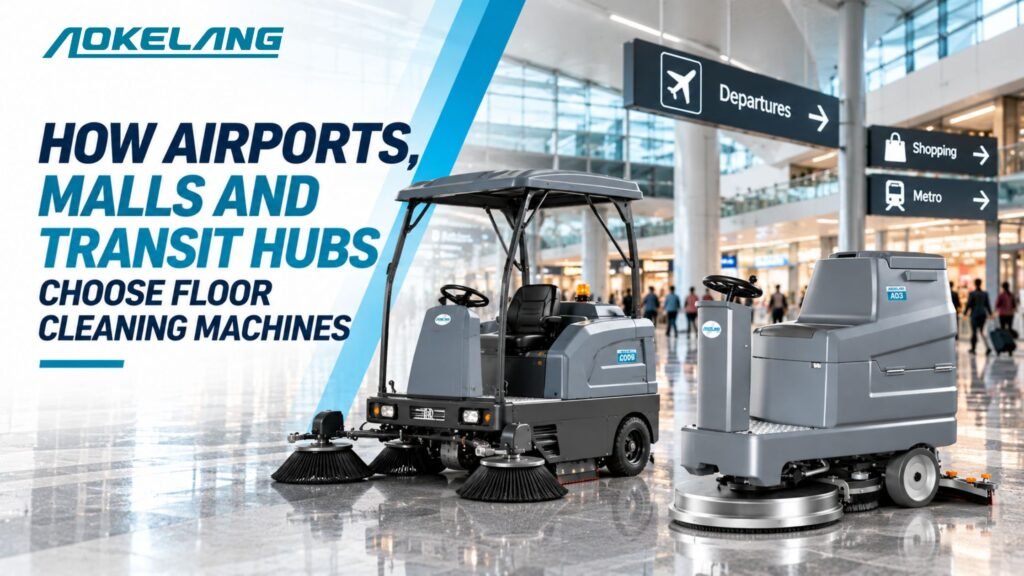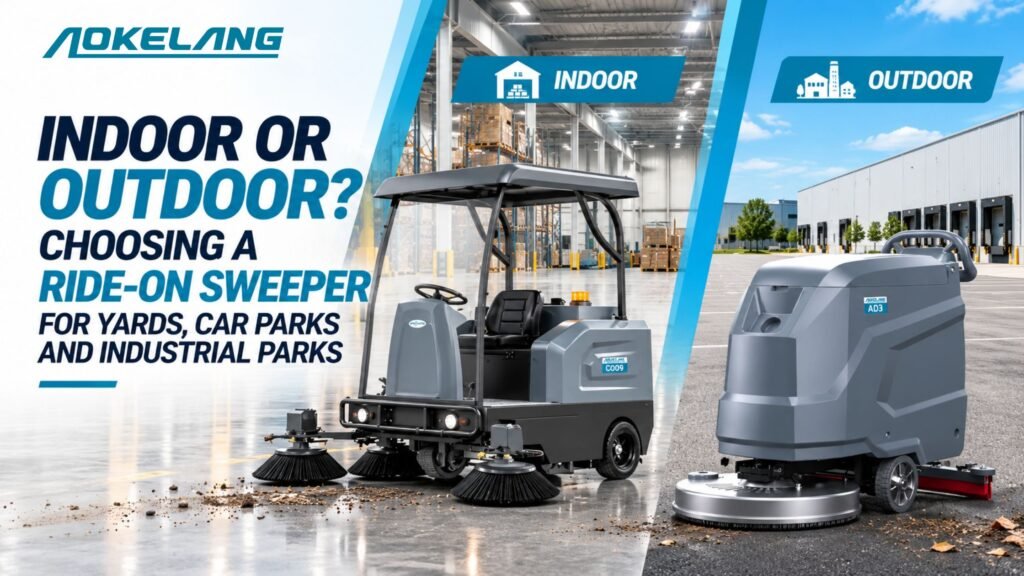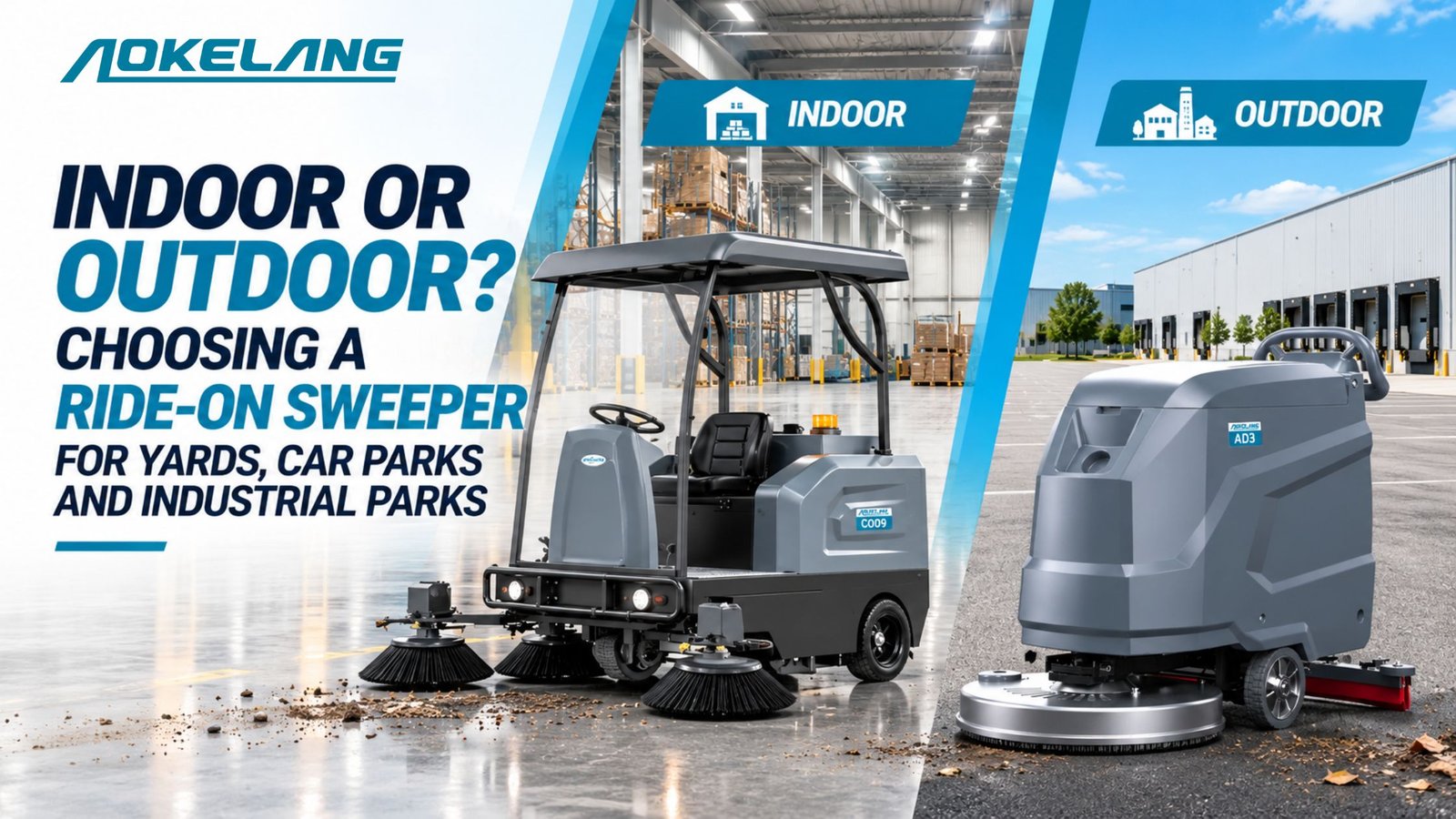
Choosing a ride-on sweeper depends on whether you prioritize emission-free, quiet dust control indoors or high-capacity, rugged debris collection outdoors. For mixed environments like yards, car parks, and industrial parks, a battery-powered ride-on sweeper is typically the most versatile choice, while diesel or LPG models suit large, open outdoor areas with heavy debris.
Key takeaways
- An outdoor ride-on sweeper faces heavier, wetter and more varied debris than an indoor machine. Expect leaves, gravel, sand, litter, cans and broken pallet pieces.
- Check five things before buying for outdoor use: gradeability, tyres, hopper size and dumping, dust control with water spray, and how the brushes handle rough surfaces.
- Water spray matters far more outdoors, where dry dust, sand and grit are common.
- Battery sweepers work well indoors and outdoors on most sites. Diesel or LPG suits very large outdoor areas with long shifts and no charging access.
- If one machine has to cover both indoors and outdoors, choose for the harder outdoor job. Then check that it still fits through your doors and aisles.
An outdoor ride-on sweeper needs to handle heavier debris, rougher surfaces, slopes and more dust than an indoor machine. Look for strong gradeability, durable tyres, a large hopper, water spray dust control, and brushes suited to asphalt and rough concrete. If the same machine also sweeps indoors, check that it still fits your aisles and doorways.
Table of Contents
How is an outdoor ride-on sweeper different from an indoor one?
Indoor and outdoor sweeping put different demands on the machine:
| Indoor sweeping | Outdoor sweeping | |
| Typical debris | Dust, packaging scraps, small grit | Leaves, gravel, sand, litter, cans, pallet pieces |
| Surface | Smooth or sealed concrete, epoxy | Asphalt, rough concrete, pavers, joints and cracks |
| Slopes | Occasional ramps | Car park ramps, kerbs, drainage falls |
| Dust | Fine indoor dust | Dry dust and sand, often heavy in dry weather |
| Weather | Controlled | Rain, wet leaves, heat, cold |
| Distances | Within one building | Between yards, buildings and car park levels |
| Obstacles | Racking, people | Vehicles, kerbs, speed bumps, drains |
| Emissions and noise | Must be low | Less restricted, but still matters near offices and housing |
A sweeper built only for smooth indoor floors can struggle outdoors. Its brushes wear quickly, its hopper fills fast, and its filter clogs in dusty conditions.
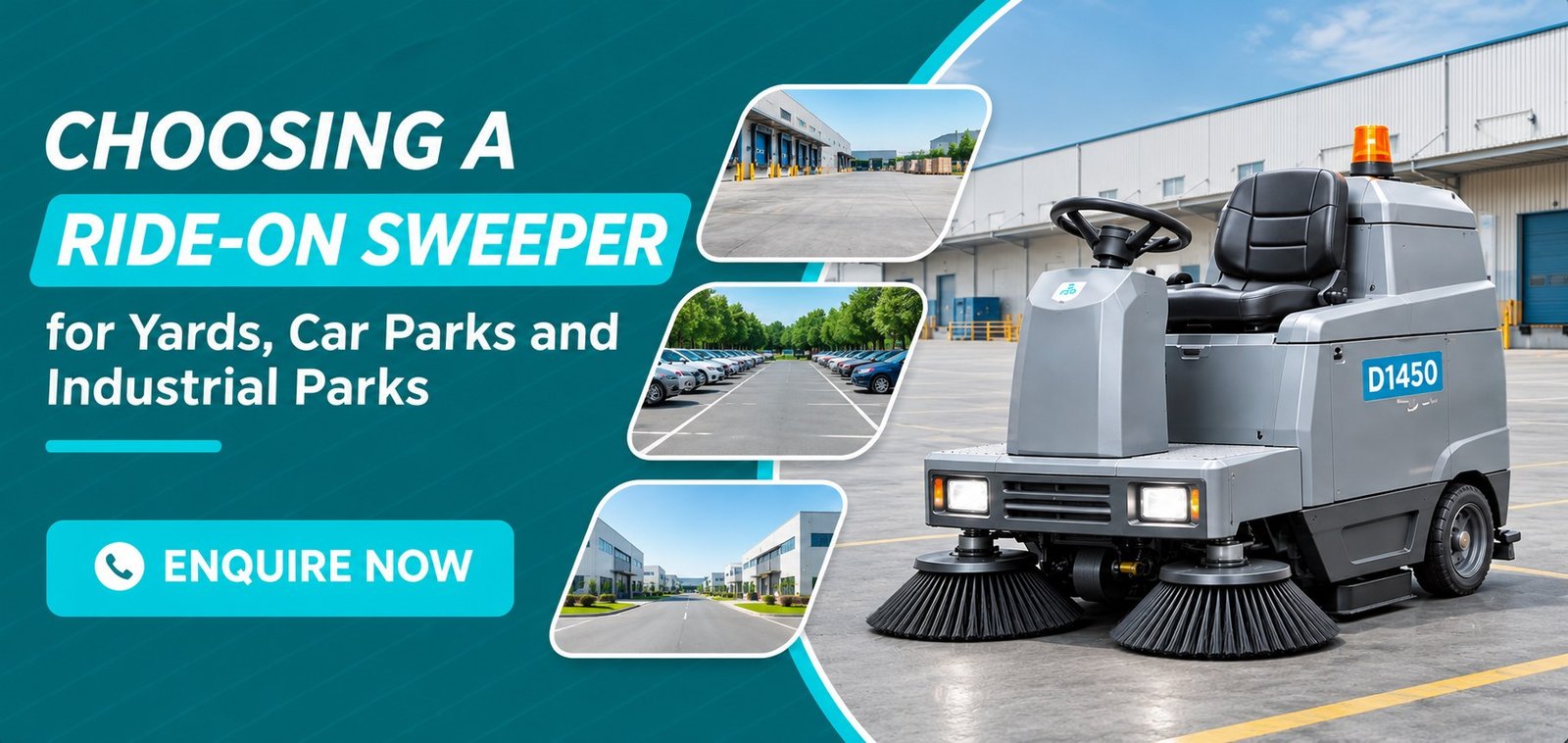
Which outdoor ride-on sweeper features matter most?
1. Gradeability for ramps and slopes
Car park ramps, loading dock slopes and drainage falls all demand climbing power, especially with a full hopper and water tank.
Gradeability is usually given as a percentage: the rise in height per 100 units of distance. Here’s how percentages convert to angles:
| Gradeability | Approximate angle |
| 10% | About 6° |
| 15% | About 8.5° |
| 20% | About 11° |
| 25% | About 14° |
Measure your steepest ramp before you buy, then choose a machine rated comfortably above it. The Aokelang D1450, for example, is rated for a 25% gradient.
Also check ground clearance against your kerbs, speed bumps and drain covers. A low-slung machine can catch on them.
2. Tyres
Outdoor surfaces are hard on tyres. Glass, metal scraps and sharp gravel can puncture or cut them.
- Solid or puncture-resistant tyres suit sites with sharp debris and avoid flat-tyre downtime.
- Pneumatic tyres give a smoother ride on rough surfaces, but they can puncture.
Check tyres weekly for cuts, and remove anything wrapped around the axles.
Also read – Floor Sweeper Maintenance Checklist
3. Hopper size and dumping
Outdoor debris is bulkier and heavier than indoor dust. A bag of leaves or a few shovels of gravel can fill a small hopper quickly.
- Larger hoppers mean fewer trips to the skip. The D1450’s debris container holds 120 L.
- Weight matters as well as volume. Sand and gravel can reach the hopper’s weight limit before it looks full.
- High-dump hoppers lift and tip straight into a skip or dumpster. That saves time and lifting on large outdoor sites.
4. Dust control and water spray
Outdoor sweeping raises far more dust than indoor sweeping, especially in dry weather. Without dust control, the operator, passers-by and parked cars all end up covered.
Look for:
- A water spray system that mists the side brushes and front of the machine. The D1450, for example, carries a 90 L water tank.
- A vacuum fan and filter sized for heavy dust, with a filter shaker.
- A moisture-tolerant filter, because damp air and wet debris are common outdoors.
For how these systems work together, see our guide to floor sweeper dust control.
5. Brushes for rough surfaces
Asphalt, pavers and rough concrete wear brushes faster than smooth indoor floors.
- Main brush: stiffer bristles move compacted dirt and gravel better. Check the sweep pattern more often, because outdoor wear is faster.
- Side brushes: these do much of the work along kerbs and walls. Check them often, because rough edges wear them down quickly. Machines with more side brushes, such as the Aokelang D1850 with four 500 mm side brushes, cover more edge area per pass.
Which sweeper suits each type of site?
| Site | Main challenges | What to prioritise |
| Indoor warehouse | Fine dust, narrow aisles, racking | Compact turning, good filtration, battery power |
| Covered or multi-storey car park | Ramps, dust, oil stains, low ceilings | Gradeability, water spray, height clearance, battery power |
| Open car park | Leaves, litter, sand, large area | Wide path, large hopper, water spray, durable tyres |
| Loading yard or dock | Pallet pieces, shrink wrap, grit, trucks | Large hopper, strong main brush, puncture-resistant tyres |
| Gravel or rough yard | Loose stones, uneven ground | Stiff brushes, ground clearance, careful brush height |
| Industrial park roads and shared areas | Long distances, kerbs, mixed debris | Travel speed, runtime, wide path, side brushes for kerbs |
| Mixed indoor and outdoor | Both sets of challenges | Machine sized for outdoor work but narrow enough for doorways |
On gravel yards, set the main brush slightly higher. A brush set too low throws stones, and can pick up loose surface stone along with the debris.
Battery, diesel or LPG for outdoor sweeping?
Power choice depends on site size, shift length and whether the machine also works indoors.
Battery suits most sites. It’s quiet, produces no exhaust, and can sweep indoors and outdoors with the same machine. Check that the runtime covers your sweeping time with a margin. The D1450 runs on a 48V/80Ah battery system rated for 3 to 4 hours.
Diesel or LPG suits very large outdoor areas where the machine runs for long shifts and there’s nowhere convenient to charge. They refuel in minutes, but their exhaust rules them out for most indoor work, and their noise can be a problem near offices or housing.
If the machine must also go indoors, battery is usually the practical choice.
How long will outdoor sweeping take?
Outdoor sites add travel time between zones. Your plan should include both sweeping time and travel time.
Sweeping time = area ÷ real productivity
Travel time = distance between zones ÷ travel speed
Illustration: An industrial park has three car parks of 4,000 m² each, about 500 m apart.
- A ride-on with a 1,450 mm path, at a real productivity of about 7,000 m²/h, sweeps each car park in about 35 minutes.
- At a travel speed of 10 km/h, each 500 m move takes about 3 minutes.
- Total: about 1 hour 45 minutes of sweeping, plus about 6 minutes of travel.
Emptying the hopper also takes time. On a leafy or sandy site, plan one or more trips to the skip per car park. Our guide to calculating floor cleaning productivity explains how to estimate real productivity.
How should you handle wet weather?
Outdoor sweeping doesn’t always happen in dry conditions. Rain and wet leaves change how the machine performs.
- Wet debris: if your machine allows it, switch off the vacuum fan when sweeping wet leaves or puddles. Damp debris and water drawn onto a paper filter can clog it within minutes.
- Water spray: turn it off in wet conditions. The ground is already damp enough to keep dust down.
- Hopper: wet debris is heavy and sticks. Empty the hopper more often, and rinse it after the shift so it doesn’t dry hard.
- Cold weather: drain the water tank and spray lines before freezing temperatures.
What maintenance does an outdoor ride-on sweeper need?
Outdoor work shortens the life of brushes, filters and tyres, so check them more often than you would on an indoor machine.
- Daily: empty and rinse the hopper, shake the filter, and remove anything wrapped around the brushes and axles.
- Weekly: run a sweep pattern test, check side brush height and wear, check the tyres for cuts, and clean the spray nozzles.
- Monthly: replace worn brushes and skirts, and check the filter seals and the hopper lift.
Our floor sweeper maintenance checklist gives a full daily, weekly and monthly routine.
What should you check before buying an outdoor ride-on sweeper?
- Measure your steepest ramp, and compare it with the machine’s gradeability.
- Check ground clearance against your kerbs, speed bumps and drain covers.
- List your debris types, such as leaves, gravel, sand, litter and pallet pieces. Then size the hopper for volume and weight.
- Confirm the dust control: water spray, filter type and filter shaker.
- Choose tyres that suit your site’s risk of punctures.
- Check the runtime against sweeping time plus travel time.
- Measure doorways and aisles, if the machine will also work indoors.
- Check height clearance for covered or multi-storey car parks.
For more on sizing width, hopper and power, see our industrial floor sweeper buying guide. If you’re unsure whether a ride-on is the right type at all, our guide to ride-on vs walk-behind floor sweepers compares them by facility size.
Frequently asked questions – Choosing a Ride-On Sweeper
Can one ride-on sweeper work both indoors and outdoors?
Yes, if it’s battery-powered, sized for your heaviest outdoor debris, and narrow enough for your doorways and aisles. Choose for the harder outdoor job, then check the indoor fit.
What is the best outdoor ride-on sweeper for a car park?
Look for a wide sweeping path, a large hopper, water spray dust control, durable tyres and enough gradeability for your ramps. For covered or multi-storey car parks, also check the machine’s height and choose battery power to avoid exhaust fumes.
Can a ride-on sweeper pick up leaves?
Yes, dry leaves sweep up well, though they fill the hopper quickly by volume. Wet leaves are heavier and can clog the filter, so switch off the vacuum fan for wet debris if your machine allows it, and empty the hopper more often.
Will a sweeper pick up gravel?
It will pick up loose gravel and grit, but on gravel surfaces it can also pull up the surface itself. Raise the main brush slightly on gravel yards, and empty the hopper often, because gravel is heavy.