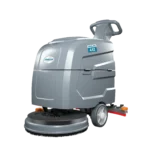
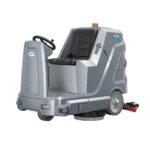
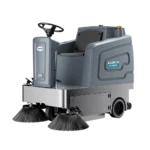
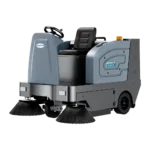
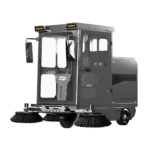
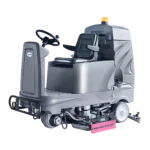
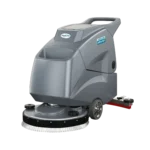
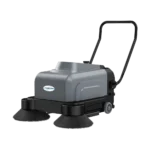
Comparing a Ride-On vs Walk-Behind Floor Sweeper comes down to facility size, layout complexity, labor costs, and budget.
Key takeaways
- Choose a walk-behind sweeper for floors up to about 3,000 m² (around 30,000 sq ft), narrow aisles and sites with lifts or tight storage.
- Choose a ride-on sweeper for floors above about 3,000 m², long open aisles, heavy debris and daily sweeping over an hour or more.
- A ride-on can cover the same floor in a quarter of the time or less. On large sites, that saved labour usually outweighs its higher price.
- Facility size is the starting point, not the whole answer. Aisle width, turning space, ramps and debris volume can change the choice.
- Large mixed sites often run both: a ride-on for open areas and a walk-behind for tight zones.
In the ride-on vs walk-behind floor sweeper decision, facility size usually settles it. A walk-behind sweeper suits floors up to about 3,000 m² (30,000 sq ft) and tight layouts. A ride-on sweeper is faster and more economical above that size, especially with long aisles and daily sweeping.
Ride-on vs walk-behind floor sweeper: which fits your facility size?
Use your daily sweeping area as the first filter:
| Daily sweeping area | Best fit | Why |
| Under about 500 m² (5,000 sq ft) | Manual push sweeper or small walk-behind | Short job; a powered ride-on is more machine than you need |
| About 500–3,000 m² (5,000–30,000 sq ft) | Walk-behind sweeper | Finishes in a reasonable time and fits tighter spaces |
| About 3,000–8,000 m² (30,000–85,000 sq ft) | Compact ride-on, or a walk-behind if aisles are tight | A walk-behind starts to take hours each day |
| Over 8,000 m² (85,000 sq ft) | Full-size ride-on | Only a wide ride-on covers this area in a single shift |
These bands are a starting point. The rest of this guide shows how to check them against your own floor.
How do ride-on and walk-behind sweepers differ?
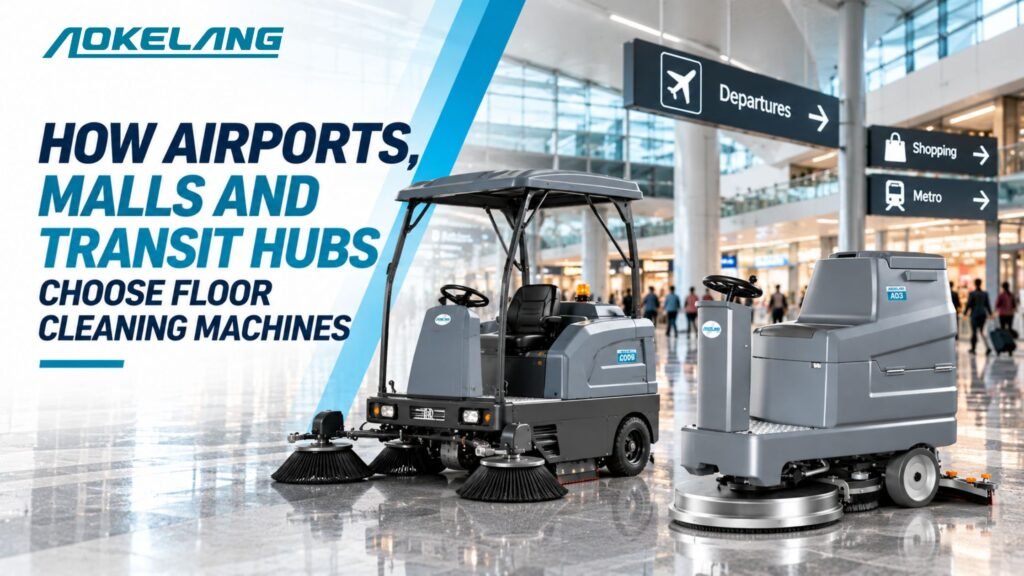
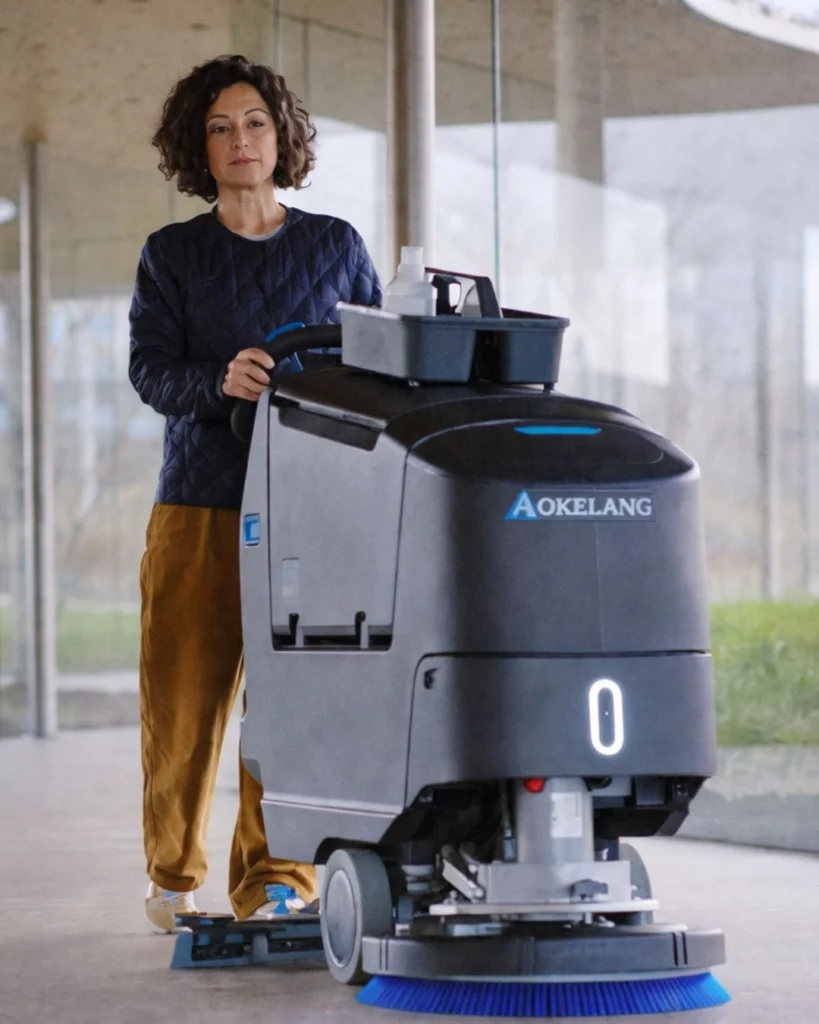
A walk-behind sweeper is pushed or self-propelled while the operator walks behind it. It has a narrower sweeping path, a smaller hopper and a compact body. It’s easy to steer in tight spaces, store in a small room, and move between floors in a goods lift.
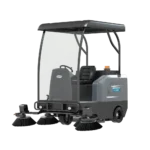
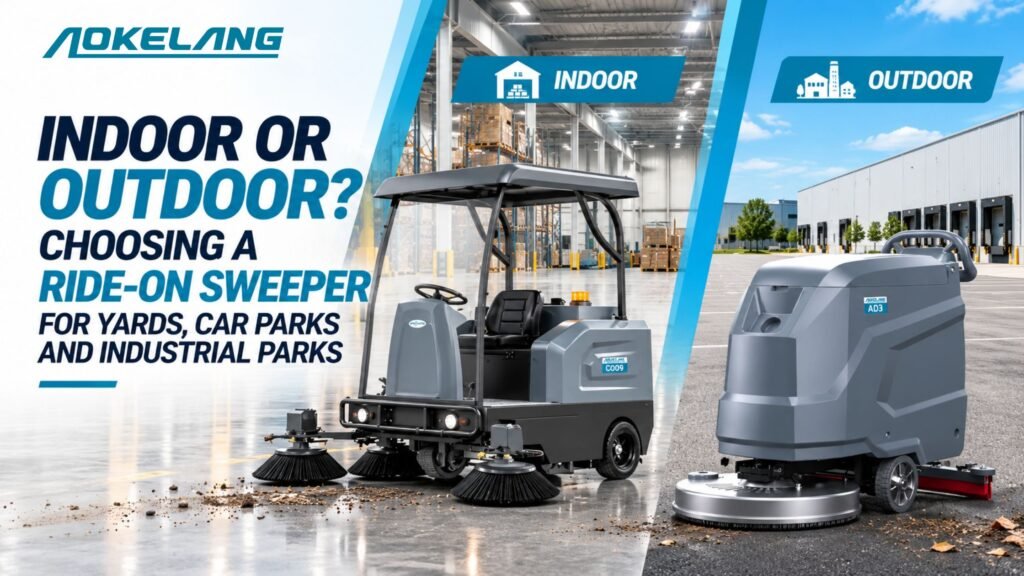
A ride-on sweeper carries the operator in a seat. It sweeps a much wider path, drives faster than walking pace, and holds more debris. The operator stays fresh over long runs, but the machine needs wider aisles, more turning space and more room to park.
| Walk-behind sweeper | Ride-on sweeper | |
| Sweeping path | Narrower | Much wider, especially with side brushes |
| Speed | Walking pace | Several times faster than walking |
| Hopper | Smaller, so more emptying stops | Larger, so fewer stops |
| Turning and aisle fit | Fits narrow aisles and doorways | Needs wider aisles and turning space |
| Operator effort | Walking for the whole job | Seated |
| Storage and transport | Fits small rooms and goods lifts | Needs a dedicated parking and charging area |
| Purchase price | Lower | Higher |
How much faster is a ride-on sweeper?
Coverage per hour is sweeping width × speed × 1,000, reduced by an efficiency factor for turns, obstacles and emptying stops. Our guide to calculating floor cleaning productivity explains each part.
The example below compares a typical walk-behind with a ride-on. The working speeds and efficiency factors are planning assumptions.
- Walk-behind: 700 mm path × 4 km/h × 1,000 × 0.65 ≈ 1,820 m²/h
- Ride-on: 1,450 mm path × 8 km/h × 1,000 × 0.60 ≈ 6,960 m²/h
Here’s how long each takes to sweep different floor sizes:
| Floor area | Walk-behind time | Ride-on time |
| 1,000 m² (10,800 sq ft) | About 35 minutes | About 9 minutes |
| 3,000 m² (32,000 sq ft) | About 1.6 hours | About 26 minutes |
| 8,000 m² (86,000 sq ft) | About 4.4 hours | About 1.2 hours |
| 20,000 m² (215,000 sq ft) | About 11 hours | About 2.9 hours |
On small floors, the time difference is minutes, so the cheaper, more compact walk-behind makes sense. Somewhere around 3,000 m², the walk-behind starts taking over an hour and a half every day. Above that, the ride-on’s speed starts to pay for itself.
When does a ride-on sweeper pay for itself?
A ride-on costs more to buy, so compare that difference with the labour it saves.
Hours saved per day = walk-behind time − ride-on time
Labour saved per year = hours saved per day × sweeping days per year × hourly labour cost
Take an 8,000 m² floor swept 250 days a year, with an illustrative labour cost of $18 per hour:
- Hours saved per day: 4.4 − 1.2 = 3.2 hours
- Hours saved per year: 3.2 × 250 = 800 hours
- Labour saved per year: 800 × $18 = $14,400
Run the same sum with your own floor area, sweeping days and labour rate. Then compare the yearly saving with the price difference between the two machines. On large floors, the gap usually closes within the first year or two.
The time saved doesn’t have to mean fewer staff. It often goes to tasks that were being skipped, or lets sweeping finish before a shift starts.
What else should decide the choice?
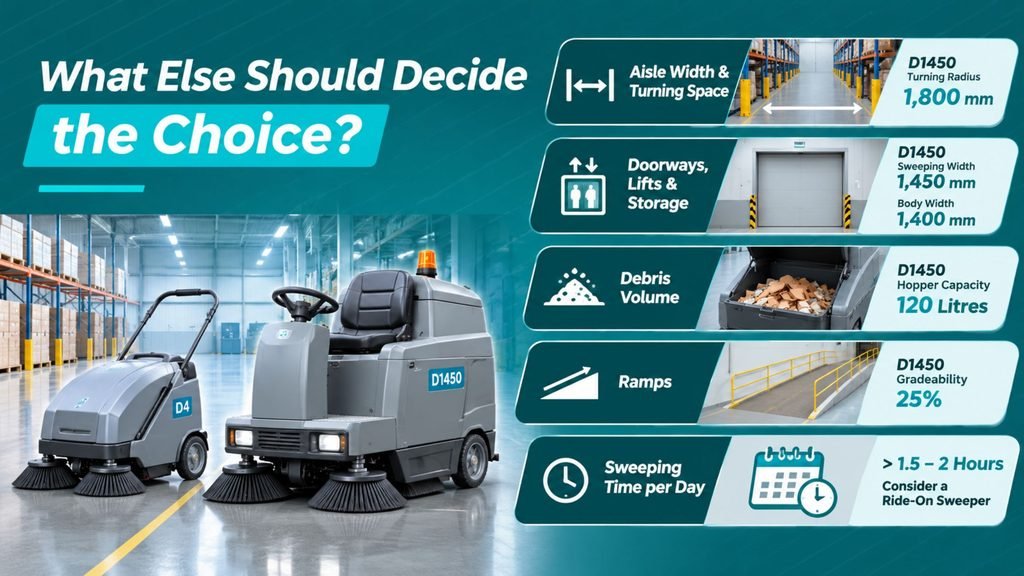
Facility size points you toward a type. Before you buy, check these six factors.
Aisle width and turning space
Measure your narrowest aisle where the machine must turn around, and your narrowest doorway. Ride-on sweepers need room to turn at aisle ends. The Aokelang D1450 ride-on, for example, has an 1,800 mm turning radius.
A walk-behind is the safer choice for narrow racking aisles and dead-end aisles.
Doorways, lifts and storage
Sweeping width and machine width are different numbers, because side brushes often reach beyond the body. The D1450 sweeps a 1,450 mm path with a 1,400 mm-wide body. That’s still too wide for many internal doorways.
If the sweeper has to move between floors in a goods lift, or be stored in a small cleaning room, a walk-behind is usually the only option.
Debris volume
A larger hopper means fewer emptying stops. The D1450 holds 120 litres of debris, which suits warehouses with heavy packaging scraps, pallet splinters and dust. A walk-behind’s smaller hopper fills faster, which matters most on large floors or debris-heavy sites.
Ramps
Check the sweeper’s gradeability against your steepest ramp, with a full hopper. The D1450 is rated for a 25% gradient.
Sweeping time per day
If the walk-behind would take more than about 1.5 to 2 hours a day, operator fatigue becomes a real factor. Walking behind a machine for hours lowers the quality of the sweep toward the end of the shift. A seated operator keeps a steadier pace.
Pedestrian traffic
Walk-behinds are easier to control in busy areas with people around, such as retail floors, schools and hospitals. Ride-ons suit areas that can be closed off or swept outside working hours.
How do you decide step by step?
- Measure your daily sweeping area. Use the floor you actually sweep, not the total building size.
- Find its size band in the table at the top of this guide.
- Work out the sweeping time for a walk-behind using the productivity formula. Over about 1.5 hours a day points toward a ride-on.
- Measure your narrowest aisle, doorway and steepest ramp. Check them against each machine’s width, turning radius and gradeability.
- Consider debris volume. Heavy debris favours a larger ride-on hopper.
- Check storage, charging space and lift access.
- Compare the labour saving with the price difference using the payback formula above.
If the size band says ride-on but the layout says walk-behind, a two-machine setup is often the answer.
Should you run both?
Many large facilities do. A typical split looks like this:
- A ride-on sweeper for main aisles, open storage areas, loading docks and outdoor yards.
- A walk-behind sweeper for narrow racking aisles, offices, break rooms and upper floors reached by lift.
The ride-on does the bulk of the area quickly, and the walk-behind reaches the spaces the ride-on can’t. This often costs less in labour than forcing one machine to do everything.
Which Aokelang sweepers fit each size?
Aokelang makes both types:
- Walk-behind floor sweepers, including the D1050, for smaller facilities and tighter layouts.
- Ride-on floor sweepers for large warehouses, factories and outdoor areas. The D1450 sweeps a 1,450 mm path, rated at up to 15,000 m²/h. The D1850 covers a 2,000 mm path with four 500 mm side brushes, for very large open floors.
For more on sweeping width, hopper size and power source, see our industrial floor sweeper buying guide.
Frequently asked questions
Ride-on vs walk-behind floor sweeper: which is better for a warehouse?
It depends on the area you sweep and your aisle widths. Warehouses with more than about 3,000 m² of open aisles usually benefit from a ride-on. Smaller warehouses, or those with narrow racking aisles, are often better served by a walk-behind.
Is a walk-behind sweeper enough for 20,000 sq ft?
Usually, yes. 20,000 sq ft is about 1,860 m², which a typical walk-behind sweeps in about an hour. A ride-on becomes worth considering as the area approaches 30,000 sq ft, or if the floor is swept more than once a day.
Are ride-on sweepers harder to operate?
Not much harder, but they need more training and care, especially around people and racking. Most operators learn the controls in one session. Plan safe routes, and sweep busy areas outside working hours where possible.
Can a ride-on sweeper be used outdoors?
Yes. Ride-ons with large hoppers and strong main brushes suit car parks, loading docks and yards. Battery-powered models work indoors and outdoors.