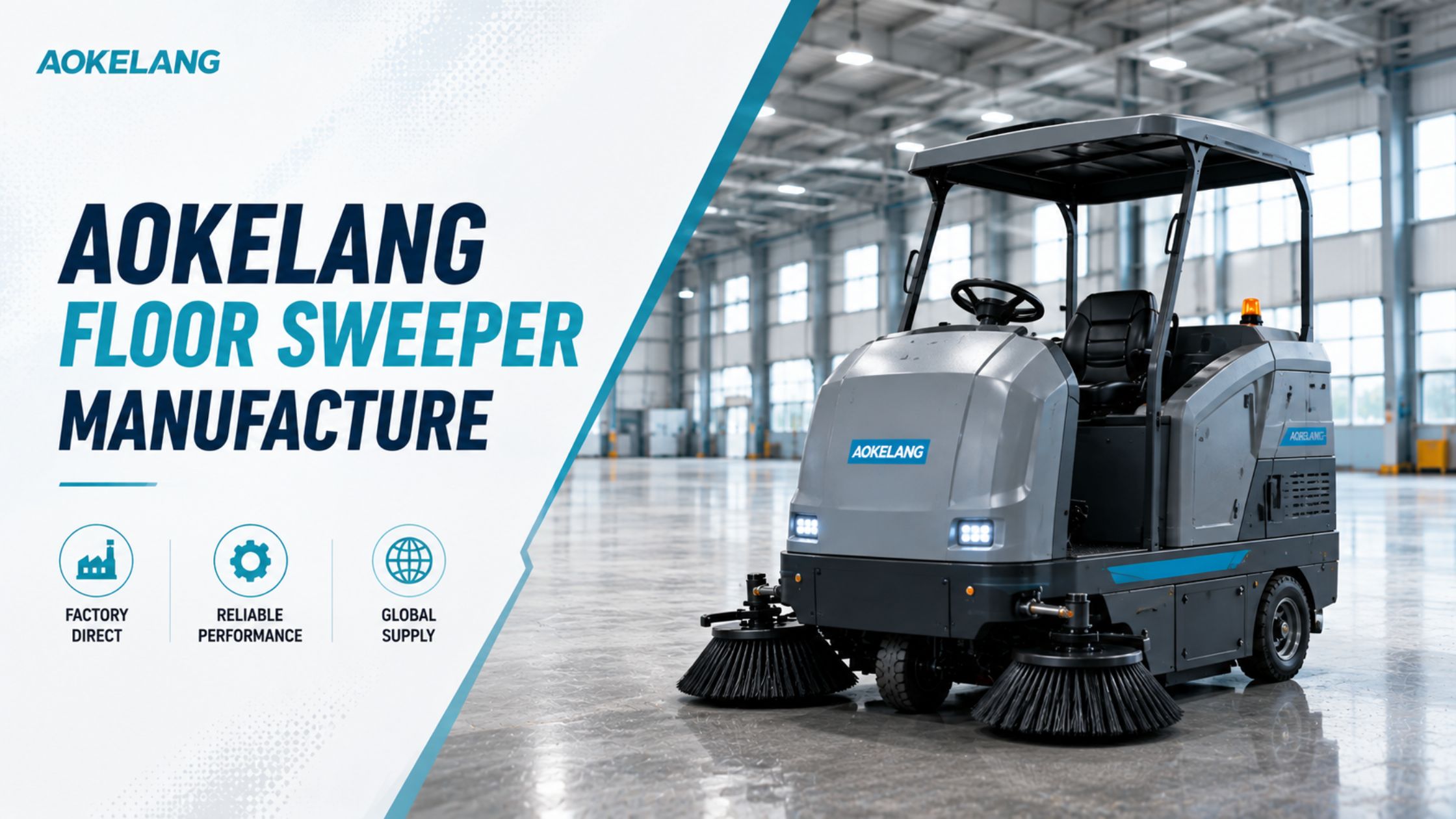
Aokelang Floor Sweeper Manufacturer picks up dry debris using brushes and a collection hopper; no water is involved. A floor scrubber uses water and detergent to wet-clean, scrub, and dry the floor surface in a single pass. They’re different tools that solve different problems, and choosing the wrong one costs you in cleaning quality, consumable wear, and machine damage from the first shift.
Table of Contents
What Does a Floor Sweeper Actually Do?
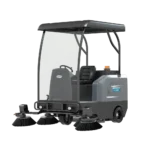
A sweeper is an industrial vacuum cleaner that cleans your floor of dust and debris. It is an essential machine for warehouses and manufacturing plants that produce a great deal of dust, and may be the best choice when dealing with light, bulky, heavy, or dry debris.
The mechanism is simple: rotating side brushes sweep debris inward toward a main brush or suction inlet, which collects it into a hopper. No water, no chemicals, no wet floor. Unlike auto scrubbers, commercial sweepers don’t require any chemicals or water to operate — which makes them faster to deploy, lower in operating cost, and simpler to maintain.
What sweepers handle well: dust, sand, grit, gravel, small stones, cardboard scraps, packaging film, plastic shards, and general industrial debris. What they cannot handle: oil, grease, sticky residues, biological contamination, or stains. A sweeper moves these — it does not remove them.
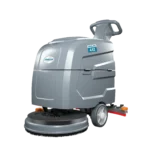
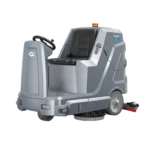
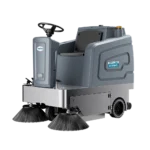
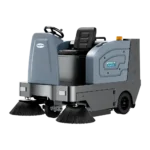
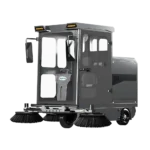
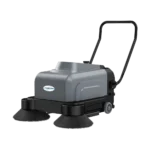
Aokelang’s industrial sweeper range spans walk-behind and ride-on formats. The Aokelang D1050 and D1250 are walk-behind models suited to smaller warehouses and facilities with tight areas. The Aokelang D1450, D1850, D1900, D2000, D2300, and D2400 are ride-on models designed for large-area industrial sweeping with higher hopper capacity and faster coverage speeds. The full range is available in the Aokelang floor sweeper machine category.
What Does a Floor Scrubber Actually Do?
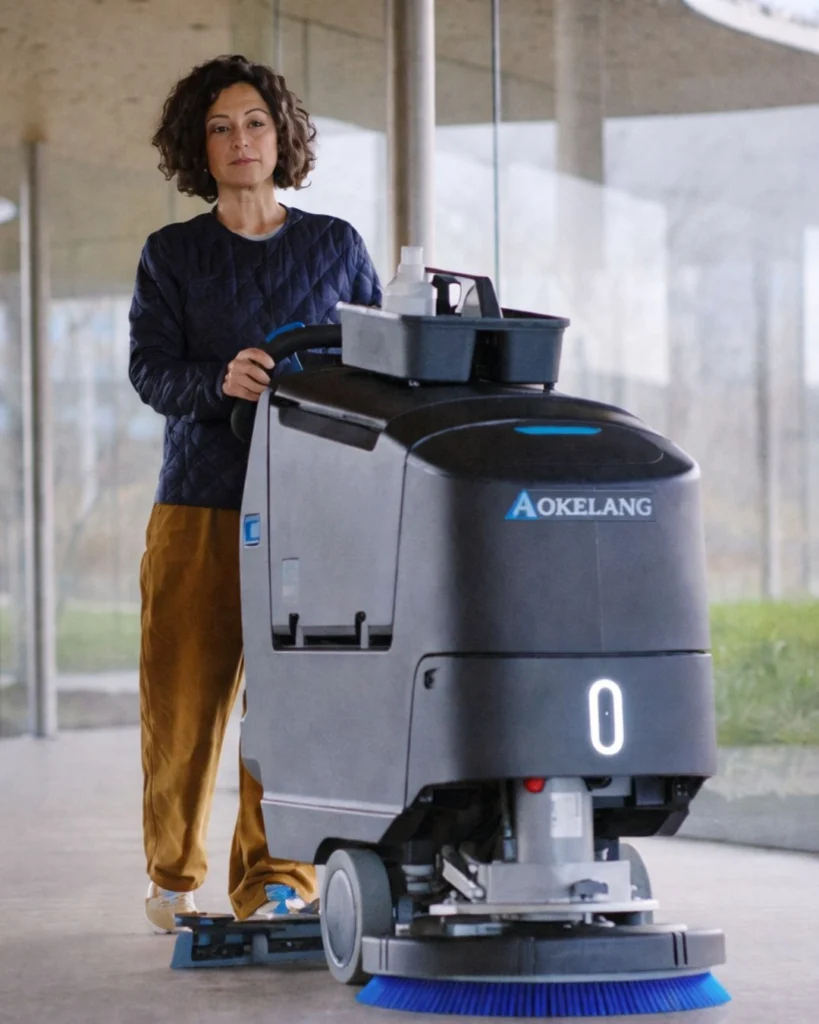
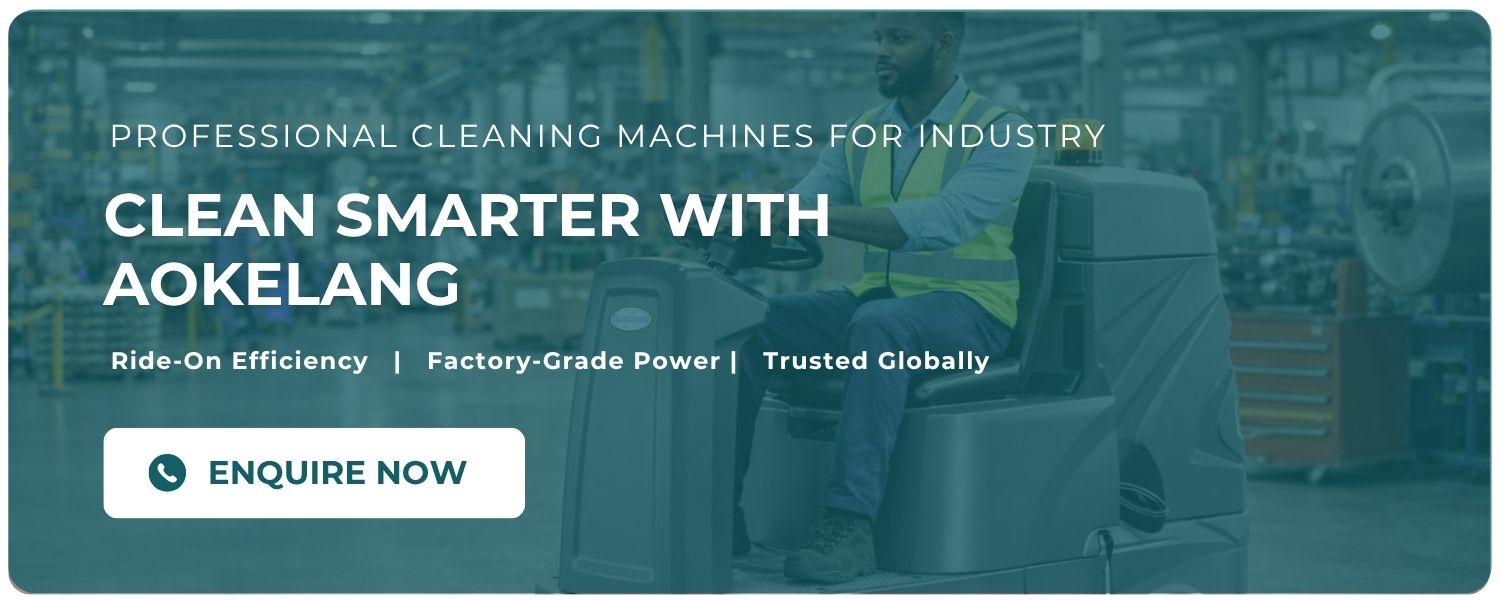
A commercial floor scrubber dispenses cleaning solution onto the floor, works it in with rotating brushes or pads, then sucks all the dirty water back into a recovery tank through a vacuum and squeegee combination — leaving a floor that’s actually clean and dry, not damp or streaky.
Scrubbers solve what sweepers cannot: embedded grime, grease, oil, spills, biological residue, and stains that have bonded to the floor surface. They also leave floors immediately dry — an important safety consideration in any high-traffic facility.
The majority of businesses don’t need a scrubber unless the application involves cleaning oil, grease, and similar compounds. If you have a grimy work environment or need to disinfect floors, choose a scrubber.
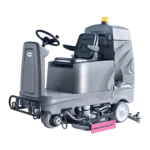
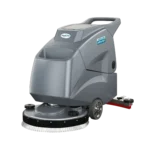
Aokelang’s full floor scrubber machine range covers walk-behind and ride-on formats from compact clinical machines to heavy-duty industrial ride-ons. The benefits of a floor scrubber machine guide covers what the right machine delivers in practical terms.
The Core Difference at a Glance
| Factor | Floor Sweeper | Floor Scrubber |
| What it removes | Dry debris — dust, grit, packaging waste | Grime, grease, oil, stains, biological residue |
| Water required | No (some models have dust suppression misting) | Yes — solution and recovery tanks |
| Chemicals required | No | Yes — low-foam neutral pH detergent |
| Leaves floor | Dry and debris-free | Clean, sanitised, and immediately dry |
| Typical coverage speed | 6,000–15,000+ m²/hr (ride-on) | 2,000–5,000 m²/hr (ride-on) |
| Best for | Warehouses, factories, car parks, outdoor areas | Healthcare, food service, retail, manufacturing with grease |
| Maintenance complexity | Lower — no water systems | Higher — tanks, brushes, squeegees, battery |
| Typical lifespan | 8–12+ years | 5–10 years |
Do I Need a Sweeper, a Scrubber, or Both?
This is the question most facility managers should be asking and the answer is almost always “it depends on your floor soil type, not your floor area.”
If your biggest problem is dust, loose dirt, or scattered debris, a sweeper will keep things under control. If you need spotless, sanitary floors free from spills and stains, a scrubber is the right tool.
A warehouse with heavy forklift traffic and constant cardboard and packaging debris needs a ride-on sweeper or a combination machine with adequate debris capacity. A hospital corridor with smooth vinyl flooring and daily foot traffic needs a walk-behind scrubber. A food processing plant with both dry ingredient dust and wet floor conditions from wash-down procedures needs either a combination machine or both a sweeper and a scrubber used in sequence.
For most industrial and warehouse facilities, the answer is both, used in sequence. Many facilities use both machines together: a floor sweeper to remove debris first, followed by a floor scrubber for deep cleaning. This produces the best results for both machines and significantly extends consumable life on the scrubber, since brushes and recovery systems aren’t being clogged by loose debris.
Also read – aokelang floor scrubber manufacturer
Why Pre-Sweeping Matters Before Scrubbing
Send a commercial floor scrubber into a warehouse buried in dry debris and you will clog its brush deck, burn through consumables ahead of schedule, and still finish with an unsatisfactory result.
Running a scrubber over heavy surface debris is one of the most consistent causes of premature brush wear and recovery system blockages. The sweeper’s job is to clear the surface so the scrubber can do what it’s actually designed for: deep-cleaning and sanitising the floor, not collecting loose material.
The only exception is cylindrical brush scrubbers, which can handle light debris collection while scrubbing. But even these have limits — cylindrical scrubbers can collect small debris like dust, sand, or light litter, but cannot handle large debris volumes or heavier materials. Facilities such as warehouses and industrial buildings usually still require a dedicated floor sweeper for effective debris removal. Aokelang’s guide on whether scrubbing is better than mopping provides further context on the role of pre-cleaning in getting the best results from a scrubber.
Walk-Behind vs Ride-On: Which Format for Sweeping?
The size decision for sweepers follows the same logic as scrubbers — it comes down to floor area and layout.
Walk-Behind Sweepers for Smaller Spaces
The average person can clean 4,000–5,000 sq ft of flooring per hour manually. With a walk-behind floor cleaning machine, they can clean 13,000 sq ft per hour. Walk-behind sweepers are the right choice for facilities under roughly 5,000–8,000 m² per cleaning shift, or for areas with tight aisles, doorways, and obstacles that a ride-on can’t navigate easily.
The Aokelang D1050 Industrial Floor Sweeper and D1250 Warehouse Floor Sweeper cover these applications well, offering the manoeuvrability needed for smaller and more complex floor layouts.
Ride-On Sweepers for Large Floor Areas
A single employee can clean up to 100,000 sq ft of flooring per hour with a ride-on sweeper. For large open warehouses, distribution centres, and factory floors, the productivity difference between walk-behind and ride-on is enormous — and the reduction in operator fatigue across an extended shift is equally significant.
The Aokelang D2300 Heavy-Duty Industrial Sweeper and Aokelang D2400 Ride-On Industrial Sweeper are built for high-throughput large-area industrial sweeping with the hopper capacity to handle heavy debris loads across full shifts without frequent emptying. The Aokelang D1850 and D1900 sit in the mid-range, covering large warehouse areas where a heavy-duty machine would be over-specified.
Do Sweepers Require Water or Chemicals?
Standard dry sweepers require neither. Standard floor sweepers operate without water or chemicals, which makes them faster to deploy, easier to store, and simpler to operate than scrubbers.
Some models include a dust suppression water spray system a very small misting function designed to keep fine dust from becoming airborne during the sweeping process. This is not a cleaning function it uses minimal water and requires no detergent. It is an air quality feature, not a hygiene feature.
How Long Do Commercial Sweepers Last vs Scrubbers?
Commercial sweepers typically outlast scrubbers, even under harsh operating conditions. They also require less maintenance than scrubbers, so you’ll have more uptime.
The lifespan advantage comes from the absence of water systems. Scrubbers carry solution tanks, recovery tanks, water pumps, squeegee systems, and battery management — all of which are subject to wear, corrosion, and maintenance requirements. A sweeper’s mechanical systems are significantly simpler, and the absence of water exposure means corrosion risk is minimal over time.
In practice: a well-maintained commercial sweeper will typically last 8–12 years or more, while a scrubber under similar use conditions typically reaches 5–10 years. Both figures depend heavily on maintenance quality and operating environment. Aokelang’s guide on how to identify common issues in cleaning machines and the importance of regular performance checks provide maintenance frameworks for extending the life of both machine types.
Which Industries Need a Sweeper, Which Need a Scrubber, and Which Need Both?
A parking structure with outdoor debris, grit, and litter needs a ride-on sweeper. A school with long hallways and a gymnasium needs walk-behind scrubbers in areas with food traffic and spill exposure, supplemented by sweeping in high-debris zones.
The breakdown across common facility types:
Sweeper-primary: car parks, outdoor covered walkways, logistics yards, raw materials storage areas, dry goods warehouses with minimal spill risk.
Scrubber-primary: hospitals and healthcare facilities, food courts, commercial kitchens, retail floors, schools and universities, any facility with grease, biological residue, or hygiene compliance requirements.
Both in sequence: manufacturing plants, busy distribution centres, food production facilities, shopping malls, airports, any facility where both loose debris and ground-in soil accumulate on the same floors. For manufacturing facilities specifically, this sequential approach is covered in detail in our guide on the best floor scrubber for manufacturing facilities.
External references: ISSA — Floor Care Equipment Guidance for Commercial Facilities | OSHA Walking-Working Surfaces Standard 29 CFR 1910.22
FAQ – Aokelang Floor Sweeper Manufacturer
What is the main difference between a floor sweeper and a floor scrubber?
Floor sweepers clean up dry debris — dirt, dust, and scattered materials. Floor scrubbers handle tougher messes including spills, deep grime, grease, and embedded contamination. Sweepers use brushes and a collection hopper with no water. Scrubbers use water, detergent, and mechanical brushing to deep-clean and recover dirty water from the floor surface.
Do I need to sweep before scrubbing?
Yes, in most cases. Large debris can clog a scrubber’s recovery system or damage brushes. Pre-sweeping removes loose material and makes the scrubbing process more effective and efficient. Cylindrical brush scrubbers can handle light debris during scrubbing, but even these are not a replacement for a dedicated sweeper in debris-heavy environments.
What types of debris can an industrial floor sweeper handle?
Industrial floor sweepers handle fine dust, sand, grit, gravel, small stones, cardboard scraps, packaging film, and general industrial debris. Aokelang’s sweeper range — from the D1050 to the D2400 — is designed for demanding warehouse and factory environments with heavy debris loads across a range of floor areas and hopper capacity requirements.
How much floor area can a ride-on sweeper cover compared to a walk-behind?
A walk-behind floor cleaning machine covers around 13,000 sq ft per hour, while a single employee on a ride-on sweeper can cover up to 100,000 sq ft per hour. Aokelang’s heavy-duty ride-on sweepers like the D2300 and D2400 are built for high-throughput large-area industrial operations where coverage speed is the primary requirement.