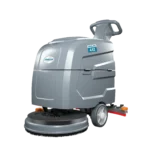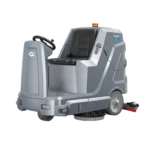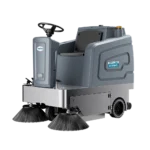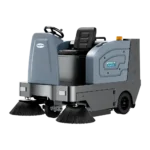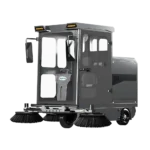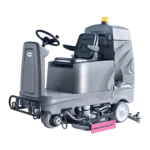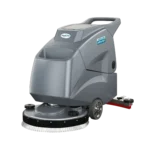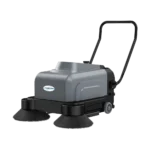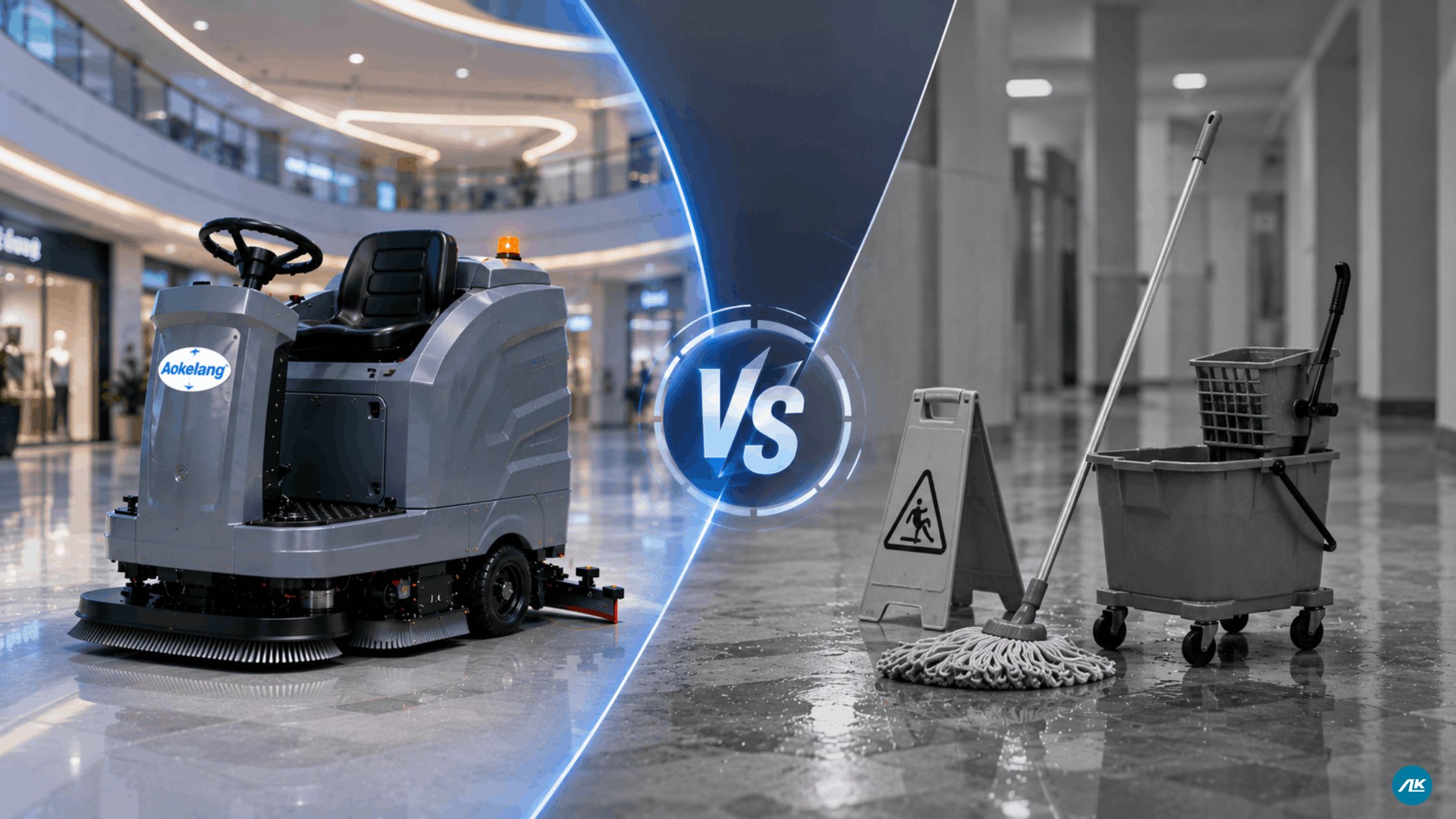
Yes scrubbing the floor is better than mopping in almost every commercial and industrial setting. Floor scrubbers clean more deeply, eliminate cross-contamination that mops spread, dry floors up to 80% faster, reduce chemical usage by up to 30%, cut labour time by half or more, and protect flooring surfaces over the long term. Mopping is sufficient for small domestic spaces and quick spot cleans. For any facility with significant floor area, regular foot traffic, or hygiene requirements, scrubbing outperforms mopping on every measurable dimension.
It’s a question that sounds simple on the surface but the answer matters significantly if you’re responsible for maintaining a commercial or industrial facility. The debate between scrubbing and mopping isn’t really about preference. It comes down to what each method actually does to your floor, how much it costs you in labour, and whether the result meets the hygiene standard your environment demands.
This guide gives you the full picture: Is scrubbing the floor better than mopping?, where scrubbing wins, what the science says about bacteria and cross-contamination, and how to match the right approach to your specific situation.
Table of Contents
What’s the Actual Difference Between Scrubbing and Mopping? Lets See If Scrubbing the Floor Better Than Mopping?
Before comparing results, it helps to understand exactly what each method does.
Mopping involves applying a water-and-detergent solution to the floor surface using a mop head, agitating the surface manually, and leaving the solution to dry or wiping it away. The mop head collects dirt as it goes — which means it also carries that dirt to the next section of floor. The same water is used repeatedly, becoming progressively more contaminated with each pass.
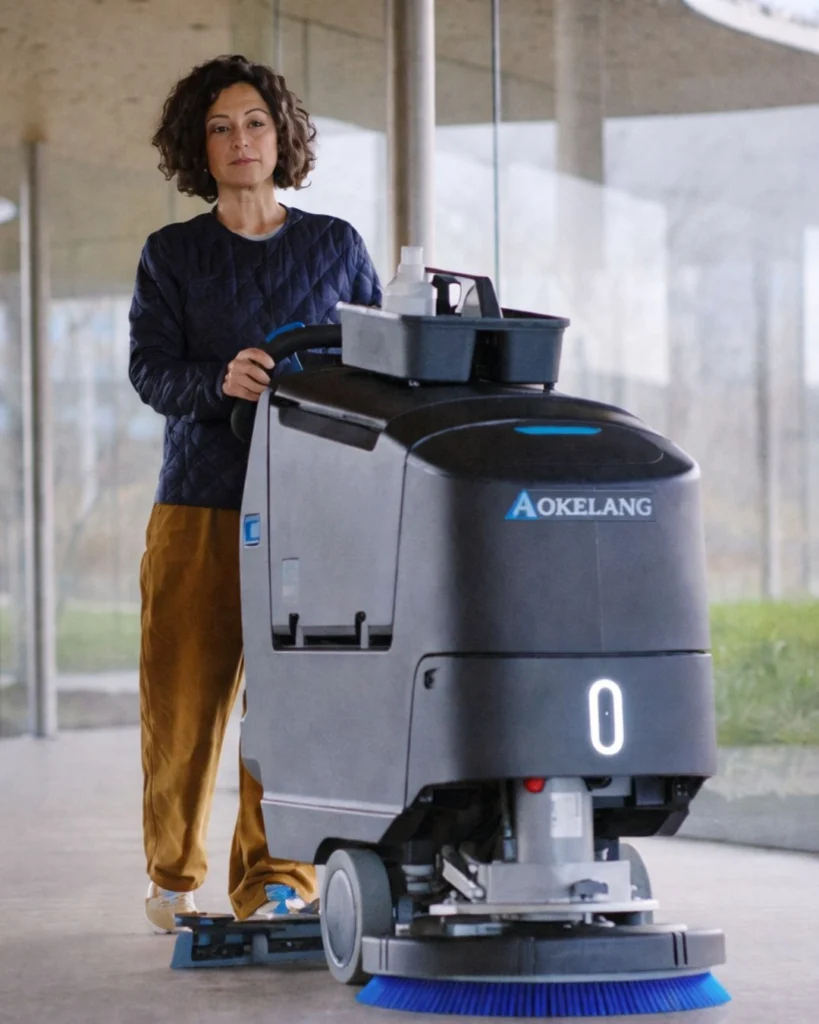
Floor scrubbing — done with a professional floor scrubber — operates on an entirely different principle. The machine simultaneously dispenses fresh, clean solution onto the floor, agitates the surface with rotating brushes or pads, and immediately vacuums up the dirty water through a squeegee system into a separate recovery tank. The floor sees only clean solution at every point. Dirty water is never redistributed.
That fundamental difference in mechanism is the root of every performance gap between the two methods
1. Hygiene: The Science Doesn’t Favour Mopping
This is where the comparison becomes most stark and most important for healthcare facilities, food processing environments, schools, and anywhere pathogen control matters.
Research published by ISSA (the Worldwide Cleaning Industry Association) found that mopping particularly with cotton string mops — results in measurable cross-contamination of bacteria across the cleaned floor surface. The mop head picks up bacteria from contaminated zones and transfers them to clean areas with each subsequent pass. Unless new mops are used every day and a rigid protocol is followed, mopping simply spreads bacteria around.
Research on hospital sanitation found that mops stored wet supported bacterial growth to very high levels and could not be adequately decontaminated by chemical disinfection alone laundering and thorough drying were required, but bacterial counts would build up again if mops were not changed daily.
Floor scrubbers eliminate this problem structurally. The machines continually dispense a solution of clean water and active chemicals, and the vacuum on the scrubber removes the solution immediately, so that contaminated liquid isn’t moved across the floor. Scrubbers also use brushes and pads, which won’t accumulate bacteria between uses.
This distinction is why regulated industries food production, healthcare, pharmaceuticals have largely moved away from mop-based cleaning in their primary cleaning protocols. The cross-contamination risk of mopping is simply incompatible with modern hygiene standards in high-risk environments.
2. Cleaning Depth: Scrubbing Lifts Dirt, Mopping Moves It
The physical action of mopping — pushing a wet mop head across a floor surface — has an inherent limitation. It applies solution and moves surface-level debris around. It doesn’t penetrate surface pores, grout lines, or textured floor finishes to lift embedded dirt.
Floor scrubbers use rotating brushes or pads that generate mechanical agitation against the floor surface. That rotating action, combined with clean solution applied consistently, physically dislodges embedded grime, oil, and organic material rather than merely distributing it.
Floor scrubbers utilize advanced technologies such as rotating brushes and high-pressure water jets to dislodge dirt, stains, and grime effectively. Unlike mops that often push dirt around, floor scrubbers provide a thorough and deep clean, leaving floors spotless and hygienic.
For environments where floors accumulate grease (commercial kitchens, food processing), fine dust (manufacturing, warehousing), or tracked-in grime (logistics, retail), this depth of clean is the difference between a floor that looks clean and a floor that actually is.
Also read – Why Shopping Centre Needs a Ride-On Scrubber
3. Speed and Efficiency: Mopping Cannot Scale
For a single room or a small office, mopping is adequate. It’s quick, requires no equipment investment, and handles light soil without complexity.
The problem emerges with scale. Manual mopping of large floor areas is slow, physically demanding, and produces diminishing-quality results as the operator and the mop water both become exhausted through the shift. Studies consistently find that using floor scrubbers can cut cleaning time by up to 50%, allowing businesses to focus on more critical tasks.
A single floor scrubber can replace three to four people doing manual mopping in the same time frame — meaning significant labour savings for businesses with large floor areas.
For facilities over 500–1,000 square metres, the productivity gap between mopping and a professional walk-behind floor scrubber is the difference between a cleaning operation that finishes on time and one that routinely runs into operational hours, requires additional staff, or produces inconsistent results as operators tire through the shift.
For anything above 3,000–5,000 square metres, ride-on floor scrubbers extend the productivity advantage further still — covering 5,000–10,000 m² per hour with a single operator.
4. Dry Times and Slip Safety: Floors Dry Up to 80% Faster
Mopping leaves floors wet. How wet depends on the mop type and operator technique, but even a well-wrung mop leaves significant moisture on the floor that requires drying time before the area can be safely re-opened to foot traffic or vehicle movement. In busy facilities, this creates either a safety hazard (wet floors with foot traffic) or operational disruption (closing sections while floors dry).
Floors cleaned with scrubbers dry 80% faster than traditionally mopped floors — reducing slip hazards and getting spaces back into use quicker.
The squeegee system on a professional floor scrubber extracts the vast majority of water from the floor surface immediately after the cleaning pass. The result is a floor that is nearly dry — sometimes fully dry — within minutes rather than the extended drying period following mopping.
For environments running continuous operations, this matters enormously. A warehouse with forklift traffic, a retail store that cannot close sections during trading hours, or a hospital corridor that needs to remain accessible — scrubbing allows cleaning to happen without the extended disruption that mopped floors require.
5. Chemical and Water Usage: Mopping Is Wasteful
Manual mopping has no precise control over how much solution is applied. Bucket concentrations are inconsistent. Application volume varies with operator technique. And because the dirty mop water is recycled across the floor repeatedly, operators often compensate by using stronger chemical concentrations — trying to offset the contamination problem with more product.
Professional floor scrubbers apply a precisely metered amount of cleaning solution to each section of floor. The application is consistent, the concentration is controlled, and dirty solution is immediately recovered rather than recycled.
The measurable result: floor scrubbers can reduce cleaning chemical usage by up to 30% compared to traditional mopping, because the machine controls solution application more precisely than manual methods. Water savings are similarly substantial — an automatic floor scrubber can help facilities save 10,400 gallons of water per year.
For businesses managing operating budgets carefully, the reduction in chemical spend alone contributes meaningfully to the total return on investment of a floor scrubber. Want to understand the full cost picture? Our blog on the benefits of floor scrubber machines covers the broader financial case in detail.
6. Flooring Surface Protection
How you clean a floor surface matters for how long it lasts. Mopping introduces prolonged moisture exposure to floor finishes, grout, and substrate materials. The repeated saturation of textured floors, tiles with grout lines, and porous surfaces from mopping contributes over time to finish degradation, grout erosion, and — in poorly ventilated environments — subsurface mould growth.
Floor scrubbers address this structurally. Because the squeegee system recovers water immediately, floors are not subjected to prolonged moisture exposure with each clean. The mechanical brush action removes soil without the need for excessive solution volume.
Regular use of floor scrubbers can extend floor lifespan by 25–40% compared to equivalent floor areas cleaned by mopping. On a commercial floor installation, that difference translates directly to deferred capital expenditure — years of additional service from the same surface before replacement is needed.
When Mopping Still Makes Sense
This is an honest comparison, so it’s worth being clear about where mopping retains its place.
Mopping is appropriate for:
- Small domestic spaces and individual rooms with light soil
- Quick spot-cleaning of isolated spills
- Tight, irregular, or inaccessible spaces where a floor scrubber cannot manoeuvre — around fixtures, in corners, under low furniture
- Supplementary cleaning between scheduled machine cleaning cycles in lower-traffic areas
Mops still work great for small spills, spot cleaning, and tight, irregular spaces with low traffic.
The practical reality for most commercial facilities is a combination approach: a floor scrubber handles the primary cleaning of open floor areas on the regular cycle, and mops are retained for spot cleaning and the specific areas that machines cannot reach. This is the setup that delivers both the performance advantage of machine scrubbing and the flexibility that every real-world facility occasionally needs.
Scrubbing vs. Mopping: A Direct Comparison
| Factor | Mopping | Floor Scrubber |
| Cleaning depth | Surface-level only | Deep agitation of embedded soil |
| Bacteria cross-contamination | High — mop spreads contamination | Eliminated — clean solution at all points |
| Drying time | Extended (20–45+ minutes) | Near-instant (minutes) |
| Chemical usage | Inconsistent, often excessive | Precisely metered, up to 30% less |
| Water usage | High, poorly controlled | Significantly reduced |
| Labour requirement per m² | High — slow, physically demanding | Low — faster, less physically demanding |
| Slip risk during cleaning | High — extended wet floor | Low — near-dry floors immediately |
| Floor lifespan impact | Negative — prolonged moisture exposure | Positive — up to 40% longer floor life |
| Consistency between operators | Variable | Consistent regardless of operator |
| Suitable for large areas | No — impractical beyond ~500 m² | Yes — from compact walk-behinds to industrial ride-ons |
Choosing the Right Floor Scrubber
If you’re ready to move from mopping to machine scrubbing, the machine selection matters. The right choice depends on your floor area, layout, and cleaning frequency.
For smaller commercial spaces — retail stores, restaurants, small warehouses, offices — a walk-behind floor scrubber is the right starting point. Compact, manoeuvrable, and easy to operate, walk-behind models handle spaces up to roughly 3,000–5,000 m² efficiently. If you want to compare models and understand what makes a strong walk-behind choice, the benefits of walk-behind floor scrubbers blog covers the key considerations.
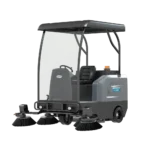
For large commercial and industrial facilities — distribution centres, airports, manufacturing plants, shopping malls — ride-on floor scrubbers eliminate the productivity ceiling of walk-behind machines and return the largest labour savings per shift.
For heavy industrial environments — factories, food processing plants, automotive facilities — industrial floor scrubber machines are built specifically for demanding conditions: heavy soiling, industrial cleaning agents, continuous daily operation.
For facilities where operator availability is a constraint — automatic floor scrubbers and robotic models handle cleaning with reduced operator input, ideal for large regularly-shaped floor areas where autonomous operation delivers consistent results.
For guidance on matching the right machine to your environment, the how to choose a floor scrubber guide is a practical starting point. You can also see the best commercial floor scrubber options in 2026 and the best automatic floor scrubber roundup for specific model comparisons.
If sourcing directly from a manufacturer is a priority, the floor scrubber manufacturer and supplier guide and the overview of working with a floor scrubber manufacturer in China are worth reviewing.
Explore the full floor scrubber machine range to compare options across all sizes and formats, or browse the complete commercial floor cleaning machines range to see scrubbers alongside sweepers and combined solutions for your facility type.
The Bottom Line
Is scrubbing the floor better than mopping? For any commercial or industrial environment with meaningful floor area, the answer is an unambiguous yes — on hygiene, speed, safety, cost, and surface protection.
Mopping has its place as a tool for spot cleaning and small spaces. As a primary cleaning method for commercial facilities, it falls short in every dimension that matters: it spreads rather than removes bacteria, it leaves floors wet and hazardous for extended periods, it consumes more chemical and water than necessary, it demands excessive labour, and it produces inconsistent results that vary between operators and across shifts.
A professional floor scrubber doesn’t just clean better. It cleans consistently, safely, and at a cost per square metre that makes the investment case straightforward once you run the numbers for your specific operation.
Is scrubbing the floor better than mopping for commercial cleaning?
Yes. Floor scrubbing provides deeper cleaning, reduces bacterial cross-contamination, dries floors faster, lowers labor costs, and uses less water and chemicals compared to traditional mopping.
Why do floor scrubbers clean better than mops?
Floor scrubbers use rotating brushes and vacuum systems to remove dirt, grime, and contaminated water immediately. Mops often spread dirty water across surfaces, resulting in less effective cleaning.
Do floor scrubbers reduce bacteria and cross-contamination?
Yes. Unlike mops, which can transfer bacteria from one area to another, floor scrubbers use clean solution and separate dirty water recovery tanks, helping improve hygiene standards in commercial environments.
Are floor scrubbers faster than manual mopping?
Floor scrubbers can reduce cleaning time by up to 50% or more. Large facilities often replace multiple manual cleaners with one operator using a walk-behind or ride-on scrubber.
Do scrubbed floors dry faster than mopped floors?
Yes. Professional floor scrubbers recover dirty water immediately after cleaning, allowing floors to dry significantly faster and reducing slip hazards in busy workplaces.