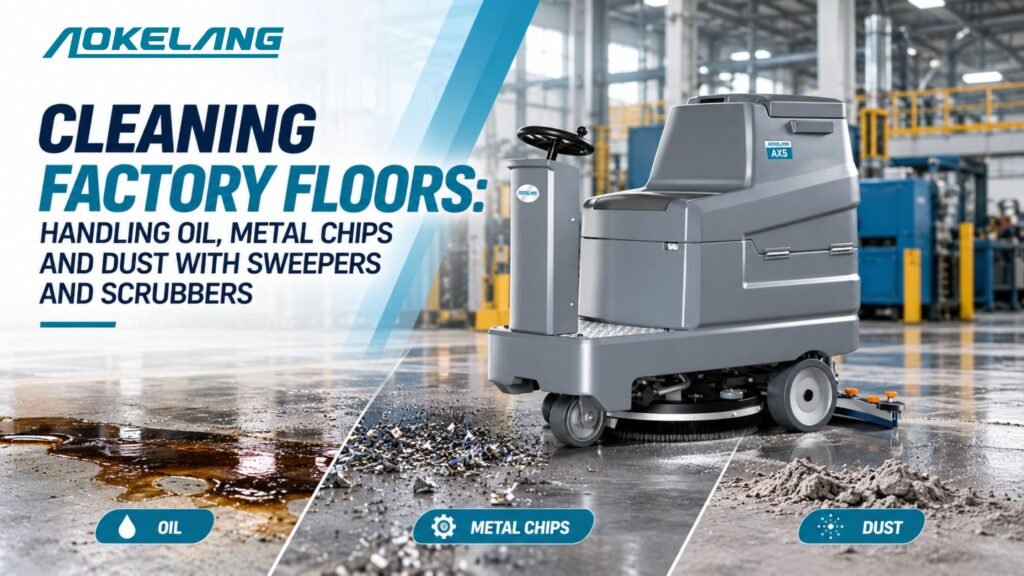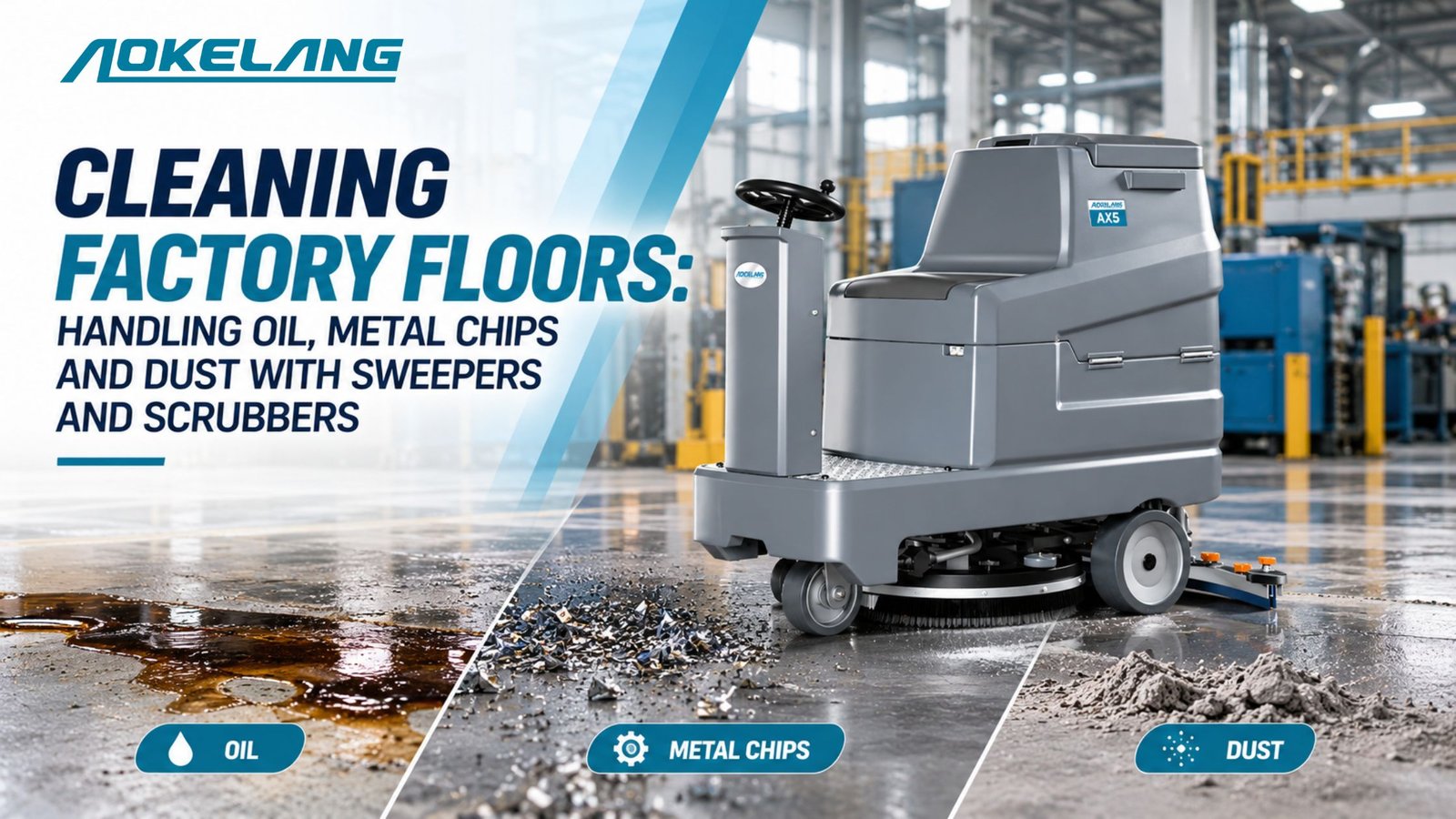
Cleaning Factory Floors: Factory floor cleaning works best in two stages. A sweeper removes dry debris such as metal chips, dust and packaging. Then a scrubber removes oil, coolant and the film they leave behind. Treat each zone differently: oily machining areas need daily scrubbing, while assembly and storage areas may only need sweeping most days.
Key takeaways
- Effective factory floor cleaning follows one rule: sweep dry debris first, then scrub. Scrubbing over chips and dust damages the scrubber and spreads dirt.
- Oil needs a scrubber, not a sweeper. Soak up pools with absorbent first, then scrub with a low-foam degreaser and oil-resistant squeegee blades.
- Metal chips are heavy, sharp and hard on equipment. Pick up steel chips with a magnet or sweeper before scrubbing, and empty the hopper by weight, not just volume.
- Fine dust needs good filtration and often water spray. Combustible dust, such as aluminium or wood dust, needs special care and may need specialist equipment.
- Clean by zone. A machining area, an assembly line and a shipping dock each need a different method and frequency.
Table of Contents
Why is factory floor cleaning different from other floors?
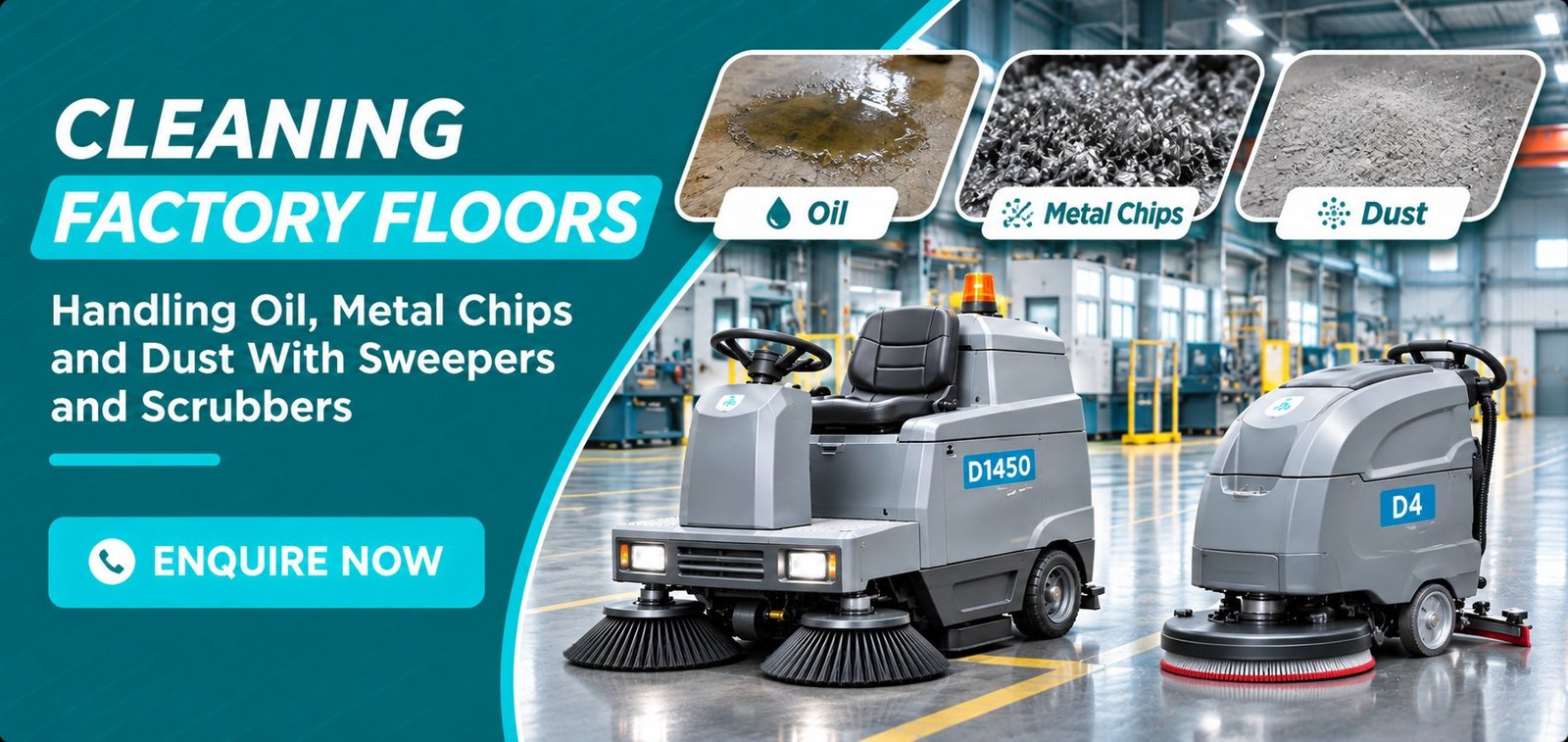
Factory floors collect several kinds of soil at once, often in the same aisle:
- Oil and fluids: cutting oil, coolant, hydraulic fluid and lubricants
- Metal chips and swarf: sharp, heavy, and sometimes coated in coolant
- Fine dust: from grinding, sanding, cutting, powders and raw materials
- General debris: packaging, pallet splinters, strapping and wrap
Each one needs a different tool. Using the wrong tool in the wrong order is the most common reason factory floors stay dirty or become unsafe.
Should you sweep or scrub a factory floor first?
Sweep first, then scrub. Here’s why the order matters:
- Chips and grit damage scrubbers. They cut squeegee blades, lift the blades off the floor and leave streaks, and clog vacuum hoses.
- Dry dust turns to mud when a scrubber wets it, and the mud smears across the floor.
- Bulky debris clogs scrub decks. Wrap and strapping wind around brushes.
A sweeper removes the dry load quickly. The scrubber then only has the oil and film left to deal with, which is the job it’s built for.
The one exception is light debris on a cylindrical scrubber. A cylindrical scrub deck can collect small debris in a tray while it scrubs. Our guide to disc vs cylindrical scrub heads explains when that works.
How do you clean oil off a factory floor?
Oil is the biggest slip hazard on most factory floors, and a sweeper can’t remove it. Here’s a step-by-step method.
1. Contain spills first
Never drive a sweeper or scrubber through a pool of oil.
- Stop the leak at its source, if it’s safe to do so.
- Spread absorbent granules or pads over the spill.
- Let the absorbent soak up the oil.
- Sweep up the used absorbent and dispose of it according to your site’s waste rules.
2. Scrub the remaining film
The film left after a spill, and the general oily layer around machines, is a scrubber job.
- Chemical: use a low-foam degreaser made for automatic scrubbers. High-foam degreasers fill the recovery tank with foam and cut suction.
- Brush: a polypropylene brush suits most oily concrete. On heavily stained, rough concrete, a grit brush cuts through the build-up.
- Speed: slow down in oily areas, so the brush has time to work and the squeegee picks up all the dirty solution.
- Second pass: for heavy build-up, scrub once with the squeegee raised to let the degreaser work for a few minutes. Then scrub again with the squeegee down to pick everything up.
3. Use oil-resistant squeegee blades
Standard gum rubber blades swell and warp in oil, and then they stop wiping the floor dry. In oily areas, use polyurethane or another oil-resistant blade material. Our guide to floor scrubber squeegee blades compares the options.
4. Dispose of oily water correctly
The recovery tank will contain oil and degreaser. Don’t empty it into a storm drain. Follow your site’s rules for oily wastewater, which may mean an oil separator or a waste collection service.
Also read – Charcoal Testing Explained
How do you clean up metal chips and swarf?
Metal chips are small, but they cause outsized problems:
- They’re sharp. They cut squeegee blades, tyres and skirts.
- They’re heavy. A sweeper hopper can reach its weight limit while it still looks half empty.
- They’re often wet with coolant, which makes them stick together and to the floor.
Steel and iron chips
Steel and iron are magnetic, which makes them easier to collect.
- Pick up large chips at the machine. Use a magnetic sweeper bar or a chip shovel at each workstation before chips spread into the aisles.
- Sweep the aisles. A sweeper collects the smaller chips spread by foot and forklift traffic.
- Empty the hopper by weight. Check your sweeper’s hopper weight limit, and empty it more often than you would for light debris.
- Scrub only after the chips are gone.
Aluminium, brass and other non-magnetic chips
These metals don’t respond to a magnet, so collection relies on sweeping and manual pickup.
Aluminium fines can also be a combustible dust hazard. See the dust section below.
Brush choice for chips
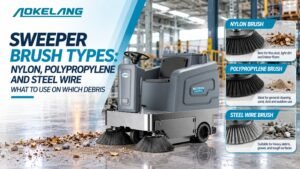
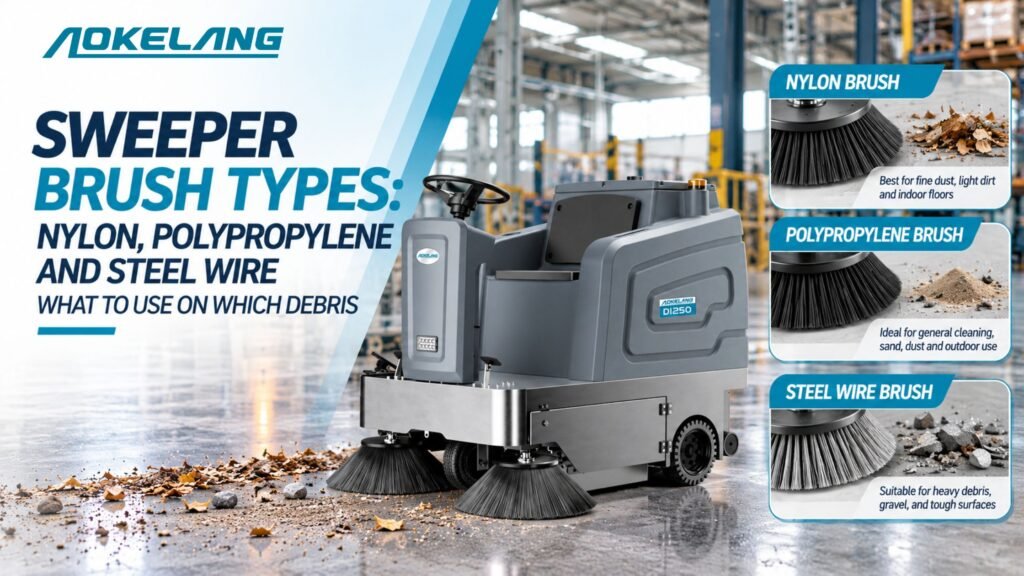
Polypropylene and nylon bristles move metal chips well. Avoid steel wire brushes in chip areas. They add little, and broken wires mix with the chips. Our guide to sweeper brush types compares bristle materials in detail.
How do you control fine dust on a factory floor?
Fine dust from grinding, cutting, sanding and powder handling settles everywhere. Sweeping it badly just moves it into the air.
- Use a sweeper with good filtration. A vacuum fan and filter pull dust into the hopper instead of blowing it around.
- Shake the filter often. A clogged filter cuts suction, and dust escapes at the front of the machine.
- Use water spray at the side brushes in very dusty areas, unless your dust cakes when wet, as cement and some powders do.
- Follow with a scrubber to remove the fine film the sweeper leaves on smooth floors.
Our guide to floor sweeper dust control explains filters, shakers and water spray.
Combustible dust needs extra care
Some factory dusts can ignite or explode when they’re suspended in the air. These include:
- aluminium and magnesium fines
- wood dust
- flour and sugar
- some plastics
If your site handles combustible dust, follow your site’s combustible dust rules and local regulations. Standard sweepers may not be suitable. Some sites need explosion-protected equipment, or dedicated industrial vacuums instead.
How often should each factory zone be cleaned?
Cleaning every area the same way wastes time in some zones and leaves others unsafe. Plan by zone.
| Zone | Main soil | Method | Typical frequency |
| Machining and CNC area | Oil, coolant, metal chips | Chip pickup at machines, sweep, then scrub with degreaser | Chips every shift; scrub daily |
| Fabrication and welding | Metal fines, slag, dust | Sweep with good filtration, scrub as needed | Sweep daily; scrub several times a week |
| Assembly lines | Light dust, small parts, packaging | Sweep, then light scrub | Sweep daily; scrub weekly or as needed |
| Main aisles and walkways | Tracked dirt, tyre marks, oil drips | Sweep, then scrub | Sweep daily; scrub several times a week |
| Warehouse and shipping | Packaging, wrap, pallet debris, dust | Sweep | Daily |
| Loading docks | Grit, rainwater, leaves, oil drips | Sweep, scrub oily spots | Daily sweep; scrub as needed |
These frequencies are starting points. Adjust them to how quickly each zone gets dirty on your site.
How do you protect floor markings and coatings?
Many factory floors have epoxy coatings and painted walkway lines. Aggressive cleaning wears them away.
- Use polypropylene or nylon brushes on coated floors, not steel wire or coarse grit brushes.
- On smooth coated floors, choose the softest scrub pad or brush that removes the oil.
- Use degreasers that are safe for your floor coating.
- Check the coating and the line markings regularly for wear.
Which machines does a factory need?
Most factories need both a sweeper and a scrubber. The size depends on floor area and aisle width.
Sweeper
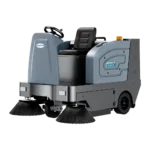
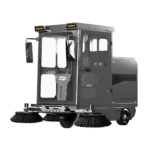
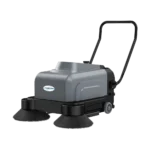
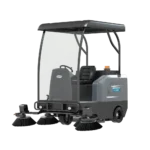
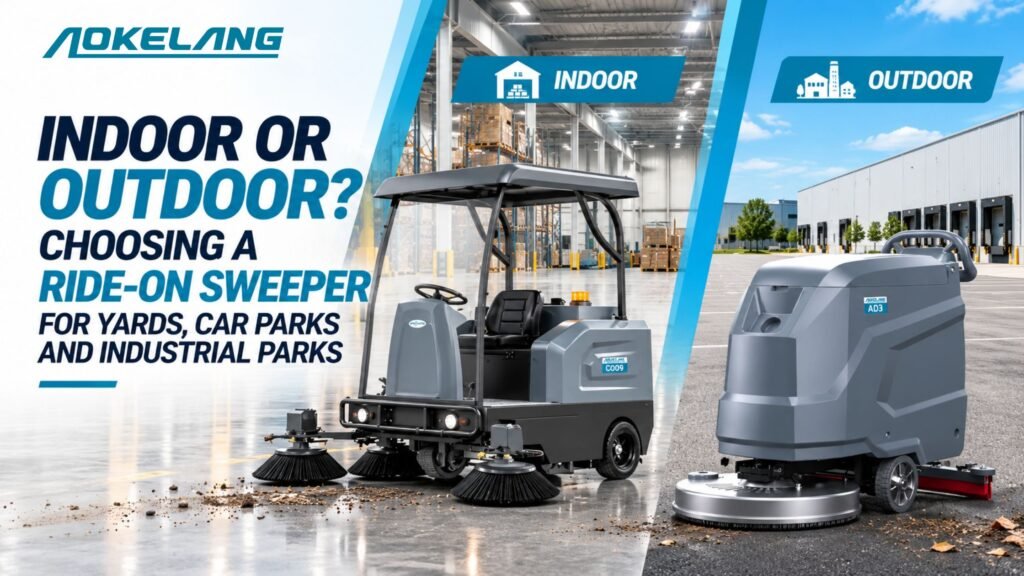
A ride-on sweeper suits large production halls and long aisles. A walk-behind suits smaller areas and tight spaces between machines.
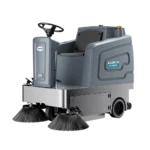
The Aokelang D1450, for example, sweeps a 1,450 mm path, with a 120 L debris container and a 90 L water tank for dust control.
Scrubber
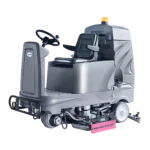
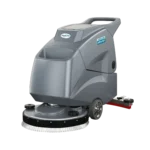
A ride-on scrubber suits large open floors. A walk-behind suits tighter areas between machines.
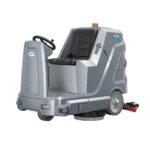
The Aokelang AD6 ride-on scrubber is built for demanding environments such as warehouses and factories. It cleans a 760 mm path, with a 90 L clean water tank and a 100 L recovery tank. Aokelang scrubbers are rated for concrete, epoxy, tile, terrazzo and other common factory floors.
What to check before buying for a factory
- Aisle width between machines, including turning space at the ends
- Hopper weight limit, if you sweep metal chips
- Filter type and shaker, for fine dust
- Oil-resistant squeegee blades, for oily zones
- Low-foam degreaser compatibility, with the scrubber’s tanks and pump
- Runtime, against your cleaning window between shifts
What daily routine keeps a factory floor safe?
During each shift
- Collect chips at each machine before they spread.
- Contain oil spills immediately with absorbent.
- Keep walkways clear of debris and fluids.
End of each shift
- Sweep the aisles and production areas.
- Scrub the oily zones with degreaser.
- Empty the sweeper hopper and shake the filter.
- Empty and rinse the scrubber’s recovery tank. Dispose of oily water correctly.
- Wipe the squeegee blades, and check them for cuts from metal chips.
Weekly
- Deep scrub the machining and fabrication areas.
- Check the brushes, squeegee blades and skirts for wear and chip damage.
- Check the floor coatings and walkway markings.
Frequently asked questions – Cleaning Factory Floors
What is the best method for factory floor cleaning?
Sweep first to remove dry debris such as chips, dust and packaging. Then scrub to remove oil, coolant and film. Plan the frequency zone by zone, with more cleaning in oily machining areas.
Can a floor scrubber pick up metal chips?
It can pick up a few small chips, but it’s the wrong tool for the job. Chips cut squeegee blades, clog hoses and cause streaks. Remove chips with a magnet, sweeper or shovel before scrubbing.
How do you remove oil stains from a concrete factory floor?
Soak up any pooled oil with absorbent first. Then scrub with a low-foam degreaser, using a polypropylene or grit brush, and let the degreaser work before the final pickup pass. Old, deep stains may need several passes.
Is a sweeper safe for aluminium dust?
Aluminium fines can be a combustible dust hazard. Follow your site’s combustible dust rules and local regulations, which may require explosion-protected equipment or dedicated vacuums instead of a standard sweeper.