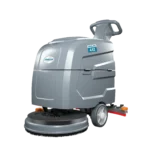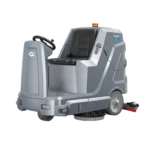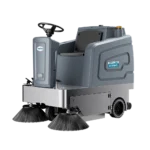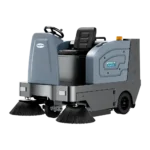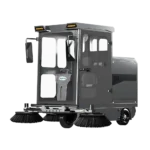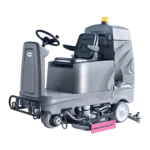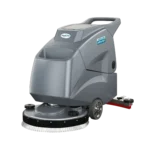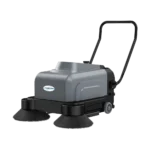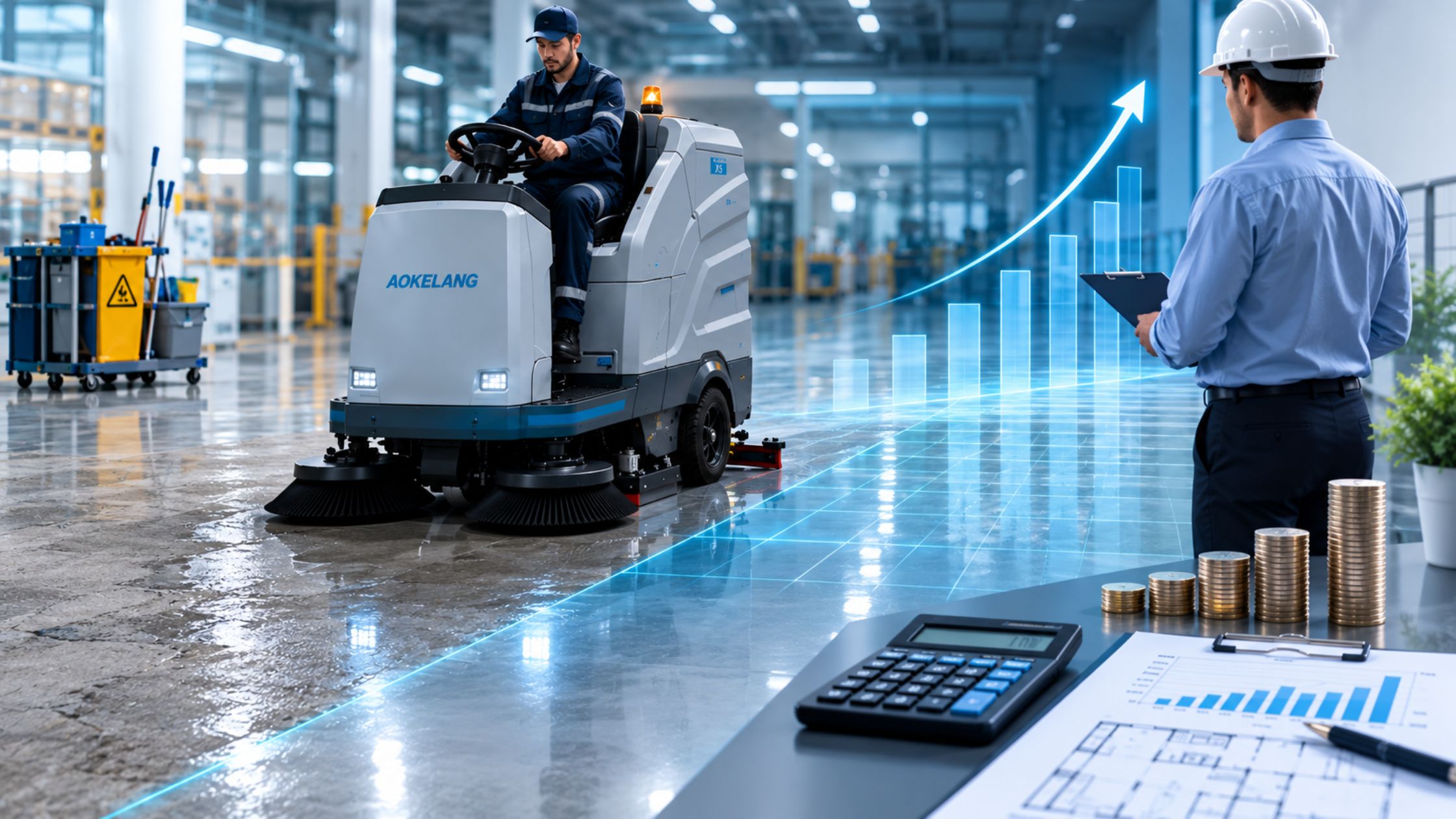
The in-house Floor Scrubber Cost Per Square Foot operating machine amortization, labor, and consumables combined typically works out to roughly $0.001 to $0.01 per square foot per cleaning cycle, once you isolate just the scrubbing task. That’s well below the $0.10–$0.40 per square foot that outsourced full-scope janitorial contracts charge, because those contracts bundle restrooms, trash, dusting, and contractor overhead on top of floor care.
This guide shows you how to calculate your own cost per square foot, walks through a worked ROI example, and gives you industry benchmarks to compare against.
Table of Contents
How Much Does It Floor Scrubber Cost Per Square Foot?
Two very different numbers get called “cost per square foot” in facility management, and mixing them up leads to bad comparisons:
| Cost Type | Typical Range | What It Includes |
|---|---|---|
| Outsourced General Commercial Cleaning Contract | Roughly $0.17 per square foot on average, with a broader range of about $0.10–$0.40 per square foot for standard service | Full janitorial scope including dusting, trash removal, restroom cleaning, floor care, contractor labor, and overhead costs |
| Outsourced Industrial Cleaning Contract | Typically $0.10–$0.30+ per square foot, often higher than standard office cleaning due to specialized requirements | OSHA compliance, specialized cleaning equipment, industry-specific safety training, and industrial facility cleaning services |
| Periodic Scrub-and-Recoat or Strip-and-Refinish Service | Scrub and recoat: approximately $0.20–$0.40 per square foot; Strip and refinish: approximately $0.30–$0.60 per square foot | One-time or scheduled deep floor restoration services designed to renew and protect flooring surfaces rather than routine daily cleaning |
| In-House Mechanized Floor Scrubbing (Machine + Labor + Consumables Only) | Approximately $0.001–$0.01 per square foot per cleaning cycle | The floor scrubbing task alone, including machine operation, labor, water, detergent, and consumable costs, without other janitorial services such as dusting, trash collection, or restroom cleaning |
The takeaway: if you’re comparing an in-house scrubber purchase against an outsourced contract quote, you’re not comparing the same scope of work. The outsourced number reflects a bundled service; the in-house number reflects one task done with owned equipment. To make a fair comparison, either isolate the floor-care portion of your outsourced contract, or compare your in-house cost against the outsourced vs. in-house labor math directly.
Also read – How to Become a Floor Scrubber Distributor or Reseller
How Do You Calculate Your Own Cost Per Square Foot?
Use this formula:
Cost per sq ft = (Machine amortized cost per cycle + Labor cost per cycle + Consumable cost per cycle) ÷ Square feet cleaned per cycle
- Machine amortized cost per cycle = purchase price ÷ expected lifespan in cleaning cycles (a machine used daily for 7 years has roughly 2,500 cycles)
- Labor cost per cycle = operator hourly wage × hours to clean the area at the machine’s rated productivity
- Consumable cost per cycle = pads, brushes, squeegee wear, and cleaning solution, averaged per cleaning session
Worked Example Across Three Facility Sizes
Productivity figures below convert each machine’s rated m²/hour to square feet (1 m² ≈ 10.76 sq ft) to estimate labor time.
| Scenario | Machine | Facility Area | Rated Productivity | Est. Time to Clean | Labor Cost/Cycle (at $20/hr) |
| Small office/retail | Aokelang D2 (350 mm, up to 1,350 m²/h) | 10,000 sq ft (~930 m²) | ~14,500 sq ft/h | ~0.7 hours | ~$14 |
| Mid-size warehouse | Aokelang T3 (510 mm, up to 2,000 m²/h) | 50,000 sq ft (~4,650 m²) | ~21,500 sq ft/h | ~2.3 hours | ~$47 |
| Large distribution center | Aokelang D6 (760 mm, up to 5,200 m²/h) | 150,000 sq ft (~13,935 m²) | ~56,000 sq ft/h | ~2.7 hours | ~$54 |
Adding machine amortization (roughly $2–$8 per cycle depending on purchase price and expected lifespan) and consumables (typically $2–$10 per cycle depending on facility size) to the labor figures above, total cost per cycle for these three scenarios lands in the range of $20–$70, which works out to roughly $0.0007–$0.002 per square foot for the mid-size and large scenarios, and slightly higher for the small office scenario due to less area to spread the fixed machine cost across.
Also read – Industrial Floor Cleaning Equipment Buying Guide
What’s the ROI and Payback Period for a Floor Scrubber?
Payback period is the more useful number for a capital purchase decision than cost per square foot alone, since it directly compares the machine’s price against what you’re currently spending.
Payback period (months) = Machine price ÷ Monthly labor savings
Monthly labor savings come from the difference between your current cleaning method (manual mopping or an outsourced contract) and in-house mechanized cleaning. As a reference point, mechanical scrubbing is roughly 75% faster than manual mopping, and in a 10,000 sq ft facility, switching from mopping to a basic walk-behind scrubber saves an estimated $33 in labor cost per cleaning cycle a figure that scales up with facility size and cleaning frequency. See the full labor savings breakdown for how this scales across larger facilities.
Example Payback Calculation
- Facility: 50,000 sq ft warehouse, cleaned 5 days/week
- Current method: manual mopping, costing an estimated $235 per cycle in labor (based on the $33-per-10,000-sq-ft benchmark scaled to 50,000 sq ft)
- New method: walk-behind scrubber, costing roughly $47 in labor per cycle (from the table above)
- Labor savings per cycle: ~$188
- Monthly savings (20 cleaning days): ~$3,760
- Machine price: ~$4,500 (mid-range walk-behind)
- Payback period: roughly 1.2 months
Facilities cleaning less frequently, or with lower labor rates, will see a longer payback period, but most mid-size to large facilities cleaning multiple times per week still land within the commonly cited 6–12 month payback window once labor savings are calculated against actual machine cost.
What Factors Change Your Actual Cost Per Square Foot?
- Cleaning frequency. More frequent cleaning spreads the machine’s amortized cost across more cycles, lowering cost per square foot, but also increases total consumable spend.
- Local labor rate. Higher-wage markets see faster payback from mechanization since manual labor cost savings are larger in dollar terms.
- Battery type. Lithium batteries cost more upfront but typically last longer and charge faster, which can lower cost per cycle over the machine’s full lifespan see this battery cost comparison.
- Machine utilization. A machine sitting idle due to downtime or being oversized for the facility still accrues amortized cost without offsetting labor savings, which raises effective cost per square foot.
- Facility layout. Open floor plans let a machine run closer to its rated productivity; facilities with many obstacles, narrow aisles, or frequent turns reduce actual coverage rate below the rated spec.
- Maintenance discipline. Poorly maintained machines break down more often and wear consumables faster, both of which raise cost per square foot over time — see this maintenance guide for the upkeep that protects your ROI.
Cost Per Square Foot Benchmarks to Compare Against
| Facility Type | Outsourced Janitorial Benchmark | Notes |
|---|---|---|
| Standard Office | $0.12–$0.18 per square foot | Typical 2026 commercial cleaning rate benchmark for office environments. |
| Warehouse | $0.10–$0.20 per square foot | Common benchmark for warehouse cleaning, depending on floor area, traffic levels, and service frequency. |
| Medical/Healthcare Facility | $0.18–$0.30 per square foot | Higher rates reflect stricter sanitation standards, infection-control protocols, and regulatory compliance requirements. |
| General Industrial Facility | $0.10–$0.30+ per square foot | Often includes specialized cleaning equipment, ride-on scrubbers, safety training, and compliance documentation. |
These figures represent full outsourced service contracts, not just floor scrubbing, so use them as a ceiling for comparison rather than a direct substitute for your own in-house cost-per-square-foot calculation above.
Next Steps
To run this calculation for your own facility, you’ll need your floor area, current cleaning frequency, and local labor rate. Browse the full floor scrubber range for factory-direct pricing to plug into the formula above, or request a quote with your facility details for a tailored payback estimate. For a deeper look at the underlying purchase price ranges, see How Much Does a Commercial Floor Scrubber Cost in 2026?, or contact the Aokelang team directly.
Floor Scrubber ROI FAQs
Is cost per square foot the right metric to justify a floor scrubber purchase?
It’s useful for comparing machines against each other, but payback period is usually more persuasive for a capital purchase decision, since it directly shows how long the machine takes to pay for itself against your current cleaning costs.
How does facility size affect cost per square foot?
Larger facilities generally see a lower cost per square foot because the machine’s fixed amortized cost is spread across more cleaned area per cycle, while very small facilities may see a higher effective cost per square foot unless cleaning frequency is high enough to justify the purchase.
Does outsourcing always cost more than buying equipment in-house?
Not always — outsourced contracts bundle services beyond floor care and include contractor overhead and profit margin, so for facilities with light or infrequent floor cleaning needs, outsourcing part or all of the janitorial scope can still be more cost-effective than owning and maintaining equipment.
What’s a realistic payback period for a mid-size warehouse buying its first scrubber?
Based on typical labor savings, most mid-size warehouses cleaning multiple times per week see payback within 6 to 12 months, though facilities with higher cleaning frequency or higher local labor rates often see it faster.
Do ride-on scrubbers have a better or worse cost per square foot than walk-behind models?
Ride-on scrubbers usually have a lower cost per square foot at large facility scale because their higher productivity spreads both machine and labor cost across far more square footage per cycle, even though the upfront purchase price is higher.