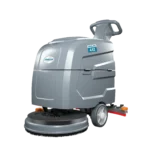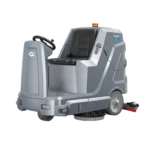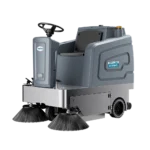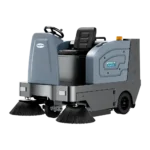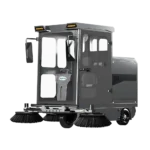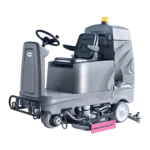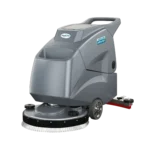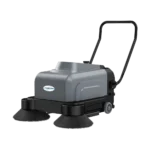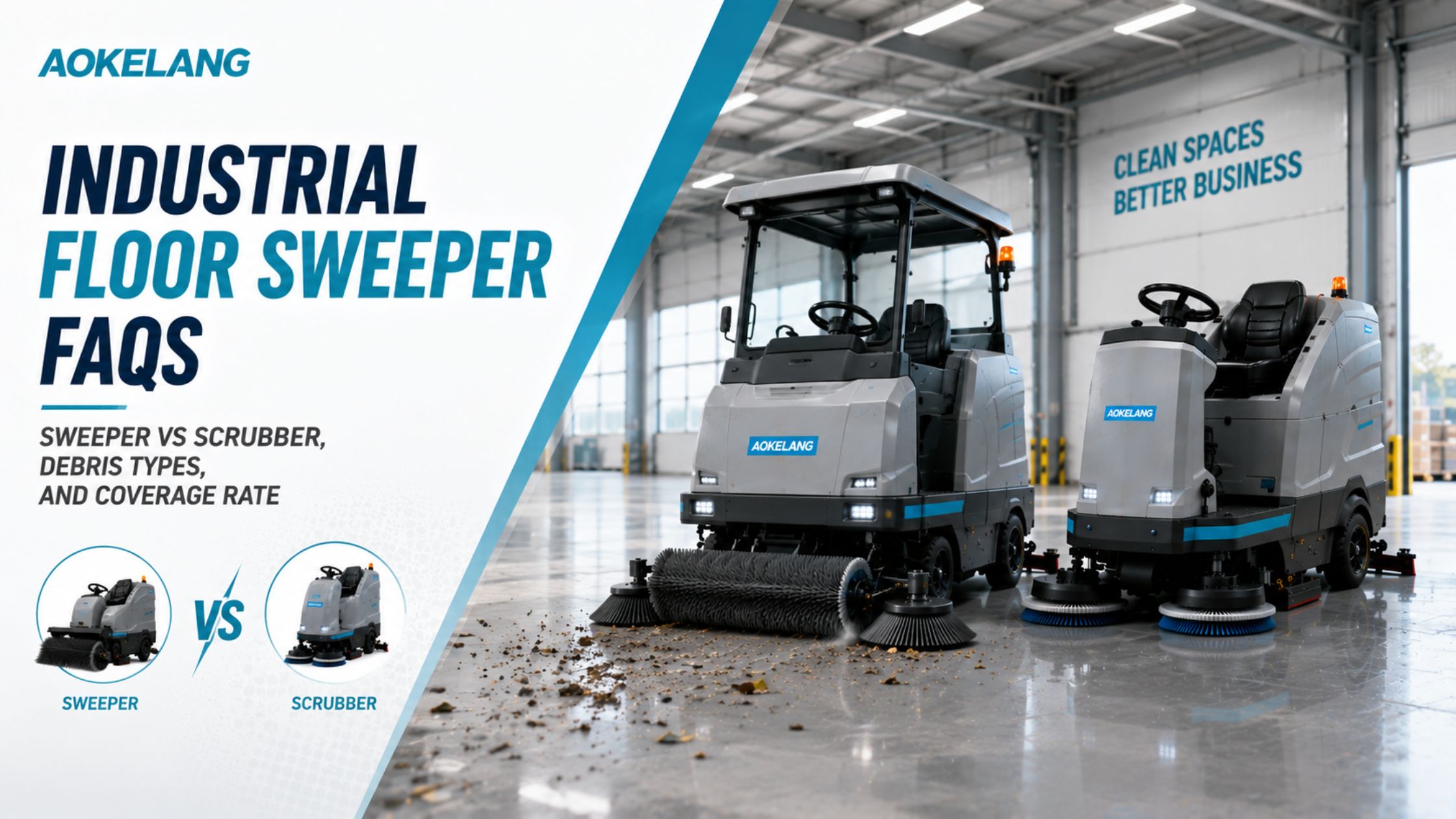
An industrial floor sweeper removes dry debris using brushes and a collection hopper, while a floor scrubber uses water and detergent to wet-clean embedded dirt and stains — most facilities need both, used in sequence. This page answers the most common questions about how sweepers work, how walk-behind and ride-on models compare, and what to expect from hopper capacity, debris handling, and equipment lifespan.
Table of Contents
What’s the Difference Between a Floor Sweeper and a Floor Scrubber — Which Do I Need?
A floor sweeper picks up dry debris — dust, dirt, gravel, packaging scraps — using brushes and a collection hopper, with no water involved. A floor scrubber uses water and detergent to wet-clean and remove embedded dirt and stains. If your floor has loose debris, sweep first; if it has grime, grease, or stains, scrub. Many facilities use both machines in sequence rather than choosing one over the other. See Floor Scrubber vs. Floor Sweeper for a fuller side-by-side breakdown of when each machine is the right tool.
Do I Need to Pre-Sweep Before Using a Floor Scrubber?
Yes, in most cases. Large debris can clog a scrubber’s recovery system or damage its brushes, so pre-sweeping removes loose material and makes the scrubbing process more effective and efficient. This is one of the main reasons facilities running both machine types typically run a sweeper — walk-behind or ride-on — as the first pass, before bringing in a scrubber for wet cleaning.
What Types of Debris Can an Industrial Floor Sweeper Handle?
Industrial floor sweepers handle a wide range of dry debris, including:
- Fine dust and sand
- Gravel and small stones
- Cardboard scraps and packaging film
- General industrial and warehouse debris
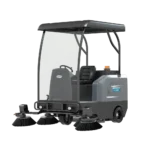
Aokelang’s sweeper range, from the compact D1050 up through the D2400, is built for demanding warehouse and factory environments where these debris types are a daily, ongoing condition rather than an occasional cleanup task.
What’s the Difference Between a Walk-Behind Sweeper and a Ride-On Sweeper for Warehouse Use?
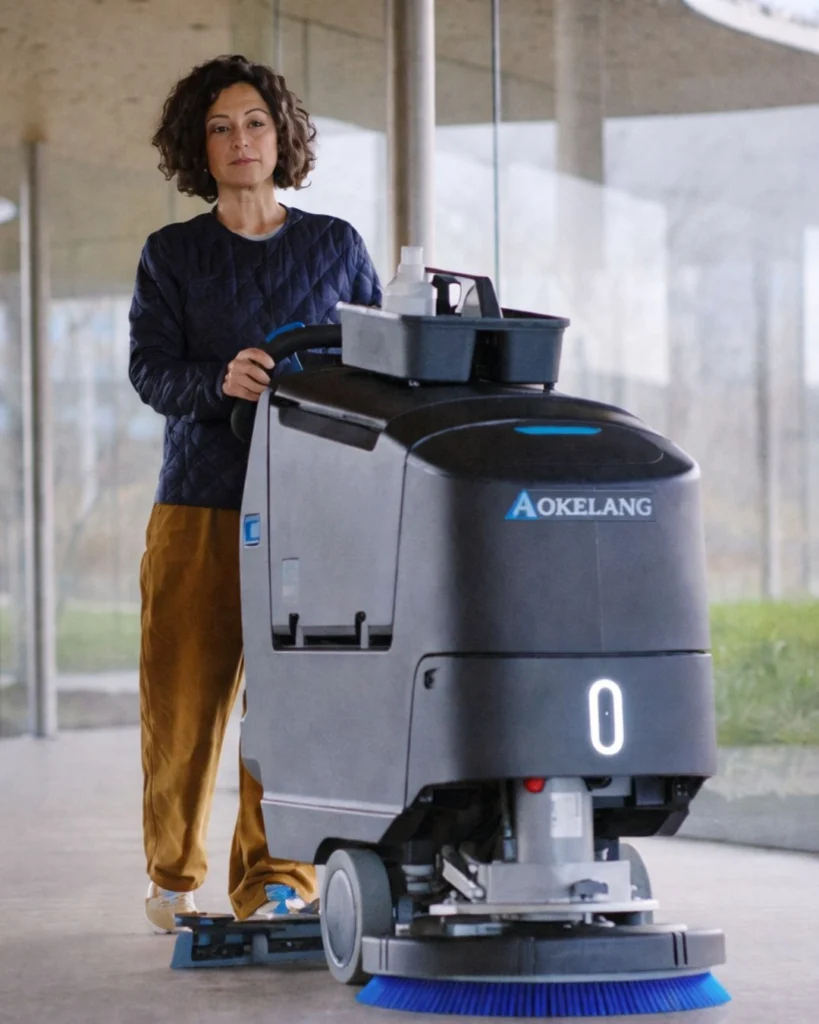
Walk-behind sweepers, like the Aokelang D1050 and D1250, are suited to smaller warehouses and areas with tighter spaces where maneuverability matters more than maximum coverage. Ride-on sweepers, like the D1450, D1850, D1900, D2000, D2300, and D2400, are designed for large floor areas, offering higher hopper capacity, faster sweeping speed, and significantly less operator fatigue over a full shift compared to walking a route.

How Much Floor Area Can a Ride-On Sweeper Cover Per Hour vs. a Walk-Behind?
| Sweeper Type | Typical Coverage Rate | Example Models |
| Walk-behind | 2,000–4,000 m²/hour | D1050, D1250 |
| Ride-on | 6,000–15,000+ m²/hour | D1450, D1850, D1900, D2000, D2300, D2400 |
The exact rate within each category depends on the specific model’s sweeping width and rated speed. Aokelang’s heavy-duty ride-on models, like the D2300 and D2400, are built specifically for high-throughput, large-area cleaning where a walk-behind machine’s coverage rate would leave a facility unable to complete its route within a typical cleaning window. For the full range of models and specs by facility size, see the floor sweeper guide and browse the complete sweeper lineup.
Does a Floor Sweeper Require Water or Chemicals to Operate?
Standard dry sweepers don’t require water or chemicals to operate. Some models include a dust suppression water spray system that uses a small amount of water to reduce airborne dust while sweeping, but this is a minor addition to the core dry-sweeping function, not a cleaning solution system. No cleaning chemicals are needed for sweeping operations at all — this is one of the clearest practical differences from a scrubber, which depends on water and detergent by design.
What Is the Hopper Capacity of Aokelang Sweepers, and How Often Does It Need to Be Emptied?
Hopper capacity varies by model, scaling up with machine size and sweeping width. Larger ride-on models like the D2300 and D2400 are designed for heavy-duty industrial use with larger hoppers specifically to reduce how often operators need to stop and empty during a shift — a meaningful factor in facilities cleaning continuously across large square footage. Specific hopper capacity figures in liters are listed on individual product pages; see the D1050 and D1900 product pages for two examples across the walk-behind and ride-on range, or browse the full sweeper lineup for the complete spec breakdown.
How Long Do Commercial Sweepers Typically Last Compared to Scrubbers?
Sweepers generally have a comparable or slightly longer lifespan than scrubbers — commonly 8–12 years with proper maintenance — since they don’t involve water exposure to internal components the way scrubbers do. The absence of a water and recovery system in a standard dry sweeper reduces corrosion risk over time, which is one practical advantage of sweeping equipment beyond its lower operating cost. Regular brush and filter maintenance still plays a large role in reaching the upper end of that lifespan range, similar to how scheduled maintenance affects scrubber lifespan.
Next Steps
To match a specific sweeper model to your facility’s floor area, debris type, and cleaning window, browse the complete floor sweeper range, or request a quote with your facility details for a tailored recommendation. For a deeper look at sweeper types and sizing, see the floor sweeper guide, or contact the Aokelang team with any questions not covered here.
Industrial Floor Sweeper FAQs
Industrial Floor Sweeper FAQs
Some integrated washer-sweeper machines combine both functions, but most facilities run separate sweeping and scrubbing equipment in sequence, since pre-sweeping protects a scrubber’s recovery system from clogging on loose debris.
Is a walk-behind sweeper enough for a mid-size warehouse?
It depends on your floor area and cleaning window — walk-behind sweepers typically handle 2,000–4,000 m²/hour, so a mid-size warehouse with a reasonable cleaning window can often be covered by a walk-behind model, while larger floor areas or tighter time windows usually call for a ride-on unit.
Do sweepers need less maintenance than scrubbers?
Sweepers generally have simpler maintenance needs than scrubbers, since they don’t have a water recovery system, squeegee, or solution tank to maintain — brush and filter upkeep are the main ongoing tasks.
What happens if I skip pre-sweeping before scrubbing?
Loose debris left on the floor can clog a scrubber’s squeegee and recovery system, reducing how well it picks up dirty water and increasing the chance of needing mid-session cleanouts or repairs.