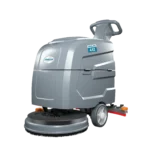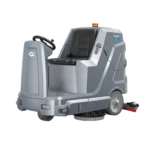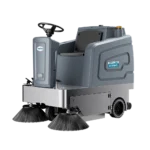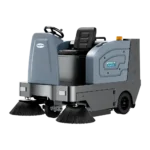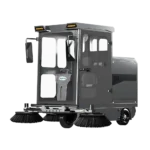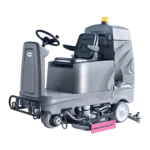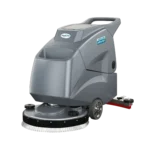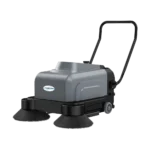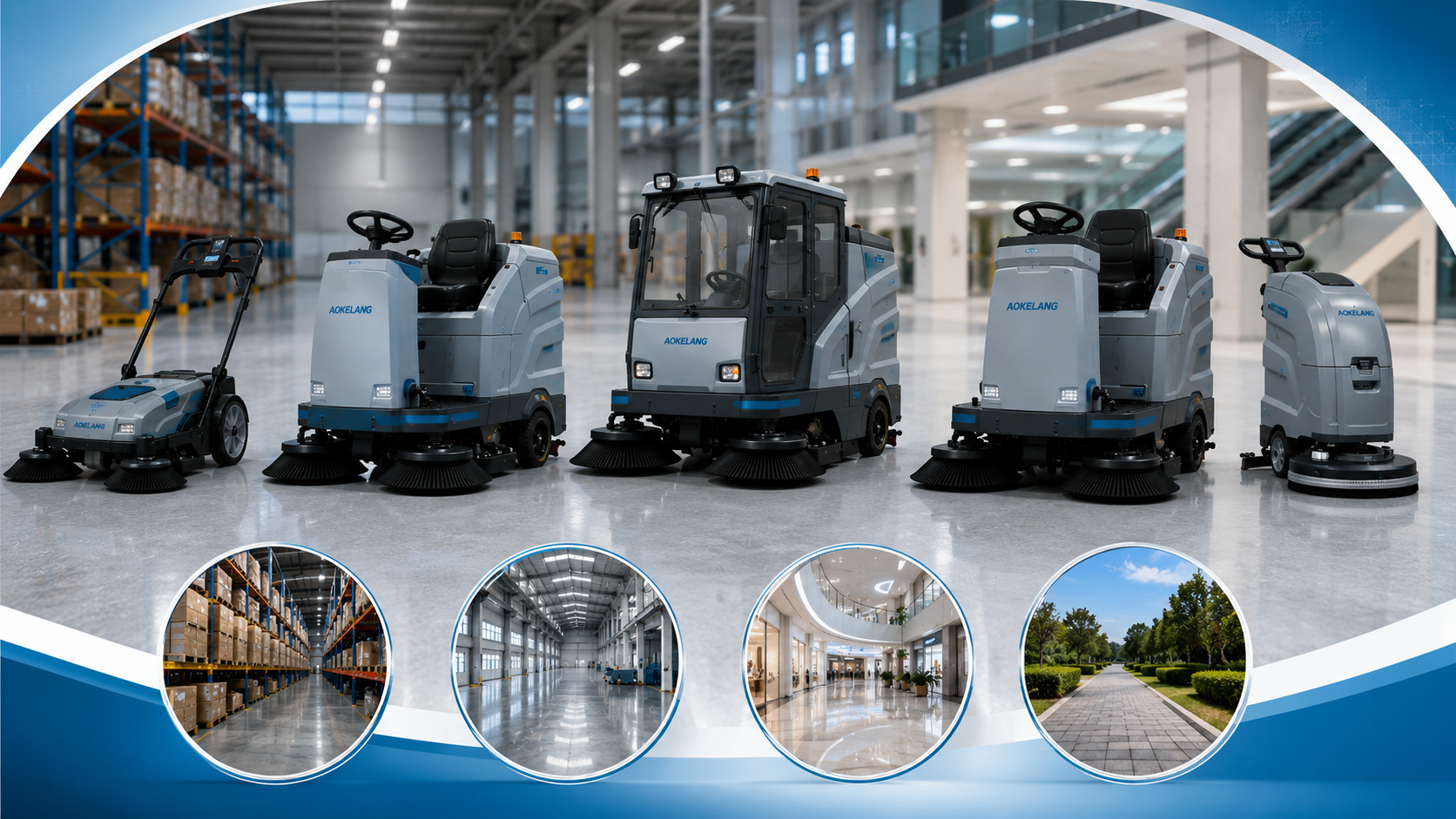
A floor sweeper is a mechanical or powered machine that uses rotating brushes to collect dust, dirt, and debris from a floor into an onboard hopper, without using water or cleaning chemicals. The main types are manual push sweepers, walk-behind power sweepers, and ride-on industrial sweepers, and the right one depends on your floor area, debris type, and how often you clean.
This Floor Sweeper Guide breaks down each sweeper type with real specs, matches each type to specific industries, and provides a step-by-step framework for choosing the right machine.

Table of Contents
What Is a Floor Sweeper?
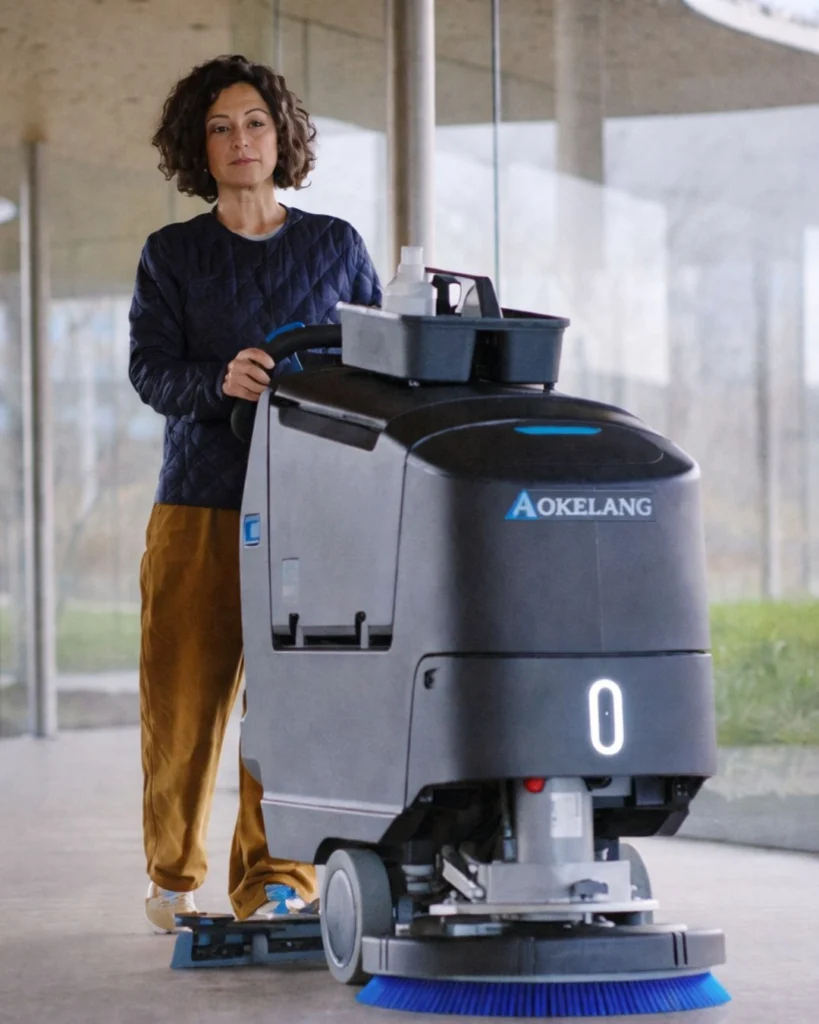
A floor sweeper is dry-cleaning equipment: side brushes pull dust and debris from edges and corners into the path of a main brush, which lifts it into a debris hopper. Most industrial models also carry a vacuum or filtration system to control airborne dust while sweeping.
This is different from a floor scrubber, which lays down water and detergent, agitates it with a scrub brush or pad, and vacuums up the dirty solution. If you need to compare the two directly, see this breakdown of floor scrubbers vs. floor sweepers.
Floor sweepers are used for:
- Dry debris removal (dust, sand, paper, packaging waste, leaves)
- Pre-cleaning a floor before scrubbing or mopping
- Daily maintenance sweeps in warehouses, factories, and parking areas
- Outdoor sweeping on yards, loading docks, and pavement
What Are the Main Types of Floor Sweepers? As Per Floor Sweeper Guide
There are four common categories, grouped by how they’re operated and the size of area they’re built for.
1. Manual Push Sweepers
Manual sweepers have no motor the brushes spin from the rotation of the wheels as the operator pushes the unit. They typically cover 300–700 mm of cleaning width and are best for very small spaces: retail aisles, small offices, or spot-cleaning between scheduled machine cleans. They have no battery, no charging time, and the lowest upfront cost of any sweeper type, but they can’t handle heavy debris loads or large square footage efficiently.
2. Walk-Behind Power Sweepers
Walk-behind sweepers are battery-powered but still steered by a walking operator. As an example of the smaller end of this category, the Aokelang D1050 industrial floor sweeper has a 1,050 mm cleaning width, a 12V battery system, a 550W motor, a 35-liter debris container, and a 30-liter water tank for dust suppression, rated at up to 6,000 m² of cleaning efficiency per hour with 3–4 hours of runtime. This size of machine suits small-to-midsize warehouses, retail backrooms, workshops, and parking areas.
3. Ride-On Sweepers
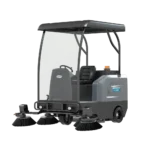
Ride-on sweepers let the operator sit and drive the machine, which increases both speed and endurance over long shifts. At the larger end, the Aokelang D1900 warehouse sweeping machine has a 2,000 mm cleaning width, a 48V battery system, a 1,200W main brush motor plus a 1,500W traction motor, a 220-liter debris container, and a 150-liter water tank, rated at up to 16,000 m² per hour with 4–6 hours of runtime. Ride-on models are built for large warehouses, distribution centers, factory floors, and airport terminals where walking the full route isn’t practical.
4. Industrial / Heavy-Duty Sweepers
This category overlaps with ride-on and larger walk-behind machines but is defined by durability features rather than seating: reinforced hoppers, higher gradeability (the D1900 is rated for a 25% grade), multiple side brushes (the D1900 uses four 500 mm side brushes versus two on smaller models), and construction meant for continuous multi-shift use in factories, industrial parks, and logistics hubs. You can browse the full range of industrial floor sweeper machines to compare models by width, tank size, and power source.
Also read – Manual vs Mechanized Floor Cleaning
Quick Comparison Table
| Type | Cleaning Width | Power Source | Best For |
| Manual push sweeper | 300–700 mm | None (mechanical) | Small retail floors, spot cleaning |
| Walk-behind sweeper (e.g., D1050) | ~1,050 mm | 12V battery, 550W motor | Small-to-midsize warehouses, workshops |
| Ride-on sweeper (e.g., D1900) | ~2,000 mm | 48V battery, 1,500W traction motor | Large warehouses, distribution centers |
| Heavy-duty industrial sweeper | 2,000 mm+ | 48V+ battery or diesel/LPG | Factories, industrial parks, airports |
What Are Floor Sweepers Used For By Industry?
Different facilities generate different debris, which changes which sweeper type fits best.
- Warehousing and logistics: Sweepers clear packaging waste, cardboard fragments, and dust from long aisles between racking. See warehousing and logistics floor cleaning solutions for equipment matched to this use case.
- Manufacturing and industrial facilities: Metal shavings, sawdust, and production waste build up quickly on factory floors, where a wide cleaning path and strong side-brush reach reduce manual sweeping labor. See manufacturing and industrial facility cleaning equipment.
- Commercial buildings and offices: Lower debris volume but higher visibility to occupants means compact, quiet walk-behind sweepers are typically preferred. See commercial building and office cleaning machines.
- Shopping malls and retail spaces: Sweepers are used during off-hours to clear foot-traffic dust and litter before scrubbers do a wet clean. See shopping mall and retail floor cleaning.
- Hospitals and healthcare facilities: Dry sweeping removes loose debris before disinfecting, and low-noise operation matters for patient-adjacent areas. See hospital and healthcare facility cleaning solutions.
- Airports and transportation hubs: High square footage and continuous public traffic call for ride-on sweepers with long runtime and large hoppers. See airport and transportation hub cleaning equipment.
Also read – industrial ride on floor sweeper machine
Floor Sweeper vs. Floor Scrubber: What’s the Difference?
A floor sweeper removes dry debris with brushes and a hopper; a floor scrubber applies water and detergent, agitates the floor, and vacuums up the dirty solution. Use a sweeper first to clear loose debris, then a scrubber to remove ground-in dirt, grease, or stains running a scrubber over heavy loose debris first can clog its recovery system.
Many facilities use both machines in sequence, and some integrated units combine sweeping and scrubbing functions. For a full side-by-side breakdown, read Floor Scrubber vs. Floor Sweeper, and if you’re deciding between operator postures for either machine type, see Walk-Behind vs. Ride-On Scrubber.
How Do You Choose the Right Floor Sweeper?
Work through these five factors in order each one narrows the field before you compare specific models.
- Measure your floor area. Under 500 m² typically suits a manual or small walk-behind sweeper; 500–5,000 m² suits a mid-size walk-behind like the D1050; above 5,000 m² generally justifies a ride-on machine like the D1900.
- Identify your debris type and volume. Fine dust and sand need strong filtration and a water tank for dust suppression; heavier debris like packaging waste or metal shavings needs a larger main brush and hopper capacity.
- Check your power source options. Battery-powered sweepers suit indoor use with charging access; if you need multi-shift continuous operation, prioritize models with a longer rated runtime (look for 4+ hours) and confirm charging infrastructure at your facility.
- Confirm gradeability and maneuverability needs. If your facility has ramps or loading dock inclines, check the gradeability rating (for example, 20% on the D1050 versus 25% on the D1900) before buying.
- Match hopper and tank size to your cleaning schedule. A larger debris container (220 L vs. 35 L) and water tank mean fewer stops to empty or refill during a shift, which matters more as floor area and debris volume increase.
Key Specs to Compare When Buying a Floor Sweeper
| Spec | Why It Matters | Example Range |
| Cleaning width | Determines how many passes are needed to cover an area | 1,050 mm – 2,000 mm+ |
| Cleaning efficiency (m²/h) | Rated theoretical coverage per hour at working speed | 6,000 – 16,000 m²/h |
| Battery voltage | Higher voltage generally supports higher-power motors and longer duty cycles | 12V – 48V |
| Debris container size | Larger hoppers mean fewer stops to empty | 35 L – 220 L+ |
| Water tank size | Supports dust suppression during dry sweeping | 30 L – 150 L |
| Operating time | Runtime per charge before recharging is needed | 3 – 6 hours |
| Gradeability | Maximum incline the machine can climb while sweeping | 20% – 25% |
Next Steps
If you’re comparing specific models, browse the full floor sweeper machine lineup by cleaning width, tank size, and power source, or check floor scrubber machines if your facility also needs wet cleaning. For help matching a machine to your floor size and debris type, request a free quote or contact the Aokelang team directly. You can also review technical downloads and spec sheets or read more on the Aokelang blog.
Floor Sweeper FAQs
Do floor sweepers use water?
Some do. Many industrial sweepers include a small water tank — for example, 30 liters on a compact walk-behind model or 150 liters on a large ride-on unit — that mists the sweeping path to suppress airborne dust. This is separate from scrubbing, which uses water to actively clean the floor surface rather than control dust.
Can a floor sweeper replace a floor scrubber?
No. A sweeper only removes loose, dry debris; it cannot remove grease, ground-in stains, or bacteria the way a scrubber’s water-and-detergent cycle can. Facilities with both dry debris and surface soiling typically run a sweeper first, then a scrubber.
How often should an industrial floor sweeper be serviced?
At minimum, brushes and filters should be checked and cleaned after every shift of heavy use, since clogged filtration reduces both dust control and sweeping efficiency. Battery terminals and drive components should follow the manufacturer’s maintenance schedule, similar to the upkeep outlined in this floor scrubber maintenance guide, much of which applies to sweeper drive systems as well.
What’s the difference between a walk-behind and ride-on sweeper?
A walk-behind sweeper is steered by an operator on foot and suits smaller areas up to a few thousand square meters; a ride-on sweeper carries a seated operator, covers wider paths (often 2,000 mm or more), and is built for large-scale continuous cleaning where walking the full route isn’t practical.