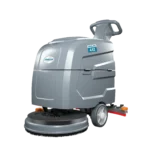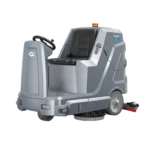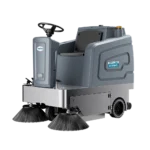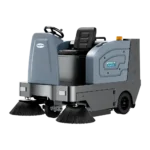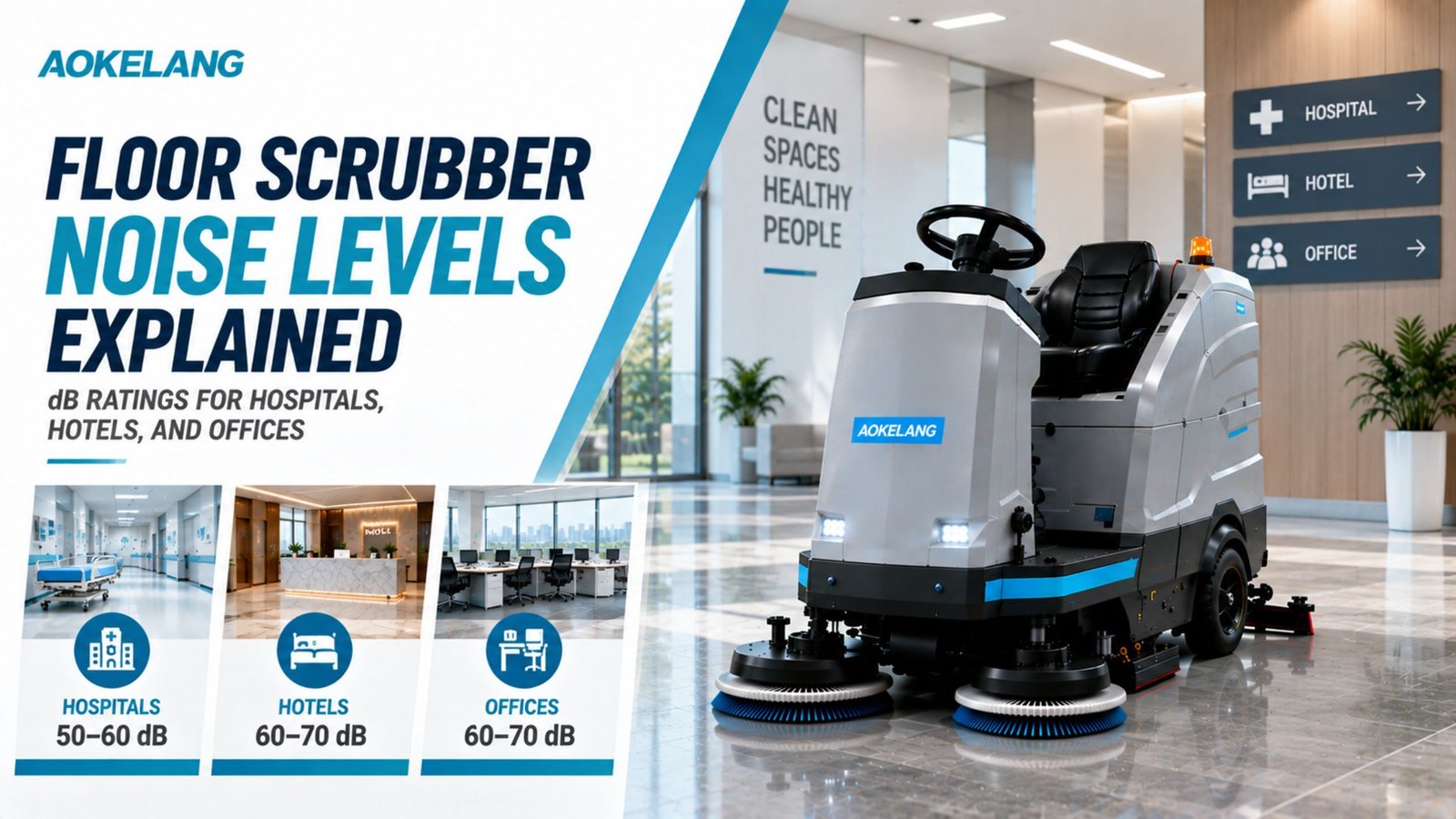
Floor Scrubber Noise Levels Explained: Most commercial floor scrubbers operate between 65 and 72 dB — roughly the volume of a normal conversation. That’s acceptable in a warehouse. It’s too loud for a hospital ward, a hotel corridor at night, or an occupied office floor. Understanding what dB ratings mean, what each facility type actually requires, and how to read a machine’s noise specification before buying will save you noise complaints, compliance problems, and the operational headache of a machine you can only run outside working hours.
Table of Contents
What Does dB Actually Mean – and Why Does the Scale Matter?
The decibel (dB) scale is logarithmic, not linear. Every 10 dB increase doubles the perceived loudness to the human ear. A machine at 75 dB sounds twice as loud as one at 65 dB. A machine at 85 dB sounds four times as loud as one at 65 dB.
This matters more than most buyers realise. The difference between a 65 dB scrubber and a 72 dB scrubber looks modest on paper — seven numbers apart. In practice, the 72 dB machine sounds more than 1.5 times louder in operation. In a quiet hospital corridor or a hotel at midnight, that gap is the difference between acceptable background noise and a disruptive intrusion.
A practical reference point: normal conversation sits at around 60–65 dB. A busy restaurant runs at about 70–75 dB. A standard commercial floor scrubber at 68–72 dB is roughly equivalent to a moderately loud conversation. That’s the baseline to keep in mind when evaluating specifications.

What Noise Levels Are Acceptable by Facility Type? – Floor Scrubber Noise Levels Explained
Hospitals and Healthcare Facilities
Hospitals carry the strictest noise requirements of any cleaning environment — and they apply during both day and night cleaning shifts.
WHO guidelines for ward rooms in hospitals set indoor noise levels at 30 dB LAeq as the baseline guideline, with maximum levels not exceeding 40 dB(A) at night. During the day and evening, the guideline value is also 30 dB LAeq. For rooms where patients are being treated or observed, the LAeq level should not exceed 35 dB.
These are ambient noise targets for the ward environment — not machine specifications. No floor scrubber operates at 30 dB. The practical implication is that cleaning equipment must be selected and deployed in ways that keep overall ambient noise below these thresholds — which means machine noise must not compound meaningfully with existing background noise levels.
For patient recovery environments, maintaining decibel levels below 60 dB is recommended by healthcare guidelines. For hospital floor scrubbers, the target range for machines intended for use near patient areas is 45–60 dB, verified to meet healthcare noise standards.
Some floor scrubber models are purpose-built for healthcare, producing just 69 decibels of sound — sitting within LEED’s 70-decibel noise guideline for cleaning equipment including vacuums, burnishers, and carpet extractors.
The practical buying rule for hospitals: target a machine rated at 65 dB or below for use in wards and patient areas. Anything above 70 dB should be restricted to service corridors, basements, or car parks where ambient noise is already elevated.
OSHA’s Occupational Noise Exposure Standard requires employers to implement a Hearing Conservation Programme for all workers exposed to an 8-hour time-weighted average of 85 dBA or higher. Most floor scrubbers operating in the 65–72 dB range sit comfortably below this threshold, but operators running machines continuously across long shifts should still monitor cumulative exposure.
Hotels
Hotels have a dual noise challenge: guest corridors and public areas require quiet cleaning at night, while back-of-house areas — kitchen approaches, loading docks, service corridors — can tolerate higher noise levels.
Hotels and classrooms target NC 30–35 in occupied spaces — roughly equivalent to 40–45 dB ambient. Guest corridors cleaned during late-night or early-morning windows need machines that don’t penetrate through room doors. A scrubber operating above 65–68 dB in a carpeted hotel corridor risks waking guests and generating complaints — a real operational and reputational risk.
For lobby areas cleaned before opening or during low-occupancy periods, 68–72 dB is generally acceptable given the higher ambient noise from HVAC systems and foot traffic. The key scheduling principle: use the quietest available machine for guest-adjacent areas regardless of time, and reserve higher-noise cleaning windows for non-occupied periods when they can’t be avoided.
Offices and Commercial Buildings
Most commercial offices target NC 35–40 — roughly 45–50 dB ambient background. For noise-sensitive environments like offices, look for models specifically marketed as “quiet” or “low-noise” — under 70 dB is the practical threshold for daytime cleaning in occupied commercial spaces.
Some machines offer a “silent mode” for cleaning in occupied spaces, allowing operation during business hours without complaint. Eco mode on certain models also reduces water and chemical consumption per square foot.
For office buildings where cleaning happens in the evenings after staff leave, noise is less of a selection criterion — but daytime cleaning in occupied floors, shared workspaces, and co-working environments needs machines under 68 dB to avoid disrupting concentration.
Schools and Universities
As covered in detail in Aokelang’s article on the best floor scrubber for schools and universities, the noise target for classroom-adjacent cleaning is similar to healthcare — machines should stay below 65–68 dB and ideally be battery-powered for cord-free, lower-noise operation. Gymnasiums and cafeterias tolerate higher noise levels given their higher ambient baseline.
Also read – ce certification for floor scrubbers
Typical Noise Levels by Floor Scrubber Type
Most floor scrubbers operate at 65–72 dBA, roughly equivalent to a normal conversation or background music. Battery-powered models are often slightly quieter than corded models.
| Machine Type | Typical dB Range | Best Environment |
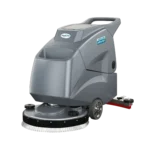
| Compact walk-behind (battery) | 60–67 dB | Hospitals, hotels, schools, offices |
| Standard walk-behind (battery) | 65–70 dB | Offices, retail, corridors |
| Standard walk-behind (corded) | 67–72 dB | Warehouses, back-of-house |
| Industrial walk-behind | 70–75 dB | Manufacturing, logistics |
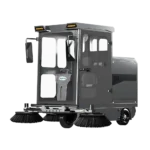
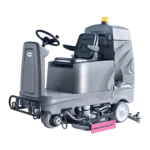
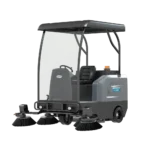
| Ride-on scrubber | 70–78 dB | Large warehouses, car parks, open halls |
| Autonomous/robotic scrubber | 60–67 dB | Hospitals, airports, shopping centres |
These ranges are indicative — always verify the actual dB rating from the machine’s specification sheet, and measure at the operator’s ear position (1 metre from the machine), not the motor alone.
Battery-Powered vs Corded: Which Is Quieter?
Battery-powered floor scrubbers are often slightly quieter than corded models. The noise difference is not dramatic — typically 2–5 dB — but in a noise-sensitive environment that margin is meaningful.
The more significant noise advantage of battery-powered machines is operational: no motor hum from a power transformer, no electrical buzz through the cord, and significantly lower mechanical vibration transmitted through hard floor surfaces. Battery motors also tend to run at more consistent speeds with less audible fluctuation than corded systems, which can create noise spikes as brush load changes.
For hospitals, hotels, and offices, battery-powered machines are the preferred choice on both noise and safety grounds. The absence of trailing cords removes both a trip hazard and a source of mechanical noise. Aokelang’s range of battery-powered walk-behind scrubbers — including the Aokelang D4, D4Z, and X2 Compact Walk-Behind — are all designed for environments where low-noise daytime operation is required alongside strong cleaning performance.
What LEED Says About Floor Cleaning Equipment Noise
LEED’s noise guideline for cleaning equipment — including vacuums, burnishers, floor scrubbers, and carpet extractors — sets a 70-decibel ceiling. Machines operating at or below 69 dB meet this standard.
For facilities pursuing LEED certification or already operating under it, equipment noise is a documented compliance consideration, not just a comfort preference. Buyers sourcing floor scrubbers for LEED-certified buildings should request manufacturer dB specifications in writing and confirm the measurement methodology — the standard test position is 1 metre from the machine at operator ear height, measured under standard operating conditions.
Aokelang’s equipment range is positioned on energy efficiency and sustainability. Buyers requiring specific dB documentation for LEED compliance should request the technical data sheet for each model from Aokelang at info@aokelang.com. The full range is available at Aokelang’s commercial floor cleaning machines page.
What Causes a Floor Scrubber to Be Louder Than Its Rating?
A machine’s rated dB is measured under controlled conditions. In real-world operation, several factors push actual noise levels above the specification:
Worn brushes produce more vibration and scraping noise as bristle height reduces. Checking and replacing brushes on schedule — typically every 40–60 operational hours — maintains both cleaning performance and noise output near the rated level. Aokelang’s guide on identifying common issues in cleaning machines covers brush condition checks in detail.
Hard floor surfaces reflect and amplify noise more than carpeted or textured surfaces. A machine rated at 67 dB on tile may sound noticeably louder in a hard-surfaced hospital corridor than in a carpeted office — particularly if walls and ceilings are hard surfaces that reflect sound rather than absorb it.
Bearing wear produces a characteristic high-pitched noise that increases progressively as internal bearings degrade. If noise level increases significantly when running — especially to noticeably above the original level — it indicates that internal bearings, motors, or shock absorber structures have worn out. This is also a machine health indicator that should trigger a maintenance inspection.
Debris in the brush deck — running a machine over unswept loose debris creates impact noise that can significantly exceed the baseline operating level. Pre-sweeping before scrubbing reduces both noise output and consumable wear.
External references: WHO Guidelines for Community Noise — Hospital and Healthcare Noise Standards | U.S. EPA — Noise Levels Affecting Health and Welfare
FAQ – Floor Scrubber Noise Levels Explained
What dB level is acceptable for a floor scrubber in a hospital?
For hospital floor scrubbers used near patient areas, the recommended target range is 45–60 dB. Machines up to 69 dB are considered compliant with LEED’s 70 dB guideline for cleaning equipment. Machines above 70 dB should be restricted to back-of-house and service areas away from patient rooms and clinical spaces.
Are battery-powered floor scrubbers quieter than corded ones?
Battery-powered models are often slightly quieter than corded models — typically by 2–5 dB — and are generally preferred for noise-sensitive environments like hospitals, schools, and hotels. The more significant advantage is consistent motor speed, which produces steadier noise output without the fluctuation spikes common in corded systems under variable brush load.
What does dB(A) mean on a floor scrubber specification?
dB(A) is a frequency-weighted measurement that accounts for the way human hearing perceives different sound frequencies. It is the standard measurement used for occupational and environmental noise because it reflects the actual impact on human hearing more accurately than unweighted dB. When comparing machine noise specifications, always compare dB(A) figures measured at the same position — typically 1 metre from the machine at operator ear height.
Can a floor scrubber be used during occupied hours in a hotel?
It depends on the machine, the area, and the time. A battery-powered walk-behind scrubber rated at 65 dB or below can typically operate in hotel public areas — lobbies, fitness centres, and large common spaces — during occupied hours without significant disruption. Guest corridors adjacent to rooms should be cleaned during low-occupancy periods regardless of machine noise level.
Does LEED certification require specific noise levels for floor scrubbers?
LEED’s 70-decibel noise guideline applies to cleaning equipment including vacuums, burnishers, floor scrubbers, and carpet extractors. Machines rated at or below 69 dB meet this guideline. Buyers operating LEED-certified facilities should request written dB specifications from suppliers and confirm the test methodology used.