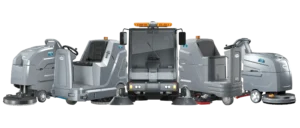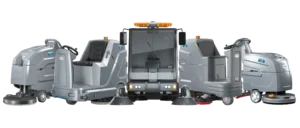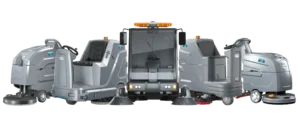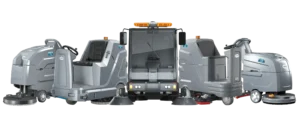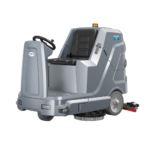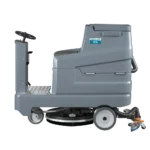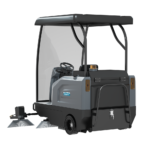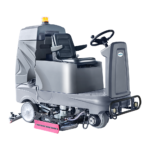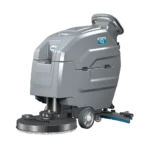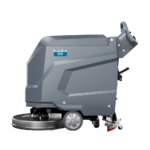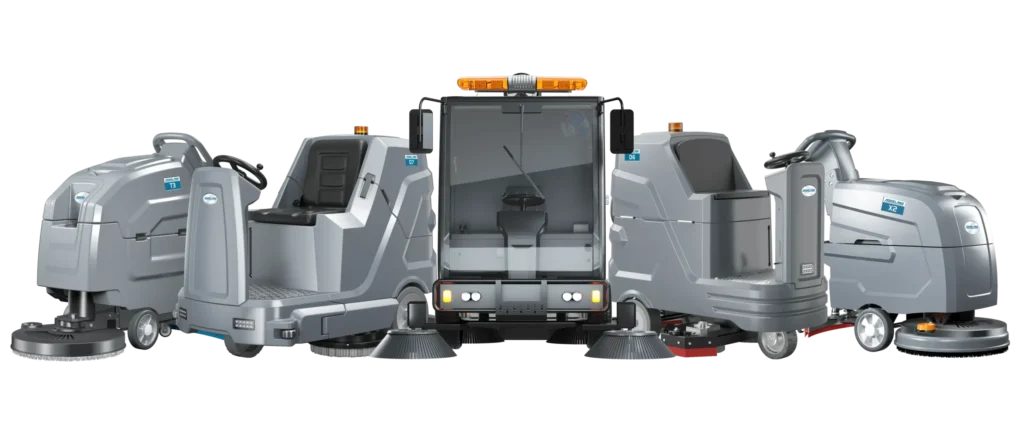
Floor Scrubber Sizing Guide: Sizing a floor scrubber correctly means picking a cleaning width based on real-world productivity not the manufacturer’s theoretical maximum and a tank capacity large enough that your team isn’t stopping to refill or empty more than once or twice per cleaning session. As a starting point, facilities under 10,000 sq ft typically need a 14–20 inch walk-behind, 10,000–50,000 sq ft need a 20–30 inch walk-behind, and facilities above 50,000 sq ft typically need a ride-on machine or multiple walk-behind units.
This guide explains why rated productivity numbers overstate real-world output, how to calculate the cleaning width and tank size your facility actually needs, and how the two specs need to scale together.
Table of Contents
Why Manufacturer-Rated Productivity Isn’t What You’ll Actually Get
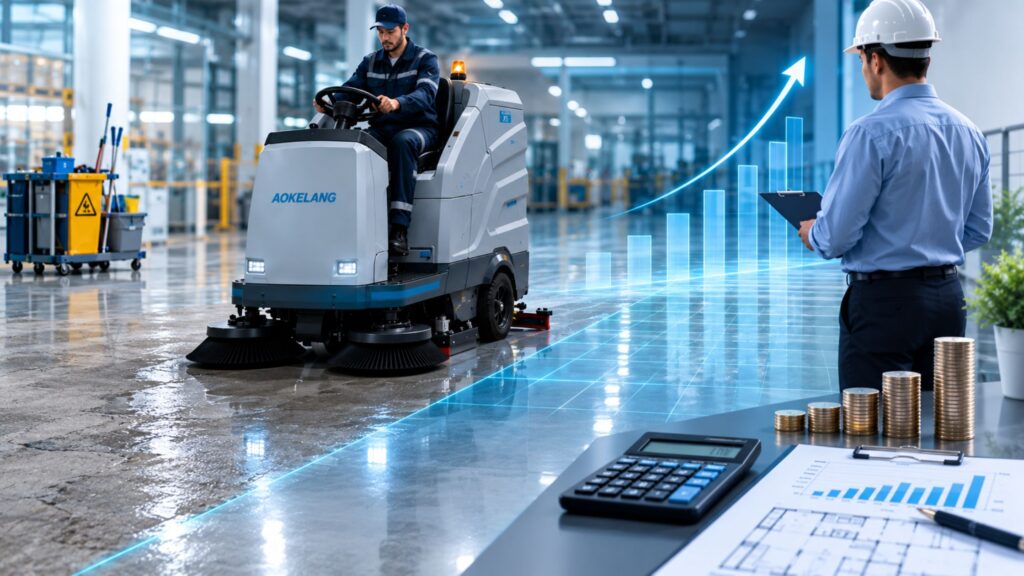
Every scrubber’s spec sheet lists a theoretical productivity figure cleaning width multiplied by a constant walking or driving speed. In practice, real-world coverage is consistently lower, because that number doesn’t account for turns, obstacles, pass overlap, or stopping to navigate around furniture, racking, or foot traffic. Industry sizing guides commonly report real-world output well below the rated maximum: a 20-inch walk-behind that’s rated much higher on paper often realistically covers closer to 8,000–12,000 sq ft per hour in daily use, a 36-inch rider closer to 25,000–35,000 sq ft per hour, and a 46-inch rider up to roughly 40,000+ sq ft per hour in open, unobstructed space.
As a planning rule, it’s reasonable to discount a manufacturer’s rated productivity by roughly 25–40% when estimating your actual cleaning time, with the larger discount applying to facilities with more obstacles, tighter aisles, or frequent turns.
Step 1: Calculate the Cleaning Width You Need
Start with your total floor area and cleaning window, then work backward to the productivity and therefore cleaning width you need.
Formula: Required productivity (sq ft/hour) = Total floor area ÷ Available cleaning hours
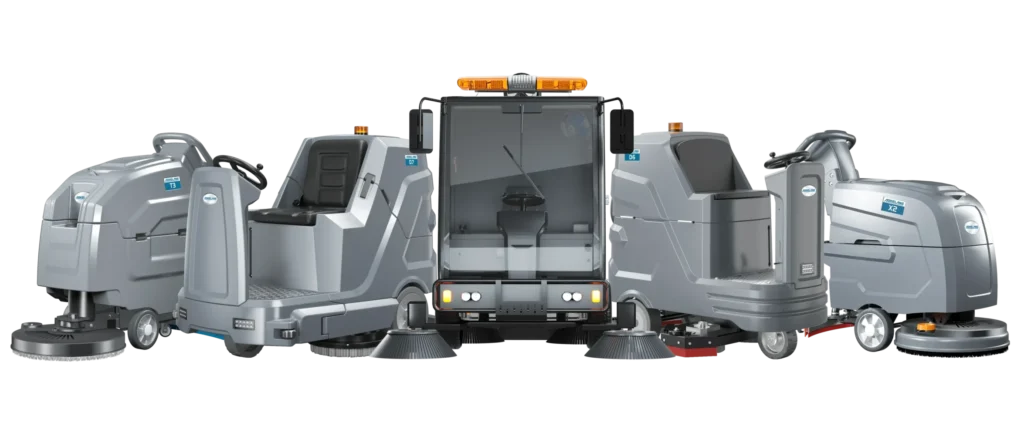
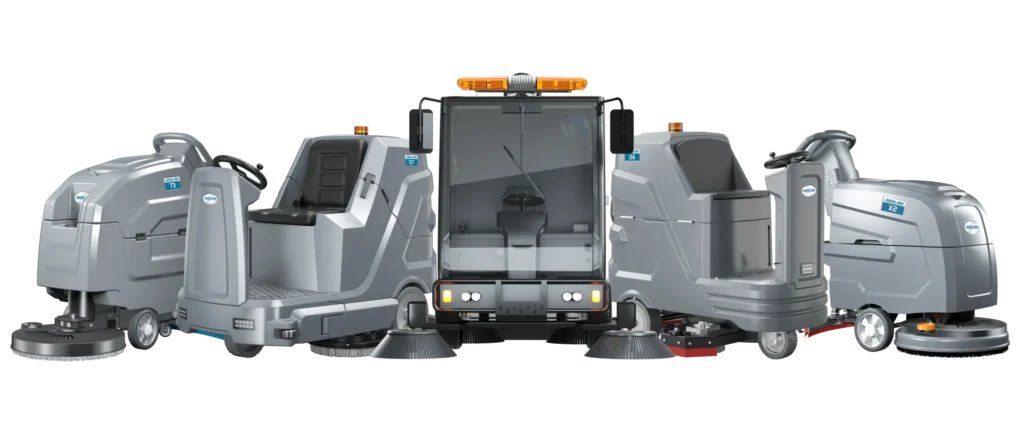
| Facility Size | Recommended Cleaning Width | Rated Productivity (Aokelang example) | Realistic Output (after ~25–35% discount) |
| Under 10,000 sq ft | 350 mm (~14″) | Aokelang D2: up to 1,350 m²/h (~14,500 sq ft/h) | ~9,500–10,900 sq ft/h |
| 10,000–20,000 sq ft | 500 mm (~20″) | Aokelang X2: up to 1,750 m²/h (~18,800 sq ft/h) | ~12,200–14,100 sq ft/h |
| 15,000–30,000 sq ft | 510 mm (~20″) | Aokelang T3: up to 2,000 m²/h (~21,500 sq ft/h) | ~14,000–16,100 sq ft/h |
| 30,000–50,000 sq ft | 510 mm (~20″) | Aokelang D4: up to 3,000 m²/h (~32,300 sq ft/h) | ~21,000–24,200 sq ft/h |
| 50,000+ sq ft | 760 mm (~30″, ride-on) | Aokelang D6: up to 5,200 m²/h (~56,000 sq ft/h) | ~36,400–42,000 sq ft/h |
If your facility’s required productivity (from the formula above) exceeds what a single machine can realistically deliver within your cleaning window, you either need a wider-deck machine, a longer cleaning window, or more than one machine running in parallel.
Also read – How to Choose a Commercial Floor Scrubber for Your Facility
How Aisle Width and Layout Affect Your Sizing Decision
Square footage alone can be misleading. A 60,000 sq ft facility with wide-open aisles may be well served by a single wide-deck ride-on machine, while the same square footage tightly packed with shelving and narrow aisles may actually perform better with a smaller, more maneuverable machine — or two smaller machines working different zones than with one oversized rider that struggles to turn. Before finalizing a width decision, walk your facility’s tightest aisle or doorway with the machine’s width and turning radius in mind.
Step 2: Calculate the Tank Size You Need
Tank size determines how much floor area you can clean before stopping to refill clean water or empty the recovery tank. As one grounded example, a machine with a 13-gallon (roughly 50-liter) solution tank paired with a productivity rating around 20,000 sq ft/hour is typically sized to complete a 5,000 sq ft facility in under 20 minutes without needing a mid-session refill the tank and the productivity rate are matched to the target facility size.
Formula: Square feet covered per tank ≈ Tank capacity ÷ Solution use rate per square foot
Solution use rate varies by floor porosity, soil level, and pad type, so it’s worth confirming actual usage with your specific machine and cleaning solution rather than assuming a fixed number, but as a planning starting point, aim for a tank size that lets you clean your full facility, or at minimum a full cleaning zone, without more than one refill/empty cycle. Facilities using a low-foaming, properly diluted solution (a common ratio is one part concentrate to roughly 128 parts water) will typically get more square footage per tank than facilities running solution at a stronger dilution.
Tank Size vs. Cleaning Width: Why They Need to Scale Together
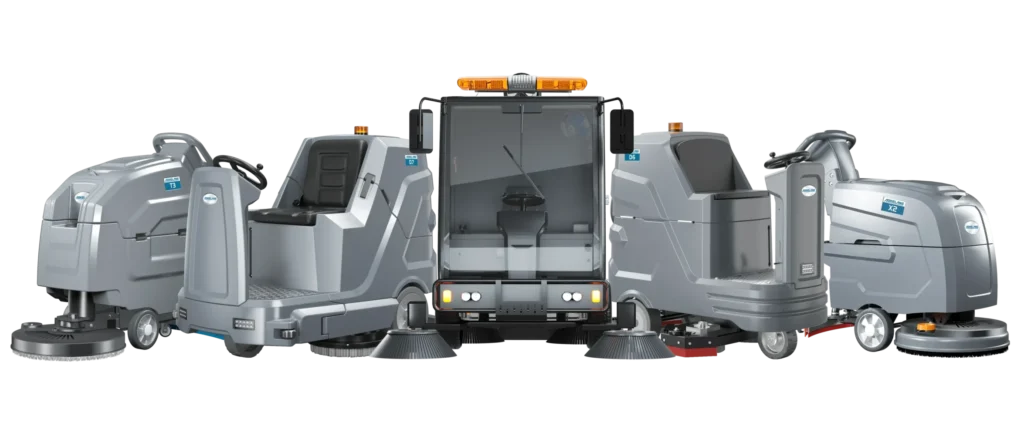
A wider deck without a correspondingly larger tank creates a machine that covers ground quickly but then has to stop constantly to refill — which erases much of the productivity advantage a wider deck was supposed to deliver. Think of it like a race car that has to pit every ten laps: raw speed doesn’t matter if you’re stopped more often than you’re moving. This is why Aokelang’s own lineup pairs wider cleaning decks with proportionally larger tanks the D2’s 350mm deck carries a 12L/14L tank pair, while the D6’s 760mm deck carries a 90L/100L pair, keeping refill frequency roughly consistent as machine size scales up.
Sample Sizing Table by Facility Size
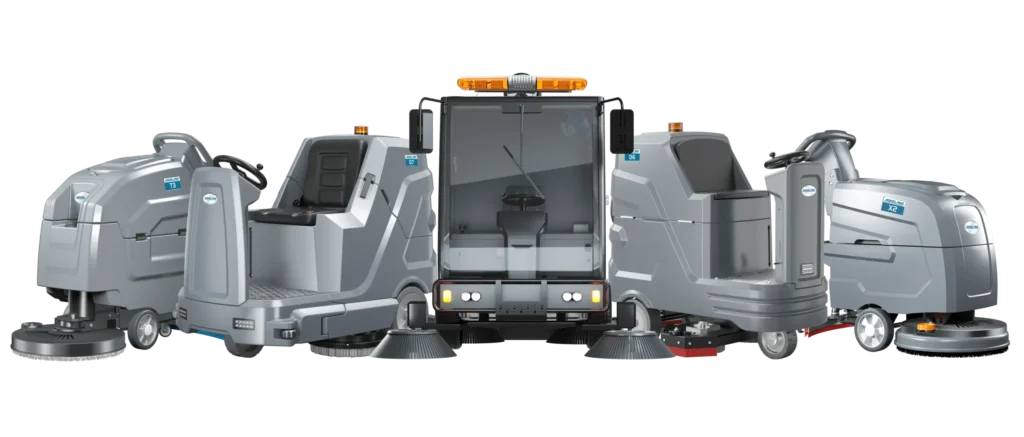
| Facility Size | Recommended Model | Cleaning Width | Tank (Clean/Recovery) | Realistic Output |
| Under 10,000 sq ft | Aokelang D2 | 350 mm | 12L / 14L | ~9,500–10,900 sq ft/h |
| 10,000–20,000 sq ft | Aokelang X2 | 500 mm | 40L / 45L | ~12,200–14,100 sq ft/h |
| 15,000–30,000 sq ft (oil/grease) | Aokelang T3 | 510 mm | 55L / 60L | ~14,000–16,100 sq ft/h |
| 30,000–50,000 sq ft | Aokelang D4 | 510 mm | 55L / 60L | ~21,000–24,200 sq ft/h |
| 50,000+ sq ft | Aokelang D6 (ride-on) | 760 mm | 90L / 100L | ~36,400–42,000 sq ft/h |
Common Sizing Mistakes to Avoid
- Buying too small to save on upfront cost. An undersized machine costs more in labor hours over its lifespan than the difference in purchase price, since it takes longer to cover the same area every single cleaning cycle.
- Sizing tank capacity to match cleaning width without checking refill frequency. A wide deck with a small tank creates the “pit stop” problem described above model your actual refill cycles before finalizing a purchase.
- Using rated productivity instead of realistic output when planning cleaning schedules. Basing your staffing or scheduling plan on theoretical maximums leads to consistently underestimating cleaning time.
- Ignoring operator fatigue. A machine that’s technically capable of covering your square footage but requires excessive physical pushing effort over a full shift will underperform its rated numbers in practice, especially with a smaller or less experienced cleaning team.
- Not accounting for facility layout. Raw square footage doesn’t capture aisle width, obstacles, or turning frequency always validate a width recommendation against your actual floor plan, not just total area.
Also read – OEM and Private Label Floor Scrubber Manufacturing
Floor Scrubber Sizing FAQs
How much lower is real-world scrubber productivity compared to the rated spec?
A reasonable planning discount is 25–40% below the manufacturer’s rated maximum, with the larger discount applying to facilities with more obstacles, tighter aisles, or frequent stops and turns.
How do I know if my tank is too small for my facility?
If your team needs to refill or empty more than once or twice during a typical cleaning session, your tank is likely undersized for your facility — this adds labor time and often leads to shortcuts in cleaning coverage under time pressure.
Should I size for my current facility or plan for future growth?
If facility expansion or increased cleaning frequency is reasonably likely within the machine’s expected 7–10 year lifespan, it’s usually more cost-effective to size slightly above your current minimum requirement rather than needing to replace the machine sooner.
Is a wider cleaning deck always the better choice for a large facility?
Not if your facility has narrow aisles or heavy obstacles — in those layouts, a smaller, more maneuverable machine (or multiple smaller machines covering different zones) often outperforms one oversized machine that can’t navigate efficiently.