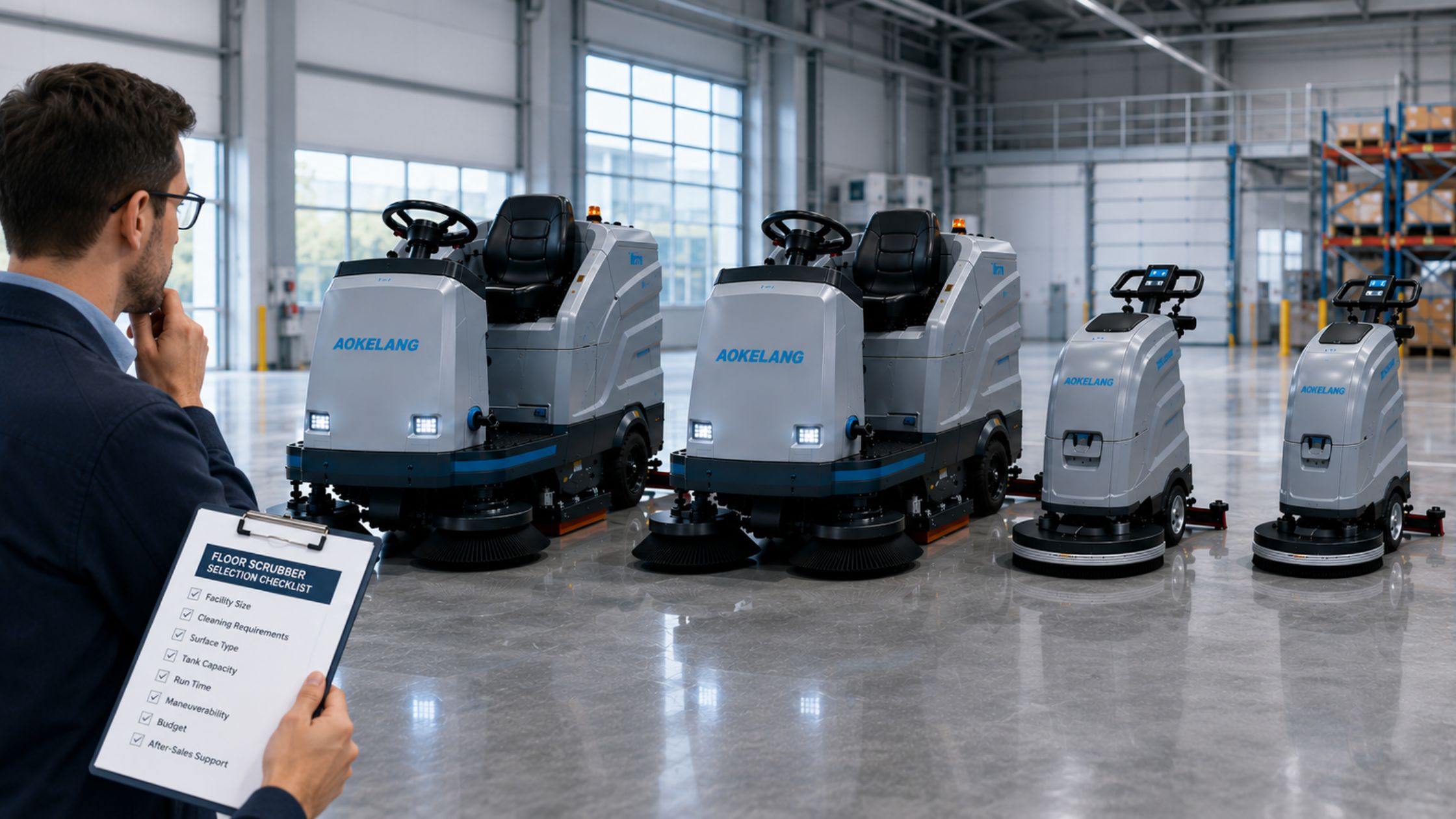
How to Choose a Commercial Floor Scrubber for Your Facility: Choosing the right commercial floor scrubber comes down to matching three specifications to your facility: cleaning width and productivity to your square footage, brush and vacuum motor power to your floor type and soil level, and tank capacity to how long you clean without stopping to refill or empty. Get these three right and the rest of the buying decision brand, price, features becomes much easier to evaluate.
This guide walks through each factor with real spec examples across five machine sizes, then combines them into a single sizing framework.
Table of Contents
Why These Three Factors Matter Most
Facility managers often start by comparing price or brand first, but price comparisons are only meaningful once you know you’re comparing machines that actually fit your space. A scrubber that’s too small for your facility means excessive labor hours; one that’s too large wastes capital and may not maneuver through your layout. The three specs below are what actually determine fit:
- Cleaning width and productivity (m²/h or sq ft/h) — determines how much floor area you can realistically cover per shift
- Motor power and battery system — determines how effectively the machine handles your specific floor type and soil level, and how long it runs before recharging
- Tank capacity — determines how many times you’ll stop to refill clean water or empty the recovery tank during a cleaning session
Step 1: Match Cleaning Width and Productivity to Your Facility Size
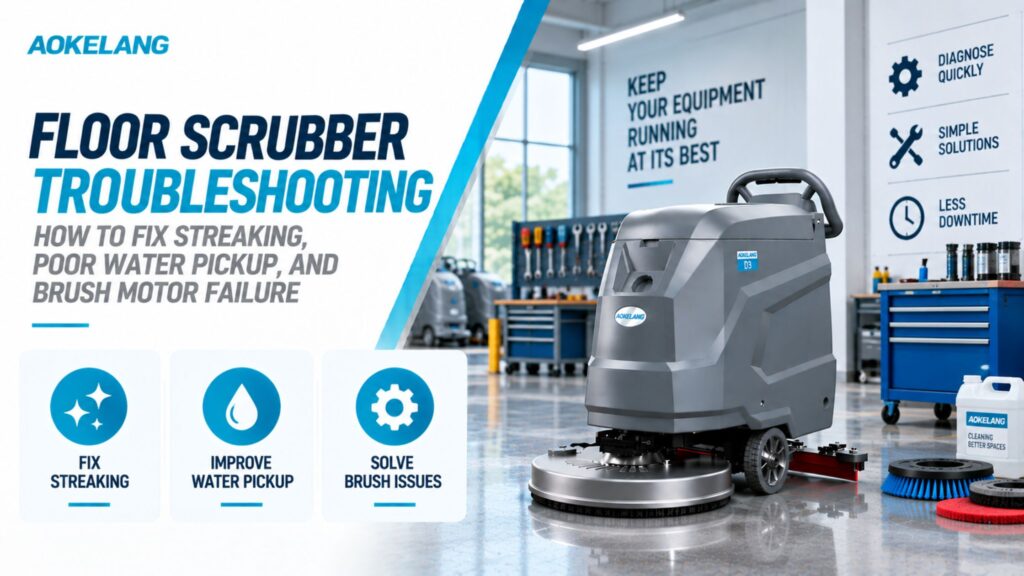
Cleaning width is the physical path the brush covers in one pass; productivity (rated in m²/hour or sq ft/hour) estimates how much floor area that translates to per hour at normal operating speed.
| Facility Size | Recommended Cleaning Width | Example Model | Rated Productivity |
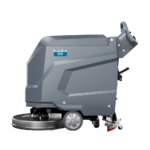
| Under 10,000 sq ft (offices, small retail) | 350 mm | Aokelang D2 | Up to 1,350 m²/h (~14,500 sq ft/h) |
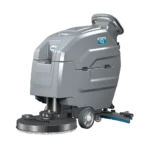
| 10,000–20,000 sq ft (mid-size retail, light-industrial) | 500 mm | Aokelang X2 | Up to 1,750 m²/h (~18,800 sq ft/h) |
| 15,000–30,000 sq ft (industrial floors, oil/grease areas) | 510 mm | Aokelang T3 | Up to 2,000 m²/h (~21,500 sq ft/h) |
| 30,000–50,000 sq ft (larger warehouse routes) | 510 mm | Aokelang D4 | Up to 3,000 m²/h (~32,300 sq ft/h) |
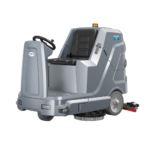
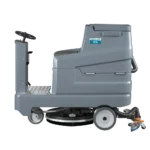
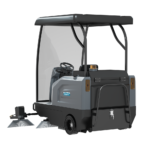
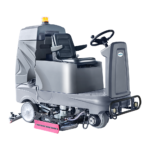
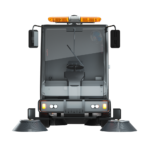
| 50,000+ sq ft (large distribution centers, big-box retail) | 760 mm | Aokelang D6 (ride-on) | Up to 5,200 m²/h (~56,000 sq ft/h) |
As a rule of thumb, aim for a machine that can cover your full facility comfortably within your cleaning window, with some margin left over — a machine running at its absolute rated maximum every shift has less tolerance for obstacles, turns, or an occasional larger cleaning task.
Also read – OEM and Private Label Floor Scrubber Manufacturing
Step 2: Match Motor Power and Battery to Your Floor Type and Soil Level
Cleaning width alone doesn’t tell you whether a machine can actually lift the dirt on your floor. Two more specs matter here:
- Brush motor wattage. Higher wattage gives the brush more scrubbing torque, which matters more on floors with oil, grease, or ground-in industrial residue than on lightly soiled office or retail floors. The compact D2 runs a 400W brush motor suited to light commercial soiling, while the T3 and D4 both run 550W motors built for tougher industrial dirt, and the D6 uses dual 300W brush motors for its wider path.
- Vacuum motor power. This determines how quickly and completely the machine recovers dirty water, which affects how dry the floor is immediately after cleaning — important in any facility with continuous foot traffic.
- Battery voltage and runtime. Most walk-behind commercial scrubbers run on a 24V system with 3–4 hours of runtime per charge; confirm this matches your shift length, or plan for a mid-shift battery swap or charging window if it doesn’t.
Also confirm floor surface compatibility directly with the manufacturer commercial scrubbers are commonly rated for tile, epoxy, terrazzo, marble, PVC, and concrete, but brush and pad selection still needs to match your specific coating to avoid dulling or scratching the surface.
Step 3: Match Tank Capacity to Your Cleaning Session Length
Tank capacity — both the clean water tank and the recovery (dirty water) tank determines how many times you’ll need to stop and refill or empty during a cleaning run.
| Model | Clean Water Tank | Recovery Tank | Best Fit |
| Aokelang D2 | 12L | 14L | Short sessions, small facilities |
| Aokelang X2 | 40L | 45L | Mid-length sessions, mid-size facilities |
| Aokelang T3 | 55L | 60L | Longer industrial sessions |
| Aokelang D4 | 55L | 60L | Longer sessions across larger walk-behind routes |
| Aokelang D6 (ride-on) | 90L | 100L | Extended sessions across large facilities |
As a general guideline, if your facility requires more than one refill/empty cycle per cleaning session with a given tank size, it’s worth sizing up — frequent stops add up in lost labor time and often get skipped under time pressure, which reduces actual cleaning consistency.
Putting It Together: A Facility Sizing Framework
Use this combined framework to narrow down a starting recommendation before comparing specific models in detail:
- Calculate your total floor area and cleaning frequency. This determines your minimum required cleaning width and productivity tier from Step 1.
- Identify your dominant soil type. Light dust and foot traffic soiling can be handled by a lower-wattage brush motor; oil, grease, or heavy industrial residue needs a higher-wattage motor and often a degreasing-compatible design.
- Estimate your typical uninterrupted cleaning session length. This tells you whether a smaller tank is sufficient or whether you need the larger tank capacity of a mid-size or ride-on machine to avoid frequent stops.
- Cross-check your shift length against battery runtime. If your cleaning window exceeds the machine’s rated runtime, budget for either a battery swap or a charging break into your cleaning schedule.
- Confirm maneuverability against your actual floor plan. A wide-deck or ride-on machine sized correctly for square footage may still be impractical if your facility has narrow aisles, tight turns, or frequent obstacles — walk your floor plan with the machine’s width and turning radius in mind before finalizing.
Also read – Questions to Ask a Floor Scrubber Manufacturer Before You Buy
Common Mistakes When Sizing a Scrubber
- Buying based on facility size alone, ignoring soil type. A wide-deck machine with a low-wattage brush motor won’t necessarily outperform a narrower, higher-wattage machine on a heavily soiled industrial floor.
- Undersizing tank capacity to save on upfront cost. Frequent refill stops erode the labor savings that justified buying a machine in the first place.
- Ignoring turning radius and doorway widths. A machine that covers your square footage efficiently on paper can still be the wrong choice if it can’t physically navigate your facility’s layout.
- Not accounting for future growth. If your facility or cleaning scope is likely to expand, it’s often worth sizing slightly above your current minimum rather than needing to replace the machine within a few years.
Facility Scrubber Sizing FAQs
How do I convert a machine’s m²/hour rating to square feet?
Multiply the m²/hour figure by roughly 10.76 to get an approximate sq ft/hour figure — for example, a machine rated at 2,000 m²/hour covers roughly 21,500 sq ft/hour.
Is a wider cleaning path always better?
Not necessarily. Wider machines cover more area per hour but are harder to maneuver in tight spaces, so the right width depends on both your total square footage and your facility’s layout, not square footage alone.
How much brush motor power do I need for a typical office or retail floor?
Lighter commercial soiling in offices and retail spaces is generally well handled by a 400W brush motor, while industrial floors with oil, grease, or heavier debris typically call for 550W or higher.
What happens if my tank is too small for my facility?
You’ll need to stop more often to refill and empty, which adds labor time and can lead to operators skipping the full route under time pressure — reducing actual cleaning consistency even though the machine itself is capable.