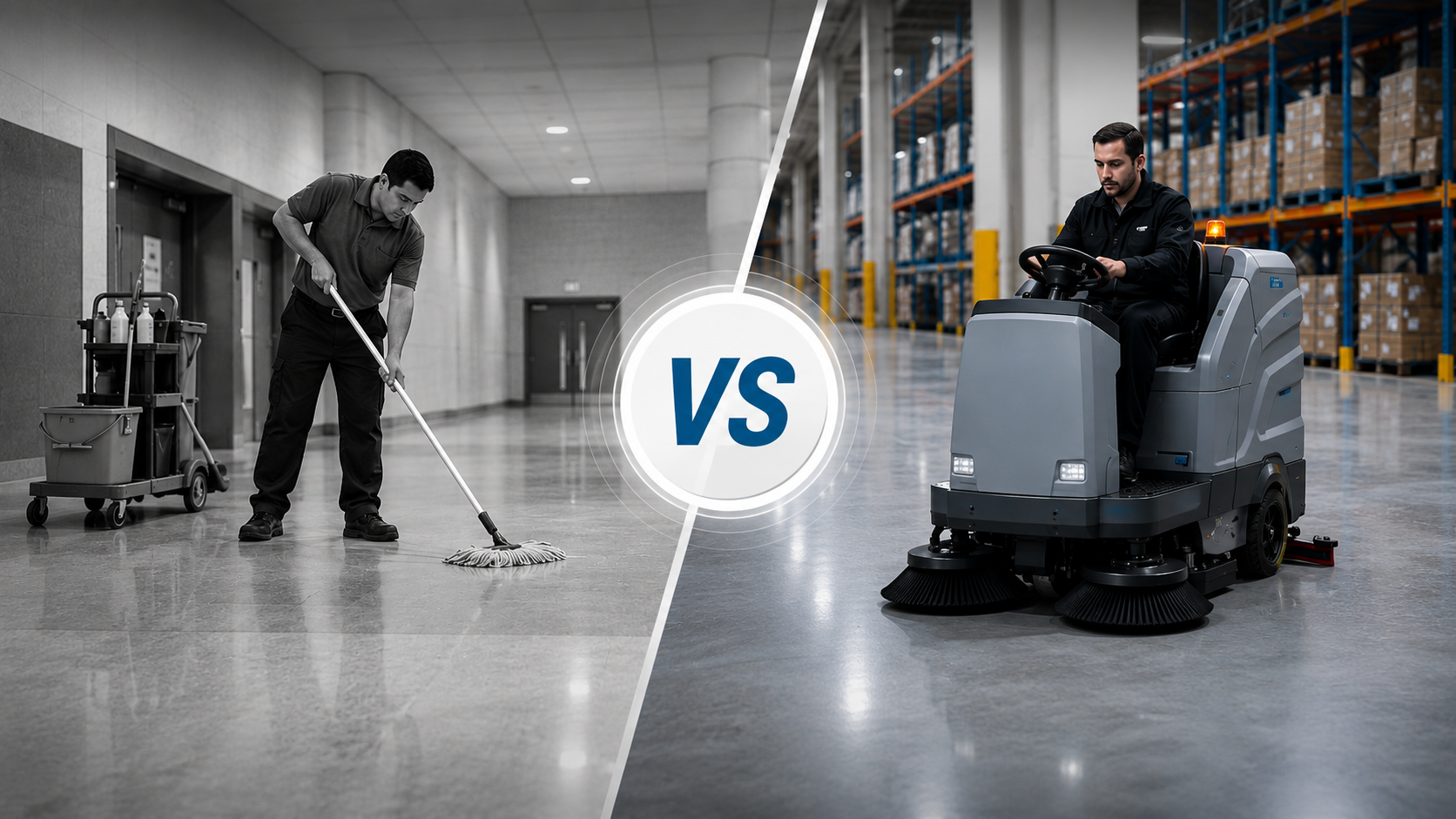
Mechanized floor cleaning is worth upgrading to once you’re cleaning more than roughly 500–1,000 m² per shift, cleaning that area daily, or paying labor costs that exceed the machine’s cost over 12–24 months. Below that threshold, manual mops and brooms are usually still the cheaper option.
This guide of Manual vs Mechanized Floor Cleaning compares manual and mechanized cleaning directly on speed, labor cost, water and chemical use, and cleaning consistency, then gives you a decision checklist so you can work out where your facility falls.
Table of Contents
What Is the Difference Between Manual VS Mechanized Floor Cleaning?
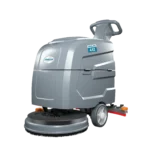
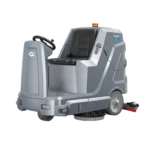
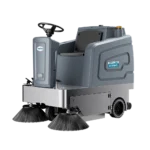
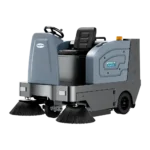
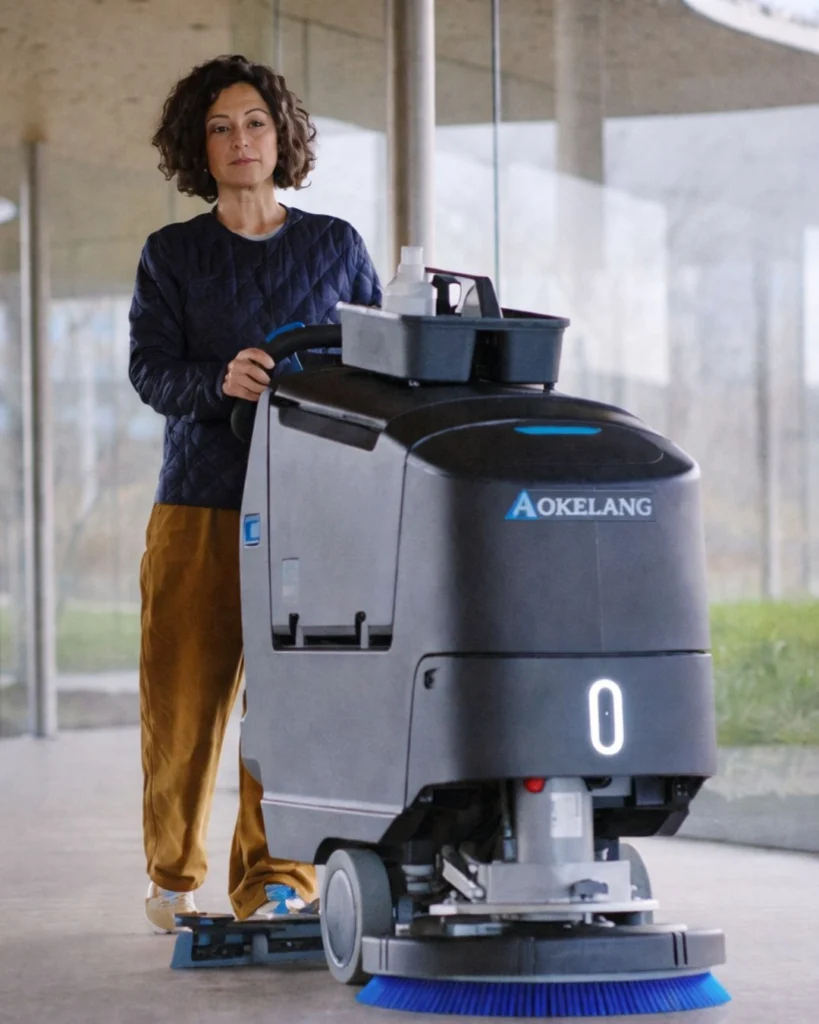
Manual floor cleaning uses hand tools, mops, buckets, brooms, and push sweepers operated entirely by human effort. Mechanized floor cleaning uses powered equipment, such as floor scrubber machines and floor sweeper machines, that combine brush agitation, water/chemical dispensing, and vacuum recovery (or dry debris collection) in a single pass.
The core operational differences:
- Manual cleaning: one pass typically only sweeps or only mops; water is applied and picked up (or left to air-dry) separately; coverage rate depends entirely on the worker’s pace.
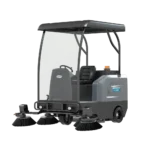
- Mechanized cleaning: a scrubber applies solution, scrubs, and vacuums it back up in one pass; a sweeper collects debris into an enclosed hopper instead of pushing dust into the air; coverage rate is set by the machine’s rated cleaning width and speed.

How Do Manual and Mechanized Cleaning Compare on Speed?
Coverage rate is the clearest gap between the two methods.
| Method | Typical Coverage Rate | Notes |
| Manual mopping | Roughly 150–300 m²/hour per worker | Rate drops further with frequent bucket changes and wringing |
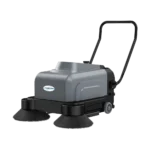
| Manual push sweeping | Roughly 300–500 m²/hour per worker | Limited by sweeper width (usually 300–700 mm) |
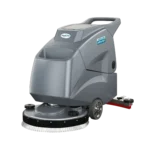
| Walk-behind powered scrubber/sweeper | Roughly 3,000–6,000 m²/hour | Example: the Aokelang D1050 industrial floor sweeper is rated at up to 6,000 m²/hour with a 1,050 mm cleaning width |
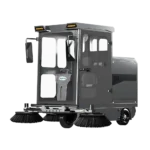
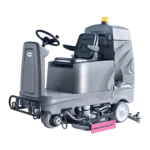
| Ride-on powered scrubber/sweeper | Roughly 10,000–16,000+ m²/hour | Example: the Aokelang D1900 warehouse sweeping machine is rated at up to 16,000 m²/hour with a 2,000 mm cleaning width |
At small scale (a few hundred square meters), this speed difference doesn’t translate into meaningful labor savings. At warehouse or facility scale, it’s the difference between needing one operator for a two-hour shift versus a full cleaning crew working most of a day.
Also read – Floor Sweeper Guide
How Do Manual and Mechanized Cleaning Compare on Labor Cost?
Labor is usually the highest ongoing cost in floor cleaning, which is why coverage rate matters more than the sticker price of a mop versus a machine.
- Manual cleaning labor cost scales linearly with area: doubling your floor space roughly doubles the hours needed, and therefore the wages paid, with no efficiency gain.
- Mechanized cleaning labor cost stays closer to flat as area increases, since one operator on a ride-on machine can cover an area that would take several manual workers the same amount of time.
- Break-even math: if a facility spends, for example, 40 labor-hours a week on manual cleaning and a machine cuts that to 8 operator-hours, the weekly labor savings can be compared directly against the machine’s purchase price, plus battery, water, and maintenance costs, to calculate a payback period.
This is why the upgrade decision is really a labor-hours-saved-per-week calculation, not just an equipment price comparison.
How Do Manual and Mechanized Cleaning Compare on Water and Chemical Use?
Mechanized scrubbers generally use water more efficiently than manual mopping because the scrub-and-recovery cycle happens in a single controlled pass instead of repeated bucket dips.
- Manual mopping typically requires frequent bucket changes as water becomes visibly dirty, and dirty mop water can be re-spread across the floor between changes rather than fully removed.
- Mechanized scrubbing applies a metered amount of solution and immediately vacuums the dirty water back into a separate recovery tank, so the floor is not left standing in soiled water.
- Dry sweeping with a sweeper, rather than a broom, also reduces airborne dust compared to manual sweeping, since debris goes directly into an enclosed hopper instead of being pushed through the air.
When Should You Upgrade From Manual to Mechanized Cleaning?
Work through this checklist the more boxes you check, the stronger the case for upgrading.
- Your cleaned area exceeds roughly 500 m² per cleaning session. Below this, a mop and broom (or a manual push sweeper) is usually still cost-effective.
- You clean the same area daily or multiple times per week. Infrequent cleaning rarely justifies the upfront cost of a machine; frequent cleaning compounds labor savings quickly.
- You’re currently paying overtime or adding staff specifically for cleaning. This is a direct sign that labor cost is scaling with area faster than your budget can absorb.
- Your floor has ongoing dust, grease, or debris control needs regulated by safety or industry standards. Facilities like manufacturing and industrial plants and warehousing and logistics centers often have consistent debris types (metal shavings, packaging waste) that machines clear more reliably than manual sweeping.
- Cleaning consistency affects safety or compliance. In hospitals and healthcare facilities, scrubbers apply a consistent, measured amount of cleaning solution, which is harder to guarantee with manual mopping across a large area.
- You’ve already calculated a payback period under 24 months. If labor savings from switching to a machine would cover its purchase price within about two years, the upgrade is generally financially justified; longer payback periods warrant more caution, especially for smaller facilities.
Which Facilities Typically Stay Manual, and Which Typically Upgrade?
- Usually stay manual: small retail stores, small offices, cafes, and other spaces under roughly 300–500 m² with light daily debris. See manual and small walk-behind options in the floor sweeper machine range if occasional powered assistance is still useful.
- Usually upgrade to walk-behind machines: mid-size retail spaces, commercial buildings and offices, and small-to-midsize warehouses in the 500–5,000 m² range.
- Usually upgrade to ride-on machines: large warehousing and logistics facilities, shopping malls and retail spaces, and airports and transportation hubs above roughly 5,000 m², where manual crews would otherwise need to work in shifts to cover the same area.
Next Steps
If you’re weighing the upgrade decision for your own facility, start by measuring your actual cleaned area and current weekly labor hours, then compare that against machine coverage rates in the full floor sweeper lineup or floor scrubber lineup. For a specific recommendation based on your floor size and cleaning frequency, request a free quote or contact the Aokelang team. You can also browse technical spec sheets and resources or read more on the Aokelang blog.
Manual vs Mechanized Cleaning FAQs
Is a floor scrubber worth it for a small business?
It depends on area and cleaning frequency more than business size. A small business cleaning under roughly 300–500 m² a few times a week typically doesn’t recover the equipment cost quickly enough to justify it, while a small business with a large single floor cleaned daily may still benefit.
Do mechanized floor cleaners save money long-term?
They can, once labor-hour savings are calculated against the machine’s purchase price and ongoing costs (batteries, water, replacement brushes/pads, and maintenance). For a breakdown of these ongoing and upfront costs, see this floor scrubber and sweeper price guide.
Can a facility use both manual and mechanized cleaning?
Yes, and many do. Machines are commonly used for the main floor area and scheduled deep cleans, while manual tools remain useful for edges, stairs, tight corners, and spot-cleaning between machine passes.
What’s the difference between a walk-behind and ride-on machine when upgrading from manual cleaning?
A walk-behind machine is the smaller step up from manual cleaning, suited to areas up to a few thousand square meters, while a ride-on machine suits large continuous areas where even a powered walk-behind unit would take too long to cover a full shift’s cleaning route. See Walk-Behind vs. Ride-On Scrubber for a full comparison.
Does a mechanized sweeper replace the need for a scrubber?
No. A sweeper only removes dry, loose debris; it doesn’t clean grease, ground-in dirt, or apply any cleaning solution. Facilities upgrading from manual cleaning often need both a sweeper for daily debris and a scrubber for periodic wet cleaning. See Floor Scrubber vs. Floor Sweeper for how the two work together.