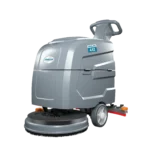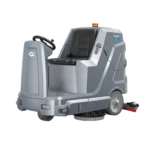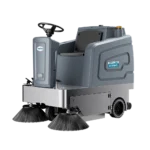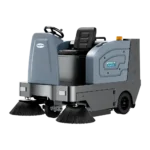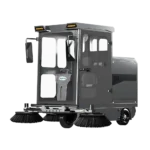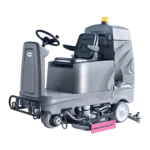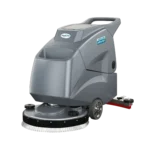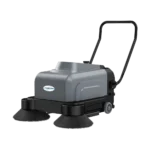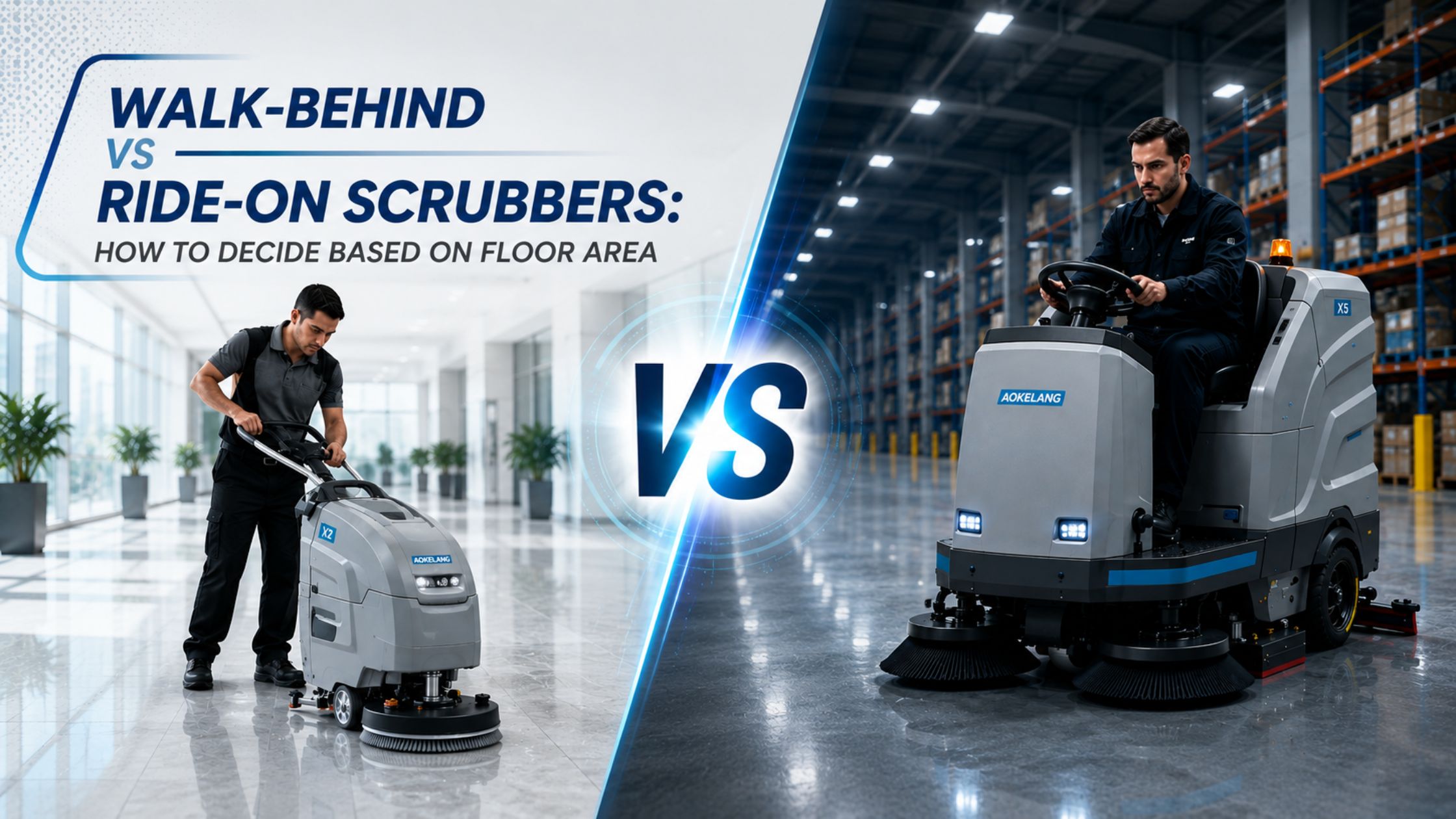
Walk-Behind vs Ride-On Scrubbers: As a general threshold, walk-behind scrubbers are the more practical choice for facilities cleaning under roughly 30,000–50,000 sq ft per session, while ride-on scrubbers become more time- and cost-efficient above that range. The exact crossover point isn’t fixed, though it shifts based on your cleaning window, aisle layout, and how many times per week you’re cleaning, so floor area is the starting point for this decision, not the only input.
This guide shows you how to calculate your own crossover point, when floor area alone can mislead you, and which machine fits at each size tier.
Table of Contents
Why Floor Area Is the Starting Point, Not the Only Factor
Floor area determines how much ground needs to be covered, but it doesn’t determine how efficiently a given machine can cover it. A 40,000 sq ft facility with wide, open aisles might be cleaned faster by a ride-on machine than by a walk-behind one, while the same 40,000 sq ft split across narrow retail aisles or tight storage racking might actually be cleaned more efficiently — and more safely — by a smaller walk-behind unit. That’s why the right way to use floor area in this decision is as an input into a productivity calculation, not as a lookup answer on its own.
What’s the Floor Area Threshold Between Walk-Behind vs Ride-On Scrubbers?
Using real productivity figures from Aokelang’s own lineup, adjusted down by roughly 25–30% to account for real-world turns, obstacles, and pass overlap (rated maximums consistently overstate actual daily output):
| Facility Size | Typical Fit | Example Model | Realistic Output |
| Under 10,000 sq ft | Walk-behind (compact) | Aokelang D2 | ~9,500–10,900 sq ft/h |
| 10,000–20,000 sq ft | Walk-behind (compact-to-mid) | Aokelang X2 | ~12,200–14,100 sq ft/h |
| 15,000–30,000 sq ft | Walk-behind (industrial) | Aokelang T3 | ~14,000–16,100 sq ft/h |
| 30,000–50,000 sq ft | Walk-behind (larger route) | Aokelang D4 | ~21,000–24,200 sq ft/h |
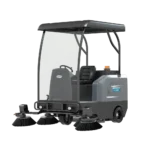
| 50,000+ sq ft | Ride-on | Aokelang D6 | ~36,400–42,000 sq ft/h |
Above roughly 50,000 sq ft, a walk-behind machine’s total coverage time typically starts exceeding what most facilities can fit into a single cleaning window, which is where ride-on productivity starts to outweigh a walk-behind unit’s lower purchase price and tighter maneuverability. Browse the full walk-behind scrubber range and full ride-on scrubber range to compare models within each category directly.

How Do You Calculate Your Own Crossover Point?
Rather than relying on a general threshold, calculate the actual crossover point for your specific cleaning window:
Maximum coverable area = Available cleaning hours × Realistic productivity (sq ft/hour)
For example, if your team has a 2-hour cleaning window and a walk-behind machine realistically covers 15,000 sq ft/hour after accounting for turns and obstacles, your walk-behind ceiling is around 30,000 sq ft for that window. If your facility exceeds that figure, either your cleaning window needs to expand, you need a wider-deck ride-on machine, or you need to run multiple machines in parallel. This calculation is worth running with your actual facility numbers rather than relying on the general size brackets above — see the full floor scrubber sizing guide for the complete formula and worked examples across more facility sizes.
When Floor Area Alone Doesn’t Tell the Whole Story
A few situations where the general size thresholds above don’t apply cleanly:
- Large area, narrow layout: A 60,000 sq ft facility with tight aisles, dense shelving, or frequent turns may still be better served by a walk-behind machine (or two working different zones) than by a ride-on unit that struggles to maneuver, even though the square footage alone would suggest ride-on.
- Small area, high frequency: A smaller facility cleaned multiple times a day, or with a team experiencing operator fatigue on a walk-behind machine, may still benefit from a ride-on unit’s reduced physical strain, even below the typical 50,000 sq ft threshold.
- Mixed floor plans: Facilities with both open warehouse space and tighter office or retail zones sometimes benefit from owning one of each — a ride-on machine for the open area and a compact walk-behind for tighter zones — rather than forcing one machine to cover both well.
- Budget constraints outweighing time savings: If your cleaning window comfortably accommodates walk-behind coverage of your full facility, the lower purchase price of a walk-behind machine may still be the better decision even at the upper end of the walk-behind size range — ride-on speed only pays off if you’re actually time-constrained.
Walk-Behind vs. Ride-On Comparison by Facility Type
| Facility Type | Typical Floor Area | Recommended Category | Why |
| Small office, retail shop | Under 10,000 sq ft | Walk-behind | Compact size navigates tight layouts; ride-on productivity is unnecessary at this scale |
| Mid-size retail, light-industrial | 10,000–30,000 sq ft | Walk-behind | Industrial-grade walk-behind models cover this range within a typical cleaning window |
| Large warehouse aisle routes | 30,000–50,000 sq ft | Walk-behind or entry-level ride-on | Crossover zone — run the formula above against your specific cleaning window |
| Large distribution center | 50,000–150,000 sq ft | Ride-on | Wider deck and larger tanks make ride-on the more time-efficient option |
| Airports, big-box retail, exhibition halls | 150,000+ sq ft | Ride-on | Only ride-on productivity realistically fits most overnight cleaning windows at this scale |
Cost Considerations at Each Size Tier
Purchase price scales with machine size, but so does the labor cost you’re offsetting a larger facility generally justifies the higher upfront cost of a ride-on machine because the labor savings scale with it. For the underlying price ranges by machine category, see How Much Does a Commercial Floor Scrubber Cost in 2026?, and for how to calculate your specific payback period at either size tier, see Floor Scrubber Cost Per Square Foot: ROI Analysis. As a general pattern, walk-behind machines typically pay back faster at smaller facility sizes, while ride-on machines pay back faster at larger sizes buying a ride-on machine for a facility that a walk-behind could comfortably clean within its window usually extends payback rather than shortening it.
Decision Checklist
- Calculate your total floor area and available cleaning window.
- Run the crossover formula above using a realistic (not rated) productivity figure for the machine sizes you’re considering.
- Walk your facility’s tightest aisles and doorways with your candidate machine’s width and turning radius in mind, a ride-on machine that fits the square footage on paper may not fit the layout in practice.
- Factor in operator fatigue if your team is cleaning large areas daily; this can justify ride-on even below the typical size threshold.
- Compare purchase price against expected labor savings at your specific facility size, rather than assuming bigger machines always pay back faster.
Walk-Behind vs. Ride-On by Floor Area FAQs
Is there a hard square footage cutoff between walk-behind and ride-on?
Not a hard cutoff — roughly 30,000–50,000 sq ft is a reasonable general range where the decision starts to depend more on your specific cleaning window and facility layout than on square footage alone.
Can a walk-behind machine handle a 50,000 sq ft facility?
It can, if your cleaning window is long enough to accommodate the coverage time — use the crossover formula above with your actual available hours to check, rather than assuming size alone rules it out.
Does a ride-on machine always clean faster than a walk-behind machine?
In open, unobstructed space, yes — but in tight, obstacle-heavy layouts, a walk-behind machine can sometimes complete a route faster in practice, since a ride-on machine loses more time maneuvering around tight turns than it gains from its wider deck.
Should I buy a ride-on machine now if I expect my facility to grow?
If growth is reasonably likely within the machine’s expected 7–10 year lifespan, sizing up in advance can be more cost-effective than replacing a walk-behind machine sooner than planned — though it’s worth weighing this against the higher upfront cost if growth timing is uncertain.