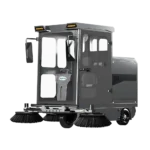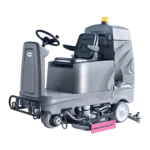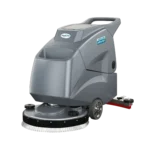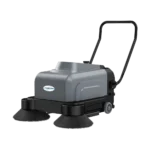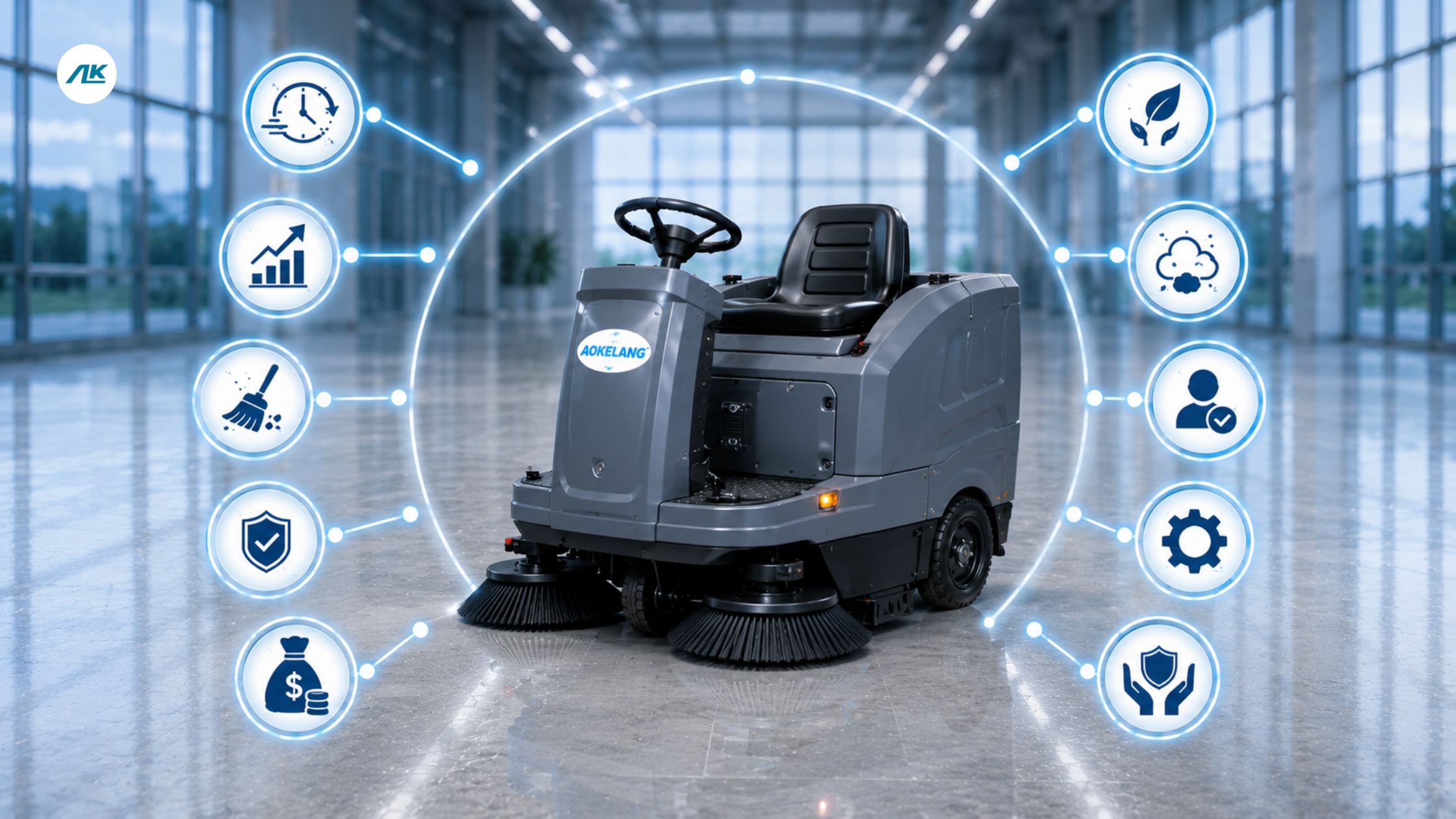
The benefits of a floor sweeper machine include faster cleaning, improved dust control, and reduced operational costs for businesses. Compared to manual sweeping, floor sweepers efficiently collect dust, debris, and waste while preventing fine particles from spreading into the air, helping maintain cleaner and healthier environments. These machines enhance workplace safety by reducing slip hazards, lower labor requirements through automation, and provide versatile cleaning solutions for warehouses, factories, parking areas, retail spaces, and other large commercial facilities.
Table of Contents
What Is a Floor Sweeper Machine?
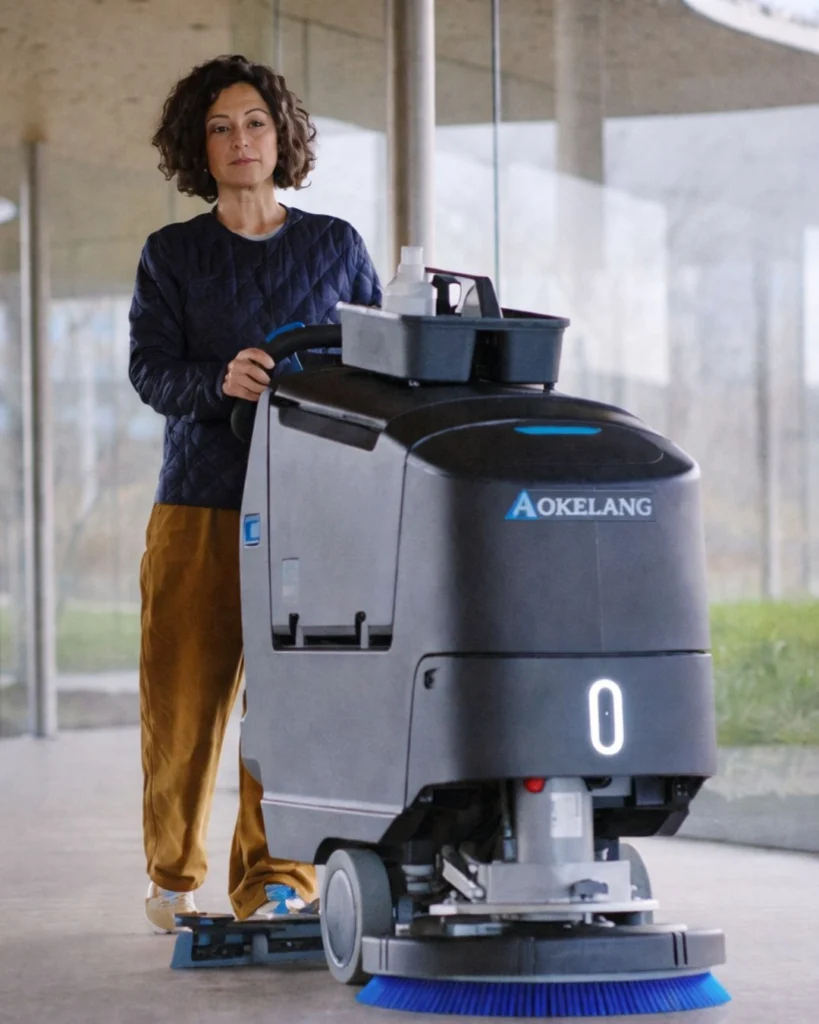
A floor sweeper machine is a powered cleaning device designed to collect dry debris, dust, dirt, sand, grit, litter, and loose particles — from hard floor surfaces using rotating brushes and a built-in collection hopper these are the Benefits of a Floor Sweeper Machine. Unlike a floor scrubber, which uses water and cleaning solution to scrub and wet-clean a surface, a floor sweeper performs dry collection, making it the right tool for environments where debris accumulation is the primary problem.
Floor sweepers are available in two main formats:
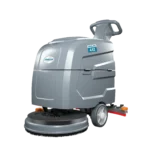
Walk-behind floor sweepers — Operator-guided machines suited to small-to-medium facilities, corridors, and areas with restricted space. The operator walks behind the machine and guides it across the floor.
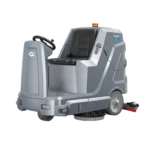
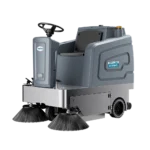
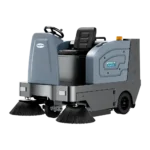
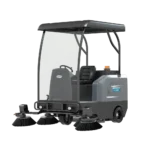
Ride-on floor sweepers — Operator-seated machines designed for large open floor areas where speed and efficiency are the priority. The operator rides on the machine, dramatically reducing the time and physical effort required to sweep large spaces.
Aokelang manufactures both types across a range of models, from the compact D1050 industrial floor sweeper to the large-scale D2400 ride-on industrial sweeper — built for warehouse, factory, retail, and institutional environments.
This blog covers the 10 most important benefits of using a floor sweeper machine, going beyond the surface-level answers to cover what facility managers, procurement teams, and operations directors actually need to understand when evaluating this equipment.
Why Most Existing Content on This Topic Misses the Point
If you have searched for “benefits of a floor sweeper machine” before landing here, you have probably read a list that tells you sweepers “save time,” “improve hygiene,” and “are easy to use.” These things are true, but they are not the full picture.
What those articles rarely cover:
- The specific operational contexts in which sweepers deliver most of their value
- The measurable cost implications of switching from manual sweeping to machine sweeping
- The difference between sweeping and scrubbing and when each is appropriate (or when both are needed)
- The right sweeper specification for different facility types, and why getting this wrong costs money
- The maintenance implications that affect total cost of ownership over a machine’s service life
- The safety and compliance considerations that matter to regulated industries
This guide covers all of it.
Benefit 1: Dramatically Faster Cleaning Coverage
The single most quantifiable benefit of a floor sweeper machine over manual sweeping is speed.
A person sweeping manually with a push broom can realistically clean approximately 200 to 300 square metres per hour under good conditions. Benefits of a floor sweeper machine, walk-behind floor sweeper typically covers 1,500 to 3,000 square metres per hour depending on model and working width. A ride-on floor sweeper covers 4,000 to 8,000 square metres per hour or more at operating speed.
This is not a marginal improvement, it is a fundamental change in what is operationally possible.
For large facilities, this difference is existential. A 10,000 m² warehouse floor cannot be practically maintained by manual sweeping without dedicating multiple full-time operatives to the task. A single ride-on sweeper, such as the Aokelang D2400, can cover that same area in a fraction of the time, freeing personnel for other operational tasks.
What this means in practice: Facilities that switch from manual sweeping to machine sweeping typically reduce the labour hours dedicated to floor maintenance by 60 to 80 percent. That labour is then available for higher-value operational tasks.
The gap most articles miss: Speed is only part of the equation. Cleaning speed needs to be matched to facility layout. A fast ride-on sweeper is ineffective in a facility with narrow aisles or frequent obstacles. Walk-behind sweepers, like the Aokelang D1050, are the better choice for tighter environments. Matching the right machine format to the facility is as important as the speed advantage itself.
Benefit 2: Consistent and Repeatable Cleaning Results
Manual sweeping is inherently variable. The quality of the result depends on the individual doing the work — their technique, their pace, their attention, and their physical condition at the time. On a long shift, sweeping quality degrades. In large areas, sections get missed. With multiple operatives covering different zones, consistency is difficult to maintain across the whole facility.
A commercial floor sweeper machine delivers the same cleaning result every time the machine is run correctly. The brush pressure, the suction, the collection system, and the cleaning width are fixed specifications. The result does not vary based on who is operating it, how tired they are, or how long the shift has been running.
For facilities where cleanliness consistency matters — whether for hygiene compliance, customer-facing presentation, or internal safety standards — this repeatability is a significant operational advantage.
What this means in practice: Facility managers can schedule sweeping runs and know with confidence what the floor condition will look like afterward. Inspection readiness improves. Cleaning records become more reliable.
The gap most articles miss: Consistency requires that the machine is correctly specified for the debris type and floor surface. A sweeper with brushes configured for fine dust will underperform on coarser debris. Aokelang specifies its sweeper range across different debris profiles — from fine particulate in the D1050 to heavy mixed debris in the D2300 and D2400 — precisely because a single specification does not deliver consistent results across all environments.
Also read – Best Commercial Floor Scrubbers in 2026
Benefit 3: Improved Air Quality and Dust Control
This is one of the most underappreciated benefits of a floor sweeper machine, particularly in industrial environments.
Manual sweeping with a broom displaces dust rather than collecting it. For every gram of debris that lands in a dustpan, a significant volume of fine particulate matter is lifted into the air and redistributed through the facility. This is not visible to the naked eye, but it is a real and measurable problem for air quality, respiratory health, and equipment performance.
Industrial floor sweepers are equipped with filtration systems — typically multi-stage dust filters or fabric filter bags — that capture fine particulate as the machine sweeps, preventing it from being released into the ambient air. The debris is collected in a sealed hopper and disposed of in a controlled way.
What this means in practice: In manufacturing facilities, warehouses, food production environments, and any space where airborne particulate is a concern, machine sweeping with a filtered sweeper materially improves air quality. This has direct implications for worker health, product contamination risk, and equipment maintenance (fine dust accelerates wear on machinery and electronics).
The gap most articles miss: Not all sweepers have equivalent filtration. The effectiveness of dust control depends on filter type, filter maintenance intervals, and hopper sealing quality. Facilities that operate in dusty environments should evaluate filtration specifications carefully when selecting a sweeper model, and ensure that filter maintenance is factored into the total cost of operation.
Benefit 4: Reduces Slip and Fall Hazards on Dry Floors
Loose debris on hard floor surfaces — grit, sand, small particles, litter — is a genuine slip and trip hazard. This is particularly true on smooth hard floors (polished concrete, epoxy, vinyl, tile) where debris underfoot reduces traction unexpectedly.
A floor sweeper machine removes dry debris before it becomes a hazard. Regular sweeping — especially in high-traffic areas and at shift change intervals — keeps floors clear and significantly reduces the risk of slip and fall incidents.
What this means in practice: For regulated industries — particularly warehousing, manufacturing, food production, and healthcare — slip and fall incidents carry financial and legal consequences in addition to the human cost. Maintaining clear floors is part of a facility’s duty of care to its workers. Machine sweeping makes it operationally practical to maintain this standard consistently.
Sweeping and scrubbing address different safety concerns. A floor sweeper removes dry debris that creates slip hazards. A floor scrubber removes wet contamination, grease films, and residues that create a different category of slip hazard. Many facilities need both — a pre-sweep followed by a scrubbing pass — particularly in food production, logistics hubs, and healthcare environments. For facilities evaluating this combination, Aokelang produces both floor sweepers machine and floor scrubbers machine across matching scales.
Also read – Best Floor Scrubber for Shopping Malls
Benefit 5: Lower Total Labour Cost Over Time
The labour cost argument for floor sweeper machines is straightforward but worth quantifying properly.
Manual sweeping of a 5,000 m² facility might require two full-time operatives over a cleaning shift. A single walk-behind or compact ride-on sweeper, operated by one person, can cover the same area in significantly less time. If the facility requires two sweeping passes per day, the labour saving multiplies across every working day of the year.
At average industrial labour rates in markets like the UK, US, and Australia, this labour saving typically justifies the capital investment in the machine within one to two years — often sooner in larger facilities or where sweeping frequency is high.
What this means in practice: Floor sweeper machines are a capital expenditure that generates measurable operating expenditure savings. The calculation is facility-specific, but for any business spending meaningful labour hours on manual floor sweeping, the financial case for mechanised sweeping is almost always positive.
Total cost of ownership includes not just the purchase price but also consumables (filters, brushes, batteries), maintenance, and the cost of any operational downtime. Aokelang’s sweeper range is designed for durability and straightforward maintenance — reducing the hidden costs that erode the financial case for cheaper, lower-quality machines.
Benefit 6: Extends the Life of Your Floor Surface
Hard floor surfaces — particularly polished concrete, epoxy resin, vinyl, and ceramic tile — are damaged over time by abrasive particles. Fine grit and sand particles, when walked on or driven over repeatedly, act as a grinding compound against the floor surface. This causes microscopic scratching that accumulates into visible dulling, surface degradation, and eventual structural damage to coatings and finishes.
Regular machine sweeping removes these abrasive particles before they can cause damage. The result is a floor surface that maintains its finish for longer, reducing the frequency and cost of refinishing, recoating, or replacement.
What this means in practice: For facilities that have invested in quality floor surfaces — epoxy warehouse floors, polished showroom or retail floors, or specialist clinical flooring — regular sweeping is not just a cleaning task; it is a floor protection measure. The cost of floor refinishing or replacement significantly exceeds the cost of the sweeping operation that prevents it.
The gap most articles miss: Different floor surfaces have different vulnerability profiles. Softer vinyl and coated floors are more susceptible to abrasive damage than raw concrete. Facilities with sensitive floor finishes should prioritise sweeping frequency and ensure that the brushes on the sweeper are appropriately specified for the surface — avoiding brush types that themselves could cause scratching.
Also read – Floor Scrubber Manufacturer & Supplier in China
Benefit 7: Supports Compliance and Audit Readiness in Regulated Industries
Many industries operate under regulatory or certification frameworks that include requirements for facility cleanliness and hygiene. This includes food production (HACCP, BRC, SQF), healthcare (CQC, infection control standards), pharmaceuticals (GMP), and logistics (health and safety legislation in the UK, OSHA in the US).
In these environments, floor cleanliness is not a preference — it is a compliance requirement that is subject to inspection and audit. Machine sweeping, when incorporated into a documented cleaning schedule, provides a consistent, auditable approach to floor maintenance that manual sweeping cannot match.
What this means in practice: Facilities that can demonstrate a systematic approach to floor cleaning — using equipment configured for the environment, with defined cleaning frequencies and documented maintenance schedules — are better positioned during compliance audits and inspections. The machine becomes part of the compliance record, not just the cleaning operation.
The gap most articles miss: Compliance is not just about how clean the floor is at inspection time. It is about demonstrating that cleanliness is maintained systematically. A machine that leaves a consistent result, operated to a defined schedule, provides the documentation foundation that manual sweeping cannot.
Benefit 8: Reduces Physical Strain on Cleaning Operatives
Manual sweeping of large floor areas is physically demanding work. Repeated pushing, pulling, and bending motions over extended periods contribute to musculoskeletal strain, particularly in the lower back, shoulders, and wrists. In industries where workers are already performing physically demanding tasks elsewhere in their shift, adding manual sweeping to their workload compounds fatigue and injury risk.
Floor sweeper machines eliminate the physical burden of manual sweeping. Walk-behind models reduce effort to guiding the machine. Ride-on models remove virtually all physical demand from the sweeping operation itself.
What this means in practice: Reduced physical strain translates to lower absenteeism related to musculoskeletal injuries, lower workers’ compensation claims (in relevant jurisdictions), and better operative wellbeing. In environments with persistent recruitment challenges — as many industrial and logistics operations face — reducing the physical burden of cleaning tasks also contributes to staff retention.
The gap most articles miss: Ergonomic benefit is often framed as a “nice to have” in cleaning equipment discussions. In reality, it is a quantifiable contributor to operational continuity. Facilities that suffer from cleaning operative absenteeism or turnover should consider whether the physical demands of manual floor maintenance are a contributing factor.
Benefit 9: More Sustainable and Environmentally Responsible Cleaning
Modern floor sweeper machines contribute to more sustainable facility operations in several measurable ways.
No water consumption — Unlike floor scrubbers, which use water as part of the cleaning process, floor sweepers are entirely dry-process machines. In facilities where water use is a sustainability metric or a cost factor, sweepers contribute to reduced consumption.
No chemical use — Sweeping is a mechanical process. No detergents or cleaning chemicals are required, eliminating chemical procurement costs, chemical storage requirements, chemical disposal obligations, and the environmental impact of chemical runoff.
Reduced waste — Machine sweepers collect debris into a sealed hopper, allowing for controlled disposal. Manual sweeping with brooms and dustpans tends to result in more waste being spread across the floor before collection, or debris being missed entirely and swept into drains or building edges.
Energy efficiency — Modern battery-powered floor sweepers operate on rechargeable lithium or lead-acid battery systems. Energy consumption per square metre cleaned is a fraction of what equivalent labour would consume in caloric and utility terms.
What this means in practice: For businesses with environmental management systems (ISO 14001), sustainability reporting requirements, or corporate ESG commitments, machine sweeping contributes positively to resource use metrics without requiring any additional operational complexity.
The gap most articles miss: The sustainability case for floor sweepers is rarely presented quantitatively. The actual water, chemical, and labour inputs saved depend on facility size and sweeping frequency. For large facilities, the figures are material — not marginal.
Must read – Floor Scrubber Price
Benefit 10: Professional Facility Presentation at Scale
The condition of a facility’s floors communicates something about the organisation. In customer-facing environments — retail, hospitality, healthcare reception areas, airport terminals — clean floors are a visible indicator of operational standards. In industrial environments, clean floors signal professionalism, safety-consciousness, and operational discipline to visitors, clients, auditors, and regulators.
Manual sweeping at the scale required to maintain large facilities to a consistently high visual standard is neither economically nor operationally practical. Machine sweeping makes it possible to maintain large floor areas to a consistent presentation standard as a routine operation rather than an exceptional effort.
What this means in practice: Facilities that invest in machine sweeping typically maintain a higher average floor condition than those relying on manual methods — not because the operatives are working harder, but because the machine makes consistent results achievable within normal operational constraints.
The gap most articles miss: Presentation benefit is often dismissed as cosmetic. But in customer-facing businesses, facility presentation directly influences customer perception, dwell time, and spend. In healthcare, it influences patient and visitor confidence in hygiene standards. In industrial settings, it influences the assessments made by visiting clients and auditors. The return on this benefit is real, even if it is harder to quantify than labour savings.
Floor Sweeper vs Floor Scrubber: Understanding When You Need Which
One of the most common questions facilities ask when evaluating floor cleaning equipment is whether they need a sweeper, a scrubber, or both. This is an important distinction and one that most buying guides handle poorly.
A floor sweeper is the right tool when the primary problem is dry debris — dust, dirt, sand, grit, loose particles, and litter. It is a dry-process machine. It does not remove grease, wet contamination, stains, or residues. If your floor problem is dry debris accumulation, a sweeper is the correct and sufficient solution.
A floor scrubber is the right tool when the primary problem is wet contamination, grease, stains, or ingrained dirt that requires water and mechanical scrubbing to remove. A scrubber also dries the floor as it cleans, leaving a surface that is both clean and safe to walk on immediately.
Both together is the right answer for many industrial and high-traffic facilities. A sweeping pass first removes loose debris that would otherwise contaminate the scrubber’s water tank and degrade scrubbing performance. The scrubbing pass then deep-cleans the surface. This two-step approach is standard practice in warehouses, manufacturing facilities, food production environments, and large retail spaces.
Aokelang manufactures both categories — a full range of floor sweeper machines and a full range of floor scrubber machines — allowing facilities to source complementary equipment from a single manufacturer with matched scale and operational compatibility.
Which Aokelang Floor Sweeper Is Right for Your Facility?
Aokelang produces eight floor sweeper models across walk-behind and ride-on configurations. The right choice depends on four key factors: floor area, debris type, available aisle width, and required cleaning frequency.
For small-to-medium industrial spaces (up to approximately 3,000 m²): The Aokelang D1050 or D1250 are appropriate walk-behind configurations that balance manoeuvrability with collection capacity.
For medium-to-large warehouse or logistics floors (3,000–8,000 m²): The Aokelang D1450 ride-on sweeper or D1850 industrial sweeping machine provide the coverage speed and hopper capacity for efficient operation at this scale.
For large industrial facilities, factories, and distribution centres (8,000 m² and above): The Aokelang D1900, D2000, D2300, or D2400 provide the maximum cleaning width, hopper capacity, and operational endurance for high-volume, large-area deployment.
The full Aokelang floor sweeper machine range is available with model specifications and quote request options. If your facility requirements are complex or you are unsure which model is most appropriate, Aokelang’s team will provide a recommendation based on your specific situation — floor area, debris type, shift patterns, and any special environmental considerations.
Summary: The 10 Benefits of a Floor Sweeper Machine
- Dramatically faster floor coverage — 5 to 20x faster than manual sweeping, freeing labour for higher-value tasks
- Consistent and repeatable cleaning results — fixed machine specifications deliver the same result every time, regardless of operator variability
- Improved air quality through dust control — filtration systems capture fine particulate instead of dispersing it into the air
- Reduced slip and fall hazards — removes dry debris that creates underfoot traction hazards on hard floor surfaces
- Lower total labour cost — capital investment typically repaid within one to two years through labour saving
- Extended floor surface life — regular removal of abrasive particles prevents cumulative surface damage
- Supports compliance and audit readiness — systematic, documented machine cleaning strengthens regulatory and hygiene compliance posture
- Reduced physical strain on operatives — eliminates the musculoskeletal demands of manual sweeping across large areas
- More sustainable cleaning operation — no water, no chemicals, low energy consumption, and controlled waste disposal
- Professional facility presentation at scale — makes consistently high floor condition achievable as a routine operation, not an exceptional effort
About Aokelang Floor Sweeper Machines
Aokelang is a specialist manufacturer of commercial and industrial floor cleaning equipment, operating from a 20,000 m² production facility in Hefei, China. The company produces a full range of floor sweeper machines — from compact walk-behind models to heavy-duty ride-on industrial sweepers — alongside a complete range of floor scrubber machines for facilities that require both cleaning functions.
All Aokelang machines are available through factory-direct supply, with technical support, parts access, and consultative pre-purchase guidance included as part of the service relationship.
To find the right sweeper for your facility, visit aokelang.com or contact the team directly at info@aokelang.com. Aokelang responds to all enquiries within two hours with a tailored recommendation at no obligation.
Frequently Asked Questions About Floor Sweeper Machine Benefits
What is the main benefit of a floor sweeper machine over a broom?
Speed, consistency, and dust control. A floor sweeper machine covers floor area 5 to 20 times faster than manual sweeping, delivers consistent results regardless of operator fatigue, and captures fine dust in a filtration system rather than dispersing it into the air.
Does a floor sweeper machine work on all floor types?
Floor sweepers are designed for hard floor surfaces including concrete, epoxy, vinyl, tile, and asphalt. They are not suitable for carpet. Brush type should be selected based on floor surface sensitivity — softer brushes for coated or polished floors, stiffer brushes for rough industrial surfaces.
How often should a floor sweeper be used?
This depends on facility type and debris generation rate. Manufacturing and logistics facilities typically benefit from daily or even twice-daily sweeping. Retail and commercial spaces may require daily sweeping at a minimum. The goal is to remove debris before it accumulates to a point where it becomes a safety hazard or begins causing floor surface damage.
Is a floor sweeper the same as a floor scrubber?
No. A floor sweeper is a dry-process machine that collects loose debris without water. A floor scrubber is a wet-process machine that uses water and cleaning solution to scrub contamination from the floor surface and then vacuum up the dirty water. They address different cleaning problems and are often used together — sweep first, then scrub.
Can a floor sweeper machine reduce cleaning costs?
Yes. The primary cost reduction is in labour. Machine sweeping covers floor area much faster than manual sweeping, reducing the number of operative hours required for the same result. Secondary savings come from reduced floor maintenance costs (less surface abrasion damage) and improved operational efficiency from faster turnaround between cleaning and productive use of the space.
What maintenance does a floor sweeper machine require?
Core maintenance tasks include emptying the debris hopper after each use, cleaning or replacing the dust filter at recommended intervals, inspecting and replacing brushes when worn, checking battery charge levels (for battery-powered models), and periodically inspecting mechanical components for wear. Regular preventive maintenance significantly extends machine service life and prevents avoidable breakdowns.
What is the difference between a walk-behind and a ride-on floor sweeper?
Walk-behind sweepers are guided by the operator on foot and are suited to smaller or more congested spaces. Ride-on sweepers carry the operator and are suited to large open floor areas where speed of coverage is the priority. Ride-on models also reduce physical fatigue on the operator during extended cleaning sessions.