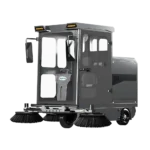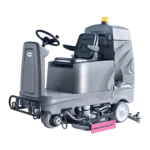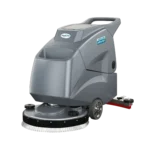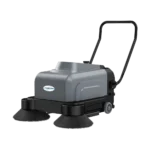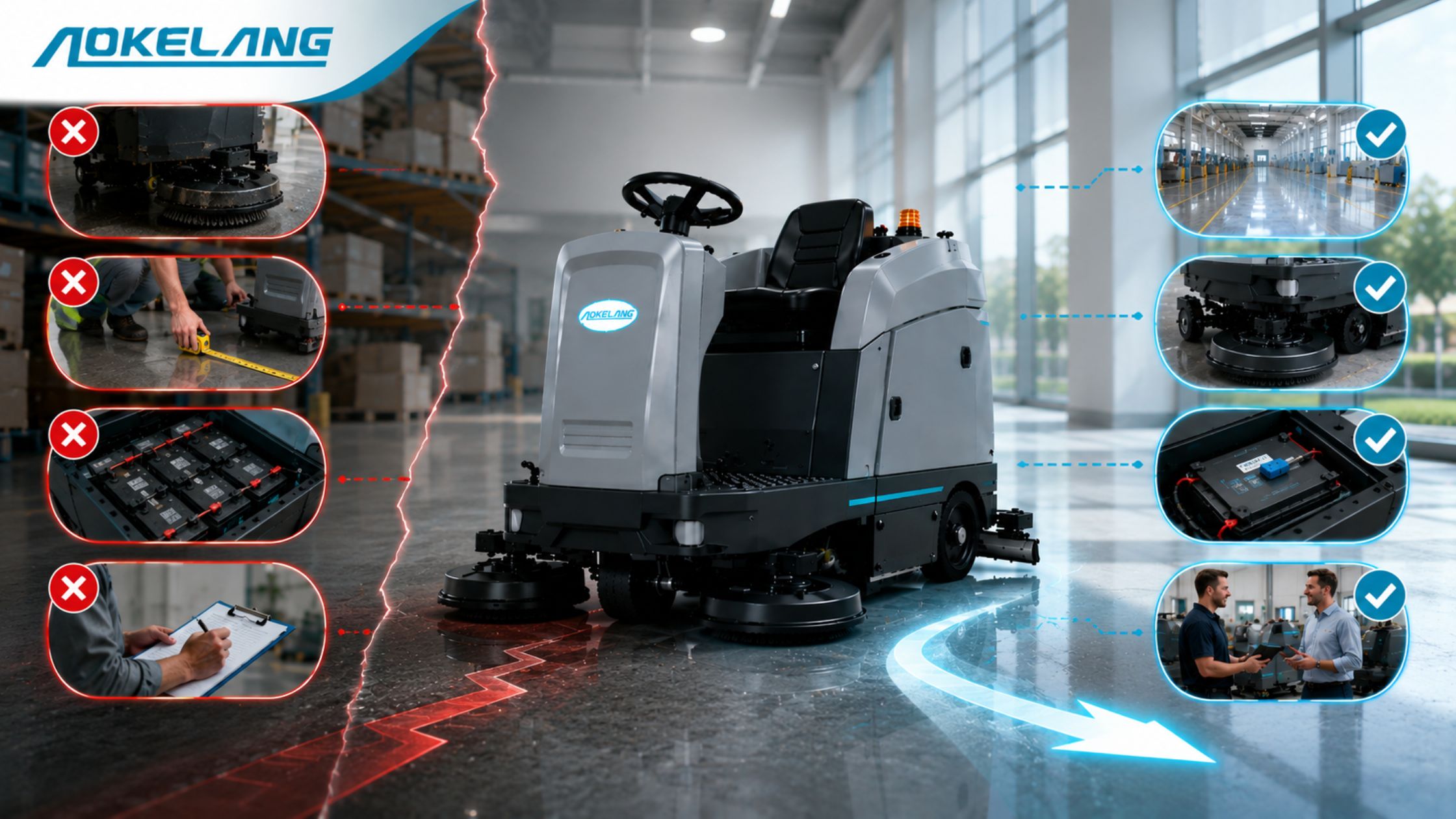
Most floor scrubber regrets happen before the machine is even switched on. Common mistakes when buying a floor scrubber are the wrong size, wrong format, wrong power source, or no plan for parts and maintenance these decisions get locked in at purchase and cost facilities for years afterward. Here are the mistakes that show up most consistently, and exactly what to do instead.
Table of Contents
Common Mistakes When Buying a Floor Scrubber
Mistake 1: Choosing by Brand or Price Before Choosing the Right Machine Type
The biggest buying mistake is choosing by brand before choosing the right machine type. A well-known brand in the wrong format is still the wrong machine. Buyers who start with “what brand should I buy?” are asking the question in the wrong order.
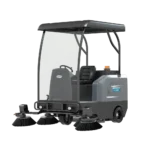
The correct sequence is: define your floor area and layout first, decide on walk-behind or ride-on second, then evaluate brands and models within that category. A walk-behind scrubber is the right choice for small to medium commercial spaces where manoeuvrability matters. A ride-on is the better choice when labour time is the biggest operational cost.
Similarly, going for the cheapest option upfront almost always costs more over time. Floor scrubbers bought at a low price often come from manufacturers who don’t provide after-sales service — so when brushes or squeegees become damaged, repairs become costly and parts are hard to source. The purchase price is only one number in the equation. Total cost of ownership maintenance, consumables, parts, downtime is the number that matters. Aokelang’s breakdown of how floor cleaning machines save your business money is a useful framework for building this calculation before buying.
Mistake 2: Getting the Size Wrong Both Too Big and Too Small
Facility managers consistently underestimate how much machine size affects daily operations in both directions.
Many people believe the bigger the scrubber, the better. In theory this is true because bigger machines carry more water and reduce refill frequency. But you also need to consider the width of the area you need to clean — and while you should go for the largest machine your space can accommodate, the scrubber needs to fit your narrowest passage.
If you are cleaning narrow aisles, don’t get a scrubber head that is exactly the width of the aisle. Even though a large brush seems like it makes the job faster, a smaller brush gives the operator ease of use and manoeuvrability.
On the other side, buying too small means constant refill and empty cycles that destroy the time savings the machine is supposed to deliver. A machine that forces stops every 20 minutes in a 10,000 sq ft facility is genuinely worse than a well-managed mop in terms of actual cleaning output per shift.
One measurement detail most buyers miss: a lot of people measure machine width by the scrubber body, but squeegees are actually the widest part of the unit. Measure squeegee width against your narrowest doorway before purchasing not the machine chassis.
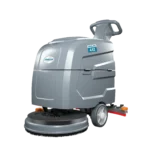
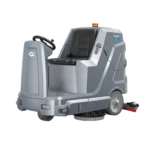
The Aokelang X2 Compact Walk-Behind Scrubber and Aokelang T3Z are the right answers for facilities where size is a genuine constraint, while the Aokelang D7 and D8 Ride-On Scrubbers suit large open floor areas where coverage speed is the priority. Aokelang’s guide on how to choose a floor scrubber walks through the sizing decision step by step.
Mistake 3: Ignoring Floor Type Compatibility
Not all floor scrubbers work on every surface. Some machines are made for smooth concrete, while others are better for tile or sealed floors. Using the wrong type can damage the floor or produce poor cleaning results.
This mistake is more common in facilities with mixed floor types a hospital with tile in corridors, polished marble in the lobby, and sealed concrete in service areas needs a machine with adjustable brush pressure and interchangeable pad/brush options. Buying a single fixed-configuration machine for a multi-surface environment is a compromise that usually performs poorly on at least one zone.
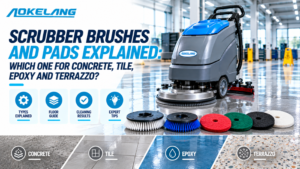
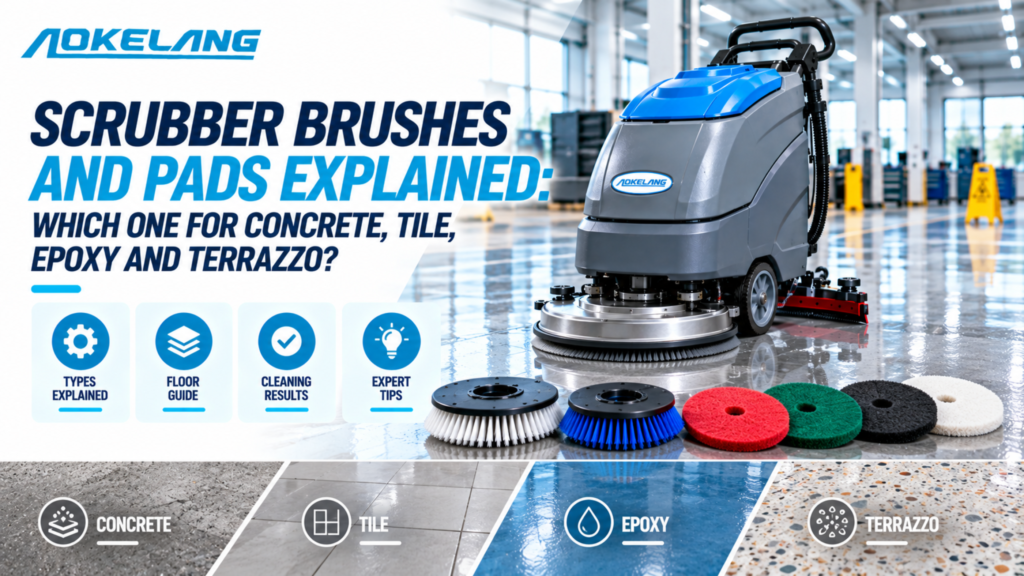
A hard bristle is too aggressive for polished floors, while a soft bristle might not effectively clean surfaces commonly found in commercial garages and industrial spaces. Confirming brush and pad compatibility with your actual floor surfaces before purchase — not after — is a non-negotiable step. Aokelang’s resource on features to look for in a professional floor cleaning machine covers brush type selection in detail.
Also read – How Long Should a Commercial Floor Scrubber Last
Mistake 4: Not Checking Parts Availability Before Buying
This is the mistake buyers only discover six months after purchase — and it’s one of the most damaging.
Don’t purchase a floor scrubber without first checking how easy it is to get replacement parts. If something unexpected happens, how long will you wait for that part — and can you afford that much downtime? Newer products, though more expensive, are more likely to have parts in stock. Deyooo
Always research the availability and price of replacement parts before making a purchase. This knowledge helps you budget more accurately and avoids surprises later. CLEANINGUY
Squeegee blades, brushes, and pads are consumables replaced every few months under regular use. If those parts aren’t locally stocked or available with short lead times, the machine effectively goes offline every time a consumable wears out. A machine with excellent specs but poor parts support is operationally unreliable regardless of its quality.
Consider the price of common parts that wear faster than others. How often should you expect to be replacing parts or servicing your machine? How reputable is the brand? Look for customer reviews to verify the brand delivers on durability and support. Jeffersonbattery1
Mistake 5: Overlooking the Battery Decision
Many buyers treat battery type as a minor specification footnote. It isn’t — it has a direct impact on cleaning consistency, operating costs, and workflow across the machine’s entire life.
The choice between lead-acid and lithium-ion matters most for facilities running machines daily. Lead-acid requires full charge cycles every time, takes 8–10 hours to charge, and loses performance consistency as it ages. Lithium-ion charges in 2–3 hours, supports opportunity charging between shifts, and delivers consistent voltage throughout the cycle rather than tapering off toward the end of the shift.
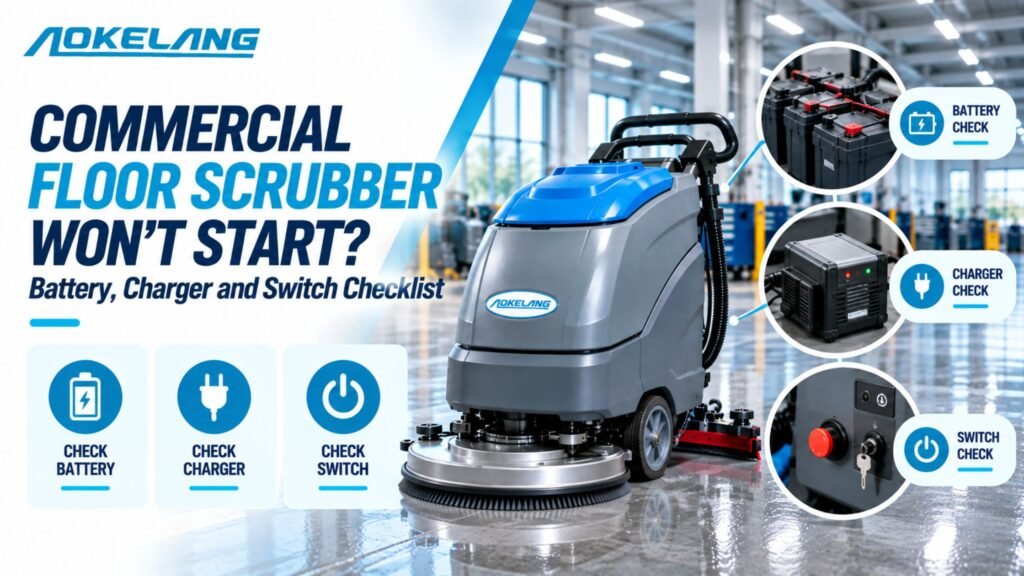
Not all batteries are the same. Using the wrong type for your workload can lead to reduced performance and increased downtime. Always check the manufacturer’s recommendations for battery type and capacity, and regularly check battery health and charge before use to avoid mid-shift interruptions. CLEANINGUY
For most commercial facilities running machines daily, lithium-ion is the right answer despite the higher upfront cost. For facilities with very light or infrequent use, lead-acid remains a reasonable budget option. Getting this decision wrong at purchase means living with the consequences for the entire battery lifespan — typically 3–5 years before replacement.
Mistake 6: Buying a Commercial Grade Machine for an Industrial Application
Don’t make the mistake of opting for a commercial floor scrubber because it’s cheaper than an industrial floor scrubber. Look at it from the perspective of a long-term investment. You will save more time and money by buying the right industrial floor scrubber the first time rather than doing trial and error through a few different commercial scrubbers.
A commercial-grade machine run in an industrial environment — heavy debris, oil, rough concrete, multi-shift use — will underperform and fail early. The motor, brush deck, chassis, and seals are simply not rated for that workload. Industrial-grade machines like the Aokelang T3 Industrial Walk-Behind Scrubber exist precisely because the manufacturing and logistics environment demands a different build standard than retail or office cleaning.
The reverse is also true at the other end: don’t go overboard buying the biggest floor scrubber isn’t always better. Over-specifying wastes capital and often produces a machine that’s harder to operate in the actual facility.
Mistake 7: Forgetting to Plan for Storage
Also, make sure you have a place to store your scrubber when it isn’t being used. Scrubbers take up significantly more space than a mop, so plan for something safe, secure, and accessible.
This sounds obvious, but is consistently overlooked. A ride-on machine requires dedicated storage space with easy access, not a cramped utility cupboard. Battery machines need ventilated storage away from heat sources. Storing a machine in a boiler room or hot, enclosed space degrades the battery and shortens machine life, regardless of how well everything else is managed.
If storage space is genuinely tight, it’s a legitimate reason to favour a compact walk-behind over a larger model. The machine that gets stored and charged correctly every night outperforms a larger machine stored poorly.
Mistake 8: No Operator Training Plan at the Point of Purchase
Buying the machine is step one. Getting the cleaning team to use it correctly is step two and many facilities skip it.
Using a floor scrubber improperly can lead to several issues, from inadequate cleaning to costly repairs. Proper training is essential, and it should include machine storage, daily maintenance like wiping down the scrubber and emptying tanks, and who to contact when more intensive maintenance or repair is required.
Untrained operators run scrubbers over heavy debris they should have swept first, use the wrong chemical concentrations, skip the post-use tank rinse, and ignore early warning signs. All of these behaviours shorten machine life significantly. Build operator training into the purchase not as an afterthought. Aokelang’s guide on the 7-step cleaning process is a practical framework for establishing correct operational habits from day one.
A Quick Checklist Before You Buy
| Question to Ask | Why It Matters |
| What is my actual floor area per cleaning shift? | Determines machine size and tank capacity needed |
| What are my floor surface types? | Determines brush/pad compatibility |
| Walk-behind or ride-on? | Determined by floor area, layout, and labour model |
| Battery or corded — and lead-acid or lithium? | Affects daily workflow, running costs, and lifespan |
| Are replacement parts locally available? | Affects downtime risk and running costs |
| Do I have appropriate storage and charging space? | Affects machine condition and battery lifespan |
| Is there a training plan for operators? | Affects cleaning results and machine longevity |
For a deeper look at the full specification decision, Aokelang’s comprehensive commercial floor cleaning machines overview covers every machine type with detailed specs, and the floor scrubber machine category lets you compare models side by side across the full range.
External references: ISSA — Cleaning Equipment Buyer’s Decision Guide | OSHA Walking-Working Surfaces Standard 29 CFR 1910.22
Frequently Asked Question
What is the most common mistake when buying a floor scrubber?
The biggest buying mistake is choosing by brand or price before determining the right machine type. Format — walk-behind vs ride-on and size relative to the facility should drive the decision first. Brand comparison comes after that, not before.
How do I know if I need a walk-behind or ride-on floor scrubber?
The primary factor is floor area. Walk-behind machines suit facilities up to roughly 15,000–20,000 sq ft per shift. Above that, the operator fatigue and time cost of walking make a ride-on the financially smarter choice. Layout also matters a large area broken up by many obstacles and narrow passages may still be better served by a walk-behind despite its size.
Is it a mistake to buy the cheapest floor scrubber available?
In most commercial applications, yes. Low-price machines often come from manufacturers who don’t provide after-sales service, making parts and repairs costly and difficult to source. Total cost of ownership across 5–7 years almost always favours a mid-to-high quality machine over repeated replacements of cheaper ones.
What should I check about parts before buying a floor scrubber?
Check how easy it is to get replacement parts, how long delivery takes, and how much common consumables brushes, squeegees, pads cost per replacement cycle. A machine with excellent specs but poor parts availability is operationally unreliable regardless of its build quality.
Can I use the same floor scrubber indoors and outdoors?
Indoor and outdoor floor scrubbers have different features and handle varying terrain and debris. Using an indoor scrubber outdoors can damage its components, as it isn’t designed for rougher surfaces or larger debris typically found outside. If you need both, either get a machine rated for both environments or use separate machines for each application.