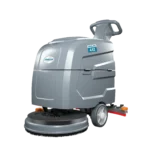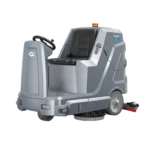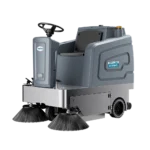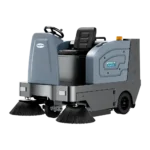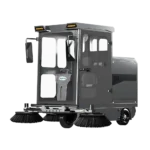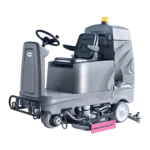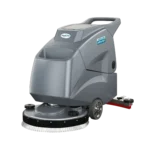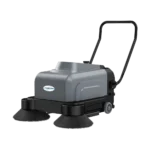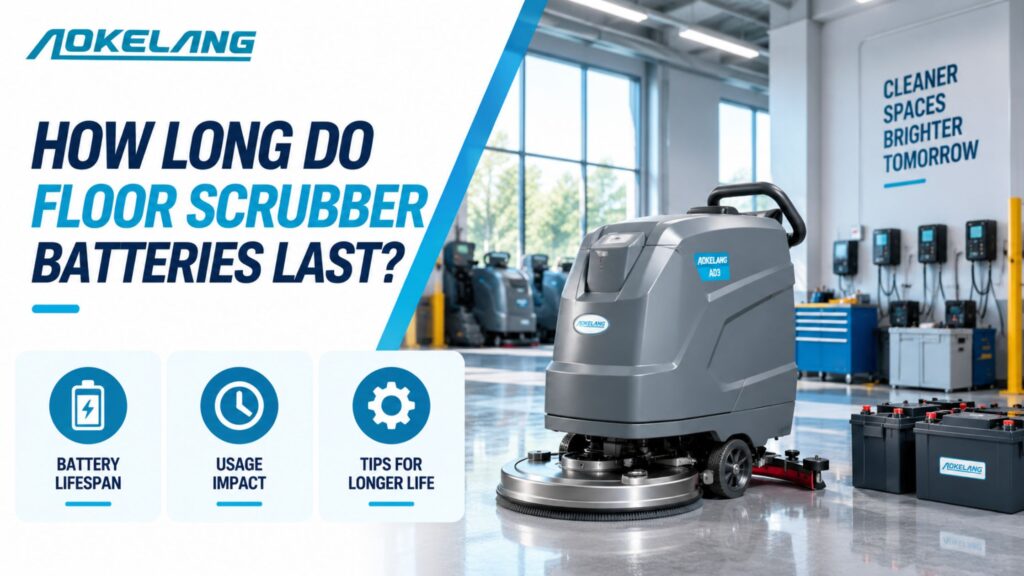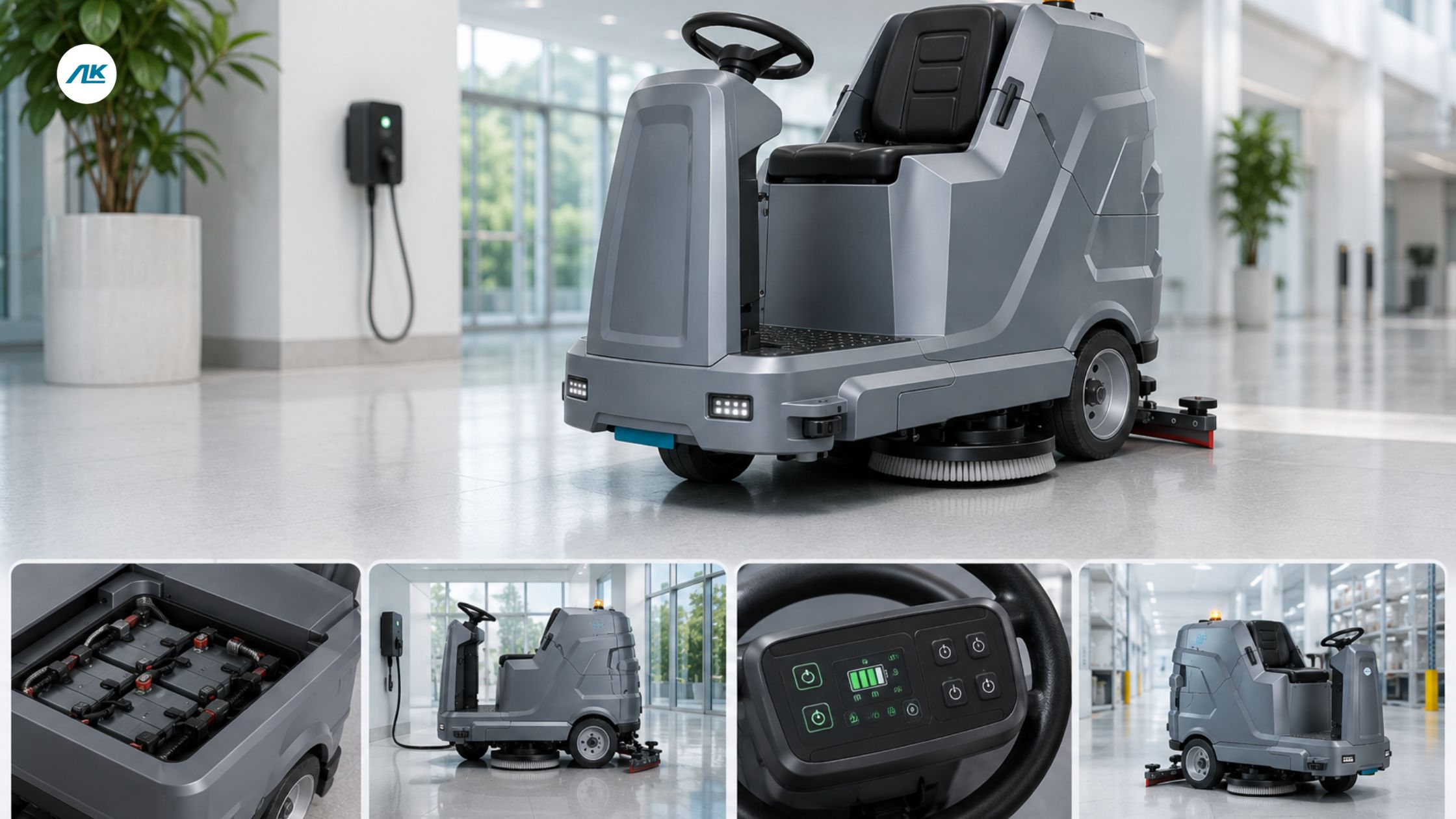
Nobody talks about batteries when they’re buying a Battery Powered Floor Scrubbers. They talk about cleaning width, tank size, and price. Then three months later, the machine dies halfway through a Tuesday morning shift, and suddenly the battery is the only thing anyone cares about.
This happens more than it should. And it’s rarely the machine’s fault. It’s the wrong battery type for the operation, wrong charging habits, or both.
Battery powered floor scrubbers now account for about 54% of all active commercial floor-cleaning fleets, and lithium-ion adoption has reached 47% of new installations. The industry has moved firmly away from corded machines, but most buyers still don’t understand the difference between the two battery types that power everything.
SOURCE: 54% fleet share, 47% lithium adoption, Global Growth Insights 2026
This guide fixes that. By the end, you’ll know exactly which battery type fits your operation, how long it’ll actually last (not the marketing number, the real number), and how to avoid killing an expensive battery in 18 months through bad habits.
Table of Contents
New to floor scrubbers? Start with our complete guide, Ultimate Guide to Floor Scrubbers
Lead-Acid vs Lithium-Ion: The Only Comparison You Need
Every battery powered floor scrubbers runs on one of two battery chemistries. Here’s how they stack up in the metrics that actually affect your daily operation:
| Factor | Lead-Acid | Lithium-Ion (LiFePO4) |
| Runtime per charge | 2–4 hours | 4–8 hours |
| Charge time | 6–8 hours (must fully charge — no partial) | 1–3 hours (supports opportunity charging) |
| Lifecycle | 300–400 full charge cycles | 500–2,000+ cycles (depending on chemistry) |
| Energy efficiency | ~80–85% | ~95% |
| Maintenance | Regular watering (every 5–10 cycles), equalization charges, terminal cleaning, acid level checks | None. Literally zero maintenance. |
| Weight | Regular watering (every 5–10 cycles), equalization charges, terminal cleaning, and acid level checks | 30–50% lighter than equivalent lead-acid |
| Upfront cost | $300–$800 | $1,200–$3,000 |
| Replacement cost | $300–$800 every 2–3 years | $1,200–$3,000 every 5–7+ years (often outlasts the machine) |
| Opportunity charging | No — partial charging causes sulfation and kills the battery faster | Yes — plug in during lunch break, get 30–50% boost. No damage. |
| Best for | Single-shift operations, tight budgets, small facilities | Multi-shift, large facilities, operations that can’t afford mid-shift downtime |
SOURCE: Efficiency %, cycle life — Straits Research Battery Powered Floor Scrubbers market report
Must read about – Ultimate Guide to Floor Scrubbers
Look at the table carefully. Lead-acid wins on one thing: upfront cost. Lithium wins on literally everything else.
The Real-World Runtime Question: “Will It Finish My Shift?”
This is the question that actually matters, and the spec sheet alone won’t answer it. A battery rated for “4 hours runtime” might give you 3 hours in your facility. Here’s why:
What eats runtime faster than expected:
- Floor condition — Heavy grime means more brush pressure, which draws more power. A scrubber cleaning an oily factory floor drains faster than one cleaning a polished retail floor.
- Inclines and ramps — Traction-drive machines climbing loading dock ramps or parking garage inclines consume significantly more battery than flat-floor operation.
- Cold environments — Cold storage and refrigerated warehouses kill battery performance. Lead-acid batteries lose 20–30% capacity below 50°F (10°C). Lithium handles cold better but still loses 10–15%.
- Battery age — A 2-year-old lead-acid battery holds 70–80% of its original capacity. By year three, you’re at 50–60%. That “4-hour” battery now gives you 2.5 hours.
- Operator habits — Running the machine at full speed constantly, over-applying solution, leaving the vacuum on high when it’s not needed — all drain faster.
Must read – Floor Scrubber vs Floor Sweeper
How to match the battery to your operation:
Forget the headline runtime number. Calculate your actual need:
- Measure your floor area in square feet.
- Divide by the machine’s productivity rate (sqft per hour found in the spec sheet).
- That gives you the cleaning time needed per session.
- Add 20% buffer for stops, turns, refills, and real-world conditions.
- Compare that number to the battery’s rated runtime.
Example: 60,000 sq ft warehouse. Ride-on scrubber rated at 40,000 sqft/hr. Cleaning time: 1.5 hours. Add 20% buffer: 1.8 hours. A lead-acid battery with 3-hour runtime handles this comfortably. A lithium battery is overkill unless you’re running double shifts.
Different example: same 60,000 sqft warehouse, but you run two shifts day and night. The scrubber needs to clean 1.8 hours, recharge, then clean for another 1.8 hours. Lead-acid needs 6–8 hours to recharge between shifts impossible with an 8-hour turnaround. Lithium recharges in 1–2 hours. Problem solved.
Explore all battery powered floor scrubbers
The Hidden Cost of Lead-Acid Batteries

Lead-acid looks cheaper on the purchase order. Over 5 years, it often isn’t. Here’s the math most buyers skip:
Replacement frequency
Lead-acid batteries in daily commercial use typically need replacing every 2–3 years. At $300–$800 per replacement, that’s $600–$2,400 in battery costs over a machine’s 7-year life.
Lithium batteries last 5–7+ years in the same daily use. Many outlast the machine itself. Replacement cost: $0 in most cases. Even if you do replace once, the total cost is $1,200–$3,000 over 7 years.
Maintenance labor
Lead-acid batteries require watering every 5–10 charge cycles. That’s someone unscrewing caps, checking acid levels, adding distilled water, and cleaning terminals. Takes 15–20 minutes per session. Over a year of daily use, that’s 15–25 hours of labor just on battery maintenance.
SOURCE: Watering frequency — battery manufacturer guidelines, ISSA resources
Lithium maintenance: zero. Charge it and walk away.
You must know about the – Floor Scrubber Maintenance Guide
Energy cost
Lead-acid batteries are 80–85% efficient, meaning 15–20% of the electricity you pay for turns into heat, not cleaning. Lithium is 95% efficient. On a machine that charges every day, that efficiency gap adds up to real money on your electricity bill over the years.
Five-year total cost comparison
| Cost Over 5 Years | Lead-Acid | Lithium-Ion |
| Initial battery cost | $500 (included in machine) | $2,000 (included or upgrade) |
| Replacements (5 yrs) | $500–$1,600 (1–2 replacements) | $0 (battery outlasts 5 years) |
| Maintenance labor | $400–$700 (watering, cleaning) | $0 |
| Energy waste (inefficiency) | $200–$400 | $50–$100 |
| Downtime cost (mid-shift deaths) | $300–$1,000+ (varies) | ~$0 (opportunity charging eliminates this) |
| TOTAL 5-YEAR COST | $1,900–$4,200 | $2,050–$2,100 |
At the 5-year mark, the costs are nearly identical, and lithium has given you zero maintenance, zero mid-shift downtime, and faster charging every single day. By year 7, lithium is firmly cheaper because you still haven’t replaced the battery. And get the detailed view on Battery Powered Floor Scrubbers pricing.
Which Battery Type for Your Operation
Skip the deliberation. Here’s the decision tree:
Choose lead-acid if:
- You run a single shift per day with 8+ hours between cleaning sessions for a full recharge.
- Your facility is under 15,000 sq ft, and the scrubber runs less than 2 hours per day.
- Upfront budget is your absolute constraint, and you’re willing to accept higher ongoing costs.
- You have a dedicated person who will water and maintain the battery on schedule. Every time. No exceptions.
Choose lithium-ion if:
- You run double shifts or need the machine available for back-to-back cleaning sessions.
- You operate in cold storage or refrigerated environments (lead-acid loses too much capacity).
- Your facility is large enough that the machine runs 3+ hours per session, and you can’t afford mid-shift battery death.
- Nobody on your team will reliably water a lead-acid battery every week. Be honest about this one.
- You want the lowest total cost of ownership over the machine’s life, even if the upfront is higher.
For most commercial operations in 2026, lithium is the right answer. The price gap has narrowed dramatically; the performance gap hasn’t. The only remaining argument for lead-acid is tight upfront budgets on single-shift operations.
Before using the Battery Powered Floor Scrubbers, you must know the difference between Walk-Behind vs Ride-On Floor Scrubber.
Not Sure Which Battery Configuration You Need?
Tell us your facility size, number of shifts, and whether you operate in cold or heated environments. We’ll recommend the right machine with the right battery, and tell you honestly if lead-acid is fine for your situation or if lithium is worth the upgrade.
Every Aokelang scrubber ships with a battery and a charger included. No surprise costs.
Checkout the product – compact walk behind floor scrubber
Matching battery to facility type:
| Facility | Shifts | Recommended Battery | Aokelang Model Fit |
| School/university | Single | Lead-acid OK; lithium ideal | X2, T3Z, D2 |
| Office building | Single (evening) | Either works | D3, X2 |
| School / university | Single + events | Lithium (flexibility for events) | D3, D4 |
| Mall / retail center | Extended / split | Lithium (opportunity charge between zones) | D6, DX6 |
| Warehouse (single shift) | Single | Lead-acid OK for budget; lithium preferred | D4Z, D7 |
| Warehouse (double shift) | Double / 24-7 | Lithium (mandatory — no time for 8-hr recharge) | D7, D8, X5 |
| Cold storage | Any | Lithium (lead-acid loses 20–30% capacity in cold) | D4Z, D7 |
| Hospital | 24/7 rotational | Lithium (fast recharge between rounds) | D3, D4, T3Z |
| Factory (heavy use) | Small retail/clinic | Lithium (mandatory) | D6, D7, DX6 |
Seven Battery Habits That Either Save You Thousands or Cost You Thousands
The battery doesn’t decide how long it lasts. You do. These habits are the difference between a battery that lasts 5+ years and one that dies in 18 months.
1. Charge after every use — no exceptions
Even if the battery shows 60% remaining, plug it in. For lithium, this is just good practice. For lead-acid, its survival — leaving a lead-acid battery partially charged causes sulfation, which permanently reduces capacity.
SOURCE: Sulfation / improper charging reducing lifespan 30–50% — battery industry data
2. Never deep-discharge a lead-acid battery
Running a lead-acid battery below 20% charge damages the cells. The machine will still run, but you’re trading 30 minutes of cleaning today for months of battery life. Stop at 20–30% and recharge.
3. Water your lead-acid battery on schedule
Check water levels every 5–10 charge cycles. Use distilled water only. Fill to just above the plates — not to the top. Overfilling causes acid overflow during charging. Underfilling exposes plates and kills cells. This is the #1 reason lead-acid batteries die early in commercial cleaning.
4. Store in a cool, dry location
Heat accelerates battery degradation for both types. Don’t park the scrubber next to a heater, in direct sunlight, or near hot machinery. A battery stored at 95°F degrades twice as fast as one stored at 77°F.
5. Use the correct charger — always
Lead-acid and lithium chargers are not interchangeable. Using the wrong charger can permanently damage the battery or, in the case of lithium, create a safety risk. Always use the charger supplied with the machine.
6. Run equalization charges on lead-acid (monthly)
An equalization charge is a controlled overcharge that balances the cells inside a lead-acid battery. Most commercial chargers have an equalization mode. Run it once a month. Skip it, and individual cells drift out of balance, reducing capacity and lifespan.
7. Keep terminals clean
Corroded battery terminals increase resistance, reduce charging efficiency, and can cause intermittent power loss during operation. Clean terminals with a baking soda solution and a wire brush every month. This applies to lead-acid only — lithium batteries have sealed terminals that require no cleaning.
Also read – 10 benefits of floor scrubbers
Frequently Asked Questions – Battery Powered Floor Scrubbers
How long does a floor scrubber battery last per charge?
Lead-acid batteries provide 2–4 hours of runtime per charge. Lithium-ion batteries provide 4–8 hours. Actual runtime depends on floor condition, machine settings, inclines, and ambient temperature. Cold environments can reduce runtime by 15–30% for lead-acid and 10–15% for lithium.
How long does a floor scrubber battery last before replacement?
Lead-acid batteries last 300–400 charge cycles, which translates to roughly 2–3 years of daily commercial use. Lithium-ion batteries last 500–2,000+ cycles, or 5–7+ years. Many lithium batteries outlast the machine itself.
Can I charge a floor scrubber battery during a lunch break?
With lithium-ion, yes. Opportunity charging (partial charging during breaks) is safe and adds 30–50% capacity in 30–60 minutes. With lead-acid, no. Partial charging causes sulfation, which permanently reduces battery capacity. Lead-acid must always be fully charged in a single 6–8 hour session.
Is a lithium floor scrubber worth the extra cost?
In most cases, yes. Lithium costs $1,000–$2,500 more upfront but eliminates maintenance, charges 3–4x faster, lasts 2–3x longer, and avoids mid-shift downtime. Over 5 years, the total cost of ownership for lithium is comparable to or lower than lead-acid. The cost gap is only justified for single-shift operations with very tight upfront budgets.
Can I use a floor scrubber in a cold storage warehouse?
Yes, but battery choice matters. Lead-acid batteries lose 20–30% capacity below 50°F (10°C), which may cut your runtime to 1.5–2.5 hours. Lithium-ion handles cold significantly better, losing only 10–15% capacity. For cold storage operations, lithium is strongly recommended.
How do I know when to replace my floor scrubber battery?
Replace when the battery delivers less than 60–70% of its original runtime and a full charge cycle doesn’t restore performance. For lead-acid, other signs include slow electrolyte recovery, visible plate damage, and inability to hold equalization charge. For lithium, the battery management system (BMS) will typically display a health indicator.
What voltage do floor scrubber batteries use?
Most commercial walk-behind scrubbers use 24V battery systems. Larger walk-behinds and compact ride-ons use 24V or 36V. Industrial ride-on scrubbers often use 36V or 48V systems. Higher voltage generally means more power and longer runtime, but also higher battery cost.
Do all Aokelang floor scrubbers come with batteries?
Yes. Every Aokelang scrubber ships with a battery and charger included in the price. Models are available in lead-acid or lithium-ion configurations. Ask about lithium upgrade options when requesting a quote — the cost difference is often smaller than expected.