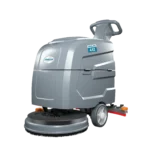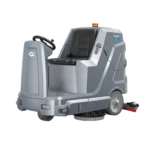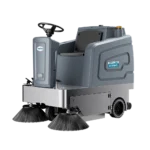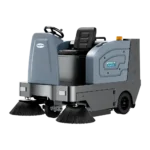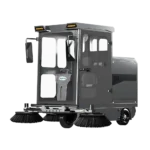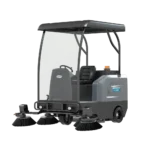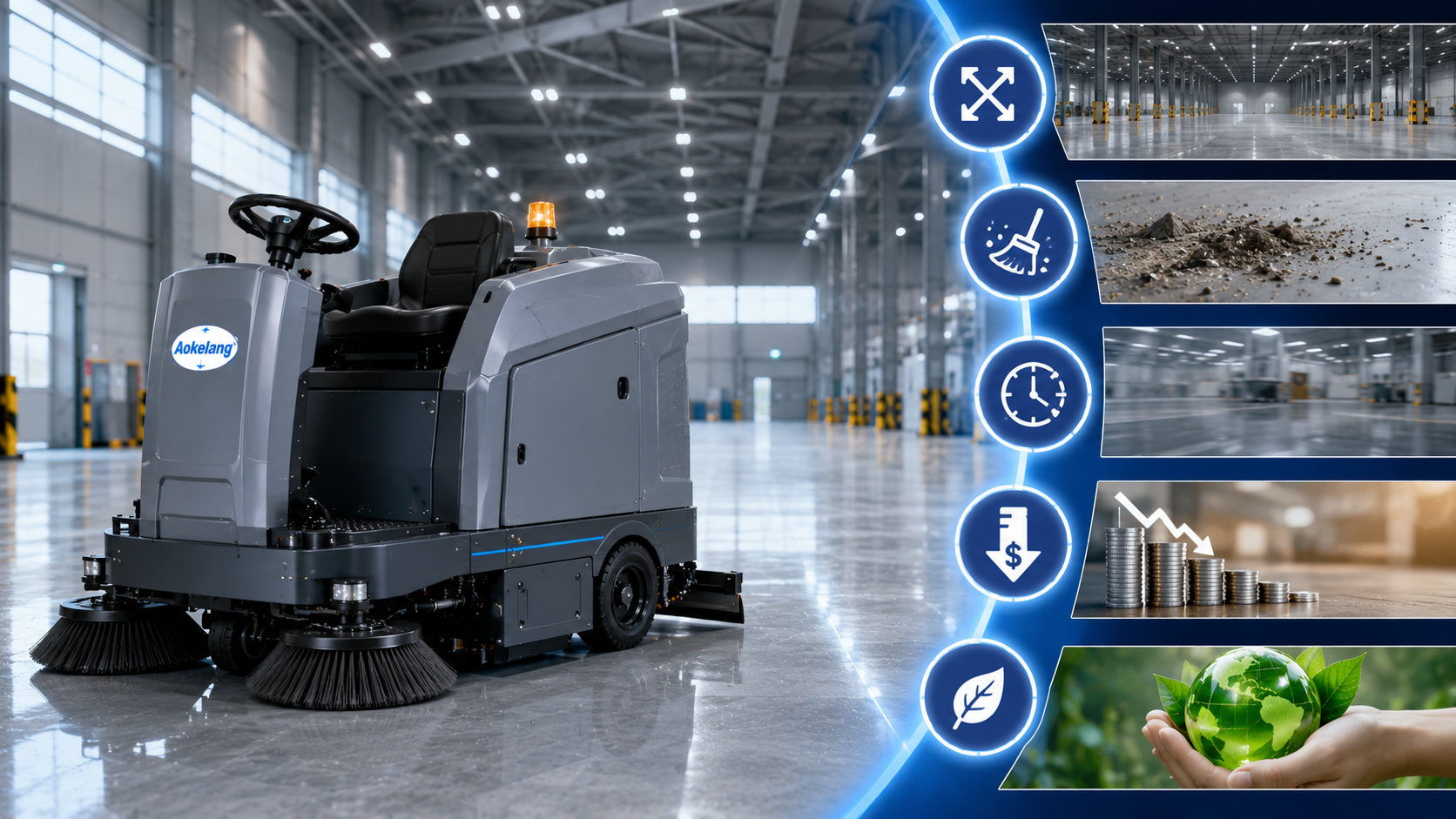
Ride-on sweepers are the ideal solution for large facility cleaning because they cover 7,000–10,000 square metres per hour — three to five times more than a walk-behind sweeper — while eliminating operator fatigue that degrades cleaning quality over long shifts. Their wider cleaning path (750–1,200mm), large-capacity hoppers, extended battery runtime, and advanced dust suppression systems allow a single operator to maintain vast floor areas that would require multiple people and far more time using smaller equipment. For any facility above approximately 5,000 m² of floor area requiring daily or frequent sweeping, the economics, performance, and practicality all point decisively toward a ride-on sweeper.
Scale changes everything in cleaning.
The techniques and equipment that work perfectly for a small retail store or a compact workshop become completely inadequate when applied to a 10,000-square-metre distribution centre, a sprawling manufacturing plant, or an airport terminal. At large scale, the problem isn’t just that smaller machines take longer — it’s that they can’t realistically complete the job within operational windows without deploying multiple operators, running cleaning during active production hours, or accepting that significant floor areas simply won’t be cleaned on schedule.
Ride-on sweepers exist to solve exactly this problem. They reframe what’s operationally possible for large-scale dry debris removal — delivering professional, consistent results across enormous floor areas in a fraction of the time that any alternative method requires.
Here’s why they are the definitive tool for large facility cleaning, and how to think about when and where they belong in your operation.
Table of Contents
The Scale Problem: Why Large Facilities Need a Different Approach
Before exploring what ride-on sweepers do well, it’s worth quantifying the scale problem they solve.
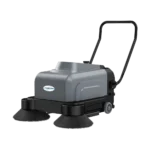
A walk-behind floor sweeper — a capable, well-engineered machine — covers approximately 2,000–3,000 m² per hour. A ride-on sweeper covers 7,000–10,000+ m² per hour. That’s not a marginal improvement. It’s a fundamentally different category of performance.
Put it in operational terms. A warehouse with 15,000 m² of floor area:
- Takes 5–7.5 hours to sweep with a walk-behind, often requiring two operators working simultaneously to finish within a shift
- Takes 1.5–2 hours to sweep with a ride-on, completed comfortably by a single operator
That’s three to four hours returned to your operation every cleaning cycle — hours that compound across every working day of the year. For facilities that clean daily, the labour saving alone from a ride-on sweeper over a walk-behind equivalent represents a significant recurring return on the machine investment.
Companies still running undersized or improperly matched equipment in large facilities end up spending roughly 40% more time on cleaning tasks and face around 18% higher staffing expenses compared to those with properly matched equipment.
The crossover point where a ride-on sweeper becomes the clear operational choice is approximately 5,000 m² of floor area requiring regular sweeping — below that, a walk-behind may serve adequately; above it, the ride-on case becomes progressively more compelling with every additional square metre.
7 Reasons Ride-On Sweepers Are Ideal for Large Facilities
1. Coverage Rate That Matches the Scale of the Task
The defining characteristic of a ride-on sweeper is its throughput. Operating at speeds of 8–12 km/h with cleaning path widths of 750mm to 1,200mm or more, ride-on sweepers cover ground at a rate that no walk-behind machine can approach.
Some ride-on sweepers achieve coverage rates of 30,000–100,000+ square feet (approximately 2,800–9,300 m²) per hour on open floor areas. At this rate, a single operator can maintain a 200,000 sq ft (18,500 m²) warehouse floor within a standard daily cleaning window — an outcome that simply isn’t achievable with walk-behind equipment without deploying multiple machines and operators running in parallel.
For large facilities — distribution centres, airports, manufacturing plants, shopping malls, logistics hubs, outdoor hardstanding — the coverage rate of a ride-on sweeper is what makes daily, thorough cleaning operationally viable rather than an aspiration that routinely gets compressed under schedule pressure.
Explore the ride-on floor sweeper range to compare coverage rates and cleaning path widths across different facility sizes.
2. Operator Comfort Sustains Cleaning Quality Throughout the Shift
This is one of the most practically important advantages of ride-on sweepers, and one that often doesn’t receive the attention it deserves in equipment selection discussions.
Walk-behind sweeper operators are on their feet for the duration of the cleaning shift, covering the same enormous floor areas that the machine itself must cover. In a large facility, that means hours of continuous physical exertion — and physical fatigue reliably degrades cleaning quality. Operators who are tired cut corners, miss sections, slow down, and produce inconsistent results in the later stages of a shift.
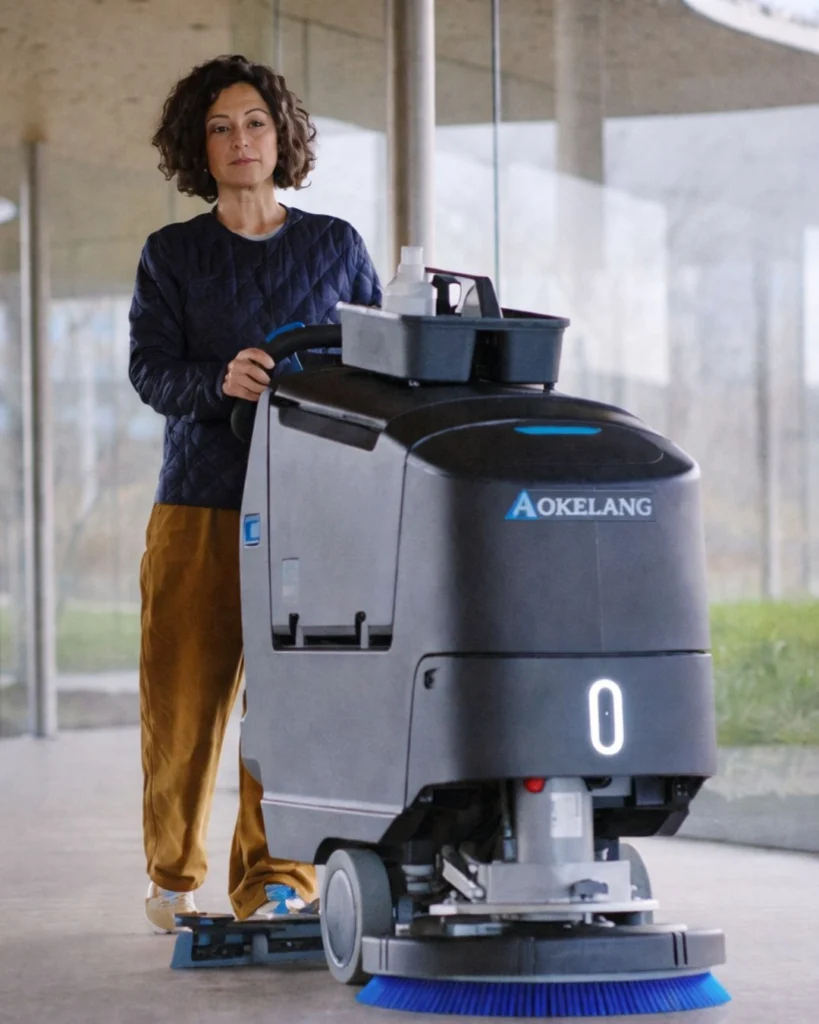
Ride-on sweeper operators sit. They drive the machine through the facility like a small vehicle, operating controls rather than providing the physical effort of pushing or guiding a machine on foot. Cleaning speed and quality stays consistent from the first pass of the shift to the last — because the operator’s physical state doesn’t change the machine’s performance.
For facilities running long cleaning shifts, multiple cleaning cycles per day, or overnight cleaning operations, this consistency is operationally significant. The floor cleaned at 2 AM is as thorough as the one cleaned at 10 PM.
3. Large Hopper Capacity Minimises Stops and Interruptions
Walk-behind sweepers typically have hopper capacities of 25–50 litres. Ride-on sweepers carry hoppers of 100–200+ litres, and industrial models can exceed this further. In a large facility generating significant debris volume — packaging materials in a logistics hub, production waste in a factory, grit and dust in a materials handling environment — hopper capacity directly determines how often the operator stops to empty the machine.
Frequent stops don’t just take time directly — they break the rhythm of the cleaning cycle, extend the total cleaning window, and create the operational disruption of a machine stationary in the middle of a facility while waste is disposed of.
Large-capacity hoppers on ride-on sweepers allow extended uninterrupted cleaning runs across large floor areas before emptying is required. In the most debris-intensive environments, ride-on sweepers designed specifically for industrial use — such as those in the industrial ride-on floor sweeper category — are built with even larger hopper volumes and more robust debris-handling systems to match the output of demanding industrial environments without constant interruption.
4. Advanced Dust Suppression Protects Air Quality and Compliance
In large industrial facilities, sweeping without adequate dust control doesn’t just leave the air uncomfortable — it can constitute a regulatory compliance failure. OSHA sets Permissible Exposure Limits (PELs) for airborne dust and respirable particulates, and investing in an OSHA-compliant industrial floor sweeper is one of the primary engineering control methods available to facilities managing dust exposure.
Ride-on sweepers designed for professional facility use incorporate dust suppression systems — water-mist or filtration-based — that capture fine particulates at the brush and hopper rather than allowing them to become airborne during the sweeping process. The difference between sweeping with a capable dust-suppression ride-on and sweeping with a broom or an inadequately filtered machine is the difference between cleaning the floor and redistributing fine dust into the air your workers breathe.
For food production, pharmaceutical, and healthcare facilities where airborne contamination is a hygiene concern as well as a respiratory one, the dust suppression capability of industrial ride-on sweepers is a direct operational requirement, not an optional upgrade.
5. Reduced Labour Requirements and Costs
Labour is the largest component of floor maintenance costs in most facilities — typically representing around 90% of total cleaning expenditure. Any equipment that reduces the hours required to maintain a facility to standard directly reduces the most significant cost in the cleaning budget.
Ride-on sweepers reduce labour requirements in two distinct ways. First, they allow one operator to cover the area that would require two, three, or more operators with walk-behind equipment — directly reducing the headcount required for each cleaning cycle. Second, they complete the cleaning cycle faster, reducing the total labour hours consumed even by a single operator.
Businesses that switch to ride-on sweepers typically see significant cuts in labour expenses because fewer staff are needed and tasks get done faster than before. The labour savings compound every day, and across a full year of operation in a large facility, they typically more than offset the higher initial investment of a ride-on machine compared to walk-behind alternatives.
6. Consistency Across Every Pass, Every Shift
Large facilities present a particular cleaning consistency challenge. When a floor spans tens of thousands of square metres, covering it uniformly — consistent brush pressure, consistent passes, no missed sections — is genuinely difficult with operator-fatigued walk-behind equipment. Sections at the far end of a long shift get shorter passes, lower brush engagement, and less thorough coverage than the areas cleaned when the operator was fresh.
Ride-on sweepers maintain consistent machine performance regardless of where in the shift they’re operating. The machine’s brush speed, travel speed, and suction remain constant from the first pass to the last. The result is a uniformly clean floor rather than one with visible quality gradients between areas cleaned early and late in the cycle.
For large-format retail environments, airports, and logistics facilities where floor appearance is commercially visible to customers and partners, this consistency in output matters beyond pure hygiene — it’s a presentation standard that reflects on the facility’s overall professionalism.
7. Better Long-Term ROI for Large-Scale Operations
The upfront cost of a ride-on sweeper is higher than a walk-behind equivalent. This is simply true, and it’s a real consideration in the capital allocation decision. But for large facilities, the total cost of ownership calculation consistently favours the ride-on when all the factors are included.
Labour savings, reduced cleaning time, lower per-m² cleaning cost, and reduced operator injury risk (which translates to lower workers’ compensation costs and reduced sick leave) all contribute to a return on investment that typically plays out within months rather than years in large facilities.
The ride-on floor sweeper range spans a wide investment range — from capable commercial ride-ons for mid-sized large facilities to heavy-duty industrial models built for the most demanding environments. Matching the right model to your specific floor area and debris load is the key to ensuring the ROI case holds as strongly in practice as it does on paper.
Large Facility Types and Why Ride-On Sweepers Fit
Warehouses and Distribution Centres
The combination of large open floor areas, high debris volumes from packaging and materials handling, forklift traffic operating alongside the cleaning machine, and the need to complete sweeping during operational windows without disrupting throughput makes ride-on sweepers the default choice for warehouse floor maintenance.
Daily sweeping in a large warehouse with a ride-on machine keeps grit and debris from grinding into sealed concrete surfaces, maintains clear aisle visibility, reduces slip-and-trip hazards from loose packaging debris, and sets the floor up for subsequent scrubbing when wet cleaning is part of the schedule.
For the largest and most demanding warehouse environments, the warehouse sweeper machine range provides purpose-built machines engineered for the debris volumes and operating conditions specific to warehouse and logistics environments.
Manufacturing and Industrial Plants
Factories generate a consistent, daily flow of production-related debris — metal shavings, composite dust, packaging offcuts, raw material residue, fine particulates from machining and fabrication processes. A ride-on sweeper’s combination of high hopper capacity, strong dust suppression, and coverage rate makes it the only practical equipment for maintaining large production floors between shifts or during operational windows.
The industrial ride-on floor sweeper category addresses the specific requirements of industrial environments — heavy-duty construction, robust brush systems capable of handling industrial debris, and dust suppression rated for fine industrial particulates.
Airports, Convention Centres, and Large Public Facilities
High-footfall public facilities with large, open floor areas — airports, exhibition halls, sports arenas, convention centres — require cleaning that combines coverage rate with low noise, and often requires cleaning to take place during or adjacent to public access hours. Battery-powered ride-on sweepers address both constraints: they cover the large areas efficiently and operate at noise levels appropriate for public environments.
Large Retail and Shopping Centres
Mall corridors, retail anchor stores, and large supermarket formats often have floor areas that are too large for walk-behind equipment to maintain thoroughly within practical cleaning windows. A ride-on sweeper handles the open floor areas of large retail environments effectively, working across multiple zones systematically in a single cleaning cycle.
Ride-On Sweepers and the Broader Cleaning Cycle
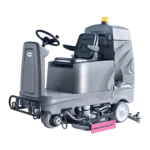
Sweeping is always the first step in any complete floor cleaning cycle — it removes dry debris before wet cleaning begins. In large facilities, pairing a ride-on sweeper for the dry sweep pass with a ride-on scrubber for the subsequent wet scrubbing delivers the full cleaning cycle at the productivity level that large floor areas require.
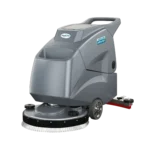
Understanding when to use a sweeper versus a scrubber — and when to use both in sequence — is covered in detail in the floor scrubber vs floor sweeper guide. For large facilities evaluating whether a walk-behind scrubber continues to serve their needs or whether a ride-on upgrade is justified, the walk-behind vs ride-on scrubber guide provides the decision framework.
Choosing the Right Ride-On Sweeper for Your Facility
Not all ride-on sweepers are built for the same environment. When selecting a model for your facility, the key factors to evaluate are:
Floor area and daily cleaning frequency — the larger the area and the more frequently it needs sweeping, the more important coverage rate and hopper capacity become. Facilities sweeping daily across 10,000+ m² need machines rated for continuous high-output operation.
Debris type and volume — paper and packaging debris in a distribution centre has different hopper and brush requirements than metal swarf in a machining facility or fine silica dust in a ceramics plant. Match the machine’s filtration and dust suppression spec to the actual debris your environment generates.
Operating environment — enclosed indoor facilities need battery-electric machines (no exhaust fumes); covered outdoor areas with ventilation may accommodate LPG alternatives; outdoor open hardstanding may require petrol-powered models rated for outdoor use and weather exposure.
Aisle width and layout — ride-on sweepers need wider operating corridors than walk-behind machines. Confirm the machine’s turning radius and overall width against the narrowest regular cleaning paths in your facility before specifying.
Battery runtime — for large facilities or extended cleaning shifts, battery runtime needs to cover the full cleaning cycle without mid-shift recharging interruption. Match stated runtime to your actual cleaning window with appropriate margin.
Browse the full ride-on floor sweeper range and the complete commercial floor cleaning machines selection to compare models across all the factors above and identify the right fit for your facility’s specific requirements.
The Honest Comparison: When a Walk-Behind Sweeper Is Still the Right Answer
A fair assessment of ride-on sweepers has to acknowledge where they aren’t the right choice.
For facilities with significant areas of narrow aisles, tight turning spaces, or extensive obstacle layouts, the walk-behind format’s manoeuvrability advantage can outweigh the ride-on’s coverage rate advantage in practice. A machine that can’t navigate your facility efficiently delivers less than its theoretical coverage rate.
For facilities with floor areas below approximately 5,000 m², the economics of a ride-on sweeper often don’t justify the higher capital cost over a quality walk-behind alternative.
And for outdoor pathways, courtyards, and the kind of narrow external cleaning areas discussed in previous guides, walk-behind sweepers remain the practical tool — ride-on machines simply can’t access these spaces.
The right answer in most large facilities is often a combination: a ride-on sweeper for large open floor areas and main thoroughfares, complemented by a walk-behind for tighter zones, edge areas, and external pathways that the ride-on can’t efficiently reach.
The Bottom Line
For large facilities, the question isn’t whether a ride-on sweeper performs better than the alternatives. It does — by coverage rate, by labour efficiency, by cleaning consistency, by dust management, and by long-term operating economics.
The question is whether your facility’s scale and cleaning requirements have crossed the threshold where the ride-on’s advantages consistently outweigh its higher initial investment. For the vast majority of facilities above 5,000 m² of floor area requiring regular sweeping, that threshold has been crossed — often significantly.
At that scale, continuing to clean with walk-behind equipment or manual methods isn’t just less efficient. It’s a daily operational cost that compounds into a substantial annual figure compared to what the right ride-on sweeper would deliver.
Frequently Asked Questions
Why are regular performance checks important for vacuum cleaners?
Regular performance checks help maintain suction power, improve cleaning efficiency, prevent motor damage, extend equipment lifespan, and reduce unexpected breakdowns or costly repairs.
How often should commercial vacuum cleaners be inspected?
Commercial vacuum cleaners should have daily checks for suction and bin capacity, weekly inspections for filters and hoses, monthly maintenance for brush rolls and performance testing, and scheduled professional servicing every 6–12 months depending on usage intensity.
Can clogged filters affect vacuum cleaner performance?
Yes. Clogged filters restrict airflow, reduce suction efficiency, increase motor strain, and may cause overheating. Over time, neglected filters can contribute to permanent motor damage and poor indoor air quality.
What are the signs that a vacuum cleaner needs maintenance?
Common warning signs include reduced suction, unusual noises, burning smells, visible dust escaping during operation, overheating, frequent shutdowns, and poor cleaning results despite normal use.
How does vacuum cleaner maintenance improve indoor air quality?
Maintained filters, especially HEPA filters, help capture fine dust, allergens, and airborne particles effectively. Dirty or damaged filters can release contaminants back into the air, reducing air quality in commercial environments.