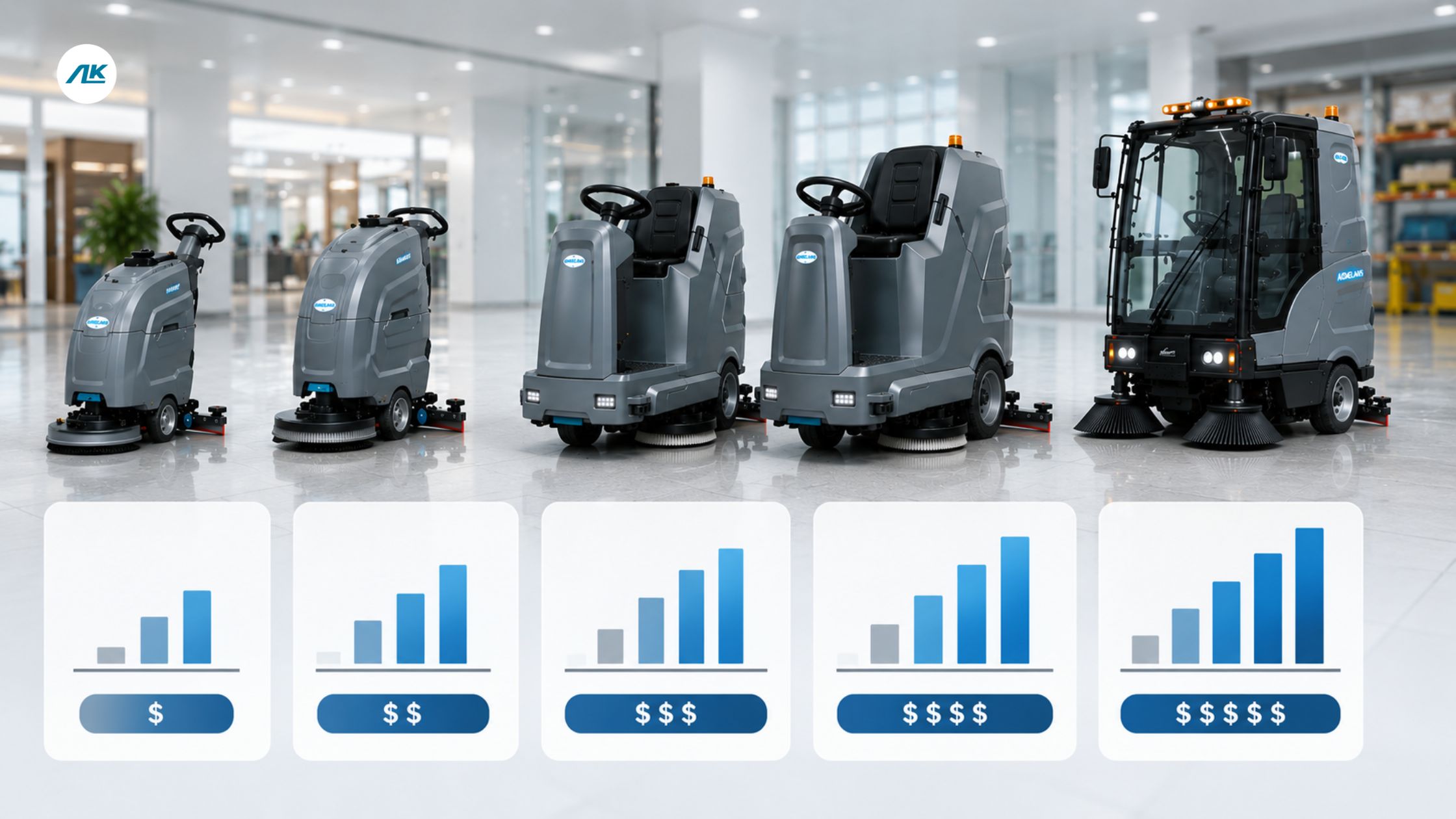
Here’s the honest answer nobody wants to hear about Floor Scrubber Price: it depends.
A floor scrubber can cost you $1,500 or $30,000. Saying “floor scrubbers cost X” without knowing your facility size, floor type, and shift schedule is like saying “a vehicle costs $25,000,” technically true for a compact sedan, wildly wrong for a semi-truck.
But “it depends” isn’t helpful. So this guide gives you every number you need: what each machine type costs, what makes one model twice the price of another, the hidden costs that hit after you buy, the ROI math that shows whether the machine saves you money or burns it, and exactly how to get the best price without getting the worst machine.
We manufacture floor scrubbers. We know what goes into the price because we build them. That gives us a perspective most price guides don’t have.
Table of Contents
New to floor scrubbers? Start with our complete guide → Ultimate Guide to Floor Scrubbers
Floor Scrubber Prices by Machine Type (2026)
These are real market ranges across the industry, not just our pricing:
| Machine Type | Price Range | Cleaning Width | Tank Size | Productivity | Best For |
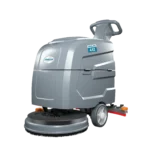
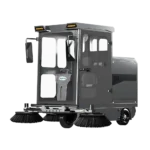
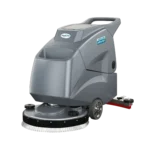
| Compact walk-behind | $1,500–$3,500 | 14–18” | 4–8 gal | 8K–16K sqft/hr | Retail, clinics, restaurants (<5K sqft) |
| Standard walk-behind | $3,000–$8,000 | 18–24” | 8–15 gal | 14K–30K sqft/hr | Offices, schools, small warehouses (5K–25K) |
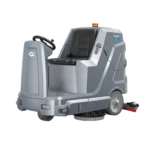
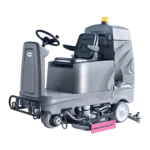
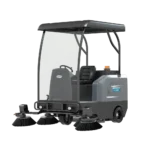
| Compact ride-on | $5,000–$12,000 | 26–32” | 20–35 gal | 28K–45K sqft/hr | Malls, mid warehouses (25K–75K) |
| Mid-size ride-on | $8,000–$18,000 | 32–40” | 35–55 gal | 40K–65K sqft/hr | Large warehouses, factories (75K–200K) |
| Industrial ride-on | $15,000–$30,000+ | 40”+ | 50–70+ gal | 55K–80K+ sqft/hr | Airports, mega-warehouses (200K+) |
SOURCE: Price ranges — Scrubbershop, ChemSource Direct, US Cleaning Tools, industry listings
Not sure which type? Read our walk-behind vs ride-on comparison → Walk-Behind vs Ride-On Floor Scrubber
Notice the wide ranges. A $3,000 walk-behind and an $8,000 walk-behind look similar from the outside. The difference is inside, which brings us to what actually drives the price.
Eight Things That Move the Price Up or Down
1. Cleaning width
Wider path = faster coverage = higher price. Every inch adds engineering cost — larger brush deck, wider squeegee, bigger vacuum system. A 20-inch walk-behind costs meaningfully less than a 28-inch walk-behind for this reason.
2. Battery type
The biggest hidden price driver. Lithium-ion adds $1,000–$2,500 upfront over lead-acid. But lithium lasts 500–600+ charge cycles vs 300–400 for lead-acid, charges in 1–3 hours instead of 6–8, and requires zero maintenance. Over the machine’s lifetime, lithium is often cheaper.
Full breakdown in our battery floor scrubber guide → Battery Powered Floor Scrubbers
3. Drive system
Pad-assist (brush friction moves the machine) is the cheapest. Traction-drive (motor drives wheels) costs $500–$1,500 more but eliminates pushing effort — critical for operators working long shifts or on inclines.
4. Tank capacity
Bigger tanks = longer runtime between refills = higher cost. For a 50,000+ sqft warehouse, the time saved by fewer stops justifies larger tanks. For a 3,000 sq ft retail store, you’ll never notice the difference.
5. Brush type
Disc-brush machines cost less than cylindrical-brush machines. Cylindrical models add pre-sweep capability (picking up dry debris before wet-cleaning), which requires more complex engineering. If your floor has both dust and grime, the extra cost is usually worth it.
6. Automation and smart features
Touchscreen dashboards, water-flow sensors, auto-detergent dosing, fleet management GPS, and telematics — each adds cost. Most mid-range buyers don’t need these. But if you manage 10+ machines across sites, fleet management can reduce operating costs by 10–15%.
7. Build quality and materials
Stainless steel frames vs plastic. Sealed bearings vs open. Industrial-grade motors vs consumer-grade. Two machines can look identical and have very different lifespans based on component quality. A $5,000 machine that lasts 10 years costs $500/year. A $3,000 machine that lasts 3 years costs $1,000/year. Cheap is expensive.
8. Where do you buy it
This is often the single biggest factor, and most buyers overlook it completely.
- Premium dealer-sold brands: 2–3 layers of markup between factory and customer. You pay 40–70% more for the brand name and the dealer’s margin. Excellent machines, premium price.
- Factory-direct from manufacturer: You buy from the company that actually builds the machine. No dealer, no distributor. This is how Aokelang operates — factory to customer, 30–60% less than dealer-sold equivalents.
SOURCE: 30–60% factory-direct savings — manufacturer pricing comparisons
Must know about the cost of floor scrubber – Floor Scrubber Price
- Used/refurbished: 40–60% off new pricing. High risk unless you know the service history. More on this in Section 4.
What Different Industries Actually Spend
Floor scrubber price guides list machine costs. But what do businesses in YOUR industry actually spend on their complete floor cleaning setup? Here’s the real-world picture:
| Industry | Typical Area | Equipment Needed | Total Equipment Cost | Annual Operating Cost |
| Small retail/clinic | 2K–8K sqft | 1 compact walk-behind | $2,000–$4,000 | $800–$1,500 (consumables + labor) |
| Restaurant/food service | 2K–6K sqft | 1 compact walk-behind | $2,500–$4,500 | $1,000–$2,000 |
| Office building | 5K–20K sqft | 1 standard walk-behind | $3,500–$7,000 | $1,500–$3,000 |
| Hospital/healthcare | 10K–50K sqft | 1–2 walk-behinds or 1 compact ride-on | $4,000–$12,000 | $2,000–$4,000 |
| Factory/manufacturing | 15K–100K sqft | 1–2 walk-behinds + 1 ride-on | $6,000–$18,000 | $3,000–$6,000 |
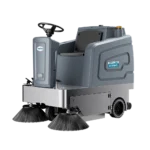
| Shopping mall | 50K–300K sqft | 1–2 ride-ons + walk-behind + sweeper | $12,000–$30,000 | $5,000–$10,000 |
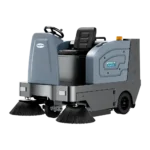
| Warehouse (mid) | 50K–150K sqft | 1 ride-on + 1 walk-behind + 1 sweeper | $12,000–$25,000 | $4,000–$8,000 |
| Large warehouse / DC | 150K–500K sqft | 1–2 ride-ons + walk-behind + industrial sweeper | $20,000–$45,000 | $7,000–$14,000 |
| Factory / manufacturing | 30K–200K sqft | 1 ride-on + walk-behind + sweeper (heavy-duty) | $14,000–$30,000 | $5,000–$10,000 |
These are total equipment costs, scrubber plus sweeper plus any supplementary machines. The annual operating cost includes consumables (pads, squeegees, detergent, filters) and amortized battery replacement, but not operator labor — that’s covered in the ROI section below.
4. New vs Used vs Refurbished: What’s Actually Worth Buying?
The used floor scrubber market is tempting. Prices are 40–60% below new. But there’s a reason those machines are being sold.
| Factor | New | Certified Refurbished | Used (As-Is) |
| Price vs new | 100% (baseline) | 50–70% of new | 30–50% of new |
| Warranty | 1–2 years full | 3–6 months typical | None (as-is) |
| Battery condition | New battery, full lifecycle | New or tested battery included | Unknown could be 80% depleted |
| Parts availability | Usually from a refurbisher | 3–6 years, depending on prior use | You’re on your own |
| Expected lifespan | 7–10 years with maintenance | 3–6 years depending on prior use | 1–4 years (unknown history) |
| Risk level | Low | Medium | High |
| Best for | Primary machines for daily use | Budget-conscious buyers who can inspect the machine | Backup machines, temporary use, buyers who can repair themselves |
SOURCE: Used pricing 40–60% off — equipment auction data, dealer listings
Also read – How to use a floor scrubber
The used machine trap
A “refurbished” walk-behind at $2,000 sounds great until you open it up: the battery holds 50% charge, the squeegee blades are worn to nothing, the vacuum motor sounds like it’s dying, and the recovery tank smells like something died in it. Now you’re spending $800 on a new battery, $200 on squeegees, and $300 on a motor service. Your $2,000 “deal” just became $3,300 — and it still only lasts 3 years instead of 10.
When used actually makes sense:
- You’re buying a certified refurbished machine from a reputable dealer who provides a 3–6 month warranty.
- You can physically inspect the machine before purchase (or have someone inspect it for you).
- You’re buying it as a second/backup machine, not your primary daily cleaner.
- You have in-house mechanical capability to repair issues as they arise.
For your primary daily machine, the one your operation depends on buy a new. The warranty alone is worth the price difference.
The ROI Math: Four Real Scenarios
The question isn’t “can I afford it?” It’s “Can I afford NOT to buy it?”
The formula: (Monthly labor cost saved) ÷ Machine price = Payback months
Scenario 1: 5,000 sqft retail store
Manual: 1 worker × $20/hr × 1 hr/day = $20/day = $440/month
Machine: Same worker × $20/hr × 0.5 hr/day = $10/day = $220/month
Savings: $220/month. Machine cost: $2,200. Payback: 10 months.
Scenario 2: 25,000 sqft school
Manual: 2 workers × $20/hr × 2.5 hrs = $100/day = $2,200/month
Machine: 1 operator × $20/hr × 1.5 hrs = $30/day + $8 machine/day = $836/month
Savings: $1,364/month. Machine cost: $5,500. Payback: 4 months.
Scenario 3: 80,000 sq ft warehouse
Manual: 3 workers × $20/hr × 4 hrs = $240/day = $5,280/month
Machine: 1 operator scrubber + 1 sweeper operator = $70/day + $25 machine/day = $2,090/month
Savings: $3,190/month. Equipment cost: $18,000. Payback: 5.6 months.
Scenario 4: 200,000 sqft factory
Manual: 6 workers × $20/hr × 5 hrs = $600/day = $13,200/month
Machine: 2 operators (ride-on + walk-behind) + 1 sweeper = $160/day + $40 machine/day = $4,400/month
Savings: $8,800/month. Equipment cost: $28,000. Payback: 3.2 months.
SOURCE: $20/hr loaded = ~$16.84/hr avg (BLS) + benefits
The pattern: bigger facility = faster payback. But even the smallest scenario (5K sqft retail) pays back within the first year. The industry average across all sizes is 3–6 months.
SOURCE: 3–6 month payback — FCE, Aiolith, industry ROI studies
Visit – Floor Cleaning Machines
Get a Price for Your Specific Facility
Every number in this guide is a range because every facility is different. Want a number that’s actually accurate for your situation?
Tell us your floor area, industry, and shift schedule. We’ll come back with a specific model recommendation and factory-direct pricing no dealer markup, no surprises. Every Aokelang scrubber ships with a battery and a charger included.
Rent vs Buy vs Lease: Floor Scrubber Price
| Factor | Rent | Buy | Lease-to-Own |
| Monthly cost | $500–$800 (WB) or $1,000–$2,000 (RO) | $0 after purchase | $200–$600/month for 24–60 months |
| 12-month total | $6,000–$24,000 | Machine price (one-time) | $2,400–$7,200 (year 1 of lease) |
| Ownership | After final payment, then it’s yours | Immediate it’s yours | After final payment, it’s yours |
| Maintenance | Usually included | Your responsibility | Varies by contract |
| Flexibility | High swap/return | Low committed | Daily use, but cash-flow constrained upfront |
| Tax treatment | Operating expense | Capital asset (depreciate) | Depends on structure |
| Best for | Seasonal use, testing before buying, <12 months | Daily use 12+ months, best long-term value | Immediately, it’s yours |
SOURCE: Rental ranges industry listings, Midco. Financing rates, equipment financing data
The 12-month rule
If you’ll use the machine daily for more than 12 months, buying is almost always cheaper. A walk-behind rental at $600/month costs $7,200/year. You can buy a comparable machine for $4,000–$6,000 and own it for 7–10 years.
Renting makes sense in exactly two situations: seasonal needs (holiday warehouse surge, post-construction cleanup) or testing a machine type before committing to purchase.
Lease-to-own: the middle ground
Equipment leasing splits the machine cost into monthly payments over 24–60 months. At the end, you own the machine. Typical interest rates run 5–15%, depending on credit. For businesses that need the machine NOW but can’t drop $10,000–$20,000 upfront, leasing preserves cash flow while building equity in the asset.
The Hidden Costs Nobody Mentions Before You Buy
Sticker price is not the total cost. Here’s what you’ll actually spend:
Consumables (ongoing)
- Brush pads/scrub brushes: $20–$80 each. Replace every 200–500 hours. Budget 2–4 sets per year for daily use.
- Squeegee blades: $15–$50 per set. Replace every 3–6 months. Most can be flipped once before replacing.
- Detergent: $30–$100 per 5-gallon concentrate. One jug lasts 2–8 weeks, depending on dilution and usage.
- Filters: $10–$30 each. Replace or clean every 1–3 months.
Battery replacement
- Lead-acid: $300–$800, typically every 2–3 years with daily use.
- Lithium-ion: $1,200–$3,000, but usually lasts 5–7+ years. Many outlast the machine.
Annual maintenance budget
Walk-behind: $300–$700/year in pads, squeegees, detergent, and filters.
Ride-on: $600–$1,500/year (larger parts, more detergent).
Battery (amortized): $100–$400/year, depending on type.
Also read – Floor Scrubber Price
The 7-year TCO example
$6,000 walk-behind over 7 years: $6,000 (machine) + $3,500 (consumables) + $1,500 (battery) = ~$11,000 total. That’s $130/month for 7 years of daily commercial floor cleaning. Compare to $2,640/month in manual labor for the same floor area. The machine isn’t just cheaper — it’s absurdly cheaper.
But these numbers assume proper maintenance. Skip the daily after-use routine, and you cut the machine’s life in half and double your parts costs.
SOURCE: 7–10 year lifespan — manufacturer data, ISSA
The 15-minute daily routine that saves you thousands → Floor Scrubber Maintenance Guide
How to Get the Best Floor Scrubber Price Without Getting the Worst Machine
Six principles:
1. Buy factory-direct
Every intermediary adds 15–30% markup. If you buy directly from the factory that builds the machine, you eliminate those layers. Aokelang sells direct from our 24,000 sqm facility — no dealer, no distributor, no inflated retail floor scrubber price.
2. Don’t buy more machines than you need
A 5,000 sqft retail store does not need a $15,000 ride-on. It needs a $2,500 compact walk-behind. Oversizing is the most common way to overpay.
3. Compare TCO, not sticker price
A $5,000 machine with lead-acid batteries needing replacement every 2 years ($800 each) and high consumable costs may cost more over 7 years than a $7,000 machine with lithium and lower-wear components. Run the full 5–7 year math.
4. Check what’s included
Some floor scrubber prices include battery, charger, starter brush set, and shipping. Others don’t. A “$4,000” machine that requires a $600 battery, $200 charger, and $300 shipping is really $5,100. Ask what’s in the box.
5. Ask about warranty and parts BEFORE buying
What’s the warranty period? Which parts are covered? How fast can replacements ship? Is there local service or online support? A $6,000 machine with a strong warranty beats a $4,000 machine from a company that disappears when something breaks.
6. Buy during off-peak
Q4 (October–December) is typically the busiest buying season for cleaning equipment. Manufacturers and dealers are more willing to negotiate pricing in Q1 and Q2 when demand is lower. If your purchase isn’t urgent, timing can save 5–15%.
Must read – Sweeper and Scrubber guide
Calculate Your Own TCO (Step-by-Step)
Use this framework to calculate the total cost of ownership for any floor scrubber you’re considering:
- Machine purchase price: $________
- Add battery + charger if not included: $________
- Add shipping / delivery: $________
- = TOTAL UPFRONT COST: $________
- Annual consumables (pads + squeegees + detergent + filters): $________
- Annual battery cost (amortized): replacement cost ÷ expected years = $________/year
- = ANNUAL OPERATING COST: $________
- Expected machine life with maintenance: ________ years
- TOTAL COST OF OWNERSHIP = Upfront + (Annual Operating × Years) = $________
- MONTHLY TCO = Total ÷ (Years × 12) = $________/month
Now compare that monthly TCO to your current monthly cleaning labor cost. If the machine is cheaper per month (it almost always is), the question stops being “can we afford it” and becomes “how fast can we get it.”
Also read – Commercial Floor Scrubber Cost
Frequently Asked Questions
How much does a commercial floor scrubber cost in 2026?
Compact walk-behinds: $1,500–$3,500. Standard walk-behinds: $3,000–$8,000. Compact ride-ons: $5,000–$12,000. Mid-size ride-ons: $8,000–$18,000. Industrial ride-ons: $15,000–$30,000+. Factory-direct manufacturers offer 30–60% savings over dealer-sold brands for comparable machines.
What is the ROI on a commercial floor scrubber?
Average payback is 3–6 months. One ride-on replaces 3–5 manual cleaners on large surfaces, delivering 40–70% annual labor savings. Use: (monthly labor saved × 12) ÷ machine price = payback months.
Is it cheaper to rent or buy a floor scrubber?
Buy if you clean daily for 12+ months. A walk-behind rental at $600/month = $7,200/year. Buying costs $4,000–$6,000, and you own it for 7–10 years. Renting only makes sense for seasonal or one-time needs, or testing a machine type before buying.
What are the ongoing costs of owning a floor scrubber?
Walk-behind: $300–$700/year. Ride-on: $600–$1,500/year. Covers pads, squeegees, detergent, and filters. Battery replacement adds $100–$400/year amortized. Total monthly TCO over 7 years: $130–$250 — far less than manual labor for the same area.
Why do floor scrubber prices vary so much?
Eight main factors: cleaning width, battery type, drive system, tank capacity, brush type, automation features, build quality, and buying channel. The biggest driver is usually where you buy — dealer-sold brands carry 40–70% markup over factory-direct.
Are cheap floor scrubbers worth buying?
Machines under $1,000 are usually residential-grade — they lack the tank capacity, build quality, and duty cycle for daily commercial use. The sweet spot for small businesses is $2,000–$4,000: genuine commercial machines at accessible pricing. Below that, expect replacement within 1–2 years.
How long does a floor scrubber last?
With proper daily maintenance (15 minutes after each use) and periodic service: 7–10 years. Without maintenance: 2–3 years. The daily after-use routine is the single biggest factor in machine lifespan.
Should I buy a new or used floor scrubber?
New is recommended for primary daily-use machines — you get full warranty, new battery, known service history, and 7–10 year lifespan. Used machines (40–60% off) make sense as backup units or for buyers with in-house repair capability. Certified refurbished (30–50% off) is the middle ground if the refurbisher provides a warranty.
Does a floor scrubber save money vs hiring cleaners?
Yes, significantly. In a 40,000 sqft facility: manual cleaning costs ~$2,640/month. A scrubber with one operator costs ~$660/month including machine amortization. That’s $24,000/year in savings. The math scales up with facility size.