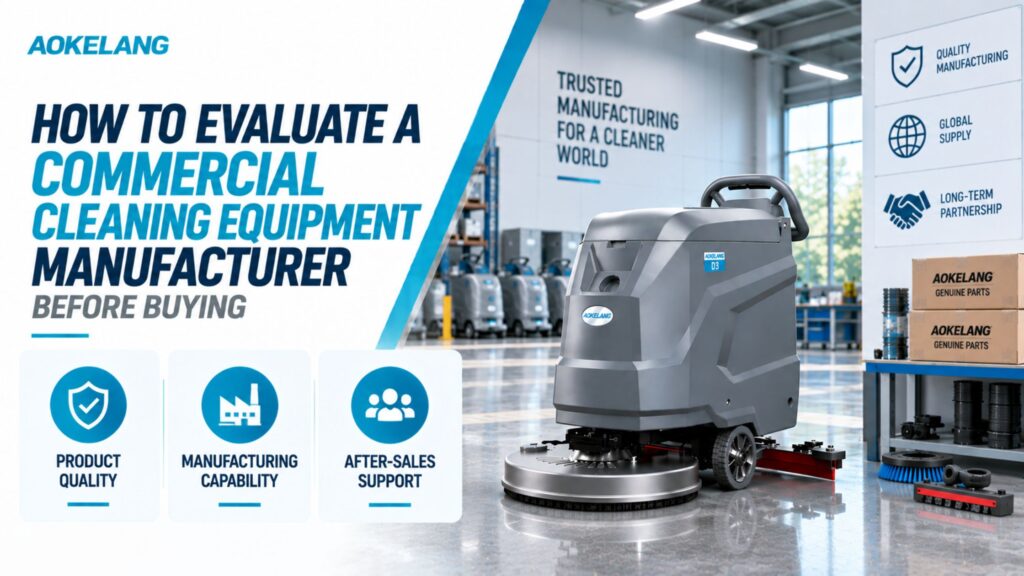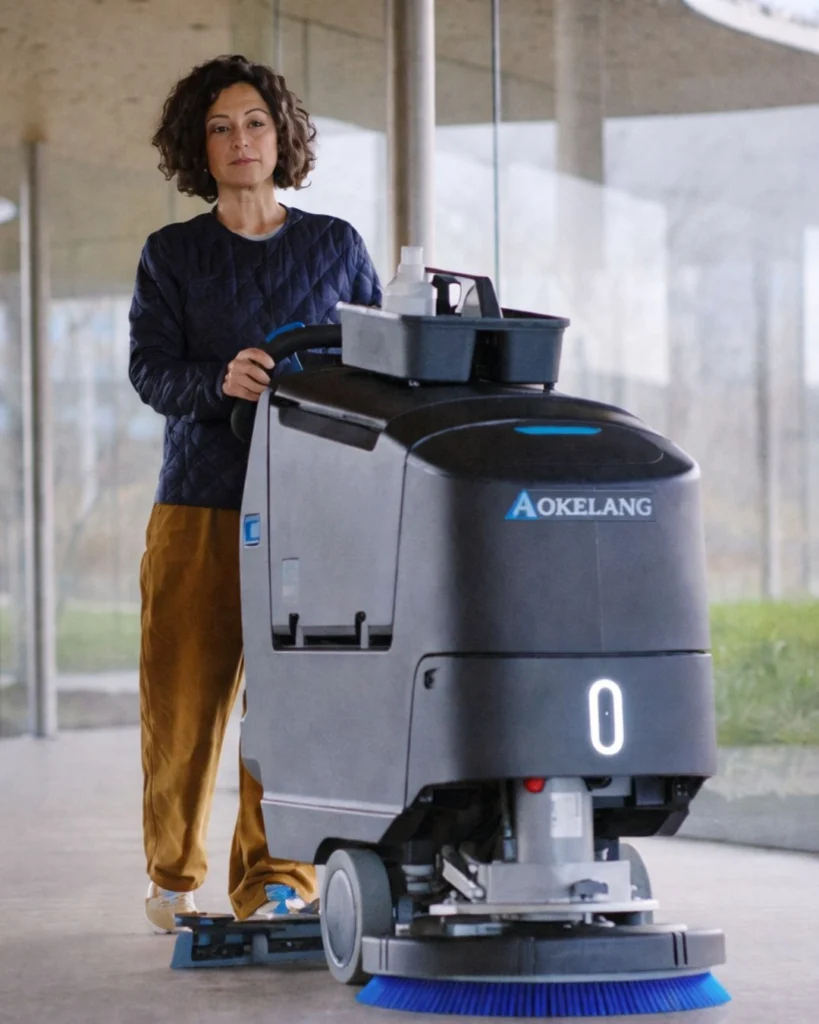
If you’re cleaning more than a few thousand square feet of floor by hand, you’re burning money. That’s not an opinion, it’s math. A single floor scrubber replaces three to five manual cleaners on large surfaces, and most machines pay for themselves within three to six months through labor savings alone.
But the floor scrubber market is confusing. Walk-behind, ride-on, disc brush, cylindrical brush, lead-acid, lithium-ion. There’s a wall of jargon, and most buying guides online are barely-disguised sales pages.
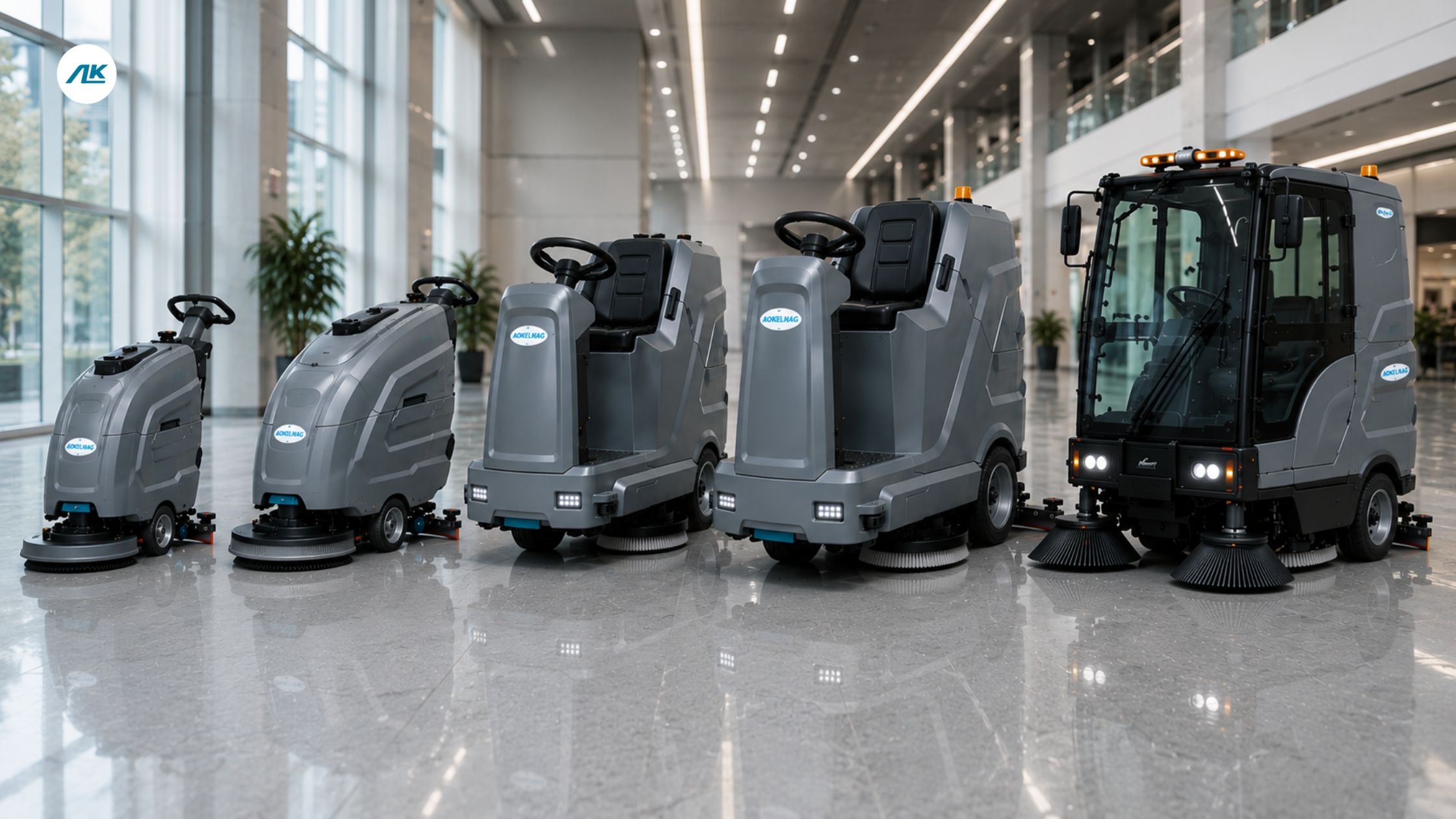
This guide is different. We manufacture over 20 models of floor scrubbers and sweepers, so we know the engineering from the inside. We’ll tell you when you need a ride-on, when a walk-behind makes more sense, and when, honestly, a mop is fine. No fluff.
Bookmark this page. It’s long. It’s thorough. And it’ll save you from spending $10,000 on the wrong machine. But before going on that topic, you must know how to use a floor scrubber.
Table of Contents
1. What Exactly Is a Floor Scrubber?
A floor scrubber is a machine that wets the floor with cleaning solution, scrubs it with rotating brushes or pads, and then vacuums the dirty water back up all in a single pass. You walk (or ride) forward, and the floor behind you is clean and nearly dry.
That single-pass process is what separates scrubbers from mopping. A mop spreads dirty water around. A scrubber removes it.
The 4-step cleaning cycle:
- Solution tank releases clean water + detergent onto the floor.
- Rotating brushes or pads break up dirt, grease, and grime.
- Rear-mounted squeegee channels dirty water into a tight line.
- The vacuum motor sucks dirty water into the recovery tank. The floor is clean and nearly dry within minutes.
No wringing mops, no waiting for floors to air-dry, no pushing dirty water from one end of the warehouse to the other.
Why the market is booming
The global commercial floor scrubbers market sits at roughly $4 billion and is expanding at over 6% per year. The growth isn’t about trends it’s about economics. Labor costs keep climbing, and hygiene standards in healthcare, food processing, and retail keep tightening. In a 2023 workplace survey, 86% of employees ranked cleanliness as the most important factor in a good work environment. The CDC has linked clean workplaces to a 40% reduction in illness-related absenteeism.
Also read – How Much Does a Floor Scrubber Actually Cost?
SOURCE: Market size — IMARC Group / Grand View Research. 86% survey + CDC 40% — cited in IMARC report
Scrubbers aren’t a luxury purchase anymore. For any facility over 10,000 sq ft, they’re a cost-reduction tool.
2. Types of Floor Scrubbers
Three types. Pick wrong and you’ll either waste money on a machine too big for your space or waste time on one too small.
Walk-Behind Floor Scrubbers
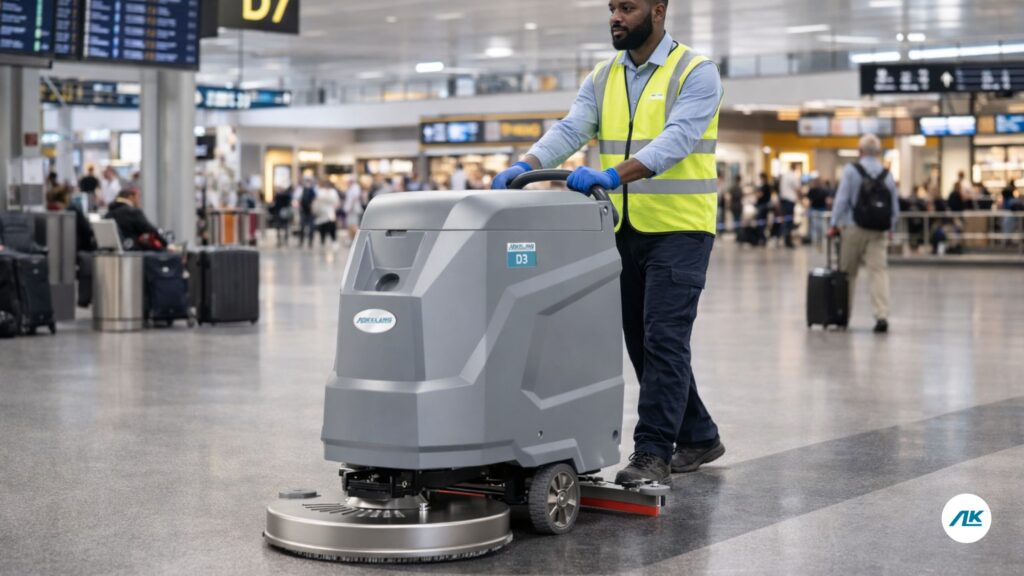
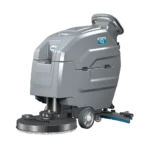
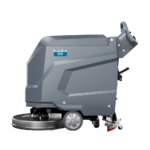
You push it or it self-propels while you walk behind. The most common type of walk-behinds holds about 45% of the global market. Don’t forget about the Floor Scrubber Maintenance.
SOURCE: 45% market share — Global Growth Insights 2026
Best for: Under 25,000 sq ft. Retail, clinics, school corridors, restaurants, and small warehouses.
Cleaning width: 14–24 inches. Tank: 4–15 gallons. Price: $1,500–$8,000.
See our: walk-behind floor scrubbers
Two drive styles: pad-assist (brush friction pulls the machine forward — cheaper, lighter, you still push a bit) and traction-drive (motor drives the wheels — zero pushing effort, better for long shifts).
Ride-On Floor Scrubbers
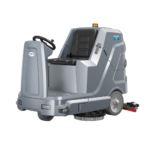
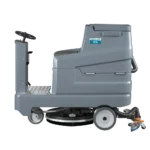
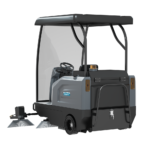
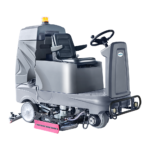
You sit on it and steer. About 36% of the market and growing faster than walk-behinds because they crush operator fatigue on big floors.
SOURCE: 36% share — Global Growth Insights 2026
Best for: Over 25,000 sq ft. Warehouses, distribution centers, airports, large factories, malls.
Cleaning width: 26–40+ inches. Tank: 20–70+ gallons. Price: $5,000–$30,000+.
browse ride-on floor scrubbers → ride on floor scrubbers
A ride-on doesn’t just clean faster, it cleans more consistently. An operator walking for four hours gets tired, and the cleaning quality drops. An operator riding maintains the same speed and pressure the entire shift.
Scrubber vs. Sweeper — Quick Clarification
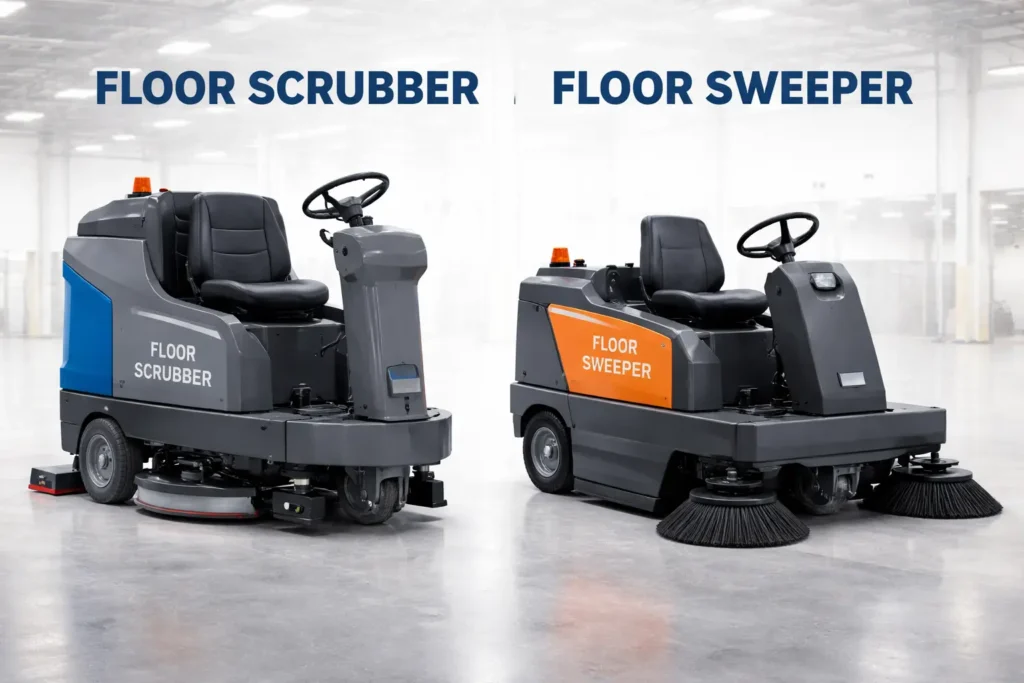
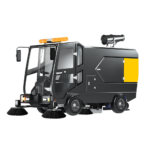
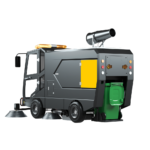
People mix these up constantly. A sweeper picks up dry debris (dust, scraps) — no water. A scrubber wet-cleans to remove grease, stains, and bacteria. If your floor has grime, you need a scrubber. If it’s just dusty, a sweeper works. Many factories need both.
Pro tip: Some cylindrical-brush scrubbers pre-sweep dry debris before wet-cleaning in a single pass. Worth knowing if you want one machine instead of two.
3. Key Components Inside Every Floor Scrubber
Knowing parts helps you compare machines and troubleshoot later.
Brush / Pad System
- Disc brushes (or pad drivers): Flat, circular. Great for smooth-coated floors — VCT, vinyl, epoxy, polished concrete. Attach different pads for scrubbing, stripping, or polishing.
- Cylindrical brushes: Tube-shaped, high RPM. Better for grouted tile, rough concrete, and pre-sweeping debris. If you have both dust and grime, cylindrical is usually smarter.
Tanks
Solution tank = clean water + detergent. Recovery tank = dirty water after scrubbing. Bigger tanks mean longer runtime between stops. For 50,000+ sq ft, you want 30+ gallon tanks. For small retail, 8–10 gallons is plenty.
Squeegee System
The rubber blade behind the scrub deck channels dirty water so the vacuum can extract it. A worn or misaligned squeegee is the #1 cause of water streaks not a bad machine, just a $30 rubber blade that needs swapping.
Vacuum Motor
Measured in CFM (cubic feet per minute). Higher CFM = drier floors after scrubbing. Critical in healthcare and retail, where wet floors during business hours are a slip hazard and a liability.
Also read – Floor Scrubber Price
4. Lead-Acid vs. Lithium-Ion Batteries
This decision matters more than most buyers realize. Pick wrong, and you’re stuck mid-shift with a dead machine.
Lead-Acid
- Runtime: 2–4 hours. Charge time: 6–8 hours (no partial charging).
- Lifecycle: 300–400 cycles. Efficiency: ~80–85%.
- Needs regular watering and equalization charges. Lower upfront cost.
Lithium-Ion
- Runtime: 4–8 hours. Charge time: 1–3 hours (supports opportunity charging on breaks).
- Lifecycle: 500–600+ cycles. Efficiency: ~95%.
- Zero maintenance. Higher upfront cost, lower total cost of ownership.
SOURCE: Efficiency + cycles — Straits Research floor scrubber market report
Battery-powered scrubbers now make up about 54% of active equipment fleets globally, and lithium adoption is at 47% of new installations.
Must visit the – Walk-Behind vs Ride-On Floor Scrubber
SOURCE: 54% fleet, 47% new — Global Growth Insights 2026
Simple rule: one daily shift in a small space → lead-acid is fine. Multiple shifts, need fast charging, or hate maintenance → lithium. The premium pays for itself in 12–18 months.
5. How to Choose the Right Scrubber for Your Facility
This is where buyers go wrong. They pick based on price or brand instead of matching the machine to their actual conditions. Here’s our framework:
Step 1: Measure your floor area
| Floor Area | Machine Type | Aokelang Models |
| Under 5,000 sqft | Compact walk-behind | X2, T3Z |
| 5K–15K sqft | Standard walk-behind | D2, D3 |
| 15K–50K sqft | Large walk-behind (traction) | D4, D4Z, T3 |
| 50K–200K sqft | Mid-size ride-on | D6, DX6 |
| 200K+ sqft | Industrial ride-on | D7, D8, X5 |
Visit the product models – Floor scrubbers
Step 2: Measure your narrowest aisle and doorway
People skip this step, then regret it. Ride-on scrubbers are 60–80 inches wide. If your tightest aisle is 55 inches, that ride-on is useless in half your building. Always measure pinch points first.
Step 3: Match machine to industry
Warehouses: Concrete floors, forklift debris, huge open areas—ride-on scrubbers for the main floor, walk-behind for between racking. Usually need a sweeper too.
warehouse floor cleaning equipment → Warehousing industries
Factories: Oil, grease, metal shavings—heavy-duty scrubbers with cylindrical brushes and degreasing detergent. OSHA compliance matters.
Hospitals: Infection control, quiet operation (under 70 dB), fast drying. Healthcare is the fastest-growing scrubber segment at nearly 11% annual growth.
SOURCE: Healthcare 10.9% CAGR — Grand View Research
hospital floor scrubber – Hospitals & Healthcare Facilities
Malls & retail: High traffic, food spills, must clean during business hours. Quiet ride-ons for open areas, compacts for corridors.
Mall industry – Shopping Malls & Retail Spaces
6. Floor Type Compatibility
Wrong brush + wrong floor = floor damage or zero result. Save this table:
| Floor | Brush Type | Pad Level | Watch Out For |
| Polished concrete | Disc pad | Medium | pH-neutral only. Aggressive pads dull polish. |
| Raw concrete | Cylindrical | Med–Aggressive | Handles rough texture + sweeps debris. |
| Epoxy-coated | Disc pad | Soft–Medium | Aggressive pads scratch/strip coating. |
| VCT (vinyl tile) | Disc pad | Medium | Most common in schools and offices. |
| Ceramic tile | Cylindrical | Med–Aggressive | Grout lines need cylindrical to clean properly. |
| Terrazzo | Disc pad | Soft | Scratches easily. Low-foam detergent. |
| Rubber | Disc pad | Soft | Common in gyms/healthcare. Gentle chemicals. |
Not sure about your floor? Take a photo and send it to the manufacturer. Any decent manufacturer will tell you the right brush/pad combo for free.
7. Cost, ROI, and the “Just Hire More Cleaners” Myth
Let’s kill the most common objection: “We can just hire more cleaners.” No, you can’t. Not economically.
A janitor in the US earns about $16.84/hour on average. With benefits, call it $20/hour. Two cleaners mopping 80,000 sq ft for 4 hours/day = $160/day = ~$3,500/month.
SOURCE: $16.84 avg wage — Bureau of Labor Statistics
One ride-on scrubber plus one operator can clean the same floor in about 2 hours. Operator cost: $40/day. Machine cost amortized over 5 years: ~$15–20/day. Total: ~$60/day. You save $100/day, $2,200/month, $26,000/year. And the floor is actually cleaner.
2026 price ranges
| Type | Price Range | Notes |
| Compact walk-behind | $1,500–$3,500 | Entry-level. Good for small shops. |
| Standard walk-behind | $3,000–$8,000 | Workhorse. Most commercial buyers land here. |
| Mid-size ride-on | $5,000–$15,000 | Best value for 25K–100K sq ft. |
| Large ride-on | $10,000–$30,000+ | Premium brands top out; factory-direct much lower. |
SOURCE: Pricing — Scrubbershop, ChemSource Direct, US Cleaning Tools
On Chinese vs. Western brands: Tennant, Kärcher, and Nilfisk build excellent machines with strong service networks. They’re also premium-priced. Manufacturers like Aokelang offer comparable engineering at 30–60% less because you buy factory-direct. The trade-off is that after-sales service varies by manufacturer. Check CE/ISO certifications, warranty terms, spare parts stocking, and real export track record before you commit.
Read about – Floor Scrubber vs Floor Sweeper
8. Maintenance That Actually Extends Machine Life
A scrubber is a $3K–$20K investment. Neglect it, and it dies in 2 years. Maintain it, and it runs 7–10 years. The difference is 15 minutes after each use.
After every use (15 minutes, non-negotiable):
- Drain and rinse both tanks with clean water.
- Remove squeegee blades, wipe clean, check for nicks.
- Remove brush/pad, rinse, check for wear.
- Clean the tank filter screen.
- Charge the battery fully. Never leave lead-acid partially charged overnight.
Every 100 hours (or every 3–6 months):
- Inspect squeegee blades — flip or replace if edges are rounded.
- Check brush bristles — replace when 50% shorter than new.
- Inspect vacuum motor hoses for blockages.
- Check battery terminals for corrosion (lead-acid).
- Lubricate per the manufacturer’s manual.
Planned maintenance prevents breakdowns. Unplanned downtime on a machine your operation depends on costs far more than a $30 squeegee blade.
Not Sure Which Model Fits Your Facility?
Tell us your floor area, industry, and cleaning challenges. We’ll recommend a specific machine based on your actual conditions — not a generic pitch.
We build 20+ models of scrubbers and sweepers in our 24,000 sqm factory. We export to 30+ countries. Whether you need one machine or a fleet, we can help.
Frequently Asked Questions
What is the difference between a floor scrubber and a floor sweeper?
A sweeper picks up dry debris with rotating brushes — no water. A scrubber wet-cleans using detergent and water, scrubs with brushes, and vacuums up the dirty water. Grease or stains? Scrubber. Just dust? Sweeper. Many facilities need both. Some cylindrical-brush scrubbers pre-sweep and scrub in one pass.
How do I choose the right size floor scrubber for my warehouse?
Measure floor area and narrowest aisle. Under 10K sqft: compact walk-behind. 10K–50K: mid-size walk-behind with traction drive. Over 50K: ride-on. Ride-ons need 60–80 inches of aisle width — measure before buying.
How much does a commercial floor scrubber cost?
Walk-behind: $1,500–$8,000. Ride-on: $5,000–$30,000+. Premium brands (Aokelang) at the top; factory-direct manufacturers 30–60% lower. Most machines pay for themselves in 3–6 months through labor savings.
Can a floor scrubber work on epoxy floors?
Yes — use disc pads (soft to medium) with pH-neutral detergent. Aggressive pads can scratch or strip epoxy coating. For raw concrete, cylindrical brushes work better. Always confirm floor type with the manufacturer.
How long does a floor scrubber battery last?
Lead-acid: 2–4 hours, 300–400 cycles. Lithium-ion: 4–8 hours, 500–600+ cycles. Lithium supports opportunity charging (top up during breaks), charges in 1–3 hours, and requires zero maintenance.
Is it better to rent or buy a floor scrubber?
Buy if you clean daily for 12+ months. A $600/month rental = $7,200/year. A mid-range walk-behind costs $4,000–$6,000 to buy. Ownership pays for itself in 6–8 months of avoided rental fees. Rent only for seasonal or one-time needs.
What is the ROI on a commercial floor scrubber?
Average payback: 3–6 months. One ride-on replaces 3–5 manual cleaners on large floors. Annual labor savings: 40–70%. Calculate: (monthly labor saved × 12) ÷ machine price = payback months.
How often should a floor scrubber be serviced?
After every use: drain tanks, clean squeegees and brushes, charge battery (15 min). Every 100 hours: inspect blades, check brush wear, clean vacuum system, check battery terminals. Planned maintenance extends life to 7–10 years.
What chemicals work in a floor scrubber?
pH-neutral detergent for most floors. Degreaser for oily factory floors. Never bleach — it damages seals and voids warranties. Never overdose — excess chemicals foam up and clog the recovery system.
Which floor scrubber is best for hospitals?
Quiet models (under 70 dB), consistent sanitization, fast drying. Walk-behinds for wards and corridors, compact ride-ons for lobbies. Must be compatible with hospital-grade disinfecting chemicals. Healthcare is the fastest-growing scrubber segment.