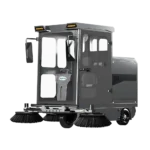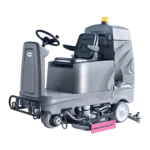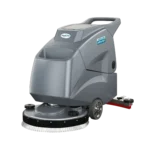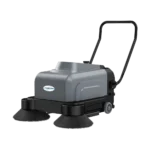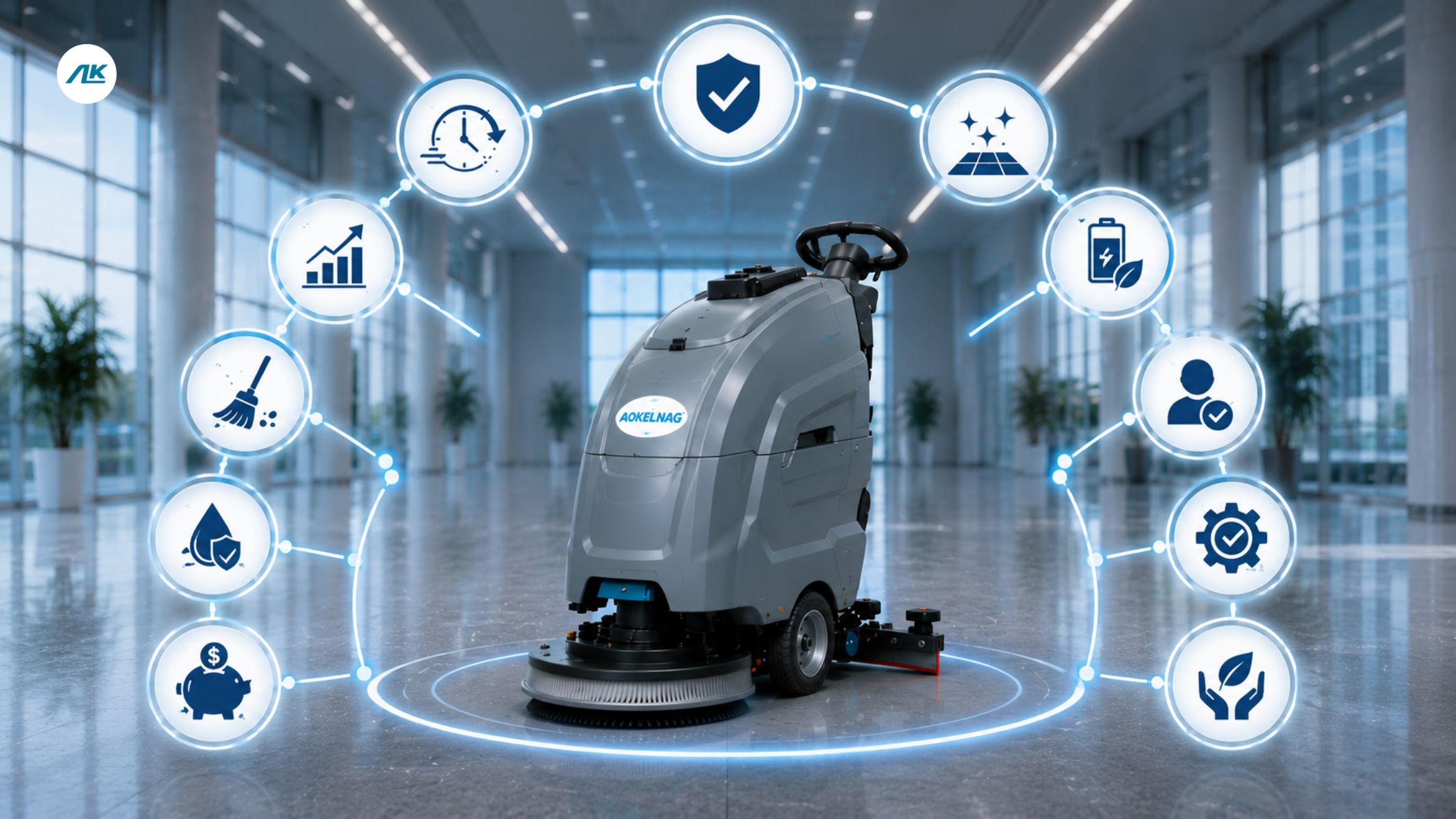
The benefits of a floor scrubber machine go beyond basic cleaning, offering faster operation, improved hygiene, and lower long-term maintenance costs. Unlike manual mopping, floor scrubbers clean and dry surfaces in a single pass, removing dirt, grease, and bacteria while reducing slip hazards caused by wet floors. These machines help businesses save time, cut labor expenses, improve workplace safety, and maintain consistently clean environments, making them an efficient solution for commercial, industrial, and large-scale facilities.
What Is a Floor Scrubber Machine?
A floor scrubber machine is a powered cleaning device that simultaneously applies cleaning solution to a hard floor surface, scrubs it with rotating or cylindrical brushes under controlled pressure, and vacuums up the dirty water — all in a single forward pass. The result is a floor that is not just surface-clean but deep-cleaned, and dry enough to be walked on within seconds of the machine passing over it.
This is fundamentally different from mopping. A mop spreads dirty water across a floor and leaves it wet. A floor scrubber applies clean solution, mechanically removes contamination, and recovers the dirty water before it can be redistributed. The floor is cleaner after one machine pass than it would be after multiple mop passes, and it is safer — no wet floor, no slip risk, no waiting.
Floor scrubbers are manufactured in two primary formats:
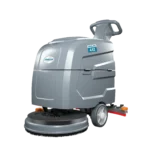
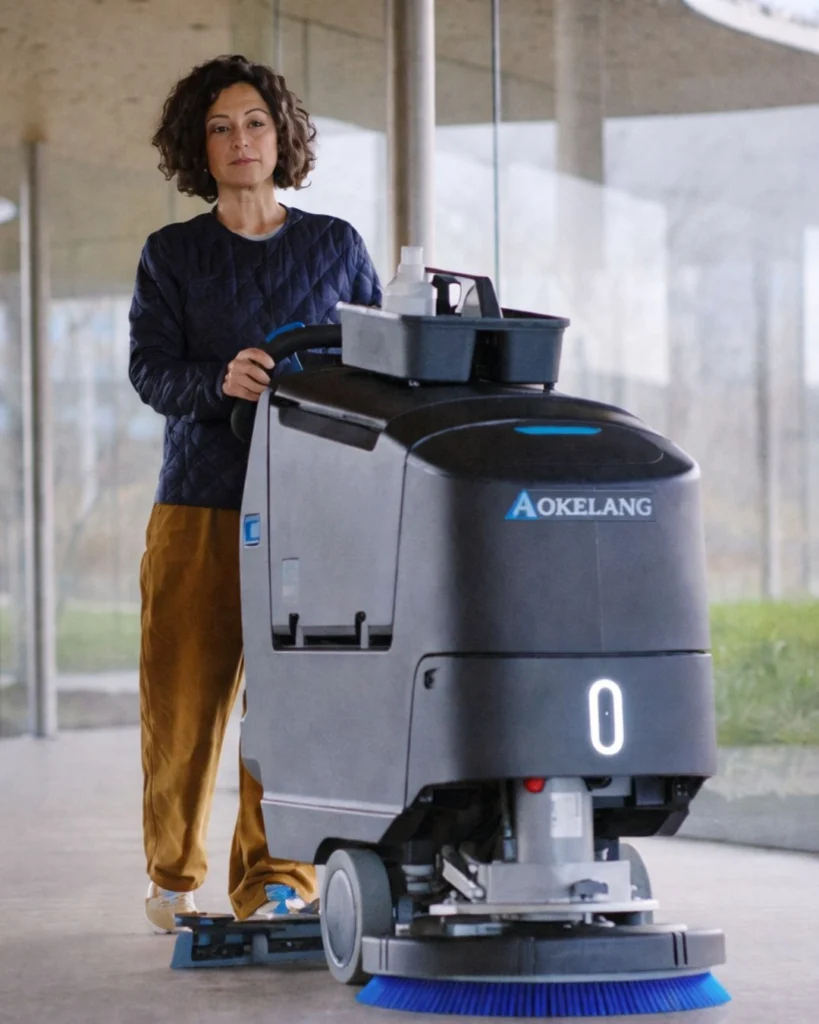
Walk-behind floor scrubbers — Operator-guided machines for small-to-medium areas, tight spaces, and facilities where manoeuvrability matters. The operator walks behind the machine and directs it across the floor. Models like the Aokelang X2 and Aokelang D3 sit in this category.
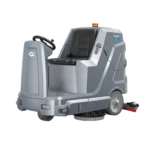
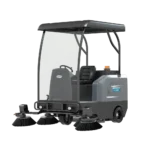
Ride-on floor scrubbers — Operator-seated machines for large open floor areas where cleaning speed and output are the priority. Machines like the Aokelang D7 and Aokelang X5 are built for warehouse, industrial, and large commercial environments.
Within these formats, scrubbers vary further by power source (battery vs mains), brush type (disc vs cylindrical), tank capacity, cleaning width, and operational automation level.
This blog covers the 10 most important benefits of a floor scrubber machine — not as a marketing list, but as a practical guide for facility managers, procurement leads, and operations teams who need to understand what this equipment actually delivers, what most buying guides fail to explain, and how to evaluate it properly for their environment.
Table of Contents
Why Most “Benefits of Floor Scrubber” Articles Fall Short
If you have already searched this topic, you have likely read a version of the same article repeated across multiple websites. They tell you floor scrubbers “save time,” “improve hygiene,” and “reduce costs.” These things are true. They are also incomplete.
What those articles almost never cover:
- The specific, measurable difference between scrubbing and mopping — not just “better cleaning” but why, at a mechanical level
- The safety and liability implications of wet floors in regulated workplace environments
- The total cost of ownership calculation that actually justifies the capital expenditure
- The difference between scrubber types and how getting the specification wrong negates most of the benefits
- The compliance and audit significance of machine cleaning in regulated industries
- The interaction between floor scrubbing and floor sweeping — and when you need both
- The floor surface protection angle that most facilities don’t consider until damage has already occurred
Every one of those gaps is covered in this guide.
Benefit 1: Deep Cleaning That Mopping Physically Cannot Achieve
The most fundamental benefit of a floor scrubber machine is the depth and quality of clean it produces — and this is worth explaining properly, because “cleans better than mopping” undersells what is actually happening.
Mopping has two structural problems. First, a mop head becomes contaminated with the first dirty water it picks up and then redistributes that contaminated water across the rest of the floor. Every stroke after the first is spreading a diluted version of the original contamination, not removing it. Second, a mop provides no mechanical scrubbing action. It relies entirely on chemical action and light physical friction, which is insufficient for ingrained grease, dried-on residues, and bonded contamination.
A floor scrubber addresses both problems by design. Clean solution is continuously fed from the clean water tank to the brush head. Rotating brushes — operating at controlled pressure and speed — provide genuine mechanical scrubbing action that breaks up ingrained contamination. The dirty water is immediately recovered by the squeegee and suction system into a separate recovery tank. At no point does contaminated water get redistributed across the floor.
What this means in practice: Floor scrubbers remove contamination that mopping cannot touch — cooking grease in food production environments, tyre marks in warehouses, chemical residues in manufacturing facilities, and ingrained dirt in high-traffic corridors. A visually clean-looking mopped floor and a scrubbed floor are not equivalent from a hygiene or contamination standpoint.
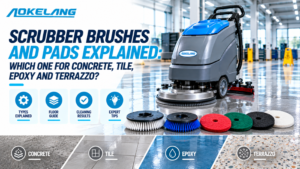
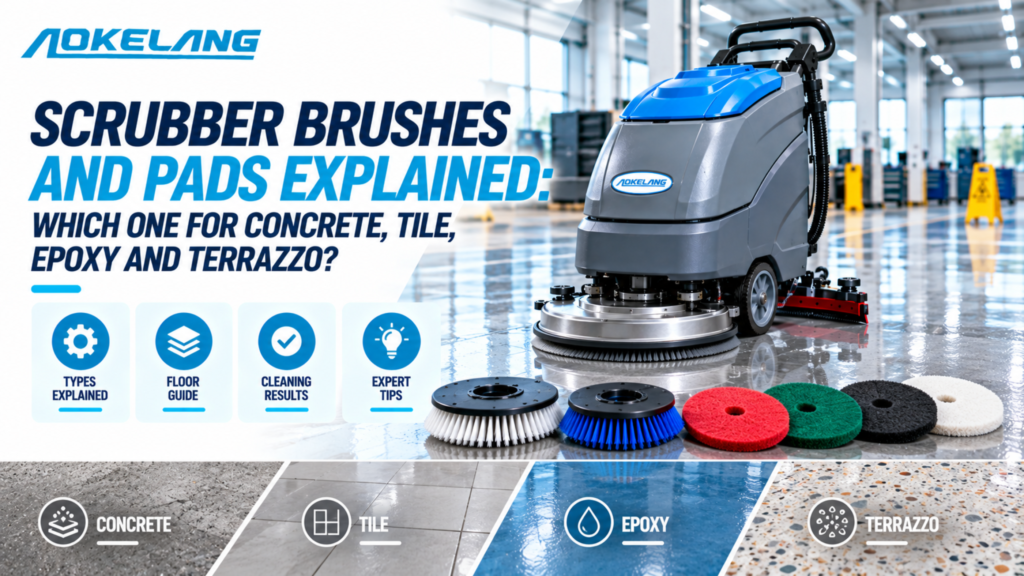
The gap most articles miss: The cleaning quality difference is not uniform across all floor types. Cylindrical brush scrubbers (which use brushes oriented horizontally) perform better on rough, textured, or grouted surfaces because the brush bristles reach into surface irregularities. Disc brush scrubbers (which use flat rotating pads) perform better on smooth, sealed surfaces. Selecting the wrong brush type for your floor surface reduces cleaning effectiveness significantly. Aokelang’s floor scrubber machine range spans both brush configurations — understanding which applies to your floor is part of the specification process.
Also read – Floor Scrubber Price
Benefit 2: Floors Are Dry and Safe to Use Immediately After Cleaning
This is the benefit that most directly differentiates floor scrubbers from every other floor cleaning method — and the one with the clearest safety and operational implications.
After mopping, a floor is wet. Depending on ambient temperature, ventilation, and the amount of water applied, drying time can range from 15 minutes to over an hour. During that period, the floor is a slip hazard. In a busy facility, this creates a genuine safety risk that requires either closing off the area, posting wet floor signs, or accepting the liability exposure of leaving wet floors in use.
A floor scrubber machine vacuums up the vast majority of moisture as it moves forward. The squeegee blade at the rear of the machine collects remaining water, which is sucked into the recovery tank. The result is a floor that is damp — not wet — and which dries to a safe, walkable condition within seconds to a couple of minutes of the machine passing over it.
What this means in practice: Facilities can clean during operational hours without taking areas out of service for extended drying periods. A hospital corridor can be scrubbed without closing it to patients. A retail floor can be cleaned in sections while customers are present. A warehouse aisle can be scrubbed and returned to forklift traffic far faster than after mopping. The operational flexibility this creates has direct economic value — cleaning no longer has to happen exclusively outside of business hours.
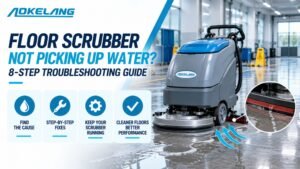
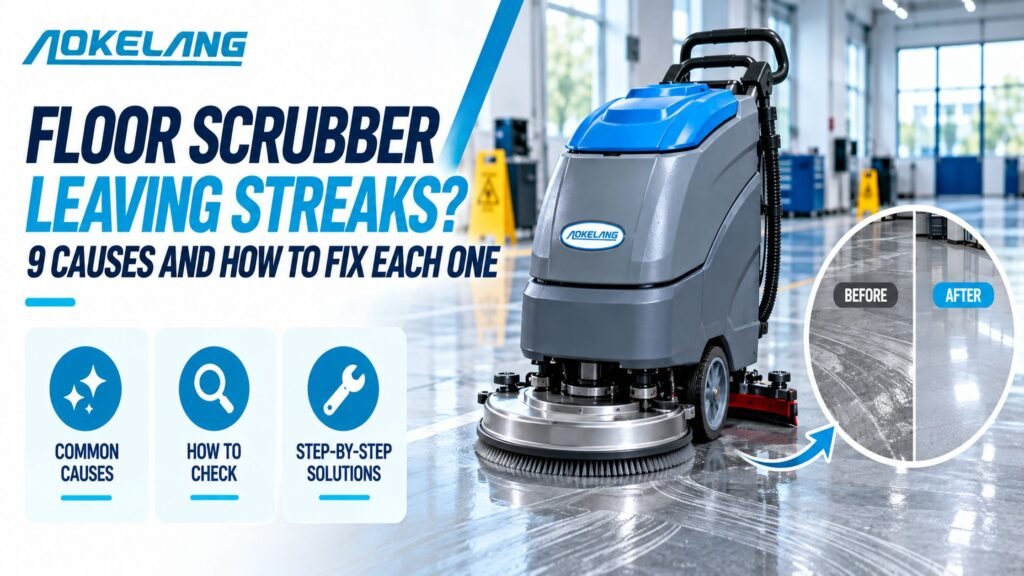
The gap most articles miss: Drying performance varies significantly between scrubber models and is affected by squeegee condition and fit. A worn or poorly fitted squeegee blade leaves more water behind, extending drying time and creating slip risk. This is one of the most commonly overlooked maintenance items on floor scrubbers. Regular squeegee inspection and replacement is not optional — it directly affects the safety outcome that makes scrubbers valuable in the first place.
Also read – Top 10 Benefits of Walk-Behind Floor Scrubber
Benefit 3: Dramatically Reduces Slip and Fall Incident Risk
Slip and fall incidents are one of the most common categories of workplace injury across commercial and industrial environments. In the UK, slips and trips account for the largest single category of non-fatal workplace injuries recorded by the Health and Safety Executive. In the US, the same pattern holds across OSHA incident data. The financial cost — in workers’ compensation, legal liability, operational disruption, and reputational damage — is substantial.
Wet floors from mopping are a primary contributor to slip incidents. Floor scrubbers reduce this risk in two ways: they remove the contamination that makes floors slippery (grease films, residues, and ingrained surface contamination), and they leave the floor dry rather than wet, eliminating the post-cleaning slip window that mopping creates.
What this means in practice: For any facility operating under health and safety regulations — which in practice means almost every commercial and industrial operation — moving from mopping to machine scrubbing is a defensible and documented risk reduction measure. It demonstrates active management of a known hazard. This matters both for incident prevention and for the organisation’s position if an incident does occur and liability is assessed.
The gap most articles miss: Slip risk from floor contamination is not always visible. A floor can look clean and still be covered in a thin grease film, residue layer, or microbial contamination that significantly reduces coefficient of friction. Floor scrubbers remove these invisible contamination layers in a way that mopping does not. Facilities that assess slip risk only visually may be underestimating the hazard on mopped floors.
Benefit 4: Significantly Lower Labour Cost Over Time
The labour cost argument for floor scrubber machines is often stated but rarely quantified in a way that is useful for decision-making. Here is how the maths actually works.
A single operative mopping a 3,000 m² floor area — working at a realistic rate accounting for wringing, bucket changes, and re-soaking — might cover the area in three to four hours. A walk-behind floor scrubber with a 50–60 cm cleaning width, operated at standard pace, covers the same area in under an hour. A compact ride-on scrubber covers it in 20 to 30 minutes.
If that facility requires two full cleaning cycles per day across a five-day week, the labour hours saved are material — often enough to reduce the cleaning operative headcount or redeploy those hours to other facility tasks. Across a year of operation, the cumulative labour saving at average wage rates in the UK, US, or Australian markets commonly exceeds the machine’s purchase price, producing a payback period of one to two years.
What this means in practice: Floor scrubber machines are not a luxury capital expenditure. For facilities spending meaningful operative hours on manual floor cleaning, they are a financially rational investment with a calculable return. The larger the facility and the higher the cleaning frequency, the shorter the payback period.
The gap most articles miss: The labour saving calculation needs to account for the total cleaning cycle, not just the scrubbing time. Setup time, solution preparation, tank filling, and recovery tank emptying all add to the operative time per cycle. Modern floor scrubbers — including Aokelang’s range — are designed to minimise these peripheral tasks through ergonomic tank access, clear fill and drain points, and straightforward operation. Machine usability directly affects how much of the theoretical time saving is actually realised in practice.
Also read – Floor Scrubber Maintenance
Benefit 5: Reduces Water and Chemical Consumption
This is a benefit that surprises most people encountering it for the first time, because the intuitive assumption is that a machine using water and cleaning solution must use more than a bucket-and-mop operation. The reality is the opposite.
Floor scrubbers use precisely metered amounts of cleaning solution, dispensed at a controlled rate directly to the brush head. There is no overfilling a mop bucket, no pouring too much detergent, and no applying excess water to the floor that then has to be left to evaporate or be wrung out. The solution is applied only where it is needed, in the quantity required for effective cleaning, and then recovered.
In practice, a floor scrubber uses significantly less water per square metre cleaned than mopping — typically 60 to 80 percent less. Chemical usage is similarly reduced, because the controlled dispensing system prevents the over-dosing that is common with manual cleaning.
What this means in practice: Reduced water and chemical consumption means lower ongoing operating costs, reduced chemical procurement and storage requirements, and a smaller environmental footprint from the cleaning operation. For facilities with environmental management systems or sustainability reporting requirements, this is a quantifiable contribution to resource efficiency targets.
The gap most articles miss: Water and chemical efficiency varies between scrubber models and depends heavily on correct calibration of the solution flow rate. Some operators instinctively turn solution flow to maximum, negating the efficiency advantage. Proper operator training and correct machine setup are prerequisites for realising the water and chemical savings that scrubbers are capable of delivering.
Benefit 6: Extends the Usable Life of Your Floor Surface
Hard floor surfaces degrade over time through two primary mechanisms: abrasive wear from particulate contamination, and chemical degradation from spills, residues, and cleaning chemical accumulation. Floor scrubbers address both.
By removing ingrained contamination — including fine grit and abrasive particles that mopping redistributes rather than removes — scrubbers prevent the grinding action that causes microscopic surface scratching and progressive finish degradation. By using controlled amounts of appropriately selected cleaning solution and recovering all of it, they prevent the chemical residue buildup that attacks floor coatings over time.
The result is a floor surface that maintains its integrity, appearance, and functional properties for longer. For facilities that have invested in quality floor finishes — epoxy resin, polished concrete, vinyl composition tile, or specialist safety flooring — the floor protection effect of regular machine scrubbing is a meaningful financial benefit that offsets a portion of the machine’s cost.
What this means in practice: Floor resurfacing, recoating, and replacement are expensive. The cost of the floor maintenance programme that prevents premature degradation — including the floor scrubber — is almost always less than the cost of the floor damage it prevents. Regular machine scrubbing is a floor asset protection measure, not just a cleaning operation.
The gap most articles miss: Over-wetting with a mop also damages certain floor types — particularly those with adhesive-bonded tiles, wood-effect vinyl, or moisture-sensitive coatings. Floor scrubbers, by applying and recovering water in a controlled way, are actually safer for many moisture-sensitive floor types than the mopping they replace. This is rarely mentioned in floor scrubber discussions but is an important consideration for facilities with sensitive floor constructions.
Also read – Best Commercial Floor Scrubbers in 2026
Benefit 7: Improves Hygiene Standards to a Clinically Meaningful Level
The hygiene benefit of floor scrubbers is often stated in general terms — “cleaner floors,” “better hygiene.” The reality is more specific and more significant, particularly for regulated environments.
Floor scrubbers remove microbial contamination more effectively than mopping for a straightforward reason: they do not redistribute contaminated water. A mop used in a hospital corridor, food production area, or any environment with genuine contamination risk picks up pathogens with the first stroke and distributes them across the remainder of the floor. Even with regular bucket water changes, the contamination window between changes means mopping is spreading pathogens across the floor rather than removing them.
A floor scrubber continuously applies fresh solution and continuously recovers contaminated water into a sealed tank. The contamination is removed from the floor surface and contained, not redistributed.
What this means in practice: For healthcare facilities, food production environments, pharmaceutical manufacturing, and any setting where microbial contamination has serious consequences, the hygiene performance difference between scrubbing and mopping is operationally significant. Machine scrubbing is consistent with HACCP cleaning protocols, infection control requirements, and GMP cleaning standards in a way that mopping is not.
The gap most articles miss: The hygiene benefit requires correct chemical selection in addition to the mechanical advantage. The cleaning solution must be appropriate for the contamination type and the floor surface, and must be used at the correct dilution. A floor scrubber with the wrong chemical or incorrect concentration is mechanically removing contamination but not chemically neutralising it. Hygiene performance is the product of the machine and the cleaning programme together, not the machine alone.
Benefit 8: Easy Enough for Any Operative to Use Consistently Well
Modern floor scrubbers are designed for straightforward operation. Walk-behind models require the operator to guide the machine across the floor — the scrubbing, solution dispensing, and water recovery happen automatically. Ride-on models add a steering and drive interface but remain accessible to any operative who can operate a basic vehicle.
The practical consequence is a low training burden. An operative can be trained to use a floor scrubber competently in a single session. Once trained, they will produce consistent results across every cleaning cycle, because the machine’s performance is fixed — it does not vary based on technique, experience, or physical condition in the way that manual mopping does.
What this means in practice: Facilities with high operative turnover — common in cleaning, logistics, and hospitality — can maintain cleaning quality without extended training periods. New operatives can be deployed productively on machine cleaning within their first shift. This is a meaningful operational advantage in environments where cleaning staff continuity is a persistent challenge.
The gap most articles miss: Ease of operation does not mean no training is needed. The key training areas are solution tank preparation and chemical dilution, battery management and charging discipline (for battery-powered models), squeegee and brush inspection before use, recovery tank emptying and rinsing after use, and basic fault identification. These are not complex tasks, but skipping any of them degrades machine performance and service life. Aokelang provides operational guidance for all its machines, and the guide on how to use a floor scrubber is a practical resource for operators and supervisors.
Check out the following:
ride on floor scrubber
walk behind floor scrubber
ride on floor sweeper
walk behind floor sweeper machine
industrial ride-on floor sweeper machine
warehouse sweeper machine
warehouse floor scrubber
battery floor scrubber
Benefit 9: Supports Regulatory Compliance and Audit Readiness
Across multiple industries, floor cleanliness is not discretionary. It is a regulatory requirement subject to inspection, and the method of achieving it matters as much as the result.
In food production, HACCP, BRC Global Standard, and SQF certification all require documented cleaning procedures with evidence of systematic implementation. In healthcare, CQC inspection criteria and national infection control standards specify cleaning method and frequency requirements. In pharmaceutical manufacturing, GMP guidelines require that cleaning procedures be validated and consistently applied. In logistics and warehousing, health and safety legislation in the UK (Health and Safety at Work Act), the US (OSHA), and Australia (Work Health and Safety Act) creates employer obligations around floor safety that must be demonstrably met.
Floor scrubbers support compliance in two ways: they deliver the cleaning outcome that regulations require, and they do so in a way that can be documented, scheduled, and audited as a systematic process.
What this means in practice: A cleaning programme built around machine scrubbing — with defined schedules, documented machine usage, and regular equipment maintenance records — provides the audit trail that regulators and certification bodies look for. Manual mopping, applied inconsistently and without systematic documentation, is a weaker compliance position even if the visible result on any given day looks the same.
The gap most articles miss: Compliance is not just about cleaning performance — it is about demonstrable systems. The combination of a capable machine, a defined schedule, trained operatives, and maintenance records constitutes a cleaning system. That system is what auditors evaluate. The machine is the foundation of the system, but the system is what achieves and maintains compliance.
Benefit 10: Professional Facility Presentation That Scales
Clean, well-maintained floors are a proxy for operational standards across almost every facility type. In customer-facing environments — retail stores, shopping centres, airports, hotel lobbies, hospital reception areas — floor condition directly influences the impression made on visitors, customers, and patients. In industrial and logistics environments, clean floors signal safety consciousness, operational discipline, and professional management to clients, auditors, and inspectors.
The challenge for large facilities is maintaining floor presentation consistently across the whole footprint, every day, without dedicating unsustainable labour hours to the task. Manual mopping at the scale required to maintain a 10,000 m² warehouse or a multi-floor commercial building to a consistently high visual standard is neither economically viable nor operationally practical.
Floor scrubbers make it possible to maintain large floor areas to a high presentation standard as a routine operation. The machine does more, faster, with fewer people, and produces a more consistent result than manual methods. The presentation standard becomes a function of scheduling and machine reliability rather than of individual operative effort and motivation.
What this means in practice: Investing in floor scrubber machines is not just a cleaning decision — it is a facility management decision. The standard of the facility’s floors is the standard of the facility. Machine scrubbing makes that standard achievable and sustainable at any scale.
The gap most articles miss: Presentation benefit is often dismissed as cosmetic and therefore secondary to functional benefits like safety and hygiene. This underestimates the operational significance of facility presentation. In retail, presentation affects customer behaviour and sales. In healthcare, it affects patient confidence and perception of care quality. In food production and manufacturing, it affects the outcome of client and auditor assessments. The return on floor presentation is real, even where it is harder to isolate as a standalone metric.
Also read – Benefits of floor sweeper machines
Floor Scrubber vs Floor Sweeper: Understanding the Difference and When You Need Both
This is one of the most common points of confusion for facilities evaluating floor cleaning equipment, and it is worth addressing directly. Sweeper and Scrubber.
A floor scrubber is a wet-process machine. It applies water and cleaning solution, mechanically scrubs the surface, and recovers the dirty water. It is designed to remove wet contamination, grease, stains, residues, and ingrained dirt. It is not designed to handle large volumes of loose dry debris — dust, grit, litter — which would saturate the solution and clog the recovery system.
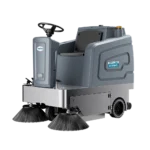
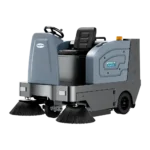
A floor sweeper is a dry-process machine. It collects loose dry debris — dust, sand, grit, particles, litter — using rotating brushes and a hopper. It does not use water or cleaning solution, and it does not remove wet contamination, grease, or ingrained surface dirt.
Most industrial and high-traffic facilities need both. The standard best practice in warehousing, manufacturing, food production, and large commercial environments is a two-stage approach: sweep first to remove loose debris, then scrub to deep-clean the surface. Attempting to scrub a floor that has not been swept first reduces scrubbing effectiveness, contaminates the clean water tank rapidly, and increases brush and squeegee wear.
Aokelang manufactures both categories — a full range of floor scrubber machines and a full range of floor sweeper machines — at matched scales for different facility sizes, so facilities can source complementary equipment from a single manufacturer with compatible operational profiles.
Choosing the Right Floor Scrubber: Key Specification Decisions
Understanding the benefits of floor scrubbers is the first step. Selecting the right model for your facility is the second — and getting the specification right is what determines whether you actually realise those benefits.
Floor area is the primary driver. Walk-behind scrubbers are suited to facilities up to approximately 2,000–4,000 m² depending on layout and cleaning frequency. Ride-on scrubbers are appropriate for larger open areas where cleaning speed is critical.
Floor surface type determines brush selection. Smooth, sealed surfaces work best with disc brushes. Textured, grouted, or rough surfaces work best with cylindrical brushes that reach into surface irregularities.
Contamination type affects solution selection and brush pressure requirements. Light daily traffic soiling requires different parameters than heavy grease or chemical contamination.
Power source — battery vs mains — affects operational flexibility. Battery-powered scrubbers are cable-free and suited to large or complex floor layouts. Aokelang’s battery-powered range, including models like the D4 and D4Z, is covered in more detail in the guide to battery-powered floor scrubbers.
Operational environment — shift patterns, aisle widths, access constraints — affects whether walk-behind or ride-on is appropriate, and which specific model within each category suits the facility layout.
For a structured approach to making these decisions, the guide on how to choose a floor scrubber covers the key decision factors with practical guidance for different facility types. The full Aokelang floor scrubber machine range is available to browse with model specifications and quote request options.
Summary: The 10 Benefits of a Floor Scrubber Machine
- Deep cleaning that mopping physically cannot achieve — mechanical scrubbing with clean solution removes ingrained contamination that mop redistribution cannot touch
- Floors dry and safe to use immediately — squeegee recovery leaves floors walkable within seconds, eliminating the extended wet-floor slip window of mopping
- Dramatically reduces slip and fall incident risk — removes contamination that creates invisible slip hazards and eliminates post-cleaning wet floor risk
- Significantly lower labour cost over time — machines cover floor area 3 to 15x faster than mopping, with payback periods typically of one to two years
- Reduces water and chemical consumption — controlled solution dispensing and recovery uses 60 to 80 percent less water than mopping and eliminates chemical overdosing
- Extends the usable life of floor surfaces — removes abrasive particles and prevents chemical residue buildup that degrades floor finishes over time
- Improves hygiene to a clinically meaningful level — continuous fresh solution application and contaminated water recovery prevents the pathogen redistribution that mopping causes
- Easy for any operative to use consistently well — low training burden, consistent results regardless of operator experience or physical condition
- Supports regulatory compliance and audit readiness — systematic, documented machine cleaning provides the audit trail that regulated industries require
- Professional facility presentation that scales — makes consistently high floor standards achievable as a routine operation across facilities of any size
About Aokelang Floor Scrubber Machines
Aokelang is a specialist manufacturer of commercial and industrial floor cleaning equipment, operating from a 20,000 m² production facility in Hefei, China. The company produces a full range of floor scrubber machines — from compact walk-behind models for smaller facilities to heavy-duty industrial ride-on scrubbers for large warehouse and manufacturing environments — alongside a complete range of floor sweeper machines for facilities requiring both cleaning functions.
All Aokelang machines are available through factory-direct supply, with no distributor markup, and with technical support, parts access, and consultative pre-purchase guidance as part of the standard service relationship.
To find the right scrubber for your facility, visit aokelang.com or contact the team at info@aokelang.com. Aokelang responds to all enquiries within two hours with a tailored recommendation based on your facility type, floor area, and cleaning requirements — no obligation, no minimum commitment.
Also read – New vs old floor scrubbers
Frequently Asked Questions About Floor Scrubber Machine Benefits
What is the main advantage of a floor scrubber over a mop?
The primary advantages are cleaning depth, hygiene performance, and floor safety. A floor scrubber mechanically removes ingrained contamination that mopping cannot dislodge, uses clean solution on every pass rather than redistributing contaminated mop water, and leaves the floor dry within seconds rather than wet for 30 minutes or more.
How much faster is a floor scrubber than mopping?
Depending on machine type and facility layout, a walk-behind floor scrubber typically cleans 3 to 5 times faster than mopping the same area. A ride-on scrubber cleans 8 to 15 times faster. The time saving compounds significantly in large facilities and high-frequency cleaning schedules.
Is a floor scrubber suitable for all hard floor types?
Floor scrubbers work on most hard floor surfaces including concrete, epoxy, ceramic tile, vinyl, and terrazzo. The key variable is brush type — cylindrical brushes for textured or grouted surfaces, disc brushes for smooth sealed surfaces. They are not suitable for carpet, and care should be taken on water-sensitive floor constructions such as unprotected timber or certain adhesive-bonded tiles.
Do floor scrubbers actually save money?
Yes, demonstrably. The primary saving is in labour — machine scrubbing covers floor area significantly faster than mopping, reducing operative hours per cleaning cycle. Secondary savings come from reduced water and chemical use, reduced floor maintenance costs from better surface protection, and reduced incident costs from improved floor safety. Payback periods for commercial facilities are typically one to two years.
How often should a floor scrubber be used?
This depends on facility type and contamination rate. Most commercial and industrial facilities benefit from daily scrubbing. High-traffic areas, food production environments, and healthcare facilities may require multiple scrubbing cycles per day. The goal is to maintain the floor in a condition that meets safety, hygiene, and presentation standards continuously, not just at the start of the day.
What maintenance does a floor scrubber need?
Core maintenance tasks are emptying and rinsing the recovery tank after each use, cleaning the squeegee blade and checking its fit, inspecting and replacing brushes when worn, managing battery charge and health on battery-powered models, and periodic filter and machine inspection. For a complete maintenance guide, see floor scrubber maintenance best practices.