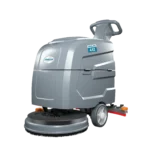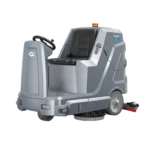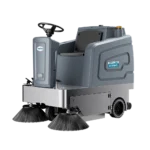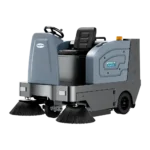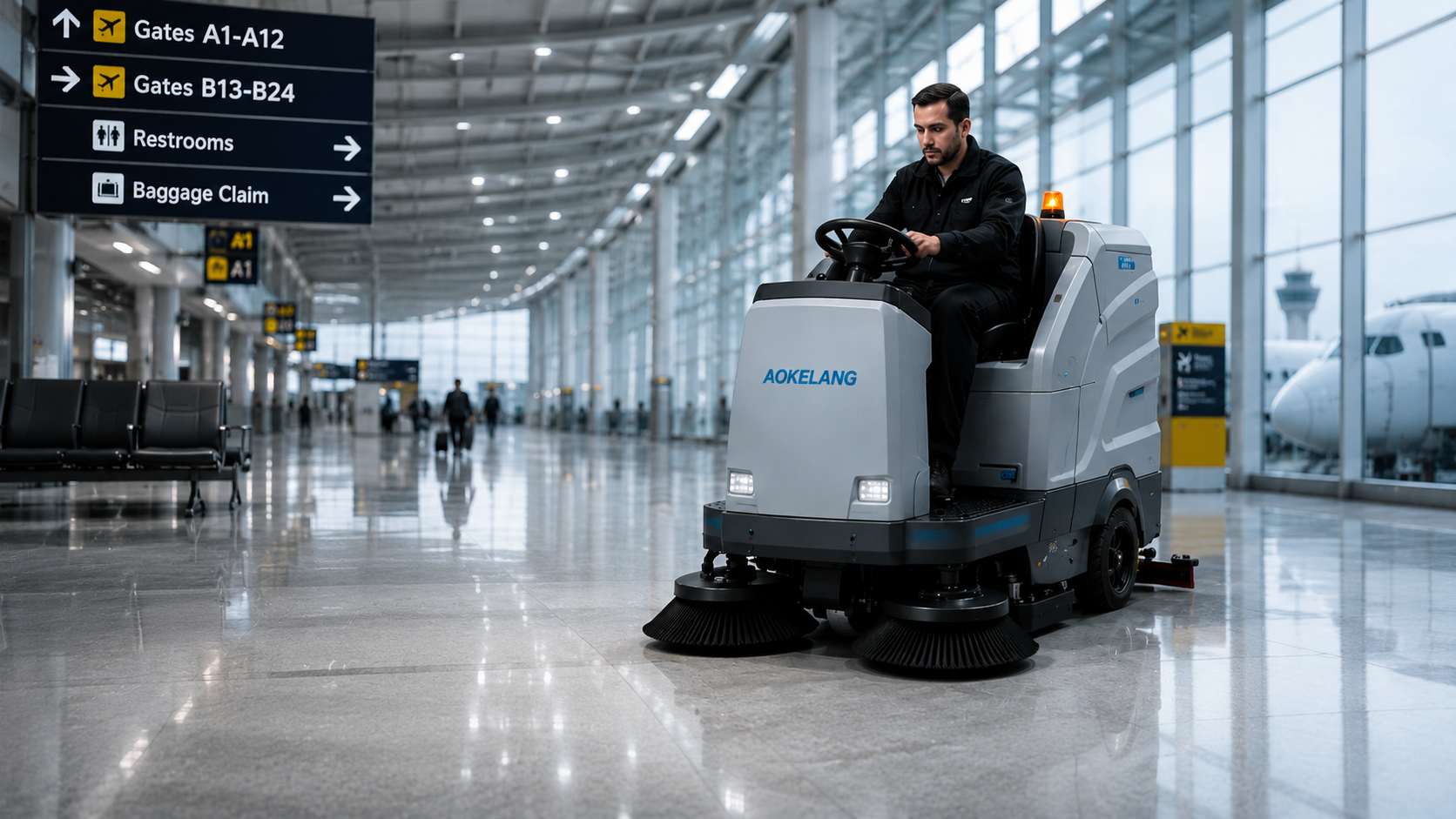
Floor Cleaning Equipment for Airports – Airports need ride-on floor scrubbers and ride-on floor sweepers for terminal concourses and large public areas, plus compact walk-behind machines for gates, restrooms, and back-of-house spaces. The equipment must run near-continuously, operate quietly around passengers, dry floors quickly for slip safety, and hold up to multi-shift daily use across polished, high-traffic surfaces.
This guide covers the specific requirements airport floor cleaning has to meet, which machine types fit which zones of an airport, and how to choose between them.
Table of Contents
What Are the Floor Cleaning Requirements for Airports?
Airport terminals differ from a typical warehouse or retail floor in several ways that directly affect equipment choice:
- Near-continuous operation. Most terminals operate close to 24/7, so cleaning has to happen in short overnight windows or in live, moving-passenger conditions, which puts a premium on machine speed and battery runtime.
- Low noise near passengers. Cleaning that happens during operating hours needs machines with quiet motor and vacuum systems so they don’t disrupt announcements or the passenger experience.
- Fast, streak-free drying. Wet floors in a corridor of moving foot traffic are a slip hazard, so scrubbers need effective squeegee and vacuum recovery that leaves floors dry almost immediately, not just clean.
- Coverage of very large open floor areas. Terminal concourses, baggage halls, and parking structures are typically thousands of square meters, which is inefficient to clean with walk-behind equipment alone.
- Durability across polished, high-value flooring. Airports commonly use terrazzo, polished concrete, or large-format tile, all of which need brushes and pads that clean effectively without scratching or dulling the surface finish.
- Multi-shift daily use. Equipment needs to withstand daily use across multiple shifts for years, not the occasional-use duty cycle of a small retail store. Checkout the best of the scrubber and How Much Does a Commercial Floor Scrubber Cost in 2026.
What Are the Best Machine Types for Airport Floor Cleaning?
Airports typically need a mix of ride-on and walk-behind machines, matched to different zones.
Ride-On Floor Scrubbers
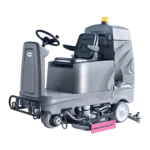
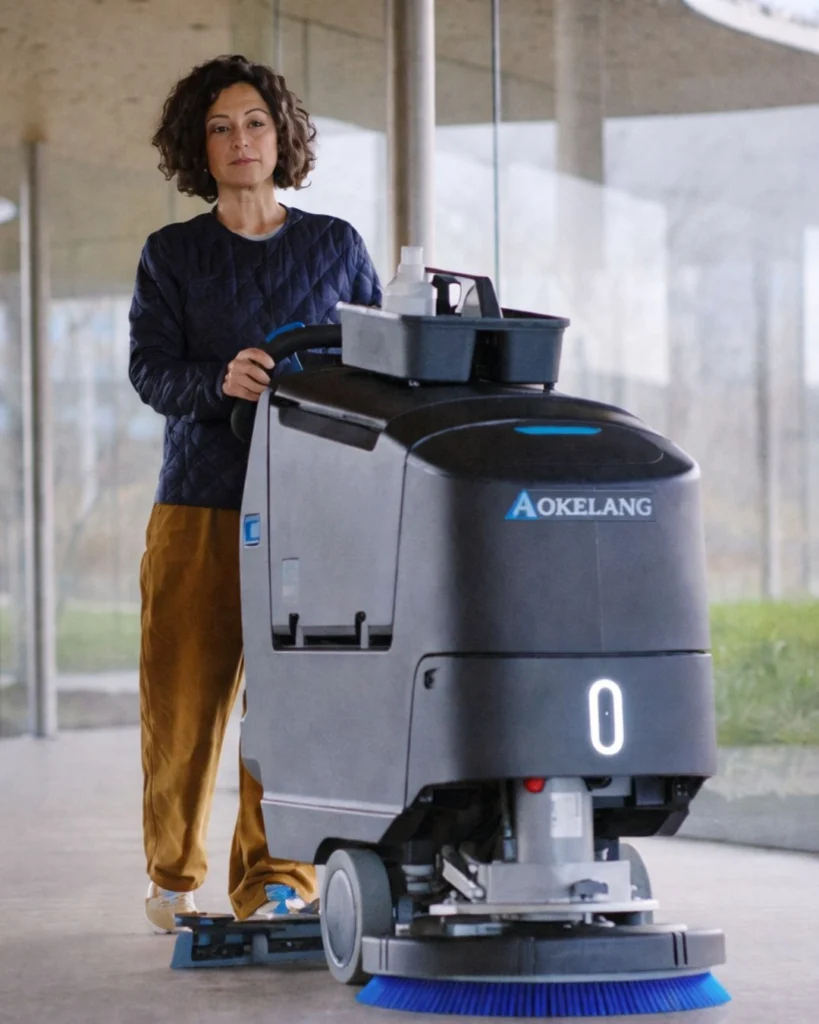
Ride-on scrubbers are the primary tool for terminal concourses, baggage claim halls, and other large open public floors. As an example, the Aokelang D6 ride-on floor scrubber has a 760 mm cleaning width and a 1,000 mm squeegee, dual 300W brush motors plus a 550W vacuum motor, a 90-liter clean water tank and 100-liter recovery tank, and is rated at up to 5,200 m² of cleaning productivity per hour with 3–4 hours of runtime on a 24V battery system. A seated operator covers far more concourse floor per shift than a walk-behind machine would, which matters when the cleaning window is limited to overnight hours.
Ride-On Floor Sweepers
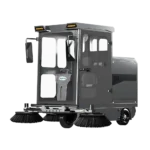
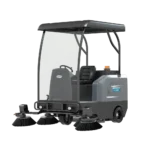
Before scrubbing, large open areas need loose debris (paper, dust, sand tracked in from outside) cleared first. The Aokelang D1900 warehouse sweeping machine has a 2,000 mm cleaning width, a 48V battery system, a 220-liter debris container, and is rated at up to 16,000 m² per hour with 4–6 hours of runtime, making it suited to parking structures, curbside areas, and other large paved or hard-floor zones adjacent to the terminal.
Walk-Behind Scrubbers
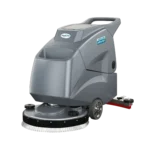
Gates, boarding areas, restrooms, offices, and narrower corridors are better suited to compact machines that can maneuver around seating, columns, and fixtures. The Aokelang T3 industrial walk-behind floor scrubber has a 510 mm cleaning width, a 550W brush motor, and up to 2,000 m²/hour productivity, while the compact Aokelang D2 walk-behind floor scrubber has a narrower 350 mm width for tight spaces like restrooms and small offices.
Walk-Behind Sweepers
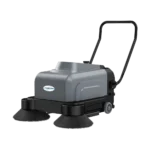
For smaller gate areas or as a backup to a ride-on sweeper, a compact walk-behind unit like the Aokelang D1050 industrial floor sweeper — 1,050 mm cleaning width, 6,000 m²/hour productivity — handles daily dust and debris in mid-size zones without the footprint of a ride-on machine.
Also read – Floor Sweeper Guide
Quick Comparison Table
| Machine Type | Example Model | Cleaning Width | Productivity | Best Airport Zone |
| Ride-on scrubber | Aokelang D6 | 760 mm | Up to 5,200 m²/h | Terminal concourses, baggage halls |
| Ride-on sweeper | Aokelang D1900 | 2,000 mm | Up to 16,000 m²/h | Parking structures, curbside, large paved zones |
| Walk-behind scrubber | Aokelang T3 | 510 mm | Up to 2,000 m²/h | Gates, corridors, offices |
| Compact walk-behind scrubber | Aokelang D2 | 350 mm | Up to 1,350 m²/h | Restrooms, small offices |
| Walk-behind sweeper | Aokelang D1050 | 1,050 mm | Up to 6,000 m²/h | Mid-size gate areas, back-of-house |
Which Areas of an Airport Need Which Equipment?
- Terminal concourses and departure halls: Ride-on scrubbers handle the bulk of the floor area efficiently; a ride-on or walk-behind sweeper typically runs first to clear loose debris before wet scrubbing.
- Gates and boarding areas: Walk-behind scrubbers and sweepers maneuver around seating and columns more easily than ride-on machines.
- Restrooms: Compact walk-behind scrubbers with a narrow cleaning width, like the D2, fit through doorways and around fixtures.
- Baggage claim halls: High debris volume (dust, paper, tags) and large open floor space make this a strong fit for ride-on sweepers followed by ride-on scrubbers.
- Parking structures and curbside drop-off: Ride-on sweepers cover the large paved area efficiently, particularly where outdoor dust and debris are tracked in continuously.
- Back-of-house corridors and offices: Standard walk-behind scrubbers, similar to what’s used in commercial buildings and offices, are typically sufficient given lower foot traffic.
For a broader look at how these same machine types serve high-traffic public facilities generally, see airport and transportation hub cleaning equipment.
How Do You Choose Floor Cleaning Equipment for an Airport?
- Map your cleaning windows. If cleaning has to happen in a narrow overnight window, prioritize ride-on machines with high m²/hour ratings over walk-behind equipment, even for moderate-size areas.
- Segment your floor plan by zone size and traffic. Large open areas (concourses, baggage halls, parking) call for ride-on equipment; smaller or obstacle-heavy areas (gates, restrooms, offices) call for walk-behind machines.
- Confirm noise levels for live-hours cleaning. If any cleaning happens while the terminal is open to passengers, check the manufacturer’s noise specifications before buying, not just cleaning productivity.
- Prioritize fast drying over raw scrubbing power. A scrubber with strong vacuum recovery and a wide squeegee reduces the window where floors are wet and slippery, which matters more in a facility with constant foot traffic than in a low-traffic warehouse.
- Check floor compatibility. Confirm the machine’s brush and pad options are rated for your specific floor surface — terrazzo, polished concrete, and large-format tile each have different pad and pressure requirements.
- Plan for redundancy. Given how disruptive equipment downtime is in a high-traffic public facility, many airports keep a backup walk-behind unit available even where ride-on machines handle the bulk of daily cleaning.
Next Steps
To match specific machines to your terminal’s floor plan and cleaning schedule, browse the full ride-on and walk-behind scrubber lineup and the full sweeper lineup, or request a free quote with your terminal’s floor area and shift schedule. For technical specifications, see the resources page, or contact the Aokelang team directly to discuss a multi-zone equipment plan.
Airport Floor Cleaning Equipment FAQs
Do airports need different equipment for terminals versus parking areas?
Yes. Terminal floors are typically polished tile, terrazzo, or polished concrete cleaned with a scrubber for wet cleaning, while parking structures and curbside areas are usually paved or sealed concrete better suited to a sweeper for debris removal, sometimes without the wet scrubbing step at all.
How often should airport floors be scrubbed?
This depends on traffic volume and local regulations, but high-traffic concourses and baggage halls are commonly scrubbed at least once daily, usually overnight, with sweeping done more frequently — sometimes multiple times per shift — to control loose debris between scrubbing cycles.
Can one machine handle both sweeping and scrubbing in an airport?
Some combination machines exist, but most airport operations use separate sweeping and scrubbing equipment in sequence, since sweeping first prevents loose debris from clogging a scrubber’s squeegee and recovery system. See Floor Scrubber vs. Floor Sweeper for how the two functions differ.
What maintenance routine keeps airport floor equipment reliable under daily multi-shift use?
Daily post-use care — draining and rinsing the recovery tank, checking squeegee blades, and clearing brush debris — is the biggest factor in equipment lifespan under heavy daily use. See this floor scrubber maintenance guide for a full daily and periodic maintenance schedule.