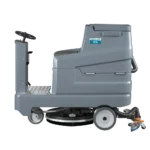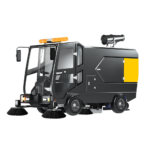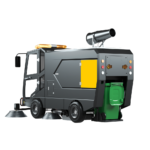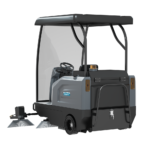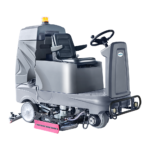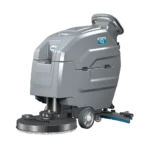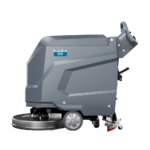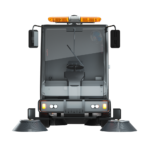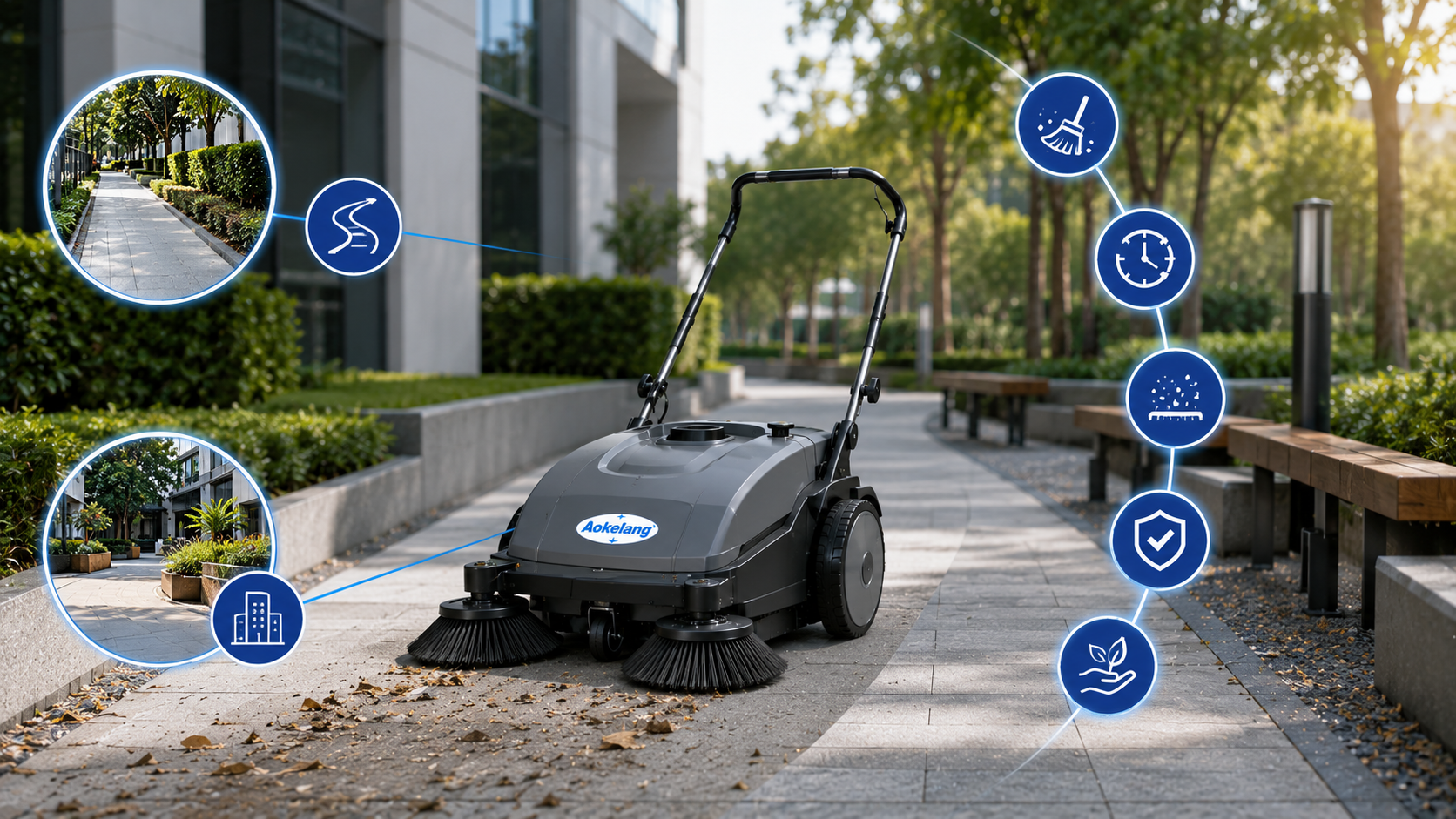
Why Walk-Behind Sweepers Are Ideal for Pathways and Courtyards? Walk-behind sweepers are ideal for pathways and courtyards because they combine the manoeuvrability to navigate narrow, winding, obstacle-filled outdoor spaces with the cleaning power to handle leaves, fine dust, grit, sand, and loose debris far more effectively than a broom — and without the bulk that makes ride-on machines impractical in these environments. Their compact width (typically 600–900mm), low operating speed, surface adaptability across concrete, brick, tile, and asphalt, and simple operation make them the most practical, cost-efficient outdoor sweeping solution for everything from commercial courtyards and pedestrian walkways to school paths, hospitality venues, and civic spaces.
Not all outdoor spaces are created equal — and not all cleaning equipment is suited to every outdoor environment.
A ride-on sweeper is outstanding in a large open car park or a wide warehouse yard. But put it on a meandering courtyard path, a pedestrian walkway between buildings, or a narrow garden route, and its size immediately becomes a liability rather than an asset. Turning circles become a problem. Access to edges and corners becomes impossible. The very thing that makes ride-on machines productive in open spaces — their width and footprint — works against them in confined outdoor environments.
Walk-behind sweepers exist precisely for this gap. They deliver professional cleaning performance in the outdoor spaces where larger machines cannot go, and they do it significantly faster and more thoroughly than manual sweeping. Here’s why they’re the right tool for pathways and courtyards — and how to get the most from them.
Table of Contents
The Core Problem: Pathways and Courtyards Aren’t Designed for Large Machinery
Before looking at what walk-behind sweepers do well, it helps to understand what makes pathways and courtyards genuinely different as cleaning environments.
They’re narrow. Pedestrian pathways — particularly those between buildings, through landscaped areas, or in older commercial or civic developments — are often only 1–2 metres wide. Many courtyards have access routes and internal paths that are similarly tight. A standard ride-on sweeper can have an overall machine width of 1.2–1.5 metres or more, making it physically impossible to operate in many of these spaces.
They turn frequently. A straight warehouse floor allows a large machine to make long, efficient passes. A winding garden path, a courtyard with planters and seating areas, or a pedestrian route between architectural features requires constant direction changes. Large machines — even when they technically fit — lose their productivity advantage entirely when they’re constantly repositioning.
They have varied surface materials. Outdoor pathways and courtyards regularly combine concrete, block paving, natural stone, brick, ceramic tile, and asphalt — sometimes within metres of each other. Equipment that can’t adapt its brush pressure and height to these transitions leaves sections poorly cleaned or risks surface damage.
Their debris is seasonal and mixed. Unlike an indoor factory floor where the soil type is relatively consistent, outdoor pathways accumulate leaves, wet organic matter, fine grit, sand tracked in from surrounding areas, cigarette debris, food waste, and seasonal seeds. Cleaning equipment needs to handle both fine dust and bulkier organic debris effectively.
Walk-behind sweepers are engineered to address all four of these constraints simultaneously.
7 Reasons Why Walk-Behind Sweepers Are Ideal for Pathways and Courtyards
1. Machine Width That Fits Where It Needs to Go
Walk-behind sweepers typically feature a cleaning path width ranging from 600mm to 900mm (24 to 36 inches), allowing them to navigate passages as narrow as 1–1.2 metres while still delivering efficient cleaning performance. Their compact overall footprint means they can access spaces that no ride-on machine — however capable — can reach.
This matters for:
- Pedestrian paths between buildings on commercial or civic properties
- Internal courtyard walkways around planters, benches, and architectural features
- Service paths alongside buildings
- Narrow entrance routes, ramps, and stepped access paths (where walk-behind machines also have the advantage of working safely on gradients that ride-on machines cannot handle)
The ability to physically access every part of the cleaning area isn’t just a convenience — it’s a fundamental cleaning requirement. A machine that can’t get into a space can’t clean it, regardless of its performance credentials.
2. Manoeuvrability Around Obstacles
Pathways and courtyards are obstacle-rich environments. Bollards, planters, benches, bicycle racks, bins, signage, trees, drainage grates, and seating areas all require the cleaning machine to navigate around them fluidly rather than stopping and repositioning repeatedly.
Walk-behind sweepers are operator-guided at walking pace, which gives the operator direct, intuitive control over the machine’s direction and position at every moment. Turning around an obstacle is a natural, flowing movement — not the multi-point repositioning required by a larger machine with a wide turning circle.
This manoeuvrability significantly reduces the time spent on setup and repositioning compared to larger ride-on sweepers, which may struggle to access confined pathway areas altogether. In practice, what this means is that a walk-behind sweeper consistently outperforms any larger machine in obstacle-dense outdoor spaces, regardless of the comparative cleaning path widths.
3. Surface Adaptability Across Mixed Outdoor Materials
The variety of outdoor surface materials on a typical commercial pathway or courtyard creates a challenge for cleaning equipment. Block paving has raised edges between individual blocks. Natural stone may have irregular surface texture. Asphalt paths have different friction characteristics than concrete. Some materials are sensitive to aggressive brush pressure; others need it.
Walk-behind sweepers with adjustable brush height and pressure settings adapt to these transitions without requiring the operator to stop and manually reconfigure the machine. The side brushes — which reach into edge joints, corners, and the border between path and planted areas — are particularly effective on the varied edge profiles of outdoor pathways, where debris accumulates in drainage channels, expansion joints, and kerb edges.
Unlike pressure washers, which can damage mortar joints between pavers, or manual brooms, which scatter fine dust rather than collecting it, walk-behind sweepers provide consistent agitation and debris collection across concrete, brick pavers, asphalt, and stone.
4. Effective Handling of Outdoor Debris Types
The debris profile of outdoor pathways and courtyards is distinct from indoor environments. Walk-behind sweepers handle the full range of outdoor debris effectively:
- Leaves and organic matter: The main brush sweeps leaves into the hopper consistently, including damp or partially compacted leaf material that a broom would scatter
- Fine grit and sand: Side brushes and main brush systems collect fine particulate rather than redistributing it — important for maintaining clean surfaces near building entrances
- Mixed debris: Walk-behind sweepers handle both small and larger items in the same pass, without the operator needing to pre-clear larger debris manually
- Wet debris: Battery-powered models with appropriate brush configurations handle damp surface conditions far better than manual sweeping, which simply moves wet debris around
Walk-behind sweepers clean around five times faster than a broom, and on outdoor surfaces with mixed debris loads, the quality of collection is considerably higher than manual sweeping as well — particularly for fine grit that brooms consistently fail to capture effectively.
5. Noise-Appropriate for Public and Commercial Environments
Outdoor courtyards, pedestrian walkways, and pathways adjacent to commercial or hospitality venues are often active environments — cafés and restaurants with outdoor seating, hotel forecourts, retail centre plazas, hospital or school grounds. Cleaning needs to happen without disturbing the activities of the space.
Battery-powered walk-behind sweepers operate at significantly lower noise levels than petrol-driven alternatives, making them appropriate for cleaning during or adjacent to operating hours in most settings. Many models operate below 70 dB — quiet enough to run in the background of an active outdoor venue without creating a disturbance.
This quiet operation also makes walk-behind sweepers appropriate for early-morning outdoor cleaning before a venue opens, without the noise complaints that a louder machine would generate.
6. Easy Transport and Storage
Pathways and courtyards are rarely the only areas a cleaning operative covers during a shift. The machine needs to move — between sections of a property, from a storage room to an outdoor area, across different parts of a campus or retail complex.
Walk-behind sweepers are compact enough to move through standard doorways, transport in a service lift, and store in a maintenance room or cleaning cupboard without requiring dedicated vehicle access or significant storage space. Their lightweight construction means one person can relocate them between cleaning areas without mechanical assistance.
This portability gives walk-behind sweepers a practical flexibility that ride-on machines inherently lack — and it makes them the realistic choice for properties where the cleaning team covers multiple zones of varying character within a single shift.
7. Lower Operating Cost for the Right Scale of Task
For pathways and courtyards — which are typically not the highest-priority cleaning area in terms of volume — the economics of a walk-behind sweeper are well-matched to the task. Walk-behind sweepers generally have a lower upfront cost, making them an economical choice for smaller properties or businesses on a budget. They also tend to have lower maintenance costs due to their simpler design.
For a facility that needs a ride-on machine for a large internal floor area, a walk-behind sweeper for the courtyard and pathway areas completes the cleaning coverage at sensible cost without requiring a second ride-on investment.
When Walk-Behind Sweepers Work Best Outdoors: Environments and Use Cases
Commercial courtyards: Retail centres, hospitality venues, office complexes, and mixed-use developments with courtyard areas — regular debris accumulation from foot traffic, food and beverage waste, and wind-blown material. Walk-behind sweepers maintain these spaces cost-effectively between deeper periodic cleans.
Pedestrian pathways and walkways: Between buildings on campuses (universities, hospitals, corporate parks), along retail frontages, or through civic spaces — the combination of varied surface materials, frequent direction changes, and mixed debris makes walk-behind sweepers the right tool.
Hospitality and hotel forecourts: Hotel entrances, restaurant terraces, outdoor bar areas — spaces where appearance matters and noise constraints during operating hours make a quiet battery-powered walk-behind the appropriate choice.
Schools and educational facilities: Playground surrounds, paths between buildings, entrance areas — frequent leaf debris, food waste, and fine grit. Walk-behind sweepers handle the full range efficiently and are safe and straightforward for cleaning staff to operate without specialist training.
Healthcare campuses: Hospital grounds, clinic car parks, and the pathways between buildings — where cleanliness has a direct impact on patient and visitor experience and where equipment noise near patient areas must be managed carefully.
Municipal and civic spaces: Town squares, public plazas, market areas post-trading — spaces that combine varied surface materials, significant debris volumes, and access constraints from street furniture and planted areas.
Walk-Behind Sweepers and the Full Outdoor Cleaning Cycle
In most outdoor environments, sweeping is the first step in the cleaning cycle — and sometimes the only step required for pathways and courtyards. For areas with food and beverage spillage, organic staining, or hygiene requirements, sweeping is followed by wet scrubbing.
When a pathway or courtyard also requires wet cleaning — outdoor seating areas in food service venues, for example, or hospital entrance paths — a walk-behind floor scrubber follows the sweeping pass to address surface contamination that dry sweeping alone cannot remove.
Understanding when sweeping suffices and when scrubbing is also required is covered in detail in the floor scrubber vs floor sweeper guide — a useful reference for matching the right equipment to each cleaning task in your outdoor and indoor environments.
For facilities that already operate a walk-behind scrubber for indoor floor cleaning, the walk-behind vs ride-on scrubber guide provides a clear framework for deciding whether the walk-behind format remains appropriate as your operation scales.
Choosing the Right Walk-Behind Sweeper for Your Outdoor Space
Not all walk-behind sweepers are the same. When selecting a model for pathway and courtyard cleaning, the key factors are:
Battery vs manual/push: For areas of 300 m² and above, a battery-powered walk-behind sweeper provides self-propulsion that reduces operator effort significantly. For smaller areas or operations where simplicity is the priority, manual push models work well. Battery-powered models also typically include dust-suppression systems that improve air quality during operation.
Hopper capacity: The hopper is where collected debris is stored during the cleaning pass. For longer pathways or high-debris areas (autumn leaf accumulation, post-market cleans), a larger hopper reduces the frequency of stops to empty it. Match hopper capacity to the typical debris load and the area being cleaned.
Brush configuration: Side brushes extend the effective cleaning width to reach edge debris, gutters, and drainage channels. Ensure the model you choose has appropriate side-brush coverage for the type of edges common in your pathways and courtyards.
Surface compatibility: Confirm the model’s brush height adjustment range covers the surfaces you’re cleaning — particularly if your outdoor areas include raised-joint block paving or textured stone that requires the brush to reach into gaps rather than just sweeping across the top.
For facilities also managing indoor floors with scrubbers, the how to choose a floor scrubber guide provides a useful parallel framework for the scrubbing decision. Understanding the full range of commercial floor cleaning machines available — sweepers and scrubbers across all formats — helps ensure each area of your facility is matched to the right equipment for the job.
The Practical Conclusion
Walk-behind sweepers aren’t the right machine for every cleaning task. For large open areas — warehouses, car parks, wide industrial yards — ride-on sweepers deliver the productivity advantage that walk-behinds simply cannot match.
But for pathways and courtyards, the equation reverses. The narrow access, frequent direction changes, mixed surface materials, and obstacle-rich layouts of these spaces favour exactly the characteristics that define a walk-behind sweeper: compact width, operator-guided manoeuvrability, surface adaptability, and the ability to get into every corner that matters.
In these environments, a walk-behind sweeper doesn’t just do the job adequately — it does it faster, more thoroughly, and more cost-effectively than any alternative. That combination is why it remains the professional’s choice for outdoor pathway and courtyard cleaning.
Frequently Asked Questions
Why are walk-behind sweepers better than ride-on sweepers for pathways and courtyards?
Walk-behind sweepers are better suited to pathways and courtyards because their compact size and tight manoeuvrability allow them to clean narrow spaces, corners, and obstacle-filled areas that larger ride-on machines cannot access efficiently.
What types of outdoor surfaces can walk-behind sweepers clean?
Walk-behind sweepers can clean a variety of outdoor surfaces, including concrete, asphalt, brick paving, natural stone, ceramic tiles, and block paving. Adjustable brush settings help maintain cleaning performance across mixed surface types.
Can walk-behind sweepers collect leaves, sand, and fine dust effectively?
Yes. Walk-behind sweepers are designed to collect multiple debris types, including leaves, fine dust, grit, sand, food waste, and small organic materials, often more efficiently than manual sweeping with a broom.
Are battery-powered walk-behind sweepers suitable for public spaces?
Battery-powered walk-behind sweepers operate at relatively low noise levels, making them suitable for schools, hospitals, hotels, retail centres, restaurants, and other outdoor spaces where minimising disruption is important.
How much faster is a walk-behind sweeper compared to manual sweeping?
Walk-behind sweepers can clean outdoor areas several times faster than manual sweeping while also improving debris collection quality, especially for fine particles that traditional brooms often leave behind.