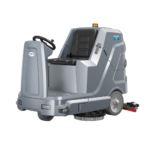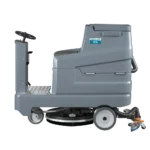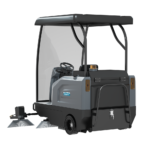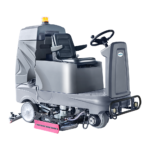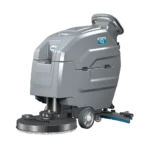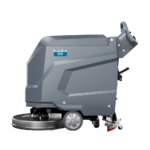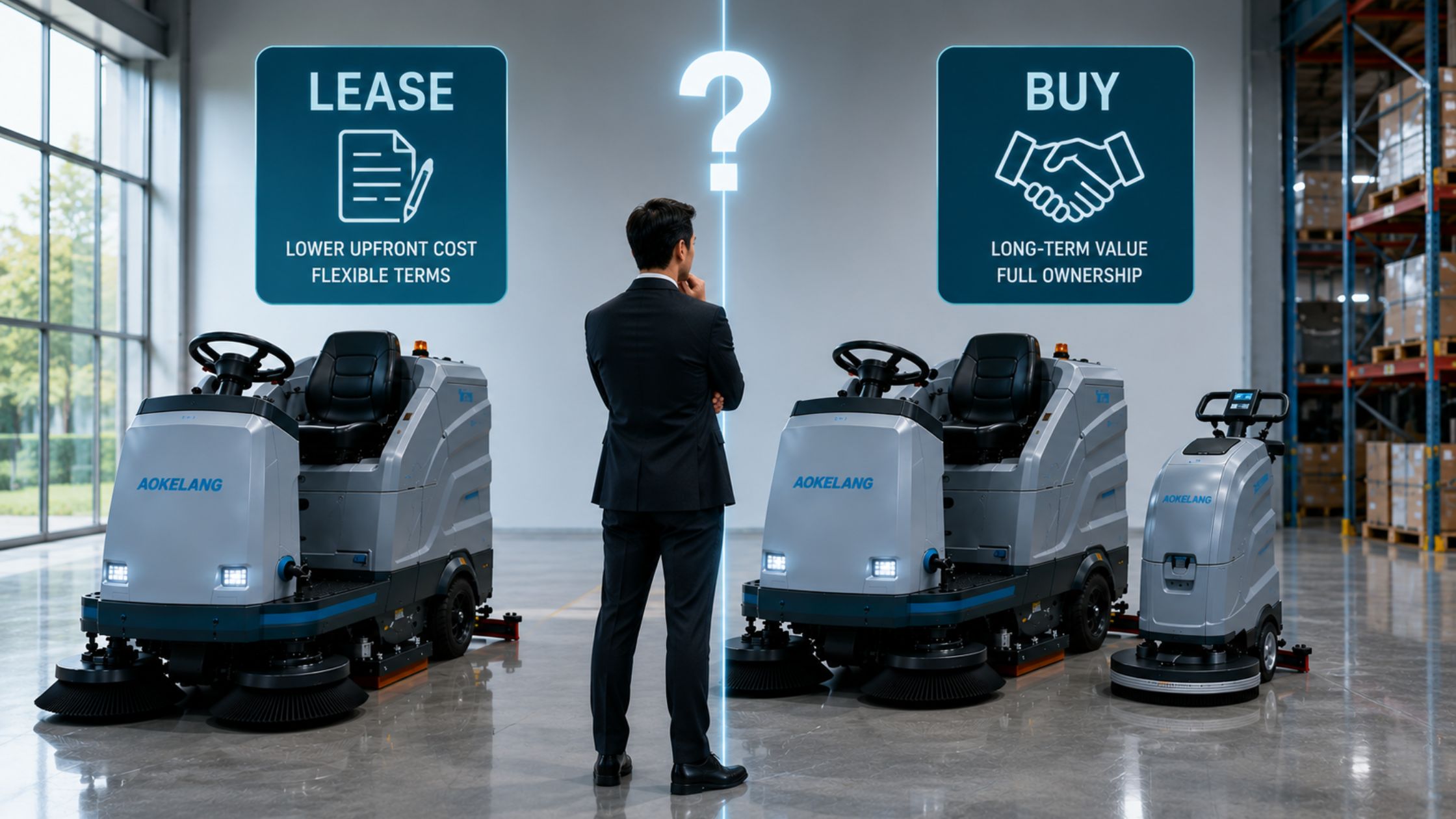
Leasing and Buying a Floor Scrubber: Buying a commercial floor scrubber is generally the lower total-cost option if you’ll use it multiple times a week for several years, since financing or leasing costs almost always add up to more than the purchase price over time. Leasing makes more sense if preserving cash flow matters more than long-term cost, or if you want the flexibility to upgrade equipment on a regular cycle rather than committing to one machine long-term.
This guide of Should You Lease or Purchase a Commercial Floor Scrubber compares the financial mechanics of leasing versus buying, walks through 2026 tax considerations, and gives you a framework for deciding which fits your facility.
Table of Contents
What’s the Difference Between Leasing and Buying a Floor Scrubber?
- Buying outright or with an equipment loan: You either pay the full price upfront or borrow the purchase price and repay it over time. Either way, you own the machine from day one (or once the loan is repaid) and build equity with each payment rather than paying indefinitely for use of an asset you’ll never own.
- Leasing: You pay a monthly fee to use the equipment for a fixed term, without owning it outright during that term. At the end of a lease, you typically have three options: return the equipment, purchase it (often at a pre-set or fair-market-value price), or renew/upgrade to a newer model.
- Renting: Distinct from both of the above, renting is a short-term, often week-to-week arrangement without a fixed-term commitment. It’s useful for a one-off job but gets expensive quickly for ongoing use — a $15,000 machine renting at $300–500 per week can exceed its own purchase price in as little as six to eight months of continuous rental.
Also read – Floor Scrubber Brush vs Pad
Within leasing specifically, there are two common structures:
- Fair Market Value (FMV) lease: Lower monthly payments because you’re only paying for the equipment’s use during what’s typically its most productive years. At the end of the term, you return it, renew, or buy it at its current fair market value. This maximizes cash flow flexibility but means you don’t automatically build equity in the machine.
- $1 buyout / capital lease: Structured more like a loan — you make payments throughout the term and then own the equipment outright for a nominal buyout amount at the end. This is functionally closer to financing a purchase than a true lease.
What Are the Pros and Cons of Buying?
Pros:
- Lower total cost over the machine’s full usable life compared to financing or leasing the same equipment
- You own the asset outright, building equity rather than making payments indefinitely
- Potential eligibility for accelerated tax deductions (see the Section 179 section below)
- No ongoing monthly obligation once the machine is paid off
Cons:
- Requires a larger upfront capital outlay, even when financed with an equipment loan
- You’re responsible for all maintenance and repair costs, which can be significant and disruptive if something major breaks
- You carry the risk of technology or battery-chemistry obsolescence — a machine bought today may lag behind newer options in a few years, but you’re still using it either way
What Are the Pros and Cons of Leasing?
Pros:
- Lower monthly payments than an equivalent purchase or loan, which preserves working capital for payroll, supplies, or other priorities
- A built-in refresh cycle — useful if you want to avoid being stuck with aging equipment
- Some full-service lease structures bundle maintenance and support into the payment, reducing unplanned repair costs
- Gets equipment on your floor immediately without waiting for capital budget approval
Cons:
- Total cost over the lease term almost always exceeds the machine’s outright purchase price — that’s simply how equipment financing works
- With an FMV lease, you don’t build equity, and you face a buy/return/renew decision at the end of every term
- Longer-term, heavy daily use (several times a week, ongoing) tends to make leasing the more expensive option compared to buying and holding the same machine
How Do 2026 Tax Considerations Factor In?
In the US, Section 179 of the tax code lets qualifying businesses deduct the full purchase price of eligible equipment in the year it’s placed into service, rather than depreciating the cost over several years. For tax years beginning in 2026, the maximum Section 179 deduction is $2,560,000, with the deduction beginning to phase out once total qualifying equipment purchases exceed $4,090,000, and phasing out completely at $6,650,000. 2026 also carries 100% bonus depreciation for qualifying equipment placed in service during the year, which can cover costs beyond the Section 179 cap for larger purchases.
A few points worth understanding before this factors into your decision:
- The equipment must be “placed in service” — delivered, set up, and ready for use — by December 31 of the tax year to qualify for that year’s deduction. Ordering or paying for equipment near year-end isn’t enough if installation isn’t complete in time.
- $1 buyout / capital leases are generally treated as a purchase for tax purposes, meaning they can often qualify for Section 179 in a similar way to an outright purchase or loan.
- True FMV/operating leases are typically not eligible for Section 179, since you don’t own the equipment; instead, your monthly lease payments are usually deductible as an ordinary business expense.
Tax treatment depends on your specific business structure, income, and how your lease or loan is structured, so this isn’t a substitute for advice from a tax professional — but it’s a meaningful factor to raise with one before finalizing a lease-vs-buy decision, since it can materially change the effective cost of either option.
Also read – Floor Scrubber Sizing Guide
What Does Each Option Cost in Practice?
| Option | Typical Cost Structure | Notes |
| Outright purchase | $5,000–$50,000+ depending on machine size and type | One-time cost; ownership from day one |
| Equipment loan | Purchase price + interest, repaid over 24–60 months typically | You own the machine immediately and build equity each payment |
| FMV lease | Lower monthly payment than a loan for the same machine | No equity build-up; end-of-term buyout, return, or renewal decision |
| Short-term rental | Roughly $300–500/week for a mid-size ride-on unit | Can exceed the machine’s purchase price within 6–8 months of continuous use |
For reference on how these purchase price ranges break down by machine type, see How Much Does a Commercial Floor Scrubber Cost in 2026?. Most facilities recoup a scrubber’s purchase price through labor savings within 6–12 months regardless of financing method, which is the baseline every lease-vs-buy comparison should be measured against see Floor Scrubber Cost Per Square Foot: ROI Analysis for that calculation in detail.
When Does Buying Make More Sense?
- You’re cleaning multiple times a week and expect to keep doing so for the foreseeable future, for regular, ongoing use, buying almost always wins on total cost.
- You have sufficient capital, or access to equipment financing at a reasonable rate, without straining cash flow needed elsewhere in the business.
- You want to take advantage of Section 179 or bonus depreciation in a given tax year, subject to your accountant’s confirmation of eligibility.
- You’d rather absorb maintenance costs directly than pay for a bundled lease structure you may not fully use.
When Does Leasing Make More Sense?
- You need equipment now but don’t have the capital budget approved until a later fiscal period.
- Preserving cash flow for payroll, new contracts, or other near-term priorities matters more than minimizing total equipment cost.
- You expect your cleaning needs, facility size, or technology preferences (like a battery chemistry upgrade) to change within a few years, and want the flexibility to refresh rather than being locked into one machine.
- You’re a growing business or contractor taking on new accounts and want to match equipment costs to revenue as it comes in, rather than front-loading a large capital expense.
Lease vs Buy Decision Framework
- Estimate your usage frequency and expected ownership horizon. Multiple cleanings per week for 5+ years strongly favors buying; occasional or uncertain-duration use favors leasing or renting.
- Check your available capital and financing rates. If financing costs would strain cash flow needed elsewhere, leasing’s lower monthly payment may outweigh its higher total cost.
- Talk to your accountant about Section 179 and bonus depreciation eligibility for the current tax year before finalizing either a purchase, loan, or capital lease.
- Decide how much you value a refresh cycle. If staying current on battery technology or newer machine features matters to your operations, an FMV lease’s built-in upgrade point may be worth its higher total cost.
- Calculate your expected labor savings and payback period regardless of financing method — this tells you how quickly the equipment starts paying for itself, which should inform how much financing cost you’re willing to absorb.
Next Steps
Whichever financing path fits your business, start by comparing purchase prices across the full floor scrubber range to know your baseline cost, then contact the Aokelang team to discuss payment terms for your order. For the underlying cost and ROI math behind either decision, see How Much Does a Commercial Floor Scrubber Cost in 2026? and Floor Scrubber Cost Per
Lease vs Buy FAQs
Is it ever cheaper to lease than to buy?
On total cost, leasing is rarely cheaper over the full useful life of a heavily used machine — the total lease payments almost always exceed the purchase price, since that’s how equipment financing is structured. Leasing’s advantage is cash flow and flexibility, not lowest total cost.
Can I deduct lease payments the same way as a purchase?
It depends on the lease structure. A $1 buyout/capital lease is often treated similarly to a purchase for tax purposes and may qualify for Section 179, while a true FMV/operating lease is typically not eligible for Section 179 — lease payments are instead deducted as an ordinary business expense. Confirm the specifics with a tax professional given your lease terms.
What happens at the end of an FMV lease?
No, renting is typically a short-term, flexible arrangement without a fixed multi-year term, while leasing involves a defined contract period with end-of-term options. Renting is useful for short, one-off jobs, but becomes more expensive than leasing or buying for any sustained, ongoing use.
How much of the Section 179 deduction can a small business actually use?
The 2026 deduction cap of $2,560,000 covers the vast majority of small and mid-size business equipment purchases, including full commercial floor scrubber fleets, well below the phase-out threshold of $4,090,000 — most single-facility or small multi-site purchases won’t come close to those limits.