Import and Shipping Considerations for Industrial Cleaning Equipment: Importing industrial cleaning equipment mainly comes down to three things: choosing the right container size and loading method for your order volume, complying with lithium battery shipping regulations if your machines are battery-powered, and confirming Incoterms, HS codes, and import duties with your freight forwarder before shipment. Sea freight in a Full Container Load (FCL) is the standard, most cost-effective method for bulk equipment orders, and it’s also significantly less restrictive for lithium batteries than air freight.
This guide covers container sizing for scrubbers and sweepers, the current lithium battery shipping rules that apply to almost all modern equipment, the documentation you should request, and the Incoterms basics worth understanding before you place an order.
Table of Contents
What Container Size Do You Need for Your Order?
Standard shipping containers come in a few sizes, and the right one depends on your order volume:
| Container Type | Approximate Usable Volume | Best For |
| 20-foot standard | ~33 cubic meters (CBM) | Smaller orders or weight-limited cargo |
| 40-foot standard | ~67 CBM | Larger volume orders where cargo isn’t especially heavy per unit |
| 40-foot High Cube | ~76 CBM | Maximum volume for bulkier crated equipment like ride-on machines |
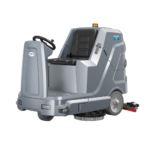
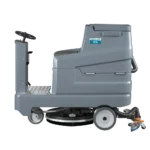
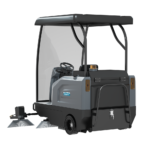
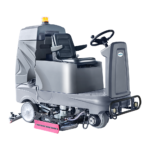
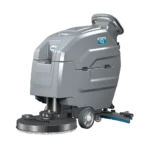
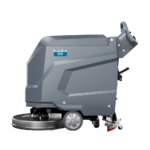
As a general planning estimate — actual figures depend heavily on crating, palletization, and the specific model — a 20-foot container typically holds somewhere in the range of 18–20 crated walk-behind scrubbers or 7–8 crated ride-on machines, while a 40-foot container roughly doubles that: around 35–40 walk-behind units or 14–16 ride-on units. These are rough planning figures, not guarantees — always request an actual loading plan from your manufacturer or freight forwarder based on your specific model mix and crate dimensions before finalizing an order.
FCL (Full Container Load) vs. LCL (Less than Container Load): For equipment containing lithium batteries, FCL is strongly preferred over LCL. With LCL, your cargo shares container space with other shippers’ goods, which introduces cross-contamination compliance risk and complicates the dangerous goods documentation required for battery-powered equipment. FCL keeps your shipment self-contained and is the more predictable option for anything battery-powered.
Also read – Commercial Floor Scrubber Warranty
What Are the Lithium Battery Shipping Rules for 2026?
Since most modern floor scrubbers and sweepers run on lithium or lead-acid batteries, and lithium shipments in particular are subject to increasingly strict international regulation, this is one of the most important compliance areas to get right.
- Sea freight is governed by the IMDG Code (International Maritime Dangerous Goods Code), the standard framework for shipping lithium batteries by ocean, which is the most practical mode for bulk equipment shipments. A significant update, IMDG Amendment 42-24, took effect January 1, 2026, introducing stricter requirements — confirm your freight forwarder is working from the current amendment.
- Batteries installed in equipment are classified differently from standalone batteries. Standalone lithium-ion batteries are typically classified as UN3480, while batteries packed with or contained in equipment — which describes most floor scrubbers and sweepers as shipped — fall under a different UN classification (commonly UN3481) with its own specific packing and documentation requirements.
- Sea freight has no state-of-charge cap, unlike air freight, which requires batteries to be shipped at a reduced charge level (commonly capped around 25–30% state of charge under current rules). This is one of the practical reasons sea freight is the standard choice for shipping full equipment units rather than air.
- Every shipment needs a valid UN38.3 test report. This document — sometimes informally called the “golden paper” in freight circles — proves the battery has passed required safety testing, and shipments without it are commonly rejected at the point of loading.
- A current Material Safety Data Sheet (MSDS) is required, and it should be dated within the current year — outdated MSDS documents are a common cause of rejection by shipping lines.
- Correct Class 9 hazmat labeling and the specific Lithium Battery Mark are required on outer packaging, with precise specifications for size and placement — an off-spec mark can result in shipment rejection even when the underlying battery documentation is otherwise correct.
Air vs. Sea Freight for Battery-Powered Equipment
| Factor | Sea Freight | Air Freight |
| State of charge limit | No cap | Capped, commonly around 25–30% |
| Typical use case | Bulk equipment orders, full machines | Urgent small shipments, spare batteries only |
| Regulatory framework | IMDG Code | IATA Dangerous Goods Regulations |
| Cost for full machines | Significantly lower per unit at volume | Substantially higher, often impractical for full equipment orders |
| Practicality for scrubbers/sweepers | Standard, practical choice | Rarely used for complete machines due to cost and battery restrictions |
For nearly all bulk equipment orders, sea freight is both the more practical and more cost-effective choice — air freight is generally reserved for urgent, smaller shipments like individual replacement parts rather than full machines.
What Documentation Should You Request From Your Manufacturer?
Before finalizing a shipment, confirm your manufacturer or freight forwarder can provide:
- UN38.3 test report for the specific battery model in your machines
- Current-year Material Safety Data Sheet (MSDS)
- Dangerous Goods Declaration / Safe Transport Certificate, confirming the shipment complies with applicable IMDG requirements
- Commercial invoice and packing list, itemizing the shipment for customs
- Bill of Lading, the core shipping document for ocean freight
- Certificate of Origin, if relevant to preferential duty treatment under any applicable trade agreement
Missing or outdated versions of any of these documents are among the most common causes of shipment delays and rejections at port — verify you have current, correctly matched documentation before your container is booked, not after.
What About HS Codes, Duties, and Incoterms?
- HS (Harmonized System) code: The exact code that applies to your specific equipment determines your import duty rate, and misclassification can lead to delays, penalties, or incorrect duty payment. Confirm the correct HS code for your specific machine type directly with your customs broker rather than assuming a general classification applies — this is a compliance-sensitive detail worth getting verified rather than guessed.
- Import duties and tariffs: These vary by country, by product classification, and can change with trade policy — check current rates with a customs broker for your specific import country rather than relying on outdated figures.
- Incoterms define who’s responsible for cost and risk at each stage of shipment:
| Incoterm | Buyer’s Responsibility Starts | Who Arranges Main Freight |
| EXW (Ex Works) | At the factory door | Buyer |
| FOB (Free on Board) | Once goods are loaded on the vessel | Buyer (buyer arranges and pays ocean freight) |
| CIF (Cost, Insurance, Freight) | Once goods arrive at destination port | Seller (arranges freight and insurance to destination port) |
| DDP (Delivered Duty Paid) | At the buyer’s final destination | Seller (handles freight, duties, and delivery) |
FOB is the most common arrangement for bulk equipment imports, giving the buyer control over freight booking while the seller handles loading. DDP shifts the most responsibility to the seller but often comes at a higher quoted price to cover that risk and coordination.
Common Import Mistakes to Avoid
- Treating LCL as equivalent to FCL for battery-containing equipment. The compliance risk and documentation complexity of sharing container space with other cargo makes FCL the safer default for anything battery-powered.
- Assuming an HS code without confirming it with a broker. An incorrect classification can lead to unexpected duty costs or customs delays that weren’t factored into your project timeline.
- Not accounting for documentation lead time. UN38.3 reports, current MSDS documents, and Dangerous Goods Declarations need to be gathered and verified before a container is booked — building this into your timeline avoids last-minute delays.
- Assuming all Incoterms mean the same total cost. A lower quoted unit price under EXW terms can end up costing more once you account for freight, insurance, and duties you’re responsible for arranging yourself — compare total landed cost across Incoterm options, not just the quoted unit price.
- Not confirming battery documentation matches the actual shipped battery model. Inconsistencies between the UN38.3 report and the battery actually in the shipment is a common cause of customs delays.
Import Checklist
- Confirm container size and FCL vs. LCL based on your order volume — default to FCL for battery-powered equipment
- Request UN38.3 test reports and a current-year MSDS for the specific battery models in your order
- Confirm your freight forwarder is working under the current IMDG Code amendment
- Verify Class 9 labeling and Lithium Battery Mark compliance with your manufacturer or freight forwarder
- Confirm the correct HS code for your equipment with a customs broker
- Compare total landed cost across Incoterm options (EXW, FOB, CIF, DDP), not just unit price
- Build documentation lead time into your project timeline, not just shipping transit time
Next Steps
Before placing a bulk import order, confirm container loading plans, lithium battery documentation, and Incoterms directly with your manufacturer — see Aokelang Floor Cleaning Equipment Manufacturer FAQs for Aokelang’s current export markets, or contact the Aokelang team to request specific shipping documentation and container loading estimates for your order size. You can also browse the full floor scrubber and floor sweeper ranges, or request a quote with your target import country and order volume included.
Import and Shipping FAQs
Can floor scrubbers with lithium batteries be shipped by air?
Technically yes, but it’s generally impractical for full machines due to state-of-charge restrictions and significantly higher cost — air freight is more commonly used for individual spare batteries or urgent small parts rather than complete equipment shipments.
What’s the biggest risk with LCL shipping for battery-powered equipment?
Sharing container space with other shippers’ cargo introduces compliance and cross-contamination risk specific to dangerous goods regulations, which is why FCL is the safer default for lithium battery-containing shipments.
Who determines the HS code for my import — me or the manufacturer?
Ultimately, the importer is responsible for correct classification, though manufacturers and customs brokers can help identify the appropriate code. Confirm it directly with a customs broker familiar with your destination country’s classification system rather than relying solely on the manufacturer’s suggestion.
What happens if a shipment is missing the UN38.3 test report?
Shipments missing this documentation are commonly rejected at the point of container loading or at port, which can cause significant delays always confirm this document is available and matches your specific battery model before booking.
Is FOB or DDP better for a first-time importer?
DDP shifts more logistics and compliance responsibility to the seller, which can simplify the process for a first-time importer unfamiliar with freight and customs procedures, though it typically comes at a higher quoted price. FOB gives more control and potential cost savings but requires the buyer to manage freight booking and customs clearance directly or through their own broker.